Heat Pump Snow Stand: Is Your HVAC Dying a Slow Winter Death?
Winter arrives with a quiet beauty, blanketing the world in snow. But for your home’s heat pump, this picturesque scene hides a serious threat that can lead to costly repairs and frigid nights.
Many homeowners overlook the single most important factor for winter heat pump performance: elevation. Without it, your expensive HVAC system could be fighting a losing battle against the elements.
You'll Learn About
Why Your Heat Pump Hates Being on the Ground in Winter
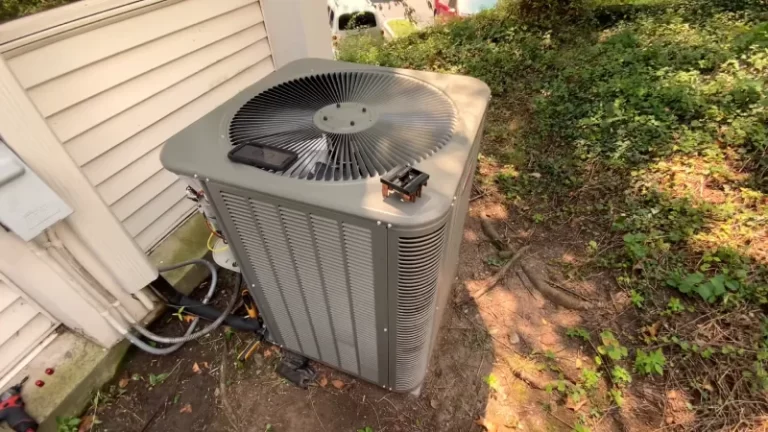
A heat pump works by transferring heat, and in winter, it pulls warmth from the outdoor air to heat your home. This process requires massive amounts of airflow. When your unit sits directly on the ground, it’s vulnerable.
Heavy snowfall can completely bury the unit, choking off the essential airflow. This forces the system to work harder, dramatically reducing efficiency and sending your energy bills soaring. It’s like forcing a runner to breathe through a straw during a marathon.
Furthermore, heat pumps must periodically run a defrost cycle to melt ice that naturally forms on the outdoor coils. The melted water needs to drain away freely. If the unit is on the ground, this water refreezes around the base, creating a growing tomb of ice that can crush delicate components and lead to catastrophic failure.
The Unsung Hero: What is a Heat Pump Snow Stand?
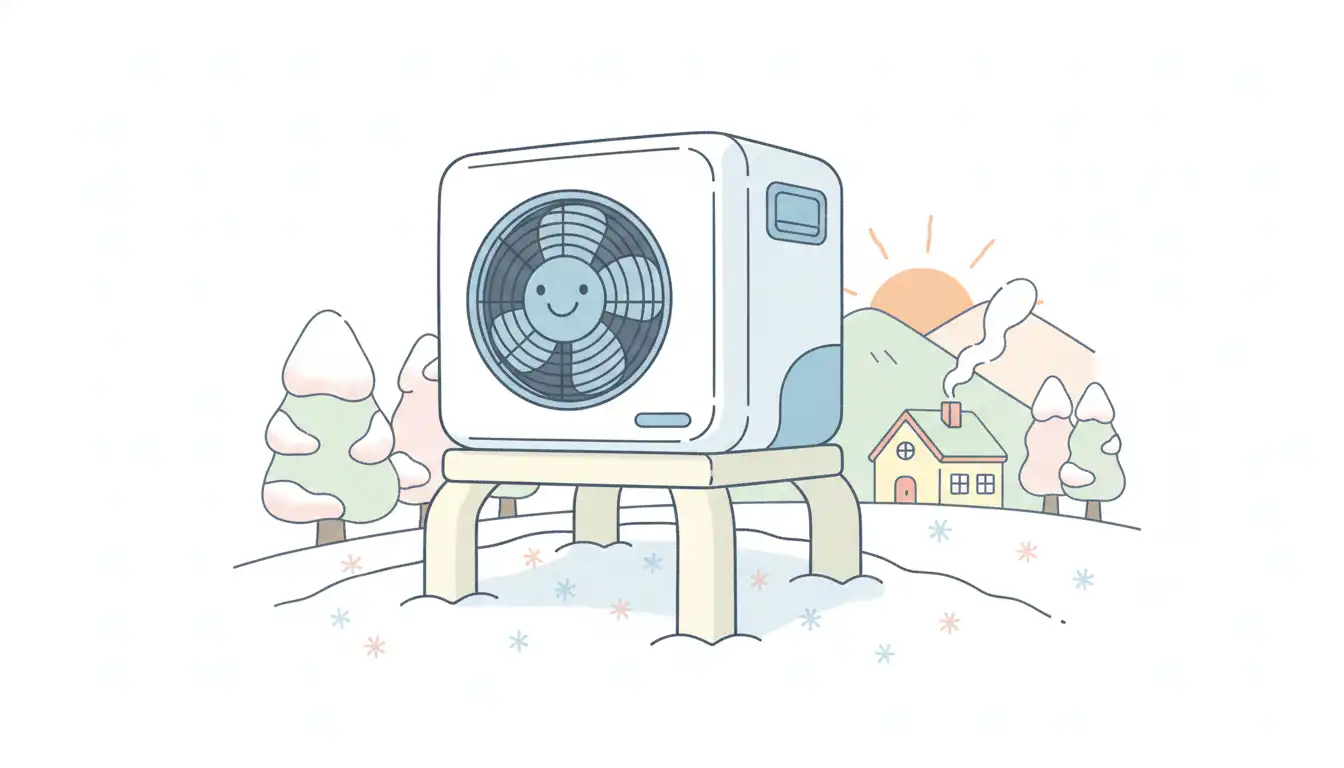
A heat pump snow stand, also known as a riser or bracket, is a simple yet critical accessory designed to solve this exact problem. It’s a sturdy frame that elevates your outdoor condenser unit safely off the ground.
This elevation ensures that even after heavy snowfall, there is a clear space underneath the unit for air to circulate freely and for water from the defrost cycle to drain away without refreezing around the system. It is a non-negotiable component for any heat pump installed in a region that receives significant snow.
Think of it as preventative care for one of your home’s most expensive appliances. This small investment protects your unit from suffocation and self-destruction by ice, ensuring it runs efficiently all winter long.
Choosing Your Defender: Ground Stand vs. Wall Bracket
Not all heat pump stands are created equal. The two primary types are ground stands, which sit on a solid base, and wall-mounted brackets, which attach directly to your home’s foundation or exterior wall. The right choice depends on your specific situation.
Ground stands are more common and easier to install, but they require a stable, level surface. Wall brackets save ground space and can offer better elevation, but they risk transferring vibrations and noise into your home if not installed with proper dampening materials.
Comparing Heat Pump Elevation Solutions
Making the right choice involves weighing factors like installation complexity, noise, and your home’s layout. This table breaks down the key differences to help you decide.
| Feature | Ground Stand / Riser | Wall-Mounted Bracket |
|---|---|---|
| Installation Complexity | Lower. Requires a level pad (concrete or composite). | Higher. Must be securely bolted into foundation or wall studs. |
| Vibration & Noise | Minimal noise transfer to the home. Vibration is absorbed by the ground. | Higher potential for transferring noise and vibration into the house. |
| Ideal Location | Best for open areas with stable, level ground available. | Excellent for tight spaces, sloped yards, or high-snowfall areas. |
| Cost | Generally more affordable. | Can be more expensive, especially with professional installation. |
| Drainage | Good, as long as the ground below is properly graded. | Excellent, as water drips far away from the unit and foundation. |
The Critical Question: How High is High Enough?
Simply lifting your heat pump is not enough; it must be lifted to the correct height. A stand that is too short is almost as useless as no stand at all. The goal is to keep the bottom of the unit above the average snow depth for your specific location.
Consult local climate data to find your area’s typical maximum snow accumulation. A good rule of thumb is to ensure the stand provides at least 12 inches of clearance, but in areas with heavy snowfall, you may need 18 to 24 inches or more. Always err on the side of caution—too high is far better than not high enough.
This proactive approach ensures your unit remains operational even during the worst winter storms, providing consistent and efficient heating when you need it most.
DIY Installation or Professional Help? A Crucial Decision
Installing a heat pump stand can be a DIY project if you have the right tools and skills. However, the process involves disconnecting and reconnecting the unit, which contains high-voltage wiring and refrigerant lines. Improper handling is dangerous and can void your warranty.
For most homeowners, hiring a qualified HVAC technician is the wisest choice. They have the equipment to safely manage the refrigerant, ensure the unit is perfectly level to prevent component damage, and guarantee the installation complies with local codes. While it costs more upfront, it prevents far more expensive problems down the road.
Just as you’d want expert advice when comparing complex systems, like in this Navien tankless water heater review, professional guidance for your HVAC installation is invaluable.
A Simplified DIY Guide for Ground Stands
If you choose to proceed with a DIY installation for a ground stand, safety and precision are paramount. First, you must have an HVAC professional safely evacuate the refrigerant from the lines.
Next, turn off all power to the unit at the breaker box and the outdoor disconnect. Disconnect the electrical wiring and the refrigerant lines. After removing the old pad, prepare a perfectly level surface using gravel and a composite or concrete pad.
Assemble the stand and secure it to the new pad. Carefully lift the heat pump onto the stand, ensuring it is centered and level. Finally, a professional must return to reconnect the lines, recharge the refrigerant, and safely restore power.
The Hidden Threat of Vibration You Can’t Ignore
A detail often overlooked in both DIY and even some professional installations is vibration management. A heat pump is a powerful machine with a compressor and fan that create constant vibrations. If the stand is not perfectly level or properly dampened, these vibrations can cause serious long-term issues.
Over time, unchecked vibrations can loosen connections, damage internal components, and create annoying buzzing or humming noises that travel into your home. This is especially true for wall-mounted brackets.
Always install anti-vibration pads between the feet of the heat pump and the stand itself. These dense rubber or cork pads absorb micro-vibrations, protecting the unit and ensuring quiet operation. This small, inexpensive step is one of the most effective ways to extend the life of your heat pump.
Beyond the Stand: Essential Winter Maintenance Tips
A snow stand is your first line of defense, but it’s not the only one. Proper winter maintenance is key to a healthy HVAC system. Taking care of your home’s core systems is always a smart investment, whether it’s understanding your options in an AO Smith water heater guide or protecting your outdoor unit.
Regularly check the unit during winter, especially after a storm. Gently brush away any snow that has accumulated on top of the unit, but never use a shovel or sharp object that could damage the delicate fins.
Also, look up. Ensure no gutters or eaves are dripping water directly onto the unit, as this can create a solid block of ice that a defrost cycle cannot handle. Just as overlooking small details in a garden can lead to issues like pumpkin flower buds dropping, ignoring these small maintenance tasks can lead to big HVAC problems.
Protect Your Investment for a Warmer Winter
Your heat pump is a significant investment in your home’s comfort and value. Leaving it on the ground in a snowy climate is a gamble you are guaranteed to lose eventually. It leads to inefficiency, premature wear, and the risk of a complete system failure when you need it most.
By installing a properly sized and professionally installed heat pump snow stand, you provide the elevation and protection it needs to operate at peak performance. It is a simple, cost-effective solution that safeguards your system, lowers your energy bills, and ensures your home remains a warm sanctuary all winter long.