Halo vs Commercial Electric LED: The #1 Mistake You’re Making With Recessed Lights
You’re standing in the lighting aisle, staring at a wall of recessed lights. On one side, you have Halo, a brand you’ve seen in homes for decades. On the other, there’s Commercial Electric, Home Depot’s house brand, with a price tag that’s hard to ignore. This is the moment where a critical, and often costly, mistake is made.
Choosing the wrong recessed lighting isn’t just about getting a bad deal; it’s about potentially compromising the entire look and feel of your home. The wrong light can make your paint colors look drab, cause annoying flickering, or fail years before its promised lifespan, forcing you to patch and paint your ceiling all over again. This guide will illuminate the key differences between Halo and Commercial Electric, ensuring your home is bright, beautiful, and free of lighting regrets.
You'll Learn About
The Core Problem: Why Most Recessed Lighting Choices Go Wrong
The fundamental issue is that most homeowners shop for recessed lights based on two factors: price and brightness (lumens). While these are important, they don’t tell the whole story. The real-world performance, longevity, and quality of light depend on less obvious factors that manufacturers of budget-friendly options hope you’ll overlook.
Common issues like flickering, buzzing when dimmed, and premature failure are often traced back to lower-quality internal components, specifically the LED driver. Both Halo and Commercial Electric offer a wide range of products, but their core philosophies differ. Halo has a long-standing reputation to uphold, often using more robust components, while Commercial Electric focuses on providing maximum value and features for the lowest possible price. This distinction is the key to understanding which light is right for your specific project.
Brand Philosophy and Reputation: The Legacy vs. The Value King
Understanding where each brand comes from can tell you a lot about what to expect from their products. One is a seasoned veteran in the lighting industry, while the other is a dominant force in the big-box retail space.
Halo: The Established Professional’s Choice
Halo, owned by Cooper Lighting Solutions, is a brand that electricians and contractors have trusted for generations. Their reputation is built on reliability and consistency. When a professional installs a Halo product, they expect it to work correctly and last, minimizing costly callbacks from unhappy clients. This professional-grade focus means their engineering often prioritizes durability and compatibility with a wide range of dimmers and electrical systems.
While Halo products can be found at big-box stores, their higher-end lines are often distributed through electrical supply houses. This history means they tend to be more conservative with adopting new features, only doing so once they can be implemented reliably. You pay a premium for this peace of mind and proven performance.
Commercial Electric: The DIY Champion
Commercial Electric is the house brand of The Home Depot. Their primary goal is to offer accessible, feature-rich products at a highly competitive price point for the DIY homeowner. They are known for quickly incorporating the latest trends, like selectable color temperatures and smart home integrations, into affordable packages.
To hit these low prices, components may be sourced from various manufacturers, which can sometimes lead to inconsistencies between product batches. While many users have great success with Commercial Electric products, the brand is generally seen as a “value” option where the trade-off for a lower price might be a shorter lifespan or a higher potential for issues like flickering with certain dimmers. The warranty and easy return policy through Home Depot are major selling points that mitigate this risk for many buyers.
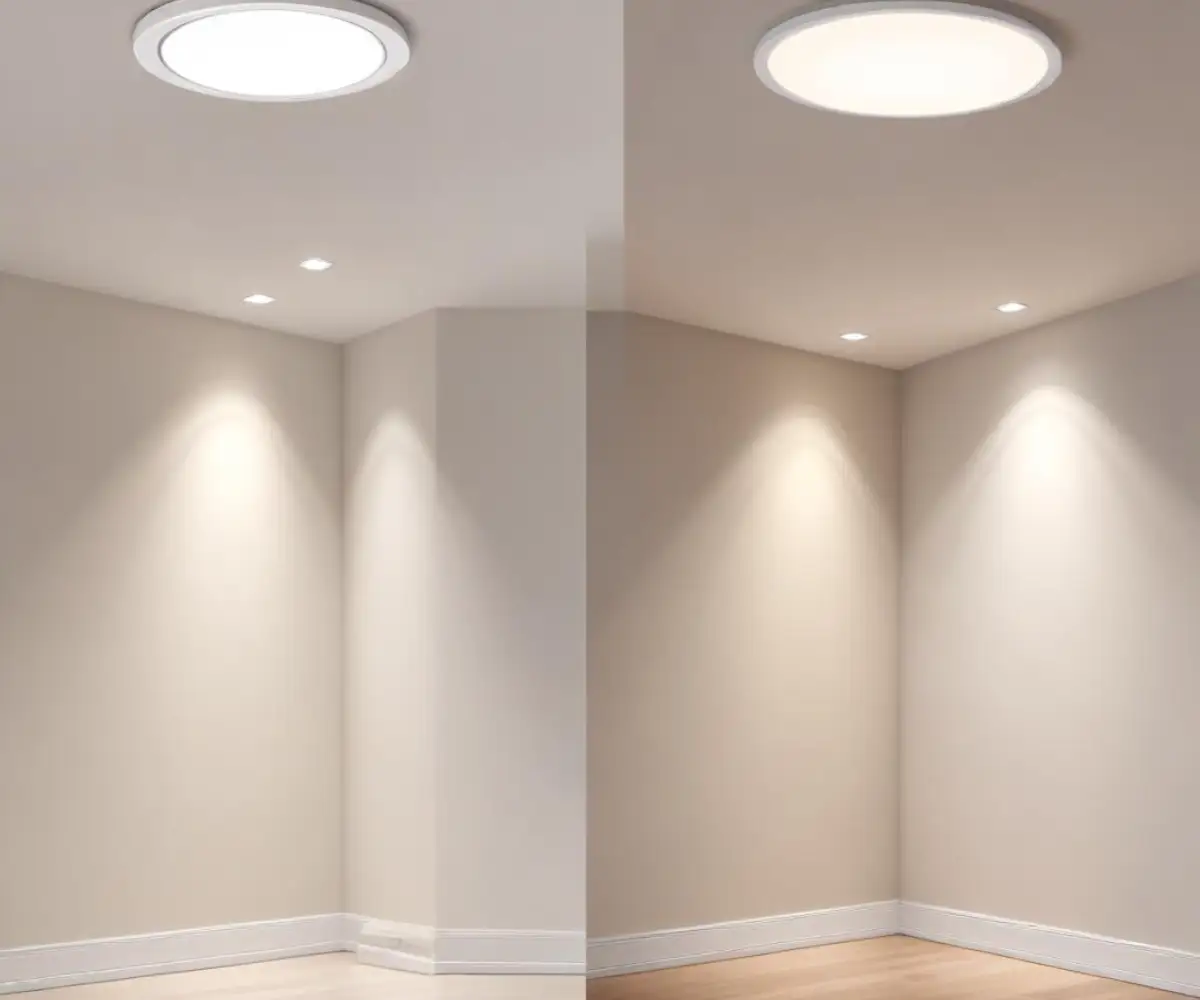
Technical Smackdown: Halo vs. Commercial Electric Head-to-Head
Beyond brand reputation, the technical specifications are where the real differences emerge. A few key metrics determine the quality of the light in your home and how well the fixtures will perform over time. Let’s break down the most important ones.
Color Rendering Index (CRI): The Secret to Beautiful Interiors
This is the single most overlooked metric by homeowners, and it’s a huge mistake. CRI measures how accurately a light source reveals the true colors of objects. A low CRI can make your vibrant decor look washed out and muddy. For a home, you should never settle for a CRI below 80, and a CRI of 90 or higher is strongly recommended for spaces where color accuracy matters, like kitchens and bathrooms.
Both Halo and Commercial Electric offer many models with a CRI of 90+, which is excellent. However, premium Halo models often have a higher R9 value (a key component of CRI that measures deep reds), making skin tones and natural wood finishes look more vibrant and lifelike. If you’ve spent weeks picking the perfect paint, like a nuanced lighter shade of a popular gray, a high-CRI light will ensure it looks exactly as you intended.
Dimmer Compatibility and Performance
Flickering and buzzing are the bane of any recessed lighting project. These issues almost always stem from an incompatibility between the LED fixture’s driver and the dimmer switch on the wall. Cheaper LED drivers can be particularly finicky.
Halo generally has an edge here. They conduct extensive testing with major dimmer brands like Lutron and Leviton and provide clear compatibility lists. This significantly reduces the guesswork. While many Commercial Electric lights dim well with compatible dimmers, user reviews suggest a higher incidence of flickering, especially on circuits with many lights. If smooth, flicker-free dimming down to very low levels is a priority, investing in a brand known for its robust drivers is a wise choice.
Build Quality and Installation
From an installer’s perspective, small differences in build quality can make a big impact. Halo housings and retrofit kits often feel more substantial. Features like captive nails in new-construction housings, easier-to-use wire connectors, and more robust retention clips can save significant time and frustration during installation.
Commercial Electric lights, particularly the popular “canless” wafer-style lights, are designed for maximum installation speed. However, some electricians note that the spring clips can be less forgiving and the junction boxes flimsier compared to their Halo counterparts. For a DIYer installing a few lights, this may not be a major issue, but for a whole-home project, the superior build quality of Halo can lead to a cleaner, more secure installation.
Feature Comparison: What Do You Get For Your Money?
Here’s a direct comparison of the features you’ll commonly find when shopping for these two brands. This will help you decide which attributes are most important for your home and garden projects.
| Feature | Halo LED Lights | Commercial Electric LED Lights |
|---|---|---|
| Price Point | Moderate to Premium | Budget-Friendly to Moderate |
| Typical CRI | Often 90+, with good R9 values on premium models. | Generally 80-90+, good value for the spec. |
| Dimming Performance | Excellent compatibility with major dimmer brands; known for smooth, flicker-free performance. | Good, but can be more sensitive to dimmer choice; some reports of flickering. |
| Build Quality | Robust housings, high-quality trims, and installer-friendly features. | Generally lighter construction; designed for value and ease of DIY installation. |
| Warranty | Typically a 5-year limited warranty on LED components. | Often a 5-year warranty, backed by The Home Depot’s convenient return policy. |
| Feature Innovation | More conservative; focuses on core performance and reliability. | Quick to adopt new features like selectable color temperature and smart tech. |
| Best For | Whole-home renovations, critical spaces like kitchens, and projects where long-term reliability is paramount. | Budget-conscious updates, basements, closets, and areas where cutting-edge features are desired over proven longevity. |
The Hidden Factor: Long-Term Reliability and Support
An LED light’s advertised lifespan of 50,000 hours is a theoretical calculation. Real-world longevity is determined by heat management and the quality of the electronic driver. Heat is the enemy of LEDs, and superior heat sink design is a feature of higher-quality lights.
While both brands typically offer a 5-year warranty, the replacement process is different. With Commercial Electric, if a light fails, you can often return it directly to a Home Depot store for a replacement. This is incredibly convenient. With Halo, you may need to go through a more formal warranty claim process with Cooper Lighting. The true cost of failure isn’t just the fixture; it’s the hassle of getting a replacement and installing it, especially if it’s in a hard-to-reach spot.
The Verdict: Which Brand Should You Choose?
The decision between Halo and Commercial Electric is not about which brand is “better,” but which is better for your specific needs and risk tolerance. Making the right choice will save you money, time, and frustration.
Choose Halo If:
- Long-term reliability is your top priority. You are lighting a “forever home” and want to install the lights once and not worry about them again.
- You are renovating a critical space like a kitchen or master bathroom. In these areas, superior color rendering and flawless dimming performance will make a noticeable difference in daily life. It’s just as important as choosing between a Thermador vs Miele refrigerator; quality components matter.
- You are sensitive to flickering or plan to use complex smart dimmer setups. Halo’s robust drivers provide a greater margin of safety for compatibility.
Choose Commercial Electric If:
- You are working with a tight budget. The value offered by Commercial Electric is undeniable, allowing you to upgrade your lighting for a fraction of the cost.
- You are lighting secondary spaces. For basements, hallways, closets, or rental properties, Commercial Electric provides more than adequate performance.
- You want the latest features without the premium price. If you’re excited about trying out selectable color temperatures or smart lighting, Commercial Electric makes these technologies highly accessible.
Ultimately, the biggest mistake is choosing based on the price on the box alone. By understanding the critical roles of CRI, driver quality, and build construction, you can look past the marketing and make an informed decision that will perfectly illuminate your home for years to come.