
Grass with Little Balls? Identify & Eradicate These Annoying Lawn Invaders
There are few things more frustrating than discovering mysterious, often painful, little balls dotting your otherwise perfect lawn. You’ve worked hard to cultivate a lush, green carpet, only to find it invaded by these unwelcome guests. This common problem can turn a pleasant barefoot stroll into a painful ordeal and leave you wondering where you went wrong.
These “little balls” are more than just an eyesore; they are often a symptom of underlying lawn health issues. Understanding what they are and why they’ve appeared is the first step toward reclaiming your turf. This guide will help you identify the culprits and provide a clear, actionable plan to eliminate them for good.
You'll Learn About
What Are Those Little Balls in Your Grass?
Before you can treat the problem, you need to identify the source. Several different culprits can create the appearance of “little balls” in your grass, each with a unique appearance and requiring a different approach. The most common offenders are weeds, but sometimes fungi are to blame.
Lawn Burweed (Soliva sessilis): The Spiky Culprit
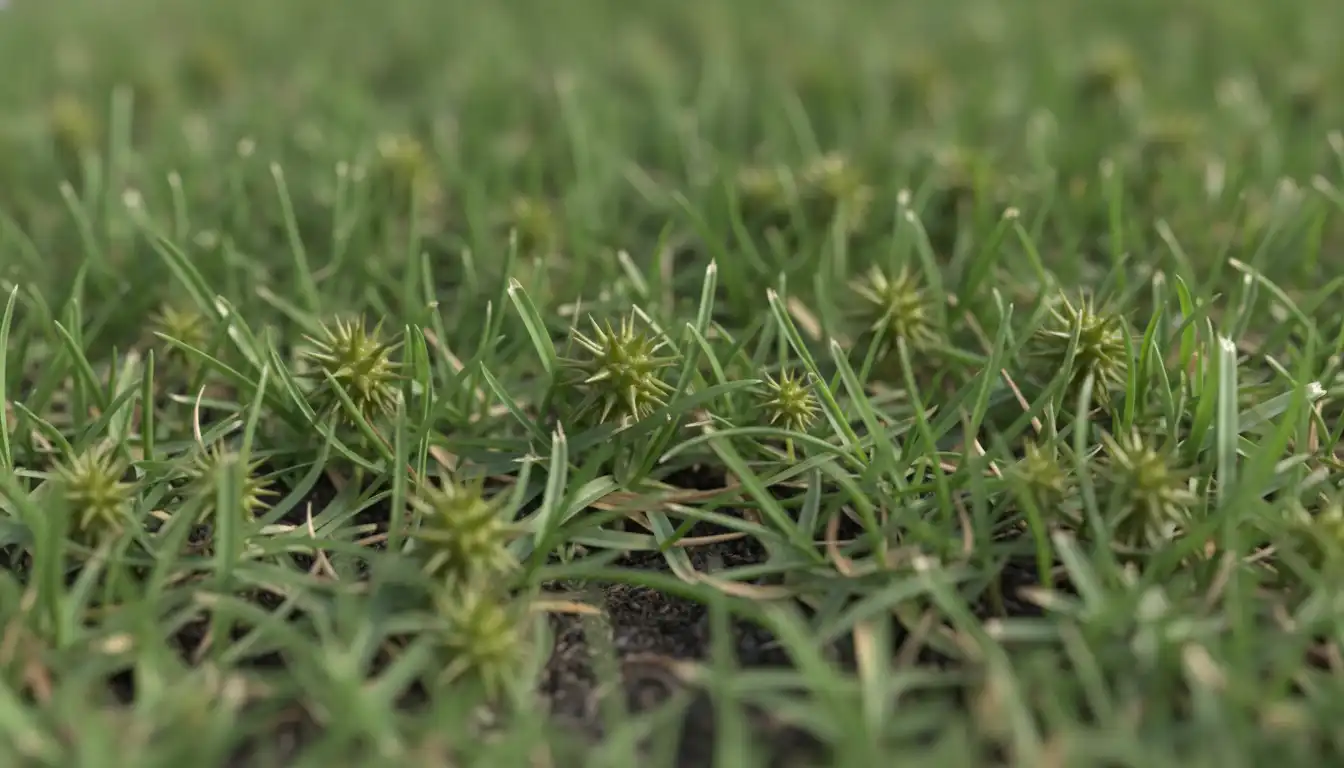
If the little balls are painfully sharp, you are almost certainly dealing with lawn burweed, also known as spurweed or stickerweed. This is a low-growing winter annual weed that germinates in the fall and grows through the winter, often going unnoticed. It has parsley-like or fern-like leaves that form dense mats.
The real trouble begins in late spring as temperatures rise. The plant produces seed pods, or burs, that are small, green, and tipped with sharp spines. These are the “little balls” that cause so much pain to bare feet and pet paws, effectively turning your lawn into a minefield. Once these burs mature and the plant dies in the summer heat, the spiky seeds are left behind to start the cycle over again next fall.
Slime Mold: The Alien-Like Impostor
Sometimes, the “little balls” aren’t part of a plant at all. Slime mold is a primitive organism that can suddenly appear on your lawn, often after periods of warm, wet weather. Initially, it might look like a slimy patch resembling dog vomit or scrambled eggs, in shades of yellow, orange, or white. It is completely harmless to your grass.
As the slime mold dries, it transforms into powdery, ball-like structures that can be gray, black, or white. These structures eventually break open to release spores. While unsightly, slime mold is not a disease and doesn’t feed on your grass. It feeds on bacteria and organic matter in the thatch and soil, simply using the grass blades as a structure to climb for spore dispersal.
Artillery Fungus (Sphaerobolus): The Speckled Nuisance
If the “little balls” are tiny, black, and stuck to surfaces *above* the ground like your house siding, car, or fence, the source is likely artillery fungus. This fungus lives in decomposing organic matter, most commonly wood mulch. The fungus produces small cups that hold a black, sticky spore mass.
When conditions are right, these cups orient toward bright surfaces (like white siding) and forcibly eject the spore masses up to 20 feet. These black specks are extremely difficult to remove and can cause permanent stains. While the fungus is in your mulch and not directly on the grass, the resulting “balls” are a significant nuisance for homeowners.
Why Your Lawn Has Little Balls: Uncovering the Root Causes
The presence of these invaders is often a sign that your lawn is under stress. A thick, healthy, and vigorous lawn is the best defense, as it can outcompete weeds and is less susceptible to fungal issues. Understanding the underlying causes is crucial for long-term prevention.
A Weak and Thin Turf Canopy
Lawn burweed and other weeds thrive in thin, patchy turf where they don’t have to compete for sunlight, water, and nutrients. If your grass is sparse, it creates a perfect opportunity for these opportunistic plants to establish themselves. A dense canopy of healthy grass is the most effective weed barrier.
Compacted Soil and Poor Drainage
Compacted soil restricts the flow of air, water, and nutrients to the roots of your turfgrass, weakening it significantly. This stressful environment is ideal for tough, shallow-rooted weeds like burweed. Furthermore, poor drainage and constantly moist conditions create a welcoming environment for fungi like slime mold and artillery fungus.
Improper Mowing and Watering Habits
Mowing your lawn too short is one of the most common mistakes that leads to weed infestations. Scalping the grass stresses the plant and allows more sunlight to reach the soil, which encourages weed seeds to germinate. Likewise, frequent, shallow watering promotes weak root systems in grass, making it less resilient, while creating the consistently damp surface conditions that fungi love. Ensuring proper soil moisture is a delicate balance; too much water invites fungal issues, while too little stresses the grass. Understanding the difference in readings, much like knowing the nuances of MMR vs RMR 86 when checking for moisture in building materials, is key to proper diagnosis.
Excessive Thatch and Organic Debris
A thick layer of thatch—the dead organic matter between the soil surface and the green grass blades—can prevent water and nutrients from reaching the soil. This layer also serves as an ideal habitat for weed seeds to germinate and provides a food source for slime molds. Similarly, decaying wood mulch is the primary breeding ground for artillery fungus.
Your Action Plan: How to Get Rid of Little Balls in Your Grass for Good
Eradicating these problems involves a two-pronged attack: immediate control to handle the current issue and long-term prevention through improved lawn health to stop it from coming back. Timing is critical, especially for controlling lawn burweed.
Step 1: Immediate Removal and Control
For lawn burweed, the key is to act before the spiky burs form. Applying a post-emergent broadleaf herbicide in the winter (December through February) is most effective. Look for products containing active ingredients like 2,4-D, dicamba, and MCPP, often found in “three-way” herbicides. If burs have already formed, it is too late for chemical control to remove the stickers for the current season; even if you kill the plant, the burs will remain until they decompose.
For slime mold, no chemical treatment is necessary. You can simply break it up with a rake or blast it with a strong jet of water from a hose. Left alone, it will typically dry up and disappear on its own within a week or two. While these growths might look alarming, they aren’t the same as the small mushrooms in your garden that feed on decay.
For artillery fungus, control focuses on the source. There is no effective spray to remove the spores from surfaces. The best course of action is to remove and replace the infested wood mulch. These stubborn spores can mar everything from your siding to your window frames, a frustrating problem whether you’re updating your home’s exterior or wondering if your classic cathedral cabinet doors are out of style on the inside.
Step 2: Long-Term Prevention Through Lawn Health
Aerate Your Lawn: Core aeration relieves soil compaction, allowing roots to grow deeper and access more resources. This should be a cornerstone of your annual lawn care, especially if you have heavy clay soil.
Fertilize Properly: A well-fed lawn is a strong lawn. Follow a consistent fertilization schedule based on your grass type to encourage the dense, vigorous growth that crowds out weeds.
Mow High: Adjust your mower to a higher setting. Taller grass blades create a denser canopy that shades the soil, preventing weed seeds from getting the light they need to sprout.
Water Deeply and Infrequently: Water your lawn for longer periods but less often. This encourages the grass to develop a deep, robust root system that is more resilient to drought and better at competing with weeds.
Step 3: The Power of Pre-Emergent Herbicides
For preventing lawn burweed, a pre-emergent herbicide is your most powerful weapon. These products create a chemical barrier in the soil that prevents weed seeds from successfully germinating. Apply a pre-emergent in the fall (late September to early October) to target winter annuals like burweed before they ever have a chance to sprout. This single application can prevent the painful sticker problem next spring.
| Culprit | Appearance | Harm Level | Best Solution |
|---|---|---|---|
| Lawn Burweed | Low-growing weed with fern-like leaves; produces small, green, spiky burs in spring. | High (Painful, spreads easily) | Apply pre-emergent in fall; post-emergent herbicide in winter BEFORE burs form. |
| Slime Mold | Initially slimy (yellow/orange), dries to powdery, ball-like structures (gray/black). | None (Cosmetic issue only) | Rake, wash away with water, or ignore. No chemicals needed. |
| Artillery Fungus | Tiny, black, sticky specks shot from mulch onto nearby light-colored surfaces. | High (Stains siding, cars, etc.) | Remove and replace infested wood mulch; use stone or cedar mulch as alternatives. |
| Grass Seed Heads | Small clusters of seeds on stalks, part of the natural grass life cycle. | None (Natural process) | Regular mowing will remove them. Not a cause for concern. |
Proactive Lawn Care: A Seasonal Calendar for a Ball-Free Lawn
Staying ahead of lawn problems is far easier than trying to correct them. By following a simple seasonal calendar, you can build a resilient turf that naturally resists invaders.
Fall (September – November)
This is the most critical season for preventing lawn burweed. Apply pre-emergent herbicides in late September or early October to stop winter weeds from germinating. Fall is also the best time to aerate and overseed your lawn to build density for the following year.
Winter (December – February)
Be vigilant during the winter months. Scout your lawn for any young burweed plants that may have escaped the pre-emergent barrier. Spot-treat with a post-emergent herbicide on a warmer day when the weeds are actively growing. This is your last chance to act before the painful burs develop.
Spring (March – May)
As your lawn greens up, begin your regular mowing schedule, keeping the mower deck high. A separate pre-emergent application in early spring can help control summer annual weeds like crabgrass. Avoid overuse of nitrogen fertilizers, which can encourage disease.
Summer (June – August)
Focus on maintaining lawn health through the stress of summer heat. Water deeply one to two times per week in the early morning to minimize evaporation and fungal growth. Continue to mow high to help the grass conserve water and shade out any potential weeds.
Frequently Asked Questions (FAQ)
Are the little balls in my grass harmful to my pets?
If the balls are from lawn burweed, they can be very painful for pets. The sharp spines can get lodged in their paws and fur, causing discomfort and potential infection. Slime mold and artillery fungus are not considered toxic or harmful to pets.
Can I just pull the weeds by hand?
Hand-pulling can be effective for a very small infestation of lawn burweed, but it is often impractical for larger areas. The plant’s low-growing, mat-forming habit makes it difficult to remove completely. The most effective approach is a properly timed herbicide application.
Will changing my mulch really stop the black spots on my house?
Yes, for artillery fungus, managing the source is the only effective prevention method. Since the fungus thrives in common wood mulch, switching to an inorganic material like stone or a naturally resistant wood like cedar can eliminate the problem.
A Healthy Lawn Is Your Best Defense
Discovering little balls in your grass can be disheartening, but it’s a solvable problem. By correctly identifying the culprit—whether it’s the painful lawn burweed, the harmless slime mold, or the pesky artillery fungus—you can take targeted action. Remember that these issues are often symptoms of a larger problem.
The ultimate solution lies in building a foundation of strong, healthy turf. Through proper mowing, watering, aeration, and a proactive weed control strategy, you can create a dense, thriving lawn that leaves no room for these unwelcome invaders. Your efforts will be rewarded with a beautiful, resilient, and pain-free lawn for everyone to enjoy.
