
Glue Down Vinyl Plank in a Basement? Avoid This #1 Mistake!
Transforming a basement from a concrete box into a comfortable living space is a homeowner’s dream. But that dream often hits a concrete wall—literally. The floor is the foundation of any great basement renovation, and it’s also the source of the biggest headaches.
Basements are notoriously challenging environments. They grapple with moisture from the surrounding earth, fluctuating temperatures, and concrete subfloors that are rarely perfectly level. These issues can turn a beautiful new floor into a warped, peeling, or moldy disaster.
For years, glue-down vinyl plank flooring has been a go-to solution for its durability and water resistance. However, a successful installation hinges on avoiding one critical, often-overlooked mistake that can doom the entire project from the start. This guide will walk you through the process, ensuring your basement floor is not just beautiful, but built to last.
You'll Learn About
Why Your Basement Floor is a Unique Challenge
Before laying down a single plank, it’s crucial to understand the subterranean battleground you’re working on. Unlike any other room in your home, a basement is in constant contact with the ground, making it a magnet for moisture-related problems.
Hydrostatic pressure can force water vapor up through the porous concrete slab, even if you’ve never had a full-blown flood. This invisible moisture is the silent killer of flooring adhesives and can lead to catastrophic failure. Add to that the typically uneven and rough surface of a concrete slab, and you have a recipe for a difficult installation.
Glue-Down vs. Floating Floor: The Definitive Basement Showdown
The first major decision in your basement flooring journey is choosing between a glue-down or a floating (click-lock) installation. While floating floors are often marketed as easier for DIY projects, glue-down vinyl offers superior stability and moisture resistance, making it an excellent choice for below-grade spaces when installed correctly.
A glue-down installation creates a permanent bond with the subfloor. This prevents shifting, reduces noise, and creates a more solid feel underfoot. Because there are no gaps between the planks and the subfloor, there’s less opportunity for water to become trapped, which is a significant advantage in a basement.
| Feature | Glue-Down Vinyl Plank | Floating (Click-Lock) Vinyl Plank |
|---|---|---|
| Stability | Exceptional; planks are fully bonded to the subfloor, preventing any shifting or movement. | Good; planks lock together but can experience slight movement as a whole floor system. |
| Moisture Resistance | Excellent; the adhesive acts as an additional barrier, and there’s no space for water to get trapped underneath. | Good, but water can potentially seep through seams and get trapped between the planks and the subfloor. |
| Subfloor Requirements | Requires a very smooth, flat, and clean subfloor. Imperfections can “telegraph” through the thin planks. | More forgiving of minor subfloor imperfections due to its rigidity. |
| Installation Complexity | More complex and messy due to the use of adhesives. Requires more skill and preparation. | Generally easier and faster for DIY installation; no messy adhesives. |
| Repairability | Easier to replace a single damaged plank by heating, removing, and re-gluing a new one. | More difficult to replace a single plank; often requires disassembling a large portion of the floor. |
| Cost | Material costs may be lower, but professional installation costs can be higher. | Material costs may be higher, but DIY installation can save on labor costs. |
The #1 Mistake: Skipping Rigorous Subfloor Testing
Here is the critical error most people make: assuming a dry-looking subfloor is actually dry. Simply running your hand over the concrete or visually inspecting it is not enough. Concrete is a porous material that can hold and transmit significant amounts of moisture vapor and alkalinity without any visible signs.
Gluing down vinyl planks over a concrete slab with high moisture content or improper pH levels will cause the adhesive to break down, leading to peeling, bubbling, and complete failure. You must test your subfloor thoroughly before you even think about opening a bucket of adhesive.
The Unskippable First Step: Mastering Subfloor Preparation
Proper preparation is not just a step; it is the most important part of the entire project. A pristine subfloor is the only guarantee of a long-lasting, beautiful glue-down vinyl floor. This process is meticulous and has several critical phases.
Cleaning and Debris Removal: More Than Just Sweeping
The subfloor must be completely free of any contaminants that could interfere with the adhesive bond. This means removing all dust, dirt, wax, grease, paint, and old adhesive residue. Start by thoroughly scraping and sweeping the floor.
After sweeping, vacuum the entire area with a shop vac. For a truly clean surface, you may need to wash the floor with a pH-neutral cleaner and water, but you must allow it to dry completely for several days before proceeding with any testing or installation.
The Litmus Test: Why Moisture and pH Testing Are Non-Negotiable
This is where expertise comes into play. Most DIY guides mention moisture, but many fail to address the equally critical issue of alkalinity (pH). A high pH level in your concrete can chemically destroy even the best flooring adhesives.
Moisture Testing: There are two primary professional methods. The Calcium Chloride Test (ASTM F1869) involves placing a small dish of calcium chloride under a sealed plastic dome for 72 hours to measure the moisture vapor emission rate. The In-Situ Relative Humidity Test (ASTM F2170) involves drilling a hole in the concrete and inserting a probe to measure the relative humidity within the slab itself. Always check the flooring and adhesive manufacturer’s specifications for acceptable moisture levels.
pH Testing: This is a simpler but vital test. According to ASTM F710, you can test the pH by placing a small amount of distilled water on the concrete surface for about 60 seconds and then dipping a pH test strip into the water. Most adhesives require a pH level between 7 and 9. Fresh concrete can have a pH as high as 12 or 13, which is highly alkaline and corrosive to adhesives.
Achieving a Flawless Canvas: Leveling and Patching
Glue-down vinyl is thin and flexible, which means any imperfection in the subfloor—no matter how small—will eventually become visible on the surface. This phenomenon is called “telegraphing.” Your subfloor must be both flat and smooth.
Use a long, straight edge or level to identify low spots and high spots. Grind down any high spots with a concrete grinder. For low spots, cracks, and holes, use a high-quality, cement-based patching or self-leveling compound. Ensure the product you choose is compatible with your adhesive and rated for the moisture levels present in your basement.
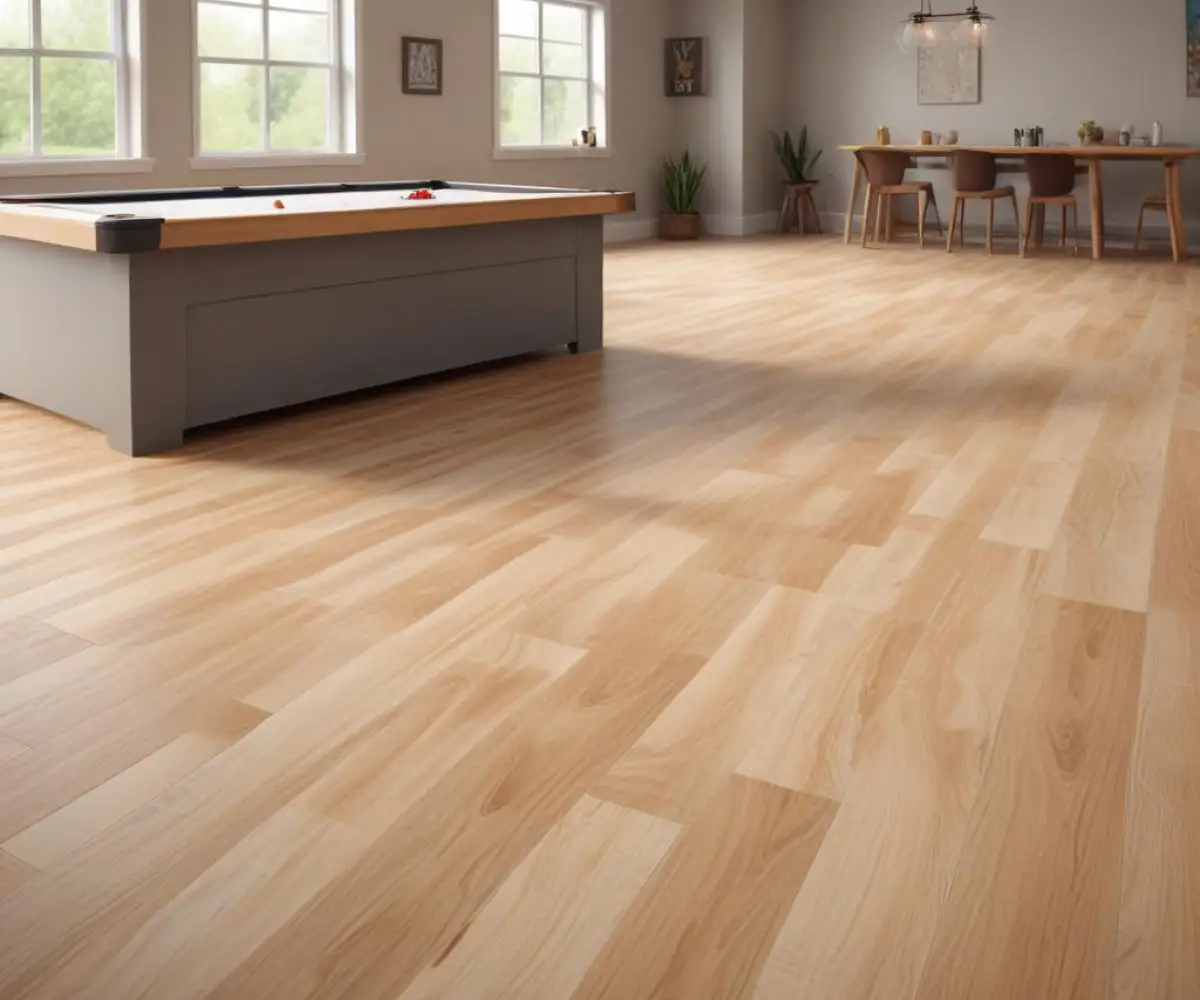
Choosing Your Weapon: The Right Plank and Adhesive
With a perfectly prepared subfloor, your focus can shift to the materials. The quality of your vinyl planks and, just as importantly, your adhesive will define the durability of your floor.
Not All Vinyl Planks Are Created Equal
When selecting your luxury vinyl plank (LVP), pay close attention to the wear layer. This is the top protective coating that resists scratches and scuffs. For a basement that will see regular foot traffic, look for a wear layer of at least 12 mil, with 20 mil being ideal for maximum durability. Some premium products, such as those you might learn about in reviews of high-end LVP, offer enhanced wear layers and robust construction perfect for demanding environments.
The Unsung Hero: Selecting the Perfect Adhesive
Do not cheap out on the adhesive. The type of adhesive you choose is critical, especially in a moisture-prone basement. There are several types, each with its own pros and cons.
Pressure-Sensitive Adhesives: These remain tacky for a long time, allowing for more flexibility in plank placement. They are generally user-friendly but may be less resistant to high moisture levels.
Hard-Set Adhesives: These create a rigid, permanent bond once cured. They offer excellent resistance to moisture and are often recommended for basements. However, they require more precise and timely installation.
Epoxy-Based Adhesives: These two-part systems create an incredibly strong, waterproof bond. They are the premium choice for areas with known moisture issues but are more expensive and complex to work with. Always check the manufacturer’s specifications to ensure the adhesive is rated for below-grade applications and can handle the tested moisture and pH levels of your slab.
The Main Event: A Step-by-Step Installation Guide
With all the preparation complete, the installation itself is a methodical process. Precision and patience are your best friends here.
Acclimation and Layout Planning
Your vinyl planks and adhesive must acclimate to the basement’s environment for at least 48 hours before installation. This allows the materials to adjust to the temperature and humidity, preventing expansion or contraction issues later. Plan your layout by finding the center of the room and snapping chalk lines to guide your first rows.
Applying the Adhesive: The Trowel Technique
Work in small, manageable sections. Use the correct notched trowel as specified by the adhesive manufacturer. The size and shape of the notches ensure that the right amount of glue is spread, creating ridges that will be flattened when the plank is pressed into place. Hold the trowel at a 45-degree angle for an even application.
Laying the Planks: Precision is Key
Carefully place your first plank along your guideline. Do not slide it into place, as this can push the adhesive around and create a mess. Press it down firmly. Install the subsequent planks tightly against each other, ensuring there are no gaps. Use a utility knife and a straight edge to make precise cuts for edges and obstacles.
Rolling the Floor: The Final, Crucial Step
Once you have laid a large section, you must roll the floor with a 75-100 lb floor roller. This step is non-negotiable. Rolling ensures that each plank makes full contact with the adhesive, squeezes out any trapped air bubbles, and creates a solid, permanent bond.
Post-Installation: Care and Long-Term Success
The work isn’t over once the last plank is down. The adhesive needs time to fully cure. Follow the manufacturer’s instructions, but generally, you should avoid heavy foot traffic for at least 24-48 hours. Do not move heavy furniture or appliances onto the floor for several days.
Cleaning your new floor is simple. Regular sweeping and occasional mopping with a pH-neutral cleaner are all that’s needed. The durable, waterproof surface of products like those found in water-resistant flooring lines makes maintenance a breeze.
Common Glue-Down Problems and How to Prevent Them
Even with careful work, issues can arise. Understanding them helps in preventing them from the start.
Plank Lifting/Peeling: This is almost always caused by adhesive failure due to improper subfloor prep—specifically, moisture or high pH levels. Prevention is the only cure: test and prepare the subfloor correctly from the beginning.
Bubbles or Gaps: These issues typically result from not rolling the floor properly or applying the adhesive unevenly. Ensure every inch of the floor is rolled with a heavy roller.
Telegraphing: This is the ghost of a poorly prepared subfloor. If you see bumps or ridges appearing on your floor’s surface, it’s because the subfloor was not made perfectly smooth. The only fix is to remove the flooring, re-prep the subfloor, and reinstall.
Is Glue-Down LVP the Right Choice for Your Basement?
Glue-down vinyl plank flooring offers a robust, waterproof, and highly durable solution for the unique challenges of a basement. Its stability underfoot and seamless appearance make it a premium choice for creating a beautiful and functional living space. While the installation process is more demanding than a floating floor, the long-term performance is often superior, particularly when it comes to moisture. For homeowners exploring various brands, looking into different luxury vinyl options can provide a broader perspective on available styles and features.
The key to success is not in the laying of the planks but in the diligent, exhaustive preparation of the concrete subfloor. By avoiding the common but critical mistake of skipping moisture and pH testing, you can ensure your adhesive forms an unbreakable bond, protecting your investment and your new living space for decades to come.
