
Glass Knobs on White Kitchen Cabinets: Your #1 Design Blunder?
White kitchen cabinets are the timeless foundation of modern kitchen design. They offer a bright, clean, and versatile canvas that promises endless stylistic possibilities. Yet, this blank slate is precisely where the most devastating design mistakes are made.
The single element that can make or break your entire kitchen aesthetic is the hardware. Choosing glass knobs on white kitchen cabinets can elevate the space to a level of sophisticated elegance, or it can be a critical misstep that leaves your kitchen looking dated and disjointed. This guide reveals the secrets to getting it right.
You'll Learn About
Why Your Hardware Choice Is More Critical Than You Think
Think of cabinet hardware as the jewelry of your kitchen. It’s the final, defining touch that ties everything together. While seemingly a small detail, the right knob can infuse personality, texture, and light into your space.
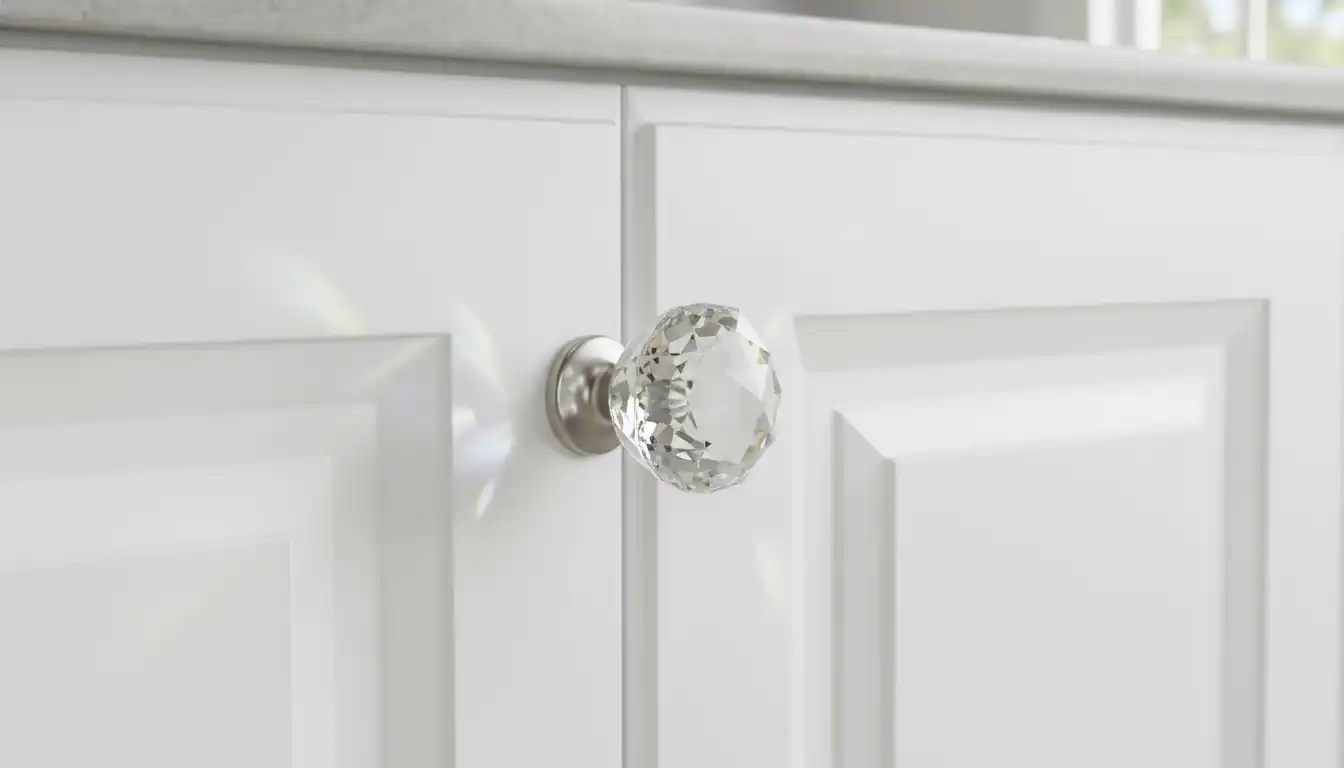
Glass knobs, in particular, have a unique ability to capture and reflect light, adding a subtle sparkle that metal hardware simply cannot replicate. They can make a kitchen feel brighter, more luxurious, and meticulously planned. But this high-reward choice comes with high risks if you don’t understand the nuances.
The Allure of Glass: A Timeless Appeal
The popularity of glass knobs dates back to the 19th century, but their appeal is far from outdated. Unlike trendy finishes that come and go, the classic transparency of glass offers a timeless quality. It bridges the gap between vintage charm and contemporary chic.
When paired with crisp white cabinets, glass knobs create a look that is both airy and grounded. This combination works beautifully in a variety of kitchen styles, from traditional farmhouse to modern transitional designs.
The Most Common Blunders with Glass Knobs (And How to Avoid Them)
The path to a stunning kitchen is paved with potential pitfalls. Many homeowners select glass knobs with the best intentions, only to find the result falls flat. Understanding these common mistakes is the first step toward achieving a flawless, professional-looking finish.
Mistake #1: Ignoring Size and Scale
The single most frequent error is choosing a knob that is disproportionate to the cabinet door or drawer. A knob that is too small will look lost and insignificant, failing to make an impact. Conversely, a knob that is too large can overwhelm the cabinet, appearing clumsy and out of place.
The key is to find the “Goldilocks” size—one that feels substantial in your hand and looks balanced to the eye. A general rule of thumb is that the knob’s diameter should be about 2.5% to 3.5% of the cabinet door’s height. For drawers, the knob should be proportional to the drawer’s height and width.
Mistake #2: The Dreaded Style Clash
Not all glass knobs are created equal. An ornate, antique-style faceted knob will look jarring on a minimalist, flat-panel white cabinet. Likewise, a sleek, modern, round glass knob might feel too simple for a traditional cabinet with intricate detailing.
You must match the style of the knob to the style of your cabinetry. For classic Shaker cabinets, a simple octagonal or hexagonal glass knob works beautifully. For more traditional raised-panel doors, a more detailed, vintage-inspired knob can be a perfect fit. The goal is harmony, not conflict.
Mistake #3: The Backplate Blunder
The metal base, or backplate, of the glass knob is a critical design element. The finish of this metal component must coordinate with other metallic finishes in your kitchen, such as your faucet, light fixtures, and appliances.
A polished nickel base offers a cool, contemporary feel, while an aged brass or bronze base lends warmth and a more vintage character. Ignoring this detail can create a chaotic and uncoordinated look. Also consider if you want a backplate at all; sometimes a simple, direct mount is the cleanest option for modern designs.
Mistake #4: Sacrificing Quality for Cost
There is a significant difference between high-quality glass hardware and cheap imitations. Inexpensive knobs are often made from acrylic instead of real glass, which can yellow over time and scratch easily. Their metal components may be hollow or thinly plated, leading to chipping and tarnishing.
Invest in knobs made from solid glass and high-grade metal. Feel the weight of the knob in your hand; it should feel substantial. Quality hardware is not just a visual upgrade; it’s a functional one that will withstand the daily wear and tear of a busy kitchen.
The Definitive Guide to Selecting the Perfect Glass Knobs
Now that you know what to avoid, let’s focus on a strategic approach to selection. Choosing the right glass knob requires a thoughtful consideration of your kitchen’s overall aesthetic and a deep understanding of the available options.
The process goes beyond simply picking something that looks pretty in a showroom. It involves analyzing the undertones of your white paint, the style of your cabinets, and the ambient lighting in your space.
Matching the Knob to Your Kitchen’s Soul
Your kitchen has a personality, and the hardware should be an extension of it. Is your kitchen a cozy farmhouse retreat, a sleek modern hub, or a glamorous entertaining space? The table below provides a starting point for matching knob styles to your kitchen’s aesthetic.
| Knob Style | Best For Kitchen Aesthetic | Suggested Backplate Finish | Design Impact |
|---|---|---|---|
| Vintage Octagonal/Hexagonal | Farmhouse, Transitional, Classic | Satin Nickel, Aged Brass, Oil-Rubbed Bronze | Adds timeless character and architectural detail. |
| Modern Round/Mushroom | Contemporary, Minimalist, Scandinavian | Polished Chrome, Polished Nickel, Matte Black | Offers a clean, understated, and sophisticated look. |
| Faceted Melon or Fluted | Traditional, Victorian, Grandmillennial | Antique Brass, Polished Brass, Polished Nickel | Maximizes light reflection for a touch of glamour. |
| Mercury Glass | Glam, Eclectic, Art Deco | Polished Chrome, Aged Silver | Provides a unique, antiqued sparkle and depth. |
| Subtly Colored Glass (e.g., light green, blue) | Coastal, Cottage, Bespoke | Satin Nickel, Polished Chrome | Introduces a soft pop of color that can tie into a backsplash. |
The Overlooked Detail: White Paint Undertones
Not all white paints are the same. A crisp, cool white with blue undertones will pair beautifully with glass knobs that have a polished chrome or nickel base. These cool metals will enhance the clean, bright quality of the paint.
On the other hand, a warmer, creamier white—like a popular off-white—shines when paired with warmer metals like aged brass or champagne bronze. This creates a cohesive and inviting look. The right hardware can even complement unique cabinet colors, just as selecting the perfect knob is crucial for Farrow & Ball Pigeon kitchen cabinets to bring out their complex undertones.
Installation Masterclass: A Flawless Finish
Even the most beautiful hardware can be ruined by a sloppy installation. Taking the time to install your knobs with precision is non-negotiable for a professional result. Nothing screams “DIY mistake” louder than a row of crooked cabinet knobs.
The goal is perfect alignment and protecting your cabinet finish throughout the process. This requires the right tools and a patient, methodical approach.
The Secret Weapon: A Cabinet Hardware Jig
Forgetting the measuring tape and pencil is the best decision you can make. A cabinet hardware jig is an inexpensive tool that ensures every hole you drill is in the exact same location on every door and drawer. It is the single best way to guarantee perfect, consistent alignment.
Set the jig to your desired position on the first door, and then simply move it from door to door. This eliminates human error and saves a tremendous amount of time and frustration.
Protect Your Investment: The #1 Installation Precaution
Drilling into a freshly painted cabinet can be nerve-wracking. To prevent the drill from scratching or chipping the paint, place a small piece of painter’s tape over the area where you intend to drill. This small step provides a protective barrier and helps prevent the wood from splintering.
This attention to detail during installation is as fundamental as ensuring a solid foundation for your cabinets. A polished look requires perfection from top to bottom, which includes details like the baseboard under kitchen cabinets for a truly complete finish.
Living with Glass: Maintenance and Durability Myths
A common hesitation with glass knobs is the perceived maintenance. Many homeowners worry about fingerprints, smudges, and the risk of chipping. However, modern, high-quality glass hardware is far more durable and easy to care for than you might think.
Debunking the Cleaning Myth
Are glass knobs fingerprint magnets? While they can show smudges, they are incredibly easy to clean. A simple wipe with a soft, dry microfiber cloth is usually all that’s needed to restore their sparkle.
For more stubborn grime, a gentle solution of water and mild dish soap on a microfiber cloth will do the trick. Avoid harsh chemical cleaners, as they can damage the metal base over time. In reality, they are often easier to keep clean than textured metal knobs where dirt can accumulate.
Built to Last: The Truth About Durability
High-quality glass knobs are made from thick, tempered glass that is designed to withstand the rigors of a kitchen environment. They are not as fragile as delicate glassware. While a very forceful impact could cause a chip, this is a rare occurrence in normal day-to-day use.
The structural integrity comes from the solid metal base and the screw that secures it. When properly installed, a quality glass knob is just as sturdy and reliable as its all-metal counterparts.
The Final Verdict: Are Glass Knobs an Outdated Trend?
In a world of fleeting design trends, it’s natural to question the longevity of any style choice. Some may wonder if glass knobs are a relic of the past, destined to make a kitchen look dated. The answer, definitively, is no.
Glass knobs are a design classic, not a fleeting trend. Their timeless appeal lies in their versatility and their ability to add a touch of elegance that transcends specific eras. When chosen and implemented correctly, they look just as appropriate in a 2025 kitchen as they did in a 1925 one.
The key is context. By following the principles of proper scale, matching the style to your cabinets, and coordinating finishes, glass knobs will always be a sophisticated and valuable addition to your home. They are a statement of quality and attention to detail, which never goes out of style. Proper planning, from hardware up to maximizing storage with 48 inch tall upper kitchen cabinets, is what creates a truly timeless kitchen.
From Bland to Brilliant: The Transformative Power of Hardware
Your white kitchen cabinets are full of potential. They can be the backdrop for a stunning, light-filled space that feels both luxurious and welcoming. The journey from a plain white box to a brilliant, personalized kitchen hinges on the details.
By avoiding the common blunders of sizing, style clashes, and poor quality, you can harness the full potential of glass knobs. This choice is more than just a functional necessity; it’s a design statement that infuses your kitchen with light, character, and enduring elegance. Make the right choice, and your hardware will transform your kitchen from simply finished to truly unforgettable.
