
Garage Door Concrete Threshold Repair: Your Ultimate Guide
That small puddle of water near your garage door seems harmless at first. But soon, it’s joined by annoying drafts, unwanted pests, and a growing sense of frustration. These are the tell-tale signs of a failing garage door concrete threshold, a problem far more significant than a simple cosmetic flaw.
A cracked, crumbling, or uneven threshold compromises the single most important seal in your garage. This guide will walk you through diagnosing the damage, understanding its causes, and executing a durable, professional-quality repair that restores security and peace of mind.
You'll Learn About
Why Your Garage Threshold is a Critical, Unsung Hero
The concrete threshold does more than just mark the entrance to your garage; it’s a critical component of your home’s protective barrier. It is engineered to create a firm, even surface for the garage door’s bottom weather seal to press against, forming an impenetrable barrier.
When this concrete foundation is compromised, it sets off a chain reaction. The door seal can no longer function effectively, leading to water intrusion, significant energy loss from drafts, and an open invitation for insects and rodents. The health of your threshold is directly linked to the performance of your entire garage door system.
Diagnosing the Damage: What to Look For
Before you can fix the problem, you must accurately identify the type and extent of the damage. A careful inspection will reveal the specific issues your threshold is facing and guide your repair strategy. Pay close attention to the various forms of deterioration.
Cracks: From Hairline to Major Fissures
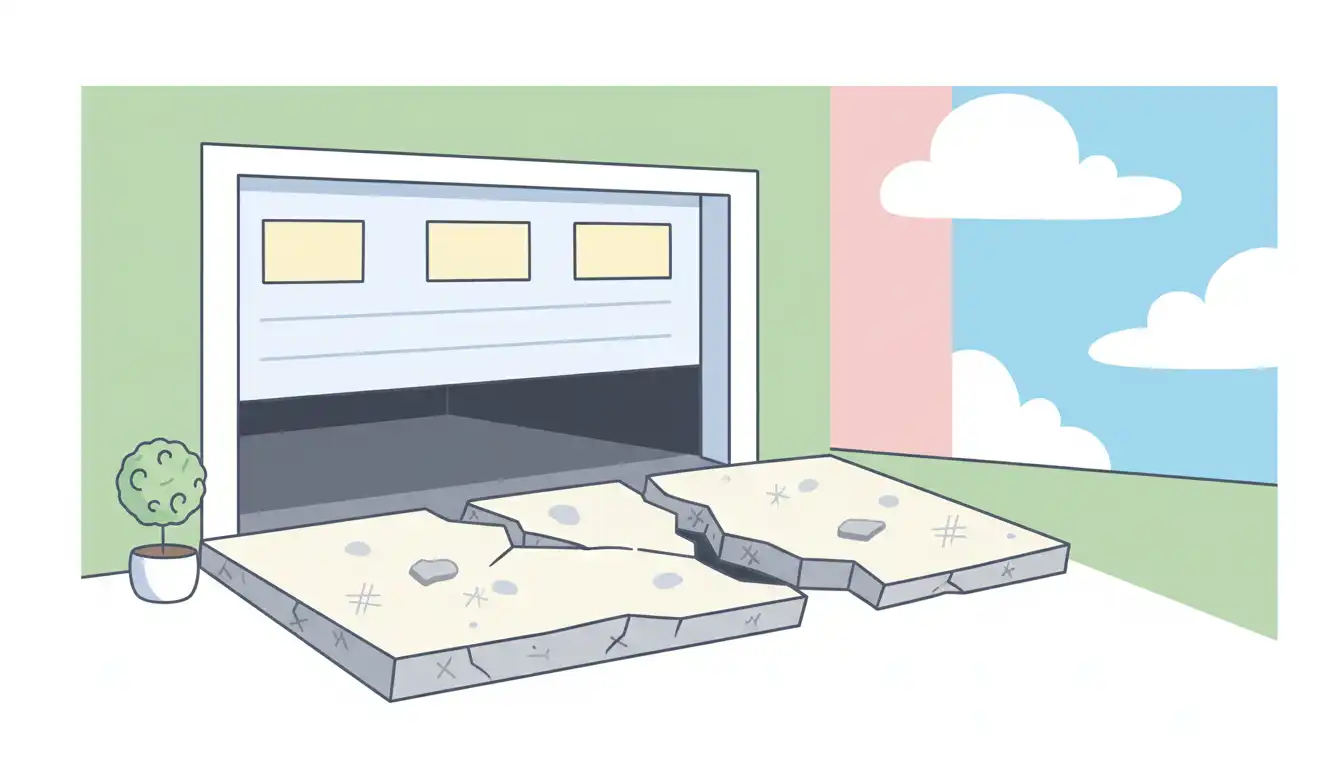
Cracks are the most common symptom of threshold failure. They can range from tiny, spiderweb-like fissures on the surface to deep, structural cracks that run through the entire slab. Hairline cracks may only be a surface-level issue, but larger cracks indicate more profound problems with the concrete’s integrity.
These openings allow water to seep underneath the slab, worsening the problem with every freeze-thaw cycle. Over time, these small cracks can grow, threatening the stability of the entire threshold.
Spalling and Pitting: The Surface is Crumbling
Spalling occurs when the top layer of concrete flakes or peels away, leaving a rough, pockmarked surface. Pitting is characterized by small but deep holes forming on the concrete. Both are signs that the concrete is losing its strength and density, often due to moisture and exposure to de-icing salts.
A spalled surface not only looks bad but also prevents the garage door seal from making solid contact. This creates countless small gaps for water and air to pass through, defeating the purpose of the weatherstripping.
Unevenness and Heaving
If your threshold is no longer level, you may be dealing with soil settlement or frost heave. Frost heave happens when trapped moisture in the ground freezes and expands, pushing the concrete slab upward. When the ground thaws, the slab can settle back down unevenly.
An uneven threshold makes it impossible for the rigid bottom of the garage door to seal properly across its entire width. This often results in significant gaps at certain points, which can be a primary cause if you notice your garage door leaks at bottom corners, as water will naturally channel to these low points.
Water Pooling
The most obvious sign of a problem is standing water. If you notice water pooling against the garage door after it rains, it’s a clear indication that the threshold is not properly sloped to drain water away from the entrance. This constant exposure to moisture accelerates all forms of concrete deterioration.
The Root Causes of Concrete Threshold Failure
Understanding why your threshold failed is crucial for preventing a repeat occurrence after your repair. Several factors, often working in combination, contribute to the breakdown of this essential concrete structure. Addressing these root causes is as important as the repair itself.
The relentless cycle of freezing and thawing is concrete’s primary enemy. Water penetrates small pores and cracks, and when it freezes, it expands with immense force, breaking the concrete apart from the inside. Road salt and chemical de-icers carried in on your vehicle’s tires can also chemically attack the concrete, weakening its structure and leading to spalling. Even the initial installation plays a role; a poor concrete mix or improper curing can create a weak slab that’s destined to fail prematurely.
Another powerful, yet often overlooked, cause is hydrostatic pressure. If the soil and landscaping around your garage entrance are not properly graded away from the foundation, groundwater can build up. This saturated soil exerts constant pressure on the concrete, forcing moisture into the slab and potentially contributing to heaving and cracking over time.
Repair vs. Replace: Making the Right Call
Once you’ve diagnosed the problem, you need to decide whether a targeted repair is sufficient or if a full replacement is necessary. This decision depends on the severity and type of damage, as well as your budget and DIY comfort level. For many common issues, a high-quality repair is a durable and cost-effective solution.
However, widespread structural damage, severe heaving, or concrete that is crumbling throughout may be beyond the scope of a patch. In these cases, attempting a repair will only be a temporary fix, and a full replacement by a professional is the better long-term investment.
| Damage Type | Recommended Action | Considerations |
|---|---|---|
| Hairline Cracks (< 1/8 inch) | Repair | Easily filled with flexible concrete crack sealant. Focus on preparation and cleaning. |
| Minor Chips or Spalling | Repair | Use a high-strength cementitious or epoxy patching compound. Surface prep is critical for a strong bond. |
| Large Cracks (> 1/4 inch) | Repair (with caution) | Requires “undercutting” the edges for a keyed-in patch. Assess if the crack is stable or growing. |
| Severe Heaving / Unevenness | Replace | This indicates a problem with the sub-base (soil). A patch will not fix the underlying issue. |
| Widespread Crumbling | Replace | If the concrete is soft and deteriorating everywhere, the original slab is compromised and needs to be removed. |
Your Step-by-Step Guide to a Flawless Concrete Threshold Repair
With the right materials and a methodical approach, you can achieve a professional-grade repair that will last for years. This process is all about preparation; the time you spend getting the surface ready will directly impact the durability of the patch. Do not rush the preparation phase.
Step 1: Gather Your Tools and Materials
Having everything you need on hand before you start is essential. You will need safety glasses and gloves, a hammer and cold chisel, a wire brush, a shop vacuum or pressure washer, and a trowel. For materials, choose a high-quality concrete patching compound; epoxy-based products offer excellent adhesion and durability for high-traffic areas, while polymer-modified cementitious patches are easier to work with and also provide a strong repair.
Step 2: Prepare the Damaged Area (The Most Critical Step)
This is where the success of your repair is determined. You cannot bond a new patch to loose, weak, or dirty concrete. Start by using the hammer and chisel to chip away all crumbling, soft, and damaged concrete. The goal is to reach a solid, sound base.
For cracks and deeper spalled areas, you must undercut the edges. This means chiseling the sides of the repair area so that the bottom of the void is slightly wider than the top. This creates a dovetail shape that mechanically locks the patch in place, preventing it from popping out under pressure.
Once all the loose material is removed, thoroughly clean the area. Use a wire brush to scrub away any remaining dust and debris. Finish by using a shop vacuum to remove every last particle, or for the best results, use a pressure washer to blast the area clean, then allow it to dry completely as per the patch product’s instructions.
Step 3: Mixing and Applying the Patching Compound
Follow the manufacturer’s instructions precisely when mixing your patching compound. Mix only as much as you can use within the product’s working time, which can be as short as 15-20 minutes for fast-setting materials. The ideal consistency is typically a workable, peanut-butter-like paste that is not runny.
Before applying the patch, dampen the repair area with a small amount of water (for cement-based patches) or apply a concrete bonding agent if the product instructions recommend it. This prevents the old, dry concrete from pulling moisture out of the new patch too quickly, which can weaken the bond. Firmly press the patching material into the void with your trowel, ensuring you force it into all corners and undercuts to eliminate any air pockets.
Step 4: Finishing and Curing for Maximum Durability
Build up the patching material so it’s slightly higher than the surrounding surface. Use your trowel to smooth and shape the patch, feathering the edges to blend seamlessly with the existing garage floor. The goal is to create a perfectly level and smooth surface for the garage door seal.
Curing is the chemical process that gives concrete its strength, and it requires moisture. After the patch has set, follow the product’s directions for curing. This usually involves covering the repair with plastic sheeting or periodically misting it with water for several days to ensure it cures slowly and develops maximum hardness and durability.
Advanced Solutions and Pro-Level Tips
To take your repair from good to great, consider a few advanced techniques. These extra steps ensure maximum longevity and address some of the more complex issues that can arise with concrete thresholds. They provide an added layer of protection against future problems.
Choosing the Right Repair Product
Not all patch materials are created equal. Epoxy-based patch kits are generally stronger and more resistant to chemicals and abrasion than cement-based products. They are an excellent choice for high-traffic thresholds or areas exposed to road salt. Cementitious patching compounds are more user-friendly and closely resemble the original concrete in appearance and texture.
Sealing Your Repaired Threshold for Longevity
After your repair has fully cured (typically 28 days), applying a high-quality concrete sealer is a crucial final step. A good penetrating sealer, like a silane/siloxane product, will soak into the concrete and chemically react to form a hydrophobic barrier. This barrier repels water and de-icing chemicals, protecting both your new patch and the surrounding concrete from the very elements that likely caused the original damage.
Addressing Persistent Water Issues
If your threshold issues are part of a larger water drainage problem, the repair alone won’t be a complete solution. Examine the grading of your driveway and the surrounding landscape. Ensure that the ground slopes away from the garage. Also, check that your gutters and downspouts are clean and directing water far away from the foundation to prevent the buildup of hydrostatic pressure.
Maintaining Your Repaired Threshold and Preventing Future Damage
A successful repair deserves proper maintenance to ensure it lasts. Make it a habit to regularly sweep the threshold clean of dirt, leaves, and debris, as these can trap moisture against the concrete. In the winter, minimize the use of harsh de-icing salts.
Regular winter maintenance is key to protecting your new threshold. A heavy snowfall can trap moisture and de-icing chemicals right where you don’t want them. If you’re wondering how many inches of snow before you use a snowblower, clearing even a few inches away from the garage door can make a big difference in preventing ice dams and moisture penetration.
When is it Time to Call a Professional?
While DIY repair is a viable option for many common threshold problems, some situations are best left to the experts. If you see signs of major structural problems, such as large, shifting cracks that extend into the foundation walls or significant heaving of the slab, it’s time to call a concrete professional.
These issues often point to deeper problems with the soil or foundation that a surface patch cannot solve. A professional can assess the structural integrity and recommend the correct course of action, which might involve a complete removal and replacement of the threshold. This kind of major work is often part of a larger garage overhaul, such as when homeowners decide to convert room back to garage space and need to ensure the foundation is sound.
A Solid Threshold for a Secure Home
Your garage door’s concrete threshold is a small but mighty defender of your home. A damaged threshold is a breach in your home’s defenses, leading to water damage, energy loss, and pests. By taking the time to properly diagnose the problem and perform a meticulous repair, you are not just fixing a piece of concrete; you are restoring a critical seal that protects your property.
Armed with this knowledge, you can confidently tackle this essential home maintenance task. A solid, well-maintained threshold provides a secure foundation for your garage door, ensuring your home stays dry, efficient, and protected for years to come.
