
Fry Kitchen: Stop the Grease & Odor Nightmare for Good!
There’s nothing quite like the sizzle and aroma of food hitting hot oil. From crispy fried chicken to golden-brown french fries, fried foods are a cornerstone of comfort and culinary delight. But for the home cook, this joy is often followed by a frustrating reality.
The aftermath involves a relentless battle against a sticky film of grease on every surface, a lingering odor that clings to fabrics for days, and a cleanup process that feels endless. Your standard home kitchen simply isn’t designed to handle the intense demands of frequent frying.
This isn’t a failure on your part; it’s a failure of conventional kitchen design. It’s time to stop fighting a losing battle and instead create a space that works for you. This is the concept of the “fry kitchen” zone—a dedicated, optimized area that contains the mess and makes frying a clean, enjoyable process.
You'll Learn About
Why Your Kitchen Can’t Handle Frying
The love for fried food often clashes with the design of our homes. A standard kitchen setup struggles to manage the intense byproducts of frying, leading to a frustrating cycle of cooking and aggressive cleaning.
The Science of a Greasy Kitchen
When you fry, hot oil turns into microscopic airborne droplets, a process known as aerosolization. These tiny grease particles don’t just splatter near the stove; they travel with steam and smoke, landing on cabinets, walls, countertops, and even floors. This creates that sticky film that seems to attract dust and grime.
Beyond the grease, potent odors embed themselves into porous and soft surfaces. Wooden cabinets, curtains, furniture, and carpets can hold onto frying smells for days, making your entire home smell like a deep fryer. Traditional cleaning and air fresheners often just mask the problem temporarily.
When Standard Ventilation Fails
Most kitchens are equipped with a basic ventilation system, such as a standard recirculating microwave hood. These systems are woefully inadequate for the demands of frying. Instead of removing greasy, smoky air, they often just pull it through a simple filter and push it right back into the room.
This does little to combat the aerosolized grease and lingering odors. For high-heat cooking methods like searing or wok frying, this lack of powerful extraction becomes even more apparent, quickly filling the room with smoke and oil vapor.
The Solution: Designing a Dedicated Fry Kitchen Zone
The answer to this greasy dilemma is not to give up on your favorite foods but to rethink your kitchen’s layout. By creating a dedicated “fry kitchen” zone, you can establish a contained, efficient, and easy-to-clean area that handles the demands of frying.
This doesn’t necessarily mean building a second kitchen. It’s about strategically choosing the right ventilation, surfaces, and appliances for one part of your kitchen to create a high-performance cooking station. The goal is to make frying mess-free, odor-free, and enjoyable again.
Pillar #1: The Power of Superior Ventilation
Effective ventilation is the single most important element of a successful fry kitchen zone. This is not the place to cut corners. Your primary goal is to capture smoke, steam, and grease at the source and expel it completely from your home.
Look for range hoods with a high CFM (Cubic Feet per Minute) rating, which measures how much air the hood can move. For frying, a higher CFM is always better. Most importantly, you must choose a ducted (or vented) hood that pipes the air directly outside, rather than a ductless one that recirculates it.
| Ventilation Type | How It Works | Best For | Considerations |
|---|---|---|---|
| Ducted High-CFM Hood | Pulls air and contaminants up and vents them directly outside through ductwork. | Serious home cooks; frequent frying, searing, and wok cooking. | The gold standard. Requires professional installation and access to an exterior wall or roof. |
| Downdraft System | Pulls smoke and steam down into ducts that run beneath the floor. Retracts into the countertop when not in use. | Kitchen islands where a hood is not feasible; minimalist design. | Less effective than overhead hoods as it fights the natural rise of heat and smoke. |
| Recirculating (Ductless) Hood | Pulls air through charcoal filters to trap some grease/odors and pushes it back into the kitchen. | Apartments or homes where external ducting is impossible. | Not recommended for a fry kitchen zone. Does not remove heat or humidity and is ineffective against heavy grease. |
The style of the hood can be adapted to your kitchen’s aesthetic. Powerful options range from professional-style wall-mount canopies to sleek inserts. Even modern flush ceiling mount range hoods can provide the necessary power while maintaining a minimalist look.
Pillar #2: Choosing Wipe-and-Go Surfaces
The area around your cooktop is the “splash zone,” and it requires materials that are non-porous and incredibly easy to clean. Selecting the right surfaces will turn a dreaded scrubbing session into a simple wipe-down. Grease should have nowhere to hide.
For the backsplash, nothing beats stainless steel. It is the universal choice for professional kitchens for a reason: it is non-porous, heat-resistant, and grease wipes off it with minimal effort. Large-format ceramic tiles with minimal grout lines are another excellent, easy-to-clean option.
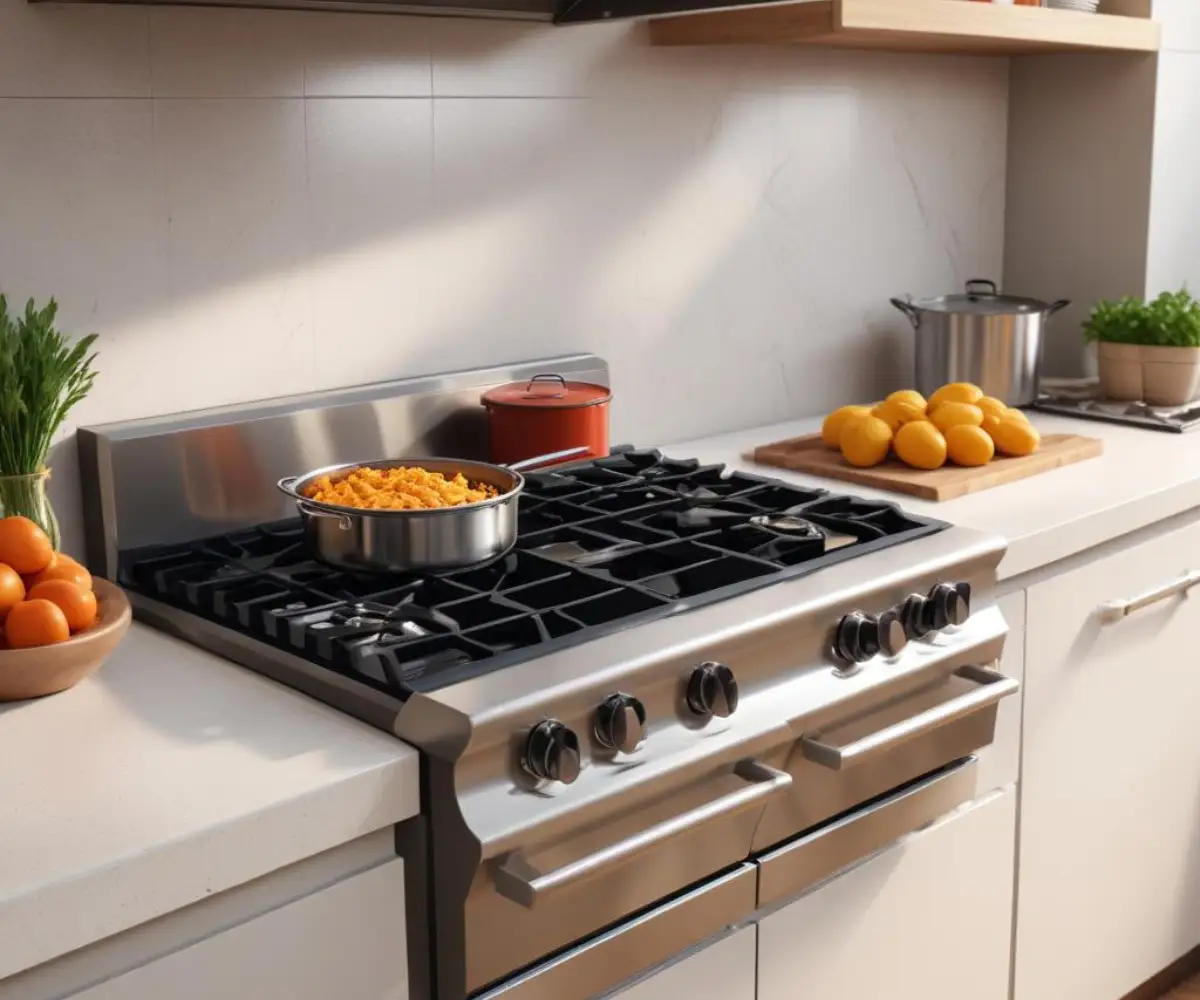
For countertops, avoid porous materials that can absorb oils and stains. Quartz and stainless steel are top contenders for a fry station. They are durable, hygienic, and will not harbor grease or odors. If you prefer natural stone, ensure it is properly and regularly sealed.
Pillar #3: The Right Appliances for the Job
The heart of your fry kitchen is the cooking appliance itself. While any cooktop can be used for frying, some are better suited for control and containment. Investing in the right appliance can significantly improve both the process and the results.
For the ultimate setup, consider a small, built-in deep fryer alongside your main cooktop. These units offer precise temperature control, contain the oil in a dedicated basin, and often include filtration systems to extend the life of your cooking oil. This is the cleanest and most professional solution.
Alternatively, modern cooktops offer features ideal for frying. An induction range with griddle provides incredibly precise temperature control, which helps prevent oil from overheating and smoking in the first place. When comparing high-end brands, a Bertazzoni vs Bosch showdown will often highlight differences in burner power (BTUs) and control, which are critical for maintaining stable frying temperatures.
Organizing Your Frying Station for Success
A well-organized station is a safer and more efficient station. Arranging your tools, ingredients, and storage logically minimizes movement and reduces the chance of spills or accidents. Everything you need should be within arm’s reach.
Smart Storage is Key
Designate cabinets and drawers immediately next to and below your frying zone for all related equipment. This creates a seamless workflow from prep to cooking to plating. Keep your setup uncluttered and functional.
Large items like countertop fryers, woks, and bulk containers of oil are best stored out of sight but close at hand. This is where 30 deep base cabinets become invaluable, offering ample space to keep your frying essentials organized and accessible.
Use drawer organizers and pull-out shelves for smaller tools. Thermometers, spider skimmers, tongs, and wire racks should have their own dedicated spots so you can grab them quickly without fumbling.
Safety First, Always
Hot oil poses a significant safety risk if not handled with care. Never leave a pot of hot oil unattended, even for a moment. Always keep a proper-fitting lid for the pot or fryer nearby; in the event of a flare-up, you can slide the lid over the flames to cut off the oxygen supply.
It is crucial to have a Class K fire extinguisher, specifically designed for oil and grease fires, mounted in an accessible location within the kitchen. For added peace of mind, consider installing a residential stovetop fire suppressor, which automatically deploys flame-retardant material when it detects a fire.
The Unspoken Secret: The “Secondary Kitchen” Concept
In many cultures, the idea of a “wok kitchen” or “spice kitchen” is common. These are smaller, secondary kitchens, often located in a pantry, laundry room, or garage, designed specifically for cooking aromatic or greasy foods to keep odors and mess out of the main living area.
You can adapt this brilliant concept for a dedicated frying zone. If you are a serious home cook who fries multiple times a week, creating a small, functional fry station in a well-ventilated utility area or garage could be the ultimate solution. This approach completely isolates the byproducts of frying.
This setup preserves your main kitchen as a pristine space for entertaining and everyday living. It contains the grease, smoke, and odors in a separate, easy-to-clean area, offering the best of both worlds.
Your Fry Kitchen Cleaning Protocol
Even in a well-designed zone, prompt cleanup is essential to prevent grease buildup. The key is to make the cleaning process a simple part of your cooking routine rather than a major chore.
Wipe down all surfaces immediately after cooking, while they are still warm. A microfiber cloth with hot, soapy water is often all that’s needed to cut through fresh grease on a non-porous surface. This simple step prevents the oil from hardening into a sticky, difficult-to-remove film.
For more stubborn spots, a dedicated kitchen degreaser or a paste of baking soda and water can be used. Always clean your range hood filters regularly as well; clogged filters are a fire hazard and cannot effectively trap grease.
Final Thoughts
Creating a dedicated fry kitchen zone is an investment in your home and your culinary passion. It elevates frying from a messy, stressful task into a clean, controlled, and enjoyable experience. You can finally embrace your love for fried foods without dreading the cleanup.
You don’t have to implement every element at once. Start with the most critical component: upgrading your ventilation. From there, you can gradually incorporate easier-to-clean surfaces and more specialized appliances to build the perfect fry kitchen for your home.
