
Front Yard Slopes Down to House? The #1 Fix You Can’t Ignore
A charming front yard with a gentle slope can add character to a property. But when that slope angles down towards your house, it becomes more than just a cosmetic feature—it’s a ticking time bomb for your foundation. This scenario, known as a negative grade, channels rainwater directly towards your home, creating a persistent threat of water damage, basement flooding, and costly structural issues.
Ignoring this problem is not an option. Water pooling around your foundation can exert immense hydrostatic pressure, leading to cracks, leaks, and a damp, mold-prone basement or crawlspace. Over time, this constant moisture can compromise the structural integrity of your home, turning a simple landscaping issue into a major financial crisis.
You'll Learn About
Why a Downward Sloping Yard Is a Serious Problem
When your front yard slopes down to the house, every rainfall becomes a potential disaster. Water naturally follows the path of least resistance, and in this case, that path leads directly to your home’s foundation. This creates a cascade of problems that can undermine your property’s value and safety.
The most immediate threat is water intrusion. Saturated soil around the foundation can force moisture through even microscopic cracks in concrete, leading to a damp basement, damaged belongings, and the growth of hazardous mold and mildew. Beyond the basement, this constant moisture can cause soil to expand and contract, putting stress on foundation walls and leading to significant structural damage over time.
The Hidden Dangers of Poor Drainage
It’s not just about a wet basement. A yard with a negative slope can cause a host of other issues that affect your entire property. Soil erosion is a major concern, as the constant flow of water can wash away valuable topsoil, destabilize landscaping, and expose the foundation.
Furthermore, standing water creates a breeding ground for pests like mosquitoes. What seems like a simple landscaping quirk can quickly become a serious threat to both your property and your family’s health. Taking proactive steps to correct the slope is essential for long-term peace of mind.
The Permanent Solution: Re-Grading Your Yard
The most effective and permanent solution to a front yard that slopes down to the house is to re-grade the landscape. This process involves reshaping the land to create a “positive grade,” ensuring that water flows away from your foundation, not towards it. The goal is to establish a gentle slope that directs runoff to a safe location, like the street or a dedicated drainage system.
A proper grade should drop at least six inches over the first ten feet away from your foundation. This creates enough of an incline to guide water effectively. Achieving this often requires bringing in additional soil to build up the area around the house, creating a high point from which the yard can slope downwards and away.
Step 1: Assessing Your Current Slope
Before you can fix the problem, you need to understand its severity. You can measure your yard’s current slope using two stakes, a string, and a line level. Place one stake against your foundation and the other ten feet away. Tie the string to the foundation stake at ground level, run it to the second stake, and use the level to make it perfectly horizontal.
The distance from the string to the ground on the second stake reveals your current grade. If the ground is higher at the second stake, you have a negative grade. This measurement will help you determine how much fill dirt you’ll need to achieve the necessary positive slope.
Step 2: Building Up the Foundation Line
The core of the re-grading process is adding soil around your foundation. Using the right type of soil is critical. A dense, clay-based fill dirt is often recommended because it resists water absorption and helps direct runoff. Avoid using sandy soil or organic topsoil for the base, as these materials can retain moisture.
Spread the fill dirt around the perimeter of your house, starting at the foundation and working outwards. The goal is to build up this area so it becomes the highest point of your yard. Be sure to leave at least four to six inches of your concrete foundation exposed to prevent moisture from wicking into your home’s siding.
Step 3: Creating the Positive Slope
Once the foundation line is built up, use a rake to carefully shape the soil into a gradual, consistent slope away from the house. Use your string and level again to check your progress, ensuring you’re achieving that critical drop of at least six inches over the first ten feet.
After shaping the subsoil, you can add a layer of topsoil to support grass and other plants. Properly finishing the grade with vegetation is crucial, as the root systems will help prevent erosion and hold the newly placed soil in place.
Alternative & Supplementary Drainage Solutions
While re-grading is the most comprehensive solution, it may not be feasible for every property due to space constraints or other factors. In these cases, or as a supplement to re-grading, several other drainage systems can effectively manage water flow and protect your home.
These engineered solutions are designed to intercept, collect, and redirect water before it can ever reach your foundation. Combining one or more of these methods with even a modest improvement in your yard’s grade can provide robust protection against water damage.
Installing a French Drain System
A French drain is a highly effective solution for yards with persistent water issues. It consists of a perforated pipe buried in a gravel-filled trench. The trench intercepts surface and subsurface water, which then flows into the pipe and is carried away to a safe discharge point.
To be effective, the French drain should be installed at the lowest point of the slope, just before the ground begins to level out near your house. The trench must also be sloped correctly—typically a drop of one inch for every eight to ten feet of length—to ensure water flows smoothly through the pipe.
Creating Swales and Berms
For a more naturalistic approach, consider incorporating swales and berms into your landscape design. A swale is a shallow, wide ditch, while a berm is a raised mound of earth. When used together, they create a powerful system for managing runoff.
A swale is strategically placed to catch water as it flows down the slope. The water is then channeled along the swale to a different part of the yard, like a rain garden or a street drain. The soil excavated to create the swale can be used to build a berm on the downhill side, further helping to slow and redirect water flow.
Building Retaining Walls
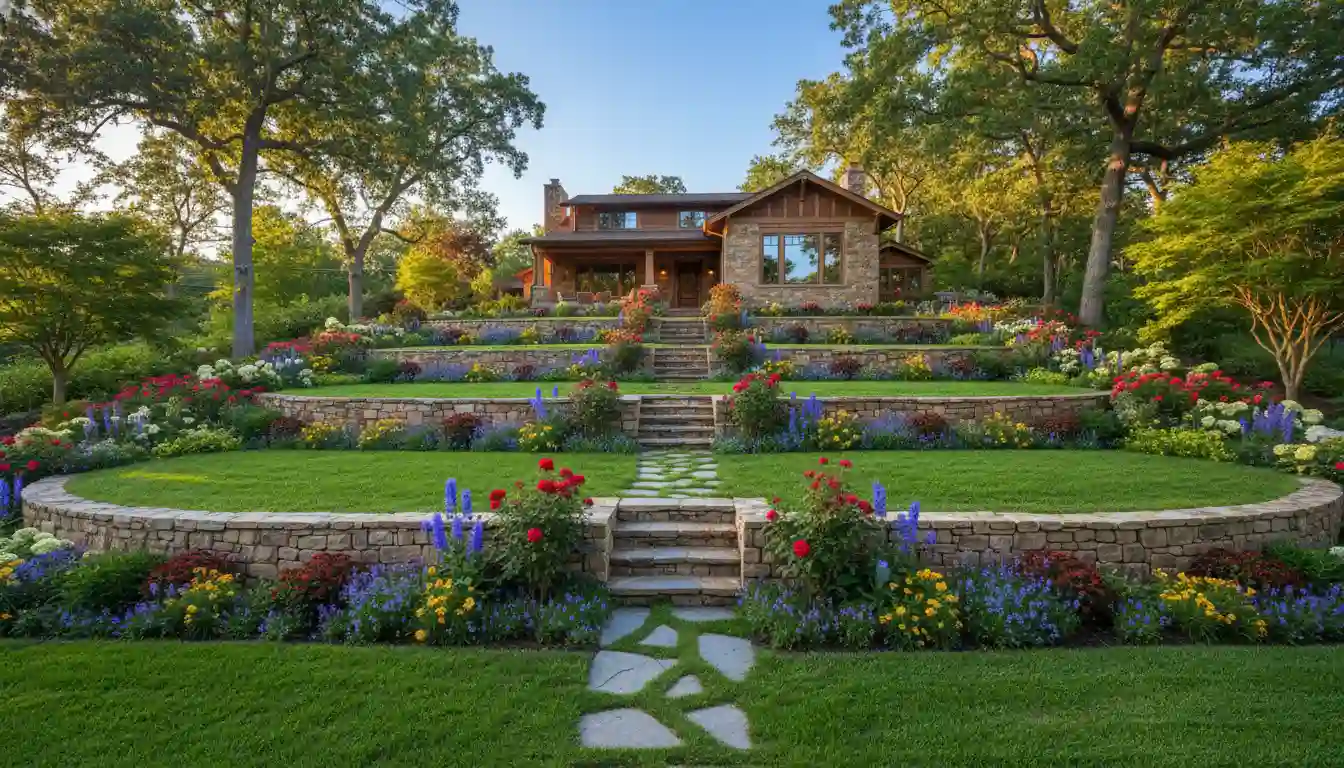
On steeper slopes, a retaining wall can be both a functional and an aesthetic solution. A well-built retaining wall can create level terraces in your yard, effectively breaking up a long, continuous slope. This slows down water runoff and reduces the risk of soil erosion.
For maximum effectiveness, retaining walls should include a proper drainage system behind them. This typically involves a layer of gravel and a perforated pipe at the base of the wall to collect water and prevent hydrostatic pressure from building up and damaging the structure.
| Solution | Best For | Average Cost (DIY) | Key Benefit |
|---|---|---|---|
| Re-Grading | Most negative slope situations | $500 – $2,000 (for fill dirt delivery) | Permanently solves the core problem by redirecting all surface water. |
| French Drain | Yards with significant water flow or clay soil | $10 – $20 per linear foot | Effectively captures and removes both surface and groundwater. |
| Swales & Berms | Gentle to moderate slopes | $100 – $500 (tool rental and materials) | A naturalistic, landscape-integrated approach to slowing and redirecting water. |
| Retaining Wall | Steep slopes and erosion control | $15 – $50 per square foot (materials only) | Creates level, usable areas while managing runoff and preventing soil loss. |
Landscaping Strategies for Sloped Yards
Once you’ve addressed the underlying drainage issues, you can focus on landscaping choices that will further secure your yard and enhance its beauty. The right plants can play a vital role in stabilizing the soil and managing moisture.
Choosing plants with deep, fibrous root systems is particularly beneficial. These roots act like a natural net, holding the soil together and preventing it from washing away during heavy rain. This is especially important on newly graded land.
Choose the Right Plants to Prevent Erosion
Groundcovers are excellent for covering bare soil and creating a dense mat of roots that holds the earth in place. Ornamental grasses and native shrubs are also fantastic choices, as their extensive root systems are well-adapted to anchoring soil on slopes.
Consider creating terraced planting beds if you have a retaining wall. This not only looks beautiful but also allows you to control irrigation more effectively for different types of plants. A carefully planned landscape is your final line of defense against the challenges of a sloping yard.
Maintaining Your Drainage Solutions
Your work isn’t done after the installation. Regular maintenance is key to ensuring your drainage solutions continue to protect your home for years to come. Make sure your gutters are clean and your downspouts are properly directed at least ten feet away from the foundation.
Periodically inspect your French drain outlets to ensure they are clear of debris. If you have swales, keep them free of leaves and sediment that could obstruct water flow. A small amount of ongoing maintenance can prevent the recurrence of major problems.
Final Words
When your front yard slopes toward your house, you are dealing with “negative grading”—a serious risk that can lead to foundation cracks, basement flooding, and costly structural damage. The #1 fix you can’t ignore is regrading for positive drainage.
1. The Critical Fix: Regrading
To protect your home, the ground must slope away from the foundation. The industry standard is a 5% slope, which means the ground should drop at least 6 inches within the first 10 feet of your house. If your yard is currently higher than your foundation, you must use fill dirt (ideally a clay-heavy mix) to build up the area immediately adjacent to your walls, ensuring water is forced to flow outward rather than pooling against the concrete.
2. The Defensive Layer: Drainage Systems
If regrading alone isn’t enough due to the steepness of your neighborhood, you need a secondary defense to “catch” the water:
-
Swales: A shallow, landscaped ditch that redirects surface runoff around your house.
-
French Drains: An underground trench filled with gravel and a perforated pipe that whisks subsurface water away to a safe exit point.
-
Downspout Extensions: Ensure your gutters aren’t contributing to the problem by extending downspouts at least 10 feet away from the house.
Neglecting a negative slope is a gamble with your home’s foundation. By combining a corrected grade with a solid drainage plan, you can turn a potential disaster into a stable, dry landscape.
