
Fridge Sticks Out? Here’s How to Get a Flush, Custom Look
There are few things more frustrating in a kitchen renovation than stepping back to admire your work, only to find the refrigerator juts out past the cabinets. It disrupts the clean lines of your kitchen and can make a thoughtfully designed space feel unfinished. This common design hiccup can be a major eyesore, but the good news is that it’s entirely fixable.
A protruding fridge doesn’t mean you’ve made a huge mistake. Most often, it’s the result of a simple mismatch between the appliance’s depth and the cabinetry’s dimensions. Understanding the root cause is the first step toward achieving that seamless, integrated look you envisioned for your kitchen.
You'll Learn About
Why Your Refrigerator Sticks Out: The Common Causes
The primary reason a refrigerator extends beyond the cabinetry is the difference between standard-depth and counter-depth models. However, other factors like ventilation requirements and the placement of utilities can also play a significant role. Correctly identifying the issue is crucial to finding the right solution.
Standard-Depth vs. Counter-Depth: The Main Culprit
Most refrigerators on the market are standard-depth, typically measuring between 30 and 36 inches deep. This design offers more interior storage capacity but almost always results in the appliance sticking out several inches from standard 24-inch deep kitchen counters. Many homeowners purchase them without realizing the dimensional conflict.
Counter-depth refrigerators, on the other hand, are designed to align nearly flush with your countertops, usually measuring between 24 and 30 inches in depth. While they provide that desirable built-in look, this sleek profile often comes at the cost of slightly less internal storage space and a higher price tag.
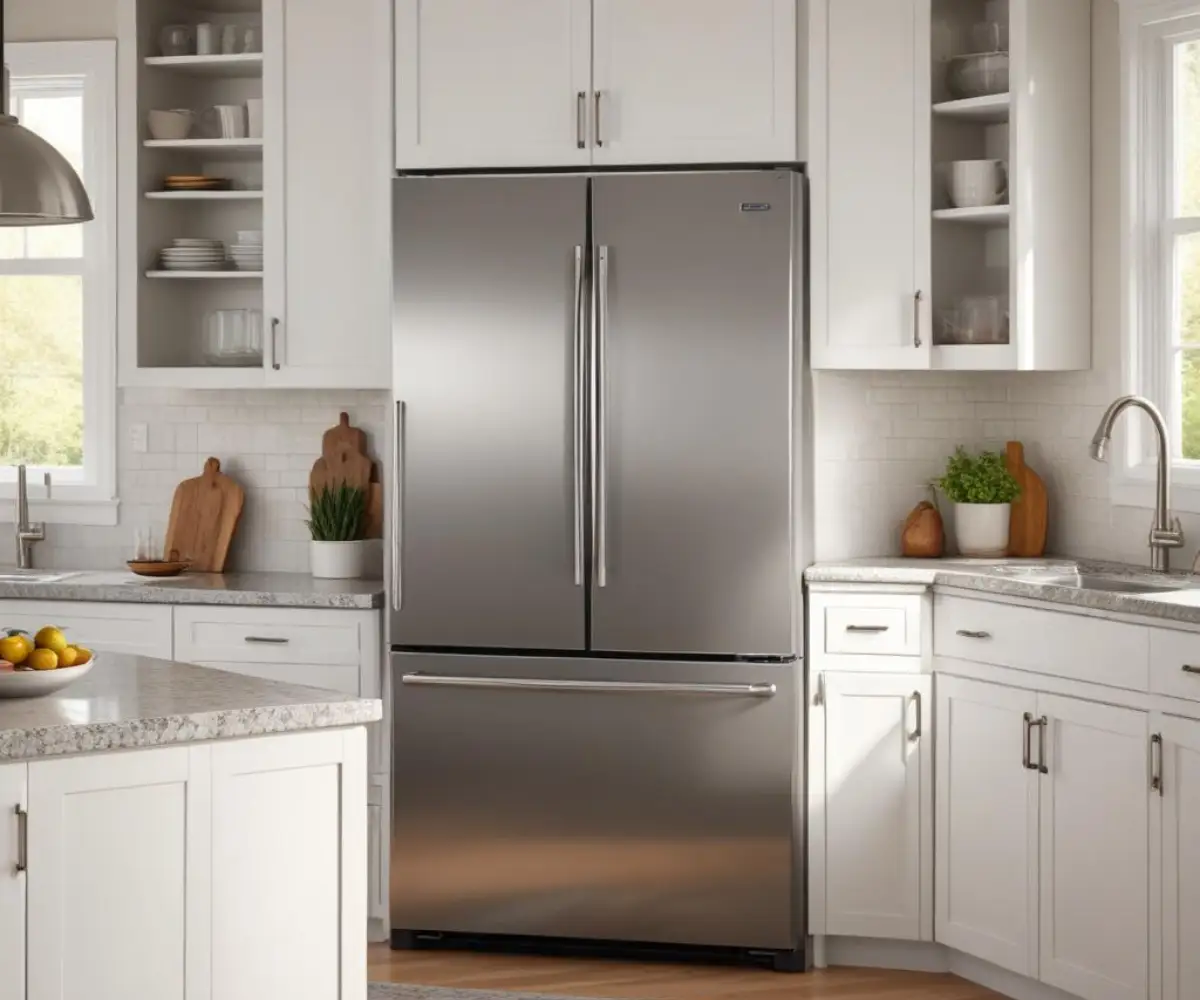
Forgetting the “Hidden” Space: Ventilation Gaps and Plugs
Every refrigerator requires empty space around it for proper air circulation to prevent overheating. Manufacturers typically recommend at least one inch of clearance at the back and top. This necessary ventilation gap pushes the refrigerator forward.
Furthermore, the electrical outlet and water line connection for the ice maker are often not recessed into the wall. A bulky plug and protruding water valve can add another one to two inches of depth, forcing the refrigerator to sit even further from the wall.
Cabinetry Miscalculations and Hinge Clearance
Sometimes the issue lies with the cabinets themselves. The cabinet box above the fridge might be a standard 12 or 24 inches deep, creating a recessed look that highlights how much the fridge sticks out. Even with a counter-depth model, if the surrounding panels aren’t deep enough to cover the refrigerator’s case, the sides will be visible.
You also have to account for the door swing. For a refrigerator to open fully, especially if it’s next to a wall, the doors and hinges need to clear the adjacent countertops and cabinets. This often means the refrigerator’s body must sit slightly proud of the cabinetry, a detail critical for achieving a true zero clearance refrigerator door setup.
The Ultimate Guide to Fixing a Protruding Fridge
Achieving a flush, built-in look is possible even after your kitchen is installed. From major renovations to clever cosmetic tricks, there’s a solution for every budget and skill level. The key is to create an enclosure that matches the depth of your refrigerator’s case, not just your counters.
Solution 1: Recess the Refrigerator into the Wall
One of the most effective methods is to create a recessed niche in the wall behind the refrigerator. This allows you to push a standard-depth model back by several inches, making it look like a counter-depth appliance. This approach can typically gain you 3 to 4 inches, depending on the wall’s construction.
This project is best suited for non-load-bearing walls and may require a contractor to safely modify the wall studs and potentially relocate plumbing or electrical lines. Though it’s a more involved process, it provides a truly custom and seamless result without sacrificing the larger capacity of a standard-depth fridge.
Solution 2: Build Out the Surrounding Cabinetry
If modifying the wall isn’t an option, you can bring the cabinetry forward to meet the refrigerator. This involves installing deeper side panels that extend from the back wall to the front of the refrigerator’s case, effectively hiding the exposed sides. A cabinet professional can build a custom enclosure that includes a full-depth cabinet above the fridge.
This technique makes the refrigerator look intentionally integrated. Careful planning is essential to avoid common kitchen design flaws, such as placing a refrigerator next to a sink without adequate workspace in between, or creating pinch points in traffic flow.
Solution 3: The Counter-Depth Refrigerator Swap
The most straightforward, albeit potentially most expensive, solution is to replace your standard-depth model with a counter-depth one. This is an ideal choice if you’re already in the market for a new appliance. A counter-depth refrigerator is specifically designed to solve the problem of protrusion.
Before buying, measure everything. Note the height, width, and depth of your space, and always check the manufacturer’s specifications for required clearances. This ensures your new appliance fits perfectly and functions correctly from day one. Planning is key to avoiding issues, like positioning a refrigerator next to a wall without enough space for the door to open.
| Feature | Standard-Depth Refrigerator | Counter-Depth Refrigerator |
|---|---|---|
| Total Depth (incl. doors) | 30 – 36 inches | 24 – 30 inches |
| Case Depth (approx.) | 28 – 32 inches | 23 – 25 inches |
| Protrusion Past Counter | 4 – 10 inches | 0 – 4 inches (doors only) |
| Capacity | Typically larger (22-30+ cu. ft.) | Slightly smaller (15-25 cu. ft.) |
| Cost | Generally less expensive | Generally more expensive |
Solution 4: Strategic Camouflage and Design Tricks
For those looking for a budget-friendly, non-permanent fix, there are several clever ways to minimize the visual impact of a protruding fridge. These cosmetic solutions can make a big difference without any construction.
One popular method is to attach a thin panel to the exposed side of the refrigerator, painted to match your cabinets. You can also install a very narrow, tall pantry cabinet or open shelving next to the fridge to conceal the side. Another simple trick is using strong magnets to attach a custom-cut decorative panel, which can be made from beadboard or a thin sheet of MDF painted to match your kitchen.
Frequently Asked Questions
Why does my refrigerator stick out from my cabinets?
Standard-depth refrigerators are typically deeper than kitchen counters, causing them to extend beyond the cabinetry. Most standard refrigerators are 30 to 36 inches deep, while kitchen counters are usually around 24 to 25 inches deep. This difference in depth is the primary reason your fridge may not sit flush with your cabinets.
What is a counter-depth refrigerator?
A counter-depth refrigerator is designed to be shallower than a standard one, with a depth that is nearly flush with kitchen countertops, which is typically 24 to 30 inches. This design provides a more built-in, seamless look in the kitchen without needing to remodel your cabinets. While they are shallower, they are often wider or taller to compensate for the reduced depth and maintain storage capacity.
How can I make my standard-depth fridge look more built-in?
To give your standard-depth fridge a more integrated appearance, you can build a cabinet enclosure around it that is deeper than the standard cabinets. Another popular option is to recess the refrigerator into the wall behind it. This can gain you several inches and allow the front of the fridge to be more aligned with the surrounding cabinetry.
What does it mean to recess a refrigerator?
Recessing a refrigerator involves creating a nook in the wall behind the appliance to push it back further. This allows a standard-depth fridge to have a more counter-depth appearance. This is a more involved solution that may require modifying the wall, but it can create a custom, built-in look without purchasing a new appliance.
Are there any downsides to a counter-depth refrigerator?
While counter-depth refrigerators offer a sleek, built-in look, they typically have less storage capacity than standard-depth models. They can also be more expensive. For larger families or those who buy groceries in bulk, the reduced storage space might be a significant consideration.
Besides buying a new fridge, what are some cosmetic fixes for a fridge that sticks out?
If you’re not ready to buy a new refrigerator, you can use decorative panels on the sides of the fridge to match your cabinetry. This can help to visually integrate the appliance into the kitchen. Some people also use strategically placed kitchen decor or carts to minimize the visual impact of a protruding fridge.
