
Footboard or No Footboard? The Design Dilemma Dividing Bedrooms
Choosing a new bed is one of the most significant decisions for any homeowner. It’s the centerpiece of your sanctuary, the focal point that defines the room’s entire mood. Yet, a surprisingly contentious question often stumps even the most decisive decorators: footboard or no footboard?
This single choice can dramatically alter a room’s sense of space, style, and functionality. It’s a debate that touches on everything from aesthetic preferences and practical needs to the very flow of energy in your space. Let’s settle this design dilemma once and for all.
You'll Learn About
The Enduring Appeal: Making the Case for the Footboard
A bed with a footboard presents a classic, finished look. It frames the mattress and bedding, creating a tidy and intentional appearance that many find comforting and aesthetically pleasing. For generations, this has been the standard for a “complete” bed.
Aesthetic Polish and Defined Style
Footboards excel at creating a sense of symmetry and enclosure. They work in harmony with a headboard to make the bed a distinct zone within the room, which can contribute to a cozy, cocoon-like feeling perfect for rest. This is particularly effective in larger bedrooms where a bed without a footboard might seem to float aimlessly.
Different styles of footboards can anchor various design themes. A solid, substantial wooden footboard speaks to traditional, rustic, or farmhouse aesthetics, while an upholstered one can add a touch of softness and luxury. A sleek, metal footboard might fit perfectly in an industrial or vintage-inspired space.
Practical Advantages You Can’t Ignore
Functionality is a major selling point for Team Footboard. One of the most-cited benefits is its ability to keep duvets, comforters, and blankets from sliding off onto the floor during the night. For restless sleepers, this small detail can make a world of difference.
Furthermore, a sturdy footboard provides structural stability to the entire bed frame, especially on larger king-size beds. Some designs go a step further, incorporating built-in storage drawers or shelving, a true blessing in rooms where space is at a premium. A low, bench-style footboard can even offer a convenient place to sit while putting on shoes.
The Modern Movement: Why No Footboard is Gaining Ground
In recent years, the footboard-free look has surged in popularity, aligning perfectly with modern and minimalist design philosophies. For many, removing this traditional element opens up a world of new possibilities for style and space.
Creating an Illusion of Space
The most significant advantage of a bed without a footboard is its space-saving nature. By eliminating the vertical barrier at the end of the bed, the room instantly feels more open and airy. This is a game-changer in smaller bedrooms, where every square inch counts.
This open design allows for an uninterrupted visual flow, making the room appear larger. When paired with the right flooring, like the clean lines you find when considering if Mohawk engineered flooring is good, the effect is even more pronounced. The continuous lines across the floor draw the eye outward, enhancing the sense of spaciousness.
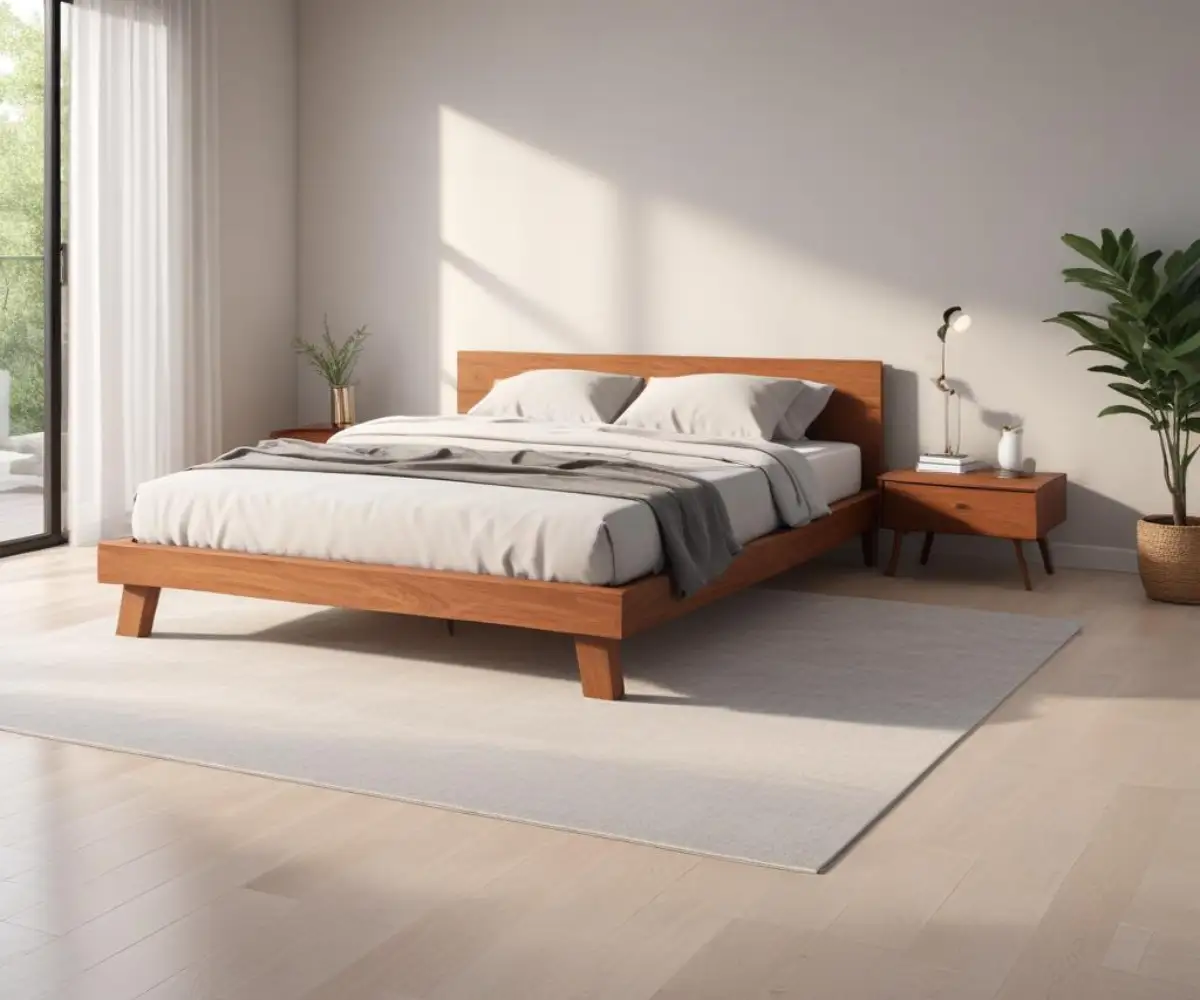
Comfort and Convenience for Modern Life
For many people, practicality is the main driver behind skipping the footboard. Tall individuals, in particular, often find footboards restrictive, preventing them from stretching out comfortably. The freedom to let your feet hang over the edge is a luxury that a footboard simply can’t offer.
Making the bed is also considerably easier without having to tuck sheets and blankets around a footboard. And let’s not forget the common complaint of banging your shins on the footboard in the middle of the night—a painful experience that a footboard-less design completely eliminates.
How to Choose: The Deciding Factors for Your Home
The right answer in the “footboard or no footboard” debate is deeply personal. To make the best choice, you must consider your space, your lifestyle, and your unique aesthetic preferences. Ask yourself the following questions.
1. How Large is Your Bedroom?
This is the most critical factor. In a large, expansive primary suite, a bed with a headboard and footboard can act as a stunning centerpiece, grounding the room. In a small or narrow bedroom, a bed without a footboard is almost always the superior choice to maximize the feeling of openness.
2. What is Your Dominant Decorating Style?
Your existing or desired decor style should guide your decision.
- Traditional, Farmhouse, Coastal: These styles often benefit from the complete, classic look of a bed with a footboard.
- Modern, Minimalist, Scandinavian: These aesthetics champion clean lines and uncluttered spaces, making a no-footboard design the natural fit.
- Industrial, Eclectic, Bohemian: These styles are more flexible. An iron footboard could work in an industrial setting, while a sleek platform bed would suit a bohemian room filled with other textures.
3. Who Will Be Using the Bed?
Think about the primary user’s needs. A tall person will almost certainly prefer a bed without a footboard. For a child’s room, a footboard might help keep their bedding in place, but it could also become an obstacle during playtime. For a guest room, a no-footboard design is often a safer, more versatile choice to accommodate visitors of all heights.
The Unspoken Influence: A Feng Shui Perspective
Many design principles incorporate elements of ancient practices, and the footboard debate is no exception. In Feng Shui, the goal is to promote a harmonious flow of positive energy, or “qi.” A high, solid footboard can be seen as a barrier that obstructs this energy flow while you sleep.
However, there’s a crucial exception. If your bed is positioned facing the door—often called the “coffin position” in Feng Shui—a solid footboard is actually recommended. In this specific layout, the footboard acts as a protective shield, deflecting the rush of energy from the doorway and providing a sense of security.
Decision Matrix: Footboard vs. No Footboard at a Glance
To simplify your choice, here is a direct comparison of the key attributes of each option.
| Feature | Bed with Footboard | Bed without Footboard |
|---|---|---|
| Best for Room Size | Medium to Large Rooms | Small to Medium Rooms |
| Aesthetic | Traditional, Formal, Complete | Modern, Minimalist, Airy |
| Practicality | Keeps bedding in place, adds stability | Easy to make the bed, more legroom |
| Best for Tall People | No | Yes |
| Common Complaint | Takes up space, can feel confining | Mattress may slide, pillows can fall in gap |
| Styling | Creates a self-contained focal point | Offers flexibility for end-of-bed decor |
Beyond the Bed: Creative Footboard Alternatives
If you’re drawn to the visual anchor of a footboard but crave the openness of a footboard-free design, you’re in luck. The space at the end of the bed is ripe for creative styling that offers the best of both worlds.
The End-of-Bed Bench
A stylish bench is perhaps the most popular footboard alternative. It visually grounds the bed and provides a convenient spot for sitting or laying out clothes, all while maintaining a low profile that doesn’t obstruct the view. Choose an upholstered bench for softness, a rustic wood bench for texture, or one with built-in storage for added function.
Stylish Storage Solutions
A vintage trunk or a pair of storage ottomans can serve a similar purpose to a bench while offering valuable space to hide away extra blankets, pillows, or seasonal clothing. This is an excellent way to combine form and function, adding a personal touch to your bedroom decor.
A Minimalist Approach
Sometimes, less is more. For a truly minimalist look, simply let your bedding be the star. A beautifully draped throw blanket or a set of crisp, tucked-in linens can create a clean, inviting look without any extra furniture. The key to a beautiful and lasting design, whether indoors or out, is ensuring a solid foundation—much like when determining the proper fence post depth in Minnesota to withstand the elements.
Securing Your Space
Whether you choose a grand bed with a footboard or a simple platform frame, its stability is paramount. A well-constructed bed is a safe bed. This principle of security extends beyond the bedroom; considering how to protect an outdoor ceiling fan from wind, for instance, shows a commitment to durability and thoughtful homeownership in all areas of your home.
The Final Verdict
The choice between a footboard and no footboard is not about following a trend but about creating a bedroom that serves your needs and reflects your personal style. A footboard offers a traditional, finished look with practical benefits for keeping bedding in place. A footboard-free design provides a modern, open feel that maximizes space and offers unrestricted comfort.
Weigh the pros and cons against your room’s dimensions and your daily habits. By carefully considering these factors, you can move beyond the dilemma and confidently select the perfect bed to build your dream sanctuary around.
