Floor Muffler vs Quiet Walk: The Ultimate Underlayment Showdown
Choosing a new floor is exciting, but the thin layer nobody sees—the underlayment—is one of the most critical decisions you’ll make. Pick the wrong one, and you could face hollow sounds, moisture damage, or even voiding your flooring’s warranty. Two of the biggest names in premium underlayment, Floor Muffler and Quiet Walk, constantly come up, leaving many homeowners wondering which is truly the best.
This isn’t just about placing a barrier between your subfloor and your beautiful new laminate or vinyl planks. It’s about investing in the comfort, longevity, and tranquility of your home. Making an informed choice between these two giants can be the difference between a floor you love and a floor you regret.
You'll Learn About
Why Your Underlayment Choice Is More Critical Than You Think
A high-quality underlayment does more than just add a bit of cushioning. Its primary jobs are to manage sound, protect against moisture, provide thermal insulation, and smooth out minor subfloor imperfections. A premium underlayment is an investment that protects your much larger investment: the floor itself.
Poor choices can lead to a host of problems. An underlayment without a proper moisture barrier over a concrete slab can trap vapor, leading to mold, mildew, and warped planks. One with poor acoustic properties will do little to stop the transmission of footsteps and other impact noises to the rooms below, a major concern in multi-story homes and condos.
Meet the Contenders: An Introduction to Floor Muffler and Quiet Walk
At first glance, Floor Muffler and Quiet Walk seem similar. They are both premium products designed to offer superior sound reduction and moisture protection. However, their core materials and construction philosophies are fundamentally different, leading to distinct advantages in different situations.
What is Floor Muffler?
Floor Muffler is a high-performance underlayment made from cross-linked polypropylene foam. This closed-cell foam construction is engineered to be incredibly durable, lightweight, and resistant to moisture. It’s often recognized for its exceptionally high acoustic ratings and its user-friendly installation features, like the UltraSeal lip and tape system.
What is Quiet Walk?
Quiet Walk is an underlayment made from dense, recycled fibers. This eco-friendly approach creates a product known for its excellent sound absorption and thermal insulation properties. It’s designed to “breathe,” allowing it to manage moisture by wicking it away and allowing it to dissipate over time, which can be beneficial over certain types of subfloors.
The Ultimate Showdown: Floor Muffler vs Quiet Walk Head-to-Head
To truly understand the difference, a direct comparison of their key features is essential. Both products have their strengths, and the “better” option often depends entirely on the specifics of your project, including your subfloor type, flooring material, and primary goals (e.g., soundproofing vs. thermal insulation).
Sound Absorption: The Battle for Silence
This is often the number one reason homeowners upgrade to a premium underlayment. Acoustic performance is measured using two key ratings: Impact Insulation Class (IIC) and Sound Transmission Class (STC). IIC measures how well the floor assembly blocks impact sounds (like footsteps), while STC measures its ability to block airborne sounds (like voices or music).
Floor Muffler consistently boasts some of the highest IIC and STC ratings in the industry, often reaching the low to mid-70s. Quiet Walk also provides excellent sound dampening, with ratings that are very competitive. For the absolute highest level of tested sound reduction, particularly in condos with strict HOA requirements, Floor Muffler often has the edge on paper.
Moisture Protection: Your First Line of Defense
Protecting your flooring from moisture is non-negotiable, especially over concrete subfloors. Concrete is porous and can wick moisture from the ground, which can get trapped under the flooring and cause catastrophic damage. Both products address this, but in different ways.
Floor Muffler’s cross-linked, closed-cell foam construction acts as a powerful vapor barrier, effectively blocking moisture transmission. Its UltraSeal system creates a tight seal at the seams, enhancing this protection. Quiet Walk uses a different approach with its Dri-Wick technology, designed to absorb and then wick away small amounts of moisture, allowing it to evaporate over time. For installations directly over concrete, especially in basements, a dedicated 6-mil vapor barrier is often recommended regardless of the underlayment chosen.
Material Composition and Durability
The core materials directly influence long-term performance. Floor Muffler’s polypropylene foam is engineered for high compression resistance, meaning it won’t pack down or lose its supportive structure over time, even in high-traffic areas. This structural integrity is crucial for supporting the locking mechanisms of floating floors.
Quiet Walk’s recycled fiber construction is dense and durable, offering great support and cushioning. The fibers provide excellent thermal properties, making floors feel warmer. The key difference lies in the material structure; the engineered foam of Floor Muffler is designed specifically for superior long-term compression strength, which helps prevent issues like flooring planks separating over time due to a failing foundation.
Installation Friendliness: A DIYer’s Perspective
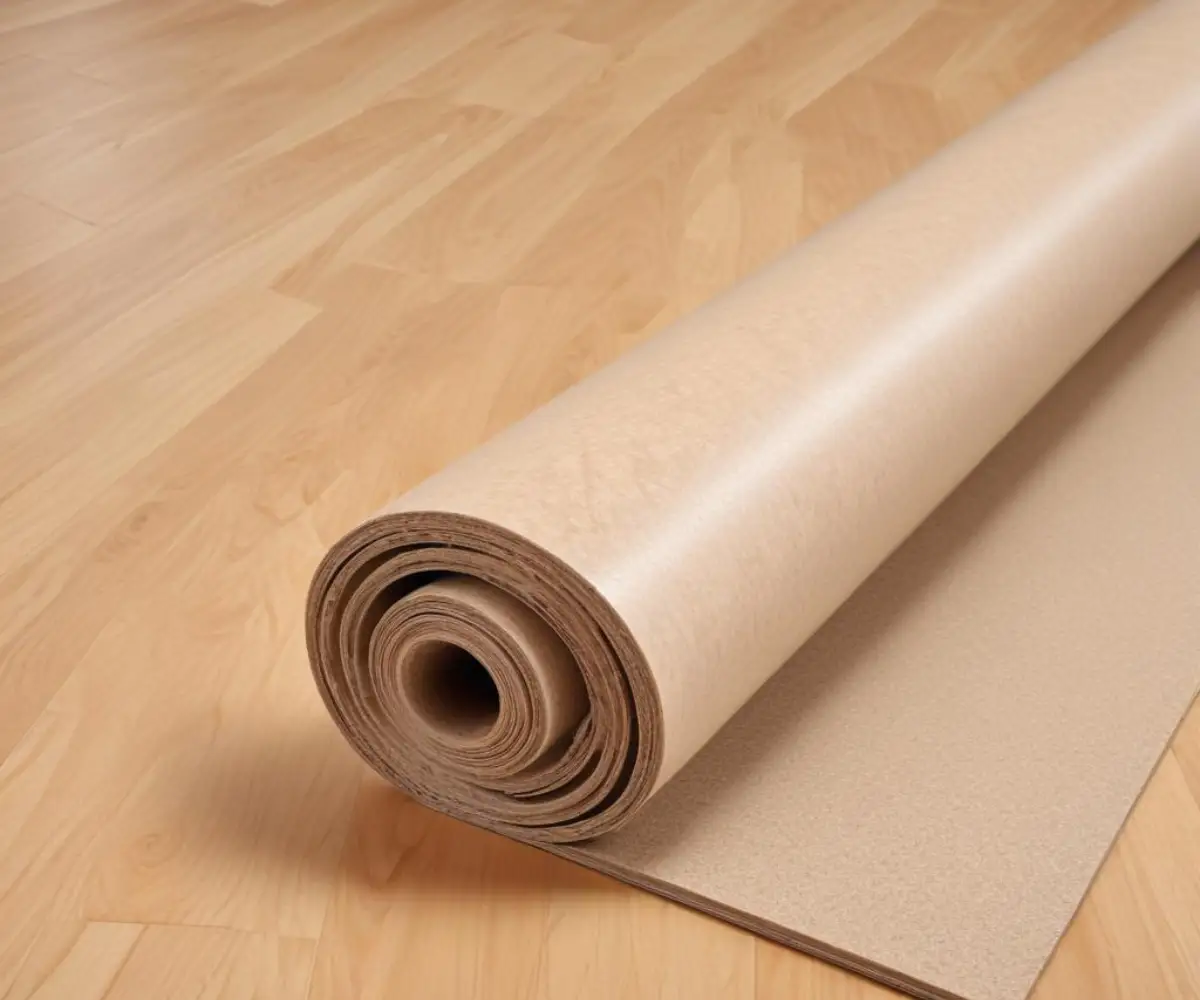
For those tackling a flooring project themselves, ease of installation is a major factor. Floor Muffler is extremely lightweight and easy to roll out and cut. The integrated UltraSeal lip-and-tape system simplifies the process of sealing the seams, ensuring a continuous vapor barrier without the need for extra tape.
Quiet Walk is also straightforward to install but is generally heavier and denser, which can make it slightly more cumbersome to handle. It requires a separate vapor barrier tape for the seams. Both products must be installed with seams butted together, never overlapping the pads themselves.
| Feature | Floor Muffler | Quiet Walk |
|---|---|---|
| Primary Material | Cross-Linked Polypropylene Foam | Dense Recycled Fibers |
| Acoustic Ratings (IIC/STC) | Excellent (Often 73/74) | Excellent (Often 66/71) |
| Moisture Management | Built-in Vapor Barrier | Vapor Barrier with Dri-Wick Technology |
| Thermal Insulation (R-Value) | Good | Excellent |
| Best For | Maximum Soundproofing, Condos, Installations over Concrete | Thermal Insulation, Eco-Conscious Projects, Wood Subfloors |
| Installation Feature | Lightweight, UltraSeal Lip & Tape System | Dense, Requires Seam Tape |
Critical Mistakes to Avoid During Underlayment Installation
Even the best underlayment can fail if installed incorrectly. Avoiding these common errors is crucial for the success of your flooring project.
Ignoring Subfloor Preparation
Underlayment is not a substitute for a properly prepared subfloor. Before rolling out anything, your subfloor must be clean, flat, and dry. Scrape away any old adhesive, vacuum all debris, and check for levelness, fixing any low spots with a leveling compound.
Overlapping the Seams
A frequent DIY mistake is overlapping the foam or felt pads at the seams. This creates a high spot that will cause a springy, unstable section in your floor. Always butt the edges of the underlayment together snugly and seal the seam with the provided tape system or a recommended vapor tape.
Forgetting the Perimeter
When installing, it’s good practice to run the underlayment an inch or two up the walls. This helps create a complete moisture barrier basin. This excess can be trimmed away after the flooring is installed and before the baseboards are attached.
The Final Verdict: Which Underlayment Wins for Your Home?
There is no single “winner” for every situation. The best choice depends on your specific needs and priorities.
Choose Floor Muffler if:
– Your primary goal is maximum sound reduction, especially for second-story rooms or condos with strict sound transmission rules.
– You are installing over a concrete subfloor where a robust, built-in vapor barrier is a top priority.
– You value a lightweight, easy-to-install product with a built-in seam-sealing system.
Choose Quiet Walk if:
– Thermal insulation is a high priority, and you want your floors to feel warmer underfoot.
– You prefer a product made from recycled, eco-friendly materials.
– You are installing over a plywood subfloor where its moisture-wicking properties can be an advantage.
Ultimately, both Floor Muffler and Quiet Walk are premium products that will significantly outperform basic foam underlayments. By evaluating your subfloor, your budget, and whether soundproofing or thermal value is your main goal, you can confidently choose the right foundation for a beautiful, quiet, and long-lasting floor.
Frequently Asked Questions
What is the main difference between Floor Muffler and Quiet Walk?
The primary difference is their material composition and main selling point. Floor Muffler is a polypropylene foam underlayment known for its superior sound reduction capabilities. In contrast, Quiet Walk is made from recycled fibers and is often chosen for its eco-friendly properties while still providing effective sound dampening.
Which underlayment is better for reducing noise?
Floor Muffler typically has higher sound ratings (STC/IIC), making it one of the most effective options for soundproofing between floors. While Quiet Walk offers good sound absorption, Floor Muffler is often the preferred choice when maximum noise reduction is the primary goal, such as in apartments or multi-story homes.
Can I use both underlayments over a concrete subfloor?
Yes, both products are suitable for installation over concrete subfloors because they provide moisture protection. Floor Muffler comes with a moisture barrier to protect against humidity and dampness. Quiet Walk features an attached vapor barrier and Dri-Wick® technology designed to manage moisture vapor from concrete.
If sustainability is my priority, which one should I choose?
Quiet Walk is the more environmentally conscious option as it is made from recycled materials. This makes it a popular choice for those looking to use sustainable products in their flooring project. Floor Muffler is made from recyclable polypropylene foam.
Is one easier to install for a DIY project?
Both are designed for straightforward installation, but some users find Quiet Walk’s thicker and more forgiving material easier to handle. Floor Muffler is noted as being lightweight, strong, and flexible, which also makes it easy to handle and install.
Which flooring types are compatible with these underlayments?
Both Floor Muffler and Quiet Walk are compatible with a variety of floating floors, including laminate, engineered wood, and hardwood. They are also available in versions specifically designed for use under luxury vinyl plank (LVP) flooring. Always check the manufacturer’s specifications for your specific flooring type.