
Fleetwood Windows vs Marvin: Which is Worth the Investment?
Choosing windows for your home is more than a simple purchase; it’s a long-term investment in your property’s beauty, comfort, and energy efficiency. When navigating the high-end market, two names consistently rise to the top: Fleetwood and Marvin. This decision can be paralyzing for homeowners, as both brands represent the pinnacle of quality and design, yet they cater to distinctly different architectural visions and functional priorities.
The core problem isn’t just about picking a “better” brand, because a definitive “better” doesn’t exist. The real challenge lies in understanding which brand’s philosophy, materials, and strengths align perfectly with your home’s unique style, your climate’s demands, and your personal aesthetic. Making the wrong choice can lead to a visual mismatch, compromised energy performance, or simply not getting the best value for your significant investment.
This comprehensive guide will dissect the nuances of Fleetwood and Marvin windows. We will move beyond the marketing brochures to provide a detailed, head-to-head comparison. By the end, you will have the clarity and confidence to select the perfect windows that will not only enhance your home but also bring your architectural vision to life.
You'll Learn About
Meet the Titans: A Glimpse into Fleetwood and Marvin
Before diving into a direct comparison, it’s essential to understand the core identity of each manufacturer. They come from different schools of thought, and their product lines reflect this. One is a master of a specialized aesthetic, while the other is a champion of versatile craftsmanship.
Fleetwood: The Master of Modern Minimalism
Fleetwood is a name synonymous with cutting-edge contemporary design. Based in California, their focus is almost exclusively on aluminum windows and doors, engineered to create massive, uninterrupted expanses of glass. Their design philosophy is built around the concept of “less is more.”
They are renowned for their incredibly slim profiles and narrow sightlines, which effectively blur the line between indoor and outdoor living spaces. If you’ve ever been captivated by a home with a disappearing wall of glass that pockets seamlessly into the wall, you were likely looking at a Fleetwood product. Their specialty lies in large-scale, custom-engineered solutions like multi-slide doors, pocket doors, and window walls for luxury, modern homes.
Marvin: The Craftsman of Versatility and Tradition
Marvin, on the other hand, is a legacy brand from Minnesota that has built its reputation on masterful craftsmanship and an astonishing range of options. While they offer modern product lines, their expertise extends across a wide spectrum of architectural styles. Marvin is not limited to a single material; they offer windows and doors in wood, aluminum-clad wood, and their proprietary Ultrex fiberglass.
This material diversity allows them to cater to everything from historic renovations to modern farmhouses and sleek contemporary builds. Marvin’s brand is structured into distinct collections—the Signature Collection (their most customizable, premium offering), the Elevate Collection (a hybrid of wood interiors and fiberglass exteriors), and the Essential Collection (all-fiberglass for maximum durability). This tiered approach provides homeowners with different entry points into their ecosystem of quality.
Fleetwood vs. Marvin: A Head-to-Head Breakdown
Now, let’s place these two industry giants side-by-side. Understanding their differences across key categories is the most critical step in making an informed decision. We will explore everything from the materials they use to their performance in harsh weather and the overall cost you can expect.
To provide a quick overview, the table below summarizes the core differences between the two brands. This at-a-glance comparison can help you quickly identify which manufacturer might be a better initial fit for your project’s primary goals.
| Feature | Fleetwood | Marvin |
|---|---|---|
| Primary Material | Aluminum | Wood, Aluminum-Clad Wood, Ultrex Fiberglass |
| Best For Architectural Style | Modern, Contemporary, Industrial | Traditional, Transitional, Modern, Craftsman |
| Key Strength | Massive glass spans, ultra-slim sightlines, multi-slide and pocket doors | Material variety, extensive customization, superior thermal performance |
| Thermal Performance | Good (with thermal breaks), but generally lower than wood/fiberglass | Excellent, especially with Ultrex fiberglass and wood options |
| Price Point | Premium to Ultra-Premium | High-End (with tiered collections) |
| Customization Focus | Engineering for size, scale, and operation | Aesthetic details: finishes, hardware, grilles, window types |
Material and Aesthetics: The Visual Divide
The most immediate difference between Fleetwood and Marvin lies in the materials they use, which directly impacts the look and feel of your home. Fleetwood is a specialist, while Marvin is a generalist—both at the highest level of quality. This distinction is the foundation of their design philosophies.
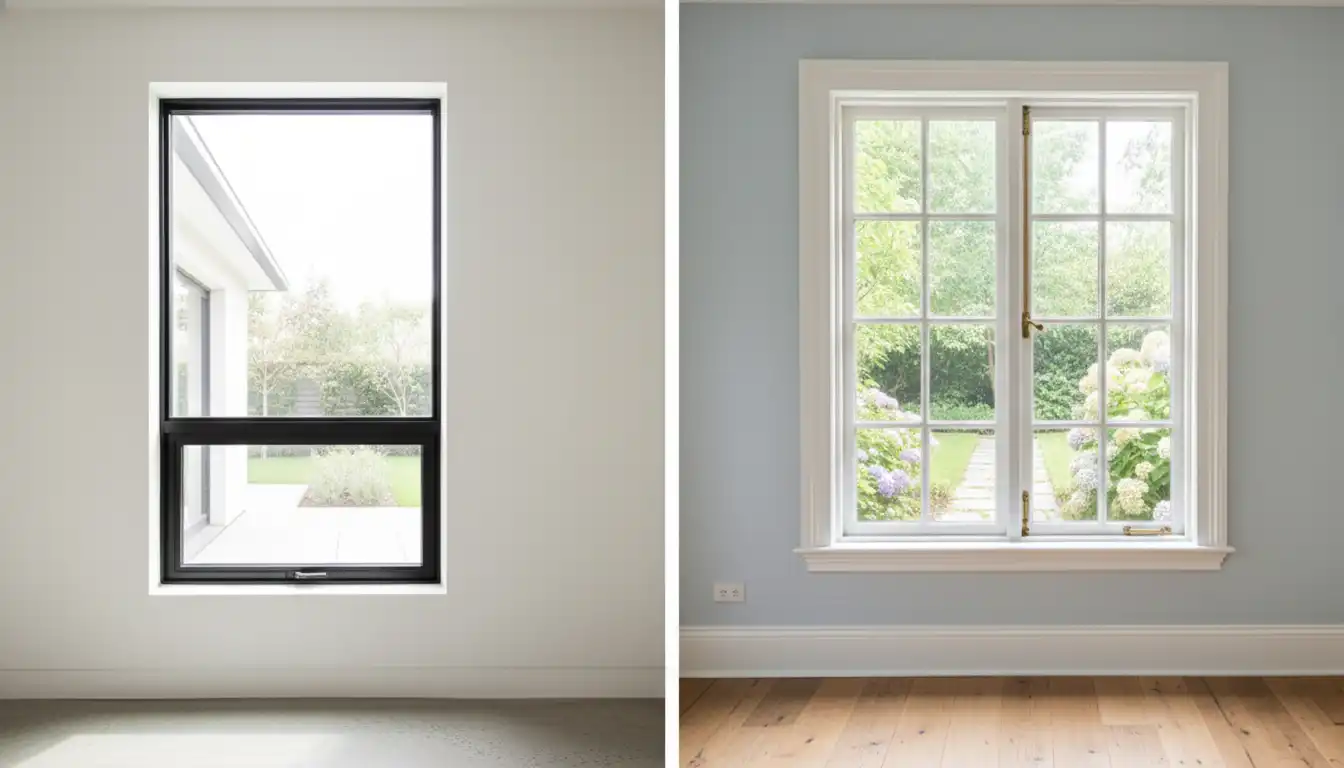
Fleetwood’s commitment to aluminum is central to their brand. Aluminum is incredibly strong and rigid, which is why they can construct enormous panels with remarkably thin frames. This strength-to-weight ratio allows for the minimalist aesthetic they are famous for, maximizing glass and minimizing the frame. The result is a sleek, clean, and industrial-chic look that is the hallmark of modern architecture.
Marvin, in contrast, offers a palette of materials to suit different tastes and needs. Their wood windows provide a natural warmth and timeless beauty that aluminum cannot replicate. For those who love the look of wood but want greater durability, their aluminum-clad wood windows feature a beautiful wood interior protected by a tough, weather-resistant aluminum exterior. This construction, featuring high-quality extruded aluminum, provides a powerful defense against the elements. This approach to materials can beautifully complement interior design choices, much like finding the right Kuliwood and leather Ashley furniture to create a cohesive and warm living space.
Performance and Durability: Beyond the Beauty
A window’s performance is a critical, long-term consideration. This is where factors like energy efficiency and weather resistance come into play, and it’s an area with significant differences between aluminum and materials like wood and fiberglass. Here, your local climate plays a huge role in the decision-making process.
Historically, aluminum has been a poorer insulator than wood or fiberglass. To combat this, Fleetwood utilizes sophisticated thermal breaks, which are reinforced polyamide strips that separate the interior and exterior aluminum frames to reduce thermal transfer. While this greatly improves energy efficiency, a high-performance Marvin window made from wood or their Ultrex fiberglass will generally offer a better U-value (a measure of heat loss). In very cold or very hot climates, this could translate to noticeable energy savings over time.
In terms of durability, both brands are exceptional. Fleetwood’s aluminum is finished to resist corrosion and fading, making it a great choice for many environments. However, for coastal areas with salt spray or regions with extreme weather fluctuations, Marvin’s Ultrex fiberglass is a true standout. It is eight times stronger than vinyl and expands and contracts at nearly the same rate as glass, ensuring the window’s seal remains tight and stable over decades, preventing leaks and maintaining performance.
Customization and Options: Tailoring to Your Vision
Both Fleetwood and Marvin offer extensive customization, but they focus on different aspects of it. Your choice may depend on whether your priority is grand-scale engineering or detailed aesthetic refinement. This is about defining your project’s scope and ambition.
Fleetwood’s customization shines in the realm of size and operation. They are the go-to brand for architects designing homes with 20-foot-tall glass walls or 50-foot-wide sliding doors that open an entire room to the outdoors. Their expertise lies in the engineering required to make these massive systems operate smoothly and reliably. The customization is about pushing the boundaries of what is possible with glass and aluminum.
Marvin’s customization is more about choice and detail. They offer a much wider variety of window types, including double-hung, casement, awning, and bay windows—styles that Fleetwood does not typically produce. Furthermore, Marvin provides a vast catalog of finishes, stains, paint colors, hardware styles, and grille patterns. This allows homeowners to perfectly match their windows to their home’s specific historical period or design theme, ensuring every detail is just right.
Cost and Value: The Investment Decision
There is no escaping the fact that both Fleetwood and Marvin are premium brands with a corresponding price tag. However, their pricing structures and the overall value proposition differ. This is not just a purchase; it’s a significant financial decision.
Fleetwood generally operates in the ultra-premium segment of the market. Because they specialize in large, custom-engineered systems, the cost per project can often be higher than with Marvin. The investment in Fleetwood is an investment in a specific, dramatic architectural statement that can significantly enhance a modern home’s value and aesthetic appeal.
Marvin’s tiered collections make their products accessible to a broader range of high-end projects. The Essential and Elevate collections offer a more moderate price point while still delivering the brand’s signature quality and durability, particularly with Ultrex fiberglass. The Signature Collection is their top-tier offering, competing directly with other luxury brands. The value in Marvin lies in its balance of performance, customization, and long-lasting durability, making it a sound investment for a wide variety of homes.
Which Brand is Right for Your Home?
By now, you should have a clear picture of each brand’s strengths. The final decision comes down to matching those strengths to your specific project. We’ve distilled the choice into a straightforward guide to help you determine your ideal match.
Choose Fleetwood If…
You should strongly consider Fleetwood if your project aligns with these priorities. Their specialization is their greatest asset.
* Your architectural style is strictly modern, contemporary, or industrial. Fleetwood’s products are designed from the ground up to complement these aesthetics.
* You desire massive, uninterrupted glass walls and seamless indoor-outdoor flow. This is their core competency and where they truly excel.
* Slim profiles and minimal sightlines are your top priority. No one does “less frame, more glass” quite like Fleetwood.
* Your project involves large, custom-engineered moving glass walls, pocket doors, or pivot doors that require specialized engineering.
Choose Marvin If…
Marvin is likely the better choice if your needs are more varied or if performance is your top concern. Their versatility is unmatched.
* You want a wider range of materials, including the warmth of wood or the superior durability of fiberglass. This material flexibility is a key advantage.
* Your home has a traditional, transitional, or modern farmhouse style. Marvin’s diverse product lines can perfectly match these aesthetics.
* Superior thermal performance is a critical factor for your climate. Marvin’s wood and Ultrex fiberglass options generally provide better insulation.
* You need a variety of window types (e.g., double-hung) and want deep customization of hardware, finishes, and grilles to perfect the look.
The Overlooked Factor: Installation and Dealer Network
One of the most critical, yet frequently overlooked, aspects of a successful window project has little to do with the brand itself. The quality of the installation is just as important as the quality of the window. A flawlessly engineered Fleetwood door or a perfectly crafted Marvin window can fail if it is not installed with precision and expertise.
Both Fleetwood and Marvin sell their products through a network of certified, independent dealers. These dealers are not only salespeople; they are your partners in the project. They provide consultation, measurement, ordering, and, most importantly, professional installation. A great dealer will understand the local building codes, have experience with your type of home construction, and employ a team of meticulous, factory-trained installers.
Before you make a final decision on a brand, vet the local dealers for both. Read reviews, ask for references, and visit their showrooms. Discuss your project in detail and gauge their level of expertise and professionalism. The right installation partner will ensure your investment is protected and performs as expected for decades to come, enhancing everything from your home’s curb appeal to its interior ambiance. This attention to detail is as crucial as selecting the perfect vanity light hanging over mirror to complete your bathroom’s design—the execution is everything.
