
Farrow & Ball Pigeon Kitchen Cabinets: Your Guide to a Timeless Look
Choosing a paint color for kitchen cabinets is a high-stakes decision. Get it right, and you create a warm, inviting space for years to come. Get it wrong, and you’re left with a costly mistake that disrupts the heart of your home. This is the central problem for anyone considering Farrow & Ball’s Pigeon No. 25 for their kitchen cabinets—a color renowned for its complex character and timeless appeal, but also for its frustratingly beautiful ability to change in different lights.
The core of the issue isn’t just about picking a color; it’s about predicting how that color will behave in your specific environment. Online photos of Pigeon kitchens vary dramatically; some appear as a soft, warm gray, others a definite sage green, and still others a moody blue-gray. This chameleon-like quality is Pigeon’s greatest strength and its most significant challenge, leaving homeowners paralyzed by uncertainty.
You'll Learn About
Decoding Pigeon: More Than Just a Color
Farrow & Ball describes Pigeon as a “cosy and nostalgic blue grey,” named after the plumage of the bird commonly seen in London. This description, however, only scratches the surface. The reality is that Pigeon is a complex neutral with strong green and blue undertones. Its perceived color is highly dependent on the quality and temperature of light it receives.
In north-facing rooms, which receive cooler, blue-tinted light, Pigeon will appear grayer and its blue undertones will become more prominent. Conversely, in warm, south-facing light, its green and warmer gray aspects will come to the forefront, creating a softer, earthier feel. This transformative nature is what makes testing the color in your own space an absolutely non-negotiable step.
The Power of Light and Sheen
Beyond natural light, the type of artificial lighting you use will also dramatically alter the appearance of Pigeon. Warm LED bulbs (around 2700K) will enhance its green undertones, while cooler bulbs (4000K and above) will pull out more of its blue-gray character. The sheen of the paint also plays a critical role, especially for high-traffic areas like kitchens.
For kitchen cabinets, Farrow & Ball’s Modern Eggshell finish is the superior choice. It has a 40% sheen, which provides increased durability, washability, and resistance to scuffs and stains compared to the flatter Estate Eggshell. This slight shine also reflects more light, which can help the nuanced color feel more alive and prevent it from appearing too dense in lower-light conditions.
Solving the Pigeon Puzzle: A Blueprint for Success
Successfully using Pigeon in your kitchen requires a methodical approach that goes beyond simply loving the color in a photo. It’s about creating a harmonious palette where cabinets, countertops, hardware, and walls all work together to support this beautiful, shifting shade. Here is a clear path to getting it right.
The first and most crucial step is to order a sample pot and paint a large board (at least two feet by two feet). Move this sample board around your kitchen throughout the day, observing it in the bright morning light, the warm afternoon sun, and under your artificial lighting at night. This is the only way to truly understand how Pigeon will behave in your home.
Perfect Pairings: Countertops and Backsplashes
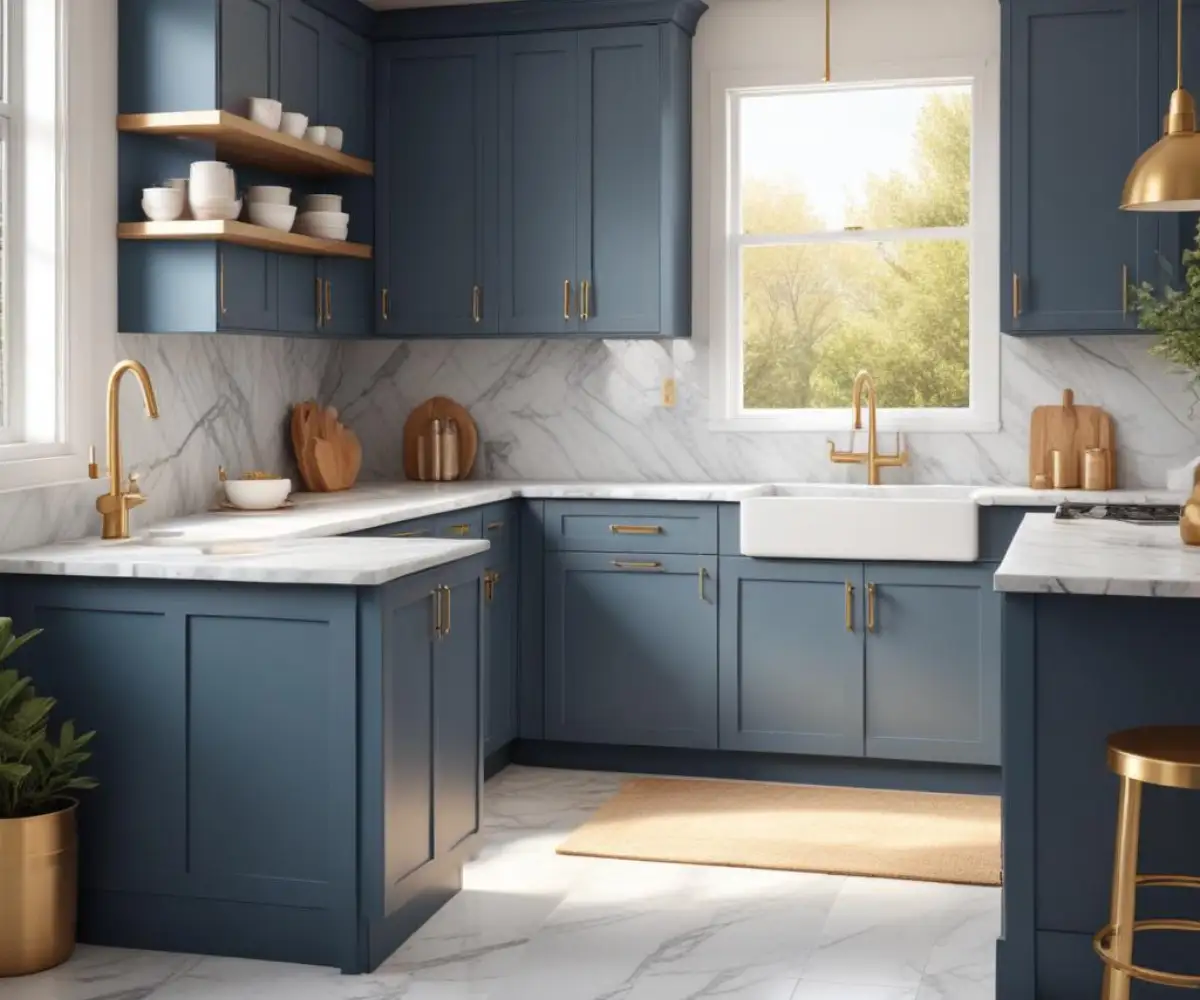
Pigeon’s versatility allows it to pair beautifully with a wide range of countertop materials. For a classic, bright look, consider white quartz with subtle gray veining, such as Caesarstone’s Frosty Carrina, or natural stones like Carrara marble. These light surfaces provide a crisp contrast that allows Pigeon to be the star.
For a warmer, more rustic aesthetic, butcher block or other natural wood countertops are an excellent choice. The warmth of the wood balances the cool tones within Pigeon, creating a cozy and inviting atmosphere. If you prefer a moodier, more dramatic kitchen, pairing Pigeon cabinets with dark surfaces like soapstone or honed black granite can create a sophisticated and grounded design.
Hardware Harmonies: The Finishing Touch
Cabinet hardware is the jewelry of the kitchen, and the right choice can elevate Pigeon from beautiful to breathtaking. The hardware finish you choose should complement the dominant undertone you wish to emphasize. The interplay between the metal and the cabinet color is a detail that completes the entire look.
Making sure every detail is perfect, right down to the floor, is essential. Even the choice of baseboard under kitchen cabinets contributes to the flawless, integrated finish that makes a kitchen truly shine. A well-chosen hardware finish ties all these elements together.
| Hardware Finish | Effect on Pigeon Cabinets | Best For |
|---|---|---|
| Brushed Brass/Gold | Enhances the warmth and green undertones. Creates a luxurious, classic, and inviting feel. | Traditional, Transitional, Modern Farmhouse |
| Polished Nickel | Pulls out the cooler blue-gray tones. Offers a clean, timeless, and sophisticated look. | Classic, Coastal, Transitional |
| Matte Black | Provides a strong, modern contrast that grounds the color and adds an industrial or minimalist edge. | Modern, Industrial, Farmhouse |
| Aged Bronze | Complements the earthy, historic feel of the color, adding a sense of rustic charm and depth. | Rustic, Traditional, Historic Homes |
The Unspoken Challenge: Durability and Maintenance
While Farrow & Ball paints are celebrated for their rich pigments and depth of color, they have a reputation for being less durable than some mass-market brands. This is a critical consideration for a high-use area like a kitchen. However, with the right product selection and proper application, you can achieve a beautiful and lasting finish.
The key is using the Modern Eggshell finish, which is specifically formulated for high-traffic surfaces like cabinets, floors, and trim. It is washable, scuff-resistant, and provides the durability needed for a kitchen environment. Proper prep work, including cleaning, sanding, and using the correct Farrow & Ball Wood Primer & Undercoat, is essential for long-term success. Even if you’re updating older cabinetry, a meticulous approach to the project, much like when refinishing mid century kitchen cabinets, will ensure the best possible outcome.
Frequently Asked Questions about Farrow & Ball Pigeon
Navigating the nuances of a complex color like Pigeon often leads to specific questions. Here are answers to some of the most common queries from homeowners and designers.
What is the best white paint to pair with Pigeon?
For a harmonious pairing, choose whites with soft, warm undertones. Farrow & Ball’s own Wimborne White or School House White are excellent choices that won’t feel too stark against the softness of Pigeon.
Is Pigeon too dark for a small kitchen?
Not necessarily. In a small kitchen, Pigeon can create a cozy, enveloping feel that is very intentional and sophisticated. To prevent the space from feeling cramped, ensure you have ample lighting and balance the cabinet color with lighter countertops and a light backsplash.
Will Pigeon look green in my kitchen?
It very well might. The green undertones in Pigeon are quite strong and will be most apparent in rooms with abundant natural light, particularly warm, south-facing light. Testing a sample is the only way to know for sure.
The Final Verdict: Is Pigeon the Right Choice for You?
Farrow & Ball’s Pigeon is a uniquely beautiful and versatile color that can create a truly timeless and sophisticated kitchen. Its ability to shift with the light gives it a life and character that few other colors possess. However, it is not a straightforward choice and demands careful consideration and planning.
The secret to success with Pigeon lies not just in the color itself, but in the ecosystem you build around it. By meticulously testing it in your light, choosing the correct paint finish like Modern Eggshell, and thoughtfully pairing it with complementary countertops and hardware, you can mitigate the risks. This approach allows you to harness its chameleon-like charm and create a kitchen that is both deeply personal and enduringly stylish.
Frequently Asked Questions
What kind of color is Farrow & Ball Pigeon?
Pigeon is a versatile blue-gray color with soft green undertones. Its appearance can shift depending on the lighting, sometimes looking more gray in north-facing rooms and greener in sunny spaces. Farrow & Ball describes it as a cozy and nostalgic blue grey, named after the bird commonly seen in London.
Is Pigeon considered a warm or cool color?
Pigeon is considered a warm paint color. It pairs well with other warm tones, including warm whites and wood accents, to create a welcoming and calming atmosphere.
What colors and hardware pair well with Pigeon kitchen cabinets?
Pigeon cabinets complement warm whites such as ‘Slipper Satin’ and ‘School House White’. For hardware, natural woods and brass are excellent choices to add warmth and character to the space.
How does lighting affect Pigeon’s appearance?
The look of Pigeon is highly dependent on the room’s lighting and orientation. In rooms with ample natural light, its green undertones will be more apparent. In darker spaces or north-facing rooms, it will read as a more neutral, moody blue-gray.
Which Farrow & Ball paint finish is recommended for kitchen cabinets?
For kitchen cabinets, Farrow & Ball’s Modern Eggshell finish is the most suitable choice. It is the brand’s toughest interior finish, designed to be durable, scuff-resistant, and washable, making it ideal for high-traffic areas like kitchens.
