
Extra Wide Countertops: Avoid This #1 Structural Disaster
The dream of a sprawling kitchen island or deep, luxurious perimeter counters is captivating. Expansive surfaces promise more room for meal prep, casual dining, and entertaining. But this alluring vision hides a critical flaw that can turn a dream kitchen into a structural nightmare.
Many homeowners focus on the beauty of an extra wide countertop and overlook the immense physical stress it creates. Without proper planning for the underlying structure, that beautiful slab of stone or quartz is a ticking time bomb. The single most catastrophic mistake is failing to engineer an adequate support system for the increased depth and weight.
This oversight can lead to sagging, cracking, and even a complete collapse of your expensive new countertop. It compromises safety and can result in thousands of dollars in repairs to both the counter and the cabinetry beneath. This guide will walk you through the essential steps to ensure your extra wide countertops are not only beautiful but also structurally sound for a lifetime of use.
You'll Learn About
Why Standard Countertop Depths Are No Longer Enough
For decades, the standard kitchen countertop depth has been about 25.5 inches. This was designed to cover standard 24-inch-deep base cabinets, with a slight overhang to protect the cabinet faces from spills. For kitchen islands, a depth of 36 to 42 inches was common, allowing for some workspace and perhaps a narrow seating area.
However, modern kitchens have evolved into multi-functional hubs of the home. Homeowners now demand more from these spaces. Larger appliances, a desire for integrated seating at the island, and the popularity of open-concept floor plans have all pushed the boundaries of traditional countertop dimensions. An extra wide surface provides the canvas for this enhanced functionality.
This increased demand for space isn’t just about aesthetics; it’s about creating a more efficient and enjoyable kitchen. More depth allows for small appliances to live on the counter without sacrificing precious prep area. It transforms a simple island into a dining table, a homework station, and a buffet for parties.
The Hidden Dangers of Going Extra Wide
While the benefits are clear, the risks associated with improper installation of extra wide countertops are significant and often underestimated. Pushing past standard dimensions without a clear understanding of the physics involved is a recipe for disaster. The dream of a massive, seamless island can quickly sour when faced with these hidden dangers.
The Crushing Weight: Understanding Structural Support
The primary danger is a failure to properly support the countertop’s weight, especially its overhang. A rule of thumb for stone countertops is that any overhang exceeding one-third of the total countertop depth requires additional support. For a 36-inch-deep island with a 12-inch overhang, you are already at the limit where reinforcement becomes critical.
Standard cabinet boxes alone are not designed to cantilever the immense weight of a deep slab of granite or quartz. Without added support, the material is under constant tension. This can lead to stress fractures over time, particularly around sink or cooktop cutouts, or a catastrophic failure where the overhang cracks and breaks off completely.
Material Limits and the Agony of a Bad Seam
Not all countertop materials are created equal when it comes to size. Natural stone like granite and marble is limited by the size of the block extracted from the quarry. While “jumbo” slabs are available, they come at a premium and still have maximum dimensions. Engineered materials like quartz also offer jumbo sizes, but exceeding these dimensions will require a seam.
A poorly placed or poorly executed seam is more than a cosmetic issue. It can be a weak point in the countertop and a trap for dirt and bacteria. On a massive island, a conspicuous seam can completely undermine the desired monolithic look, becoming an eyesore that you can’t ignore. Planning for seams, or selecting a material that can achieve your desired size without one, is a crucial early step.
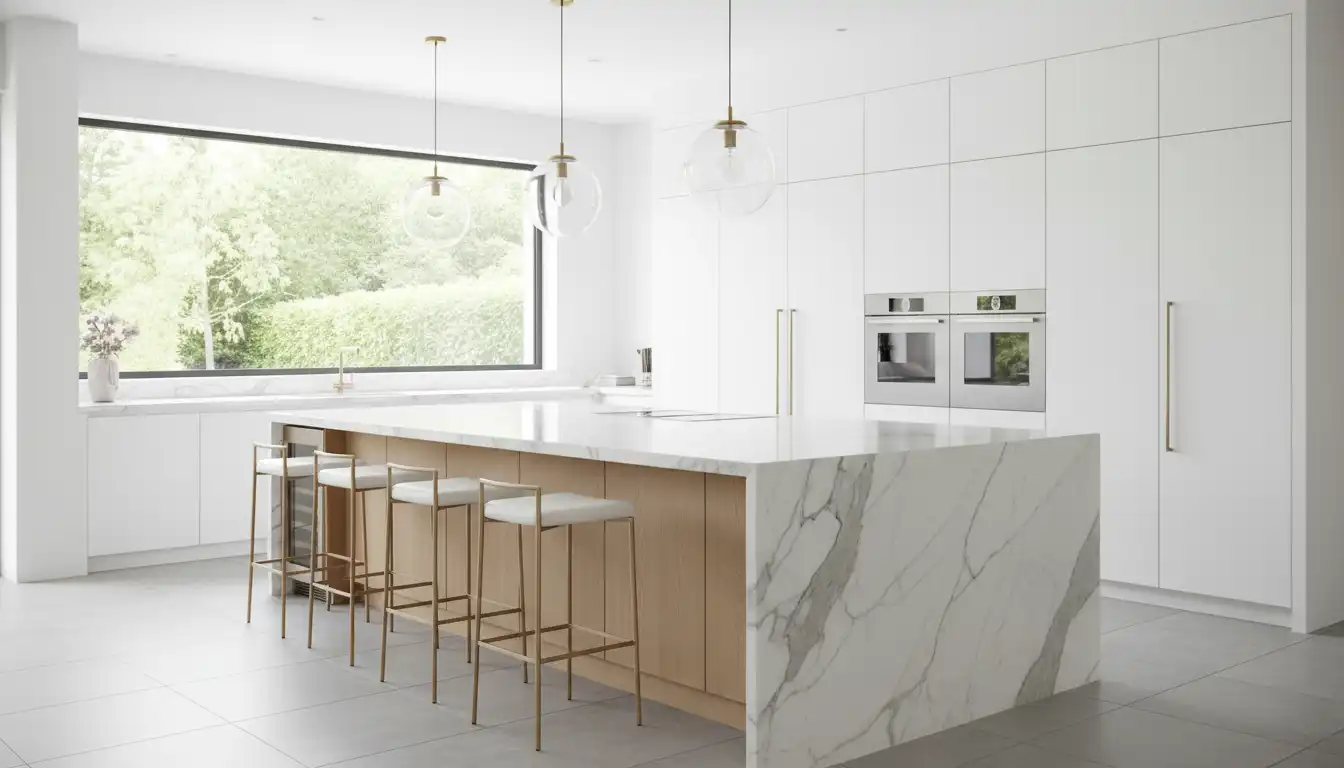
The “Dead Zone” Dilemma and Ergonomics
A countertop can be too deep for its own good. Once a perimeter countertop exceeds about 30 inches in depth, the back portion becomes difficult to reach for the average person. This “dead zone” is hard to clean and often becomes a cluttered graveyard for items you rarely use. You gain surface area, but you lose usability.
For islands, an excessive width can disrupt the kitchen’s workflow, forcing you to take extra steps to walk around it. It’s crucial to maintain adequate clearance—typically at least 42 inches—between the island and perimeter counters. An island that is too wide can make the entire kitchen feel cramped and inefficient, defeating the purpose of a remodel.
Your Blueprint for Flawless Extra Wide Countertops
Achieving a stunning and safe extra wide countertop requires meticulous planning. It’s a project where measuring twice and cutting once is an understatement. Follow this blueprint to navigate the complexities and ensure your investment is a lasting success.
Step 1: Master the Measurement Phase
Before you even think about materials, consider logistics. Measure not only your kitchen but also every doorway, hallway, and stairwell the slab must pass through to get there. A massive, beautiful slab is worthless if it can’t be safely delivered into your home. Professional installers may even refuse a job if access is too risky.
Plan your clearances meticulously. Ensure there are at least 42 inches of walkway around all sides of a kitchen island, and 48 inches in a multi-cook household. This will guarantee comfortable movement and safe access to appliances. Don’t let the allure of a huge island create a dysfunctional, bottlenecked kitchen.
Step 2: Choose the Right Material for the Span
The material you choose is intrinsically linked to the size you can achieve and the support you will need. Some materials are better suited for long, seamless spans than others. This decision impacts not just the final look but also the budget and long-term durability of your surface.
Carefully weigh the pros and cons of each material based on your design goals. If a seamless look is your top priority for a very large island, your choices will be narrowed to materials available in jumbo or super jumbo slabs, and your budget must accommodate the premium for these oversized pieces.
| Material | Typical Max Seamless Size | Best For | Considerations |
|---|---|---|---|
| Quartz | ~130″ x 75″ (Jumbo Slabs) | Large, seamless islands; low maintenance. | Jumbo slabs carry a 15-25% price premium. |
| Granite | ~120″ x 70″ (Varies greatly) | Durability and natural beauty. | Slab size is unpredictable; requires sealing. |
| Marble | ~110″ x 65″ (Varies) | High-end, luxurious aesthetic. | Softer and more prone to staining/etching. |
| Butcher Block | Customizable to very large sizes. | Warm, traditional look; forgiving on knives. | Requires regular oiling and maintenance. |
| Solid Surface | Can be fused for invisible seams. | Completely seamless appearance; repairable. | Less heat resistant than stone. |
Step 3: Engineer the Perfect Support System
This is the most critical step. Supporting an extra wide countertop is not a place to cut corners. The type of support needed will depend on the material, its thickness, and the size of the overhang.
For overhangs of 10-15 inches, you will need robust support. Flat steel bars or plates, routed into the underside of the countertop, offer a strong, invisible solution. They are attached directly to the top of the cabinet structure and extend out to support the overhang. This preserves legroom for seating areas.
For larger overhangs or heavier materials, steel L-brackets or decorative wooden corbels are necessary. These are mounted to the back of the island’s base cabinets. Brackets should be spaced no more than 24 inches apart and extend to within a few inches of the countertop edge for maximum effectiveness. The design of your base cabinets is also a factor, as sturdy extra tall base cabinets can provide a more substantial foundation for deep counters.
Step 4: Design for Functionality and Reach
Don’t let your beautiful new countertop become a dysfunctional space. Address the “dead zone” on extra-deep perimeter counters by designing solutions for it. An appliance garage at the back of the counter can hide away your toaster and blender while keeping them accessible.
For wide islands, consider how the center will be used. If it’s out of comfortable reach, it’s not useful for prep. This central space might be better suited for a decorative feature, a secondary prep sink, or a cooktop, which brings the functional area closer to the user.
Beyond Width: Factors Everyone Forgets
A successful design considers all dimensions, not just width. Several other factors come into play when planning for oversized countertops, and forgetting them can lead to disappointment and unforeseen costs.
Thickness, Weight, and Cabinetry
The thickness of your countertop has a major impact on its aesthetics, cost, and weight. A thicker slab (3cm or 1.25 inches is standard for stone) provides a more substantial look but is significantly heavier. This extra weight puts more stress on both the support structure and the cabinet boxes themselves.
Ensure your cabinets are well-constructed, with reinforced corners and solid top rails, to handle the load. This is especially true when considering options like extra thick granite countertops, where the sheer mass of the stone demands an unyielding foundation. Weak or poorly installed cabinets can bow or even collapse under the pressure.
Let There Be Light: Under-Cabinet Lighting
A deeper countertop can create a dark cavern at the back, near the wall. The shadow cast by your upper cabinets can make the extra space feel gloomy and unusable. Proper task lighting is essential to illuminate the entire work surface.
Install high-quality LED under-cabinet lighting to ensure the full depth of your countertop is bright and functional. This not only improves visibility for tasks but also highlights your backsplash and makes the kitchen feel more open and inviting. It’s a small detail that makes a huge difference in the usability of your extra wide surface.
Material Reality Check
Be realistic about the material you choose. While a giant marble island is stunning, are you prepared for the maintenance? Some homeowners find that materials requiring significant upkeep become a source of stress. For example, many people discover they hate their concrete countertops due to their propensity for staining and cracking, issues that are magnified on a large, prominent surface.
Choose a material that aligns with your lifestyle, not just your aesthetic dream. For a busy family, a durable and low-maintenance material like quartz might be a more practical and enjoyable choice in the long run than a softer, more porous stone.
Conclusion: Building Your Dream Countertop Without the Nightmare
Extra wide countertops can transform a kitchen, elevating it from a simple workspace to a stunning, multi-functional hub for your home. They offer unparalleled space and a sense of modern luxury. However, this dream can only be realized through careful, informed planning.
The key to success lies in looking beyond the surface. By prioritizing structural integrity, making intelligent material choices, considering logistics and ergonomics, and paying attention to details like lighting, you can avoid the catastrophic mistakes that plague ill-conceived projects. A beautiful countertop begins with a strong, well-engineered foundation. With the right blueprint, you can confidently build the expansive, functional, and breathtaking kitchen you’ve always envisioned.
