Exterior Sliding Glass Doors for Small Spaces: Your Ultimate Guide
Living with a small footprint doesn’t mean you have to sacrifice a connection to the outdoors. For homeowners with cozy patios, compact balconies, or limited yard space, the dream of a seamless indoor-outdoor transition can feel impossible. Traditional hinged doors swing open, consuming precious square footage either inside or out, making furniture placement a frustrating puzzle.
This common design challenge often leads to dark, cramped-feeling rooms that are disconnected from their outdoor potential. The solution lies in choosing the right entryway, but not just any door will do. Exterior sliding glass doors for small spaces are specifically engineered to solve this problem, turning a limitation into a stunning architectural feature.
You'll Learn About
Why Standard Sliding Doors Often Fail in Compact Areas
While any sliding door is a step up from a hinged one in a tight space, the standard, off-the-shelf models you find at big-box retailers have their own set of drawbacks for small applications. These doors are typically designed for larger, more forgiving openings and can introduce new frustrations.
Many homeowners discover that bulky frames obstruct views and limit the amount of natural light, which is a critical element for making a small room feel larger. Furthermore, a standard two-panel slider only allows for a 50% opening at best, as one panel must always remain fixed. This can create a bottleneck effect, especially when you want to truly open up your home to fresh air.
The Unseen Problems with Bulky Design
Beyond the obvious space constraints, conventional sliding doors can feature thick, visually heavy frames that dominate a small wall. This aesthetic imposition can make a room feel cluttered and unbalanced. The focus shifts from the beautiful view outside to the door frame itself, defeating the purpose of installing a large glass feature.
Additionally, the threshold on many standard models can be awkwardly high, creating a tripping hazard and a jarring transition between your indoor flooring and outdoor decking. What should feel like a single, unified space instead becomes two distinct and disconnected areas.
The Secret Weapon: Advanced Sliding Doors Engineered for Small Spaces
To truly maximize a compact area, you must look beyond the basics and explore door systems designed with space efficiency and aesthetics in mind. These advanced options address the core problems of limited openings, bulky frames, and intrusive hardware, providing elegant and highly functional solutions.
These aren’t just doors; they are transformative design elements that create an illusion of spaciousness, flood your home with light, and deliver that coveted, seamless flow to your patio or balcony.
Pocket Sliding Glass Doors: The Ultimate Disappearing Act
For the ultimate in space-saving design, the pocket sliding glass door is unmatched. When opened, the door panel doesn’t just slide behind another piece of glass; it glides directly into a hidden cavity, or “pocket,” built into the wall. This allows for a 100% unobstructed opening, completely removing the barrier between inside and out.
The result is a clean, minimalist aesthetic that is perfect for modern homes. However, this level of integration requires careful planning. The wall must be thick enough to accommodate the pocket, and installation is more complex, often best suited for new construction or major renovations. Despite the higher initial cost and construction needs, no other door style offers such a complete and dramatic opening.
Telescoping Sliding Glass Doors: Creating a Wall of Light
Telescoping, or multi-slide, doors offer a brilliant compromise when a wall pocket isn’t feasible. This system uses three or more panels on separate tracks that slide and stack neatly behind a single fixed panel. This allows you to open up two-thirds or even three-quarters of your wall space, far exceeding the 50% limit of a standard slider.
This design is ideal for creating a “wall of glass” effect that visually expands the room. While the stacked panels remain visible on one end, the significantly wider opening provides an impressive connection to the outdoors, making it an excellent choice for entertaining or simply enjoying a beautiful day.
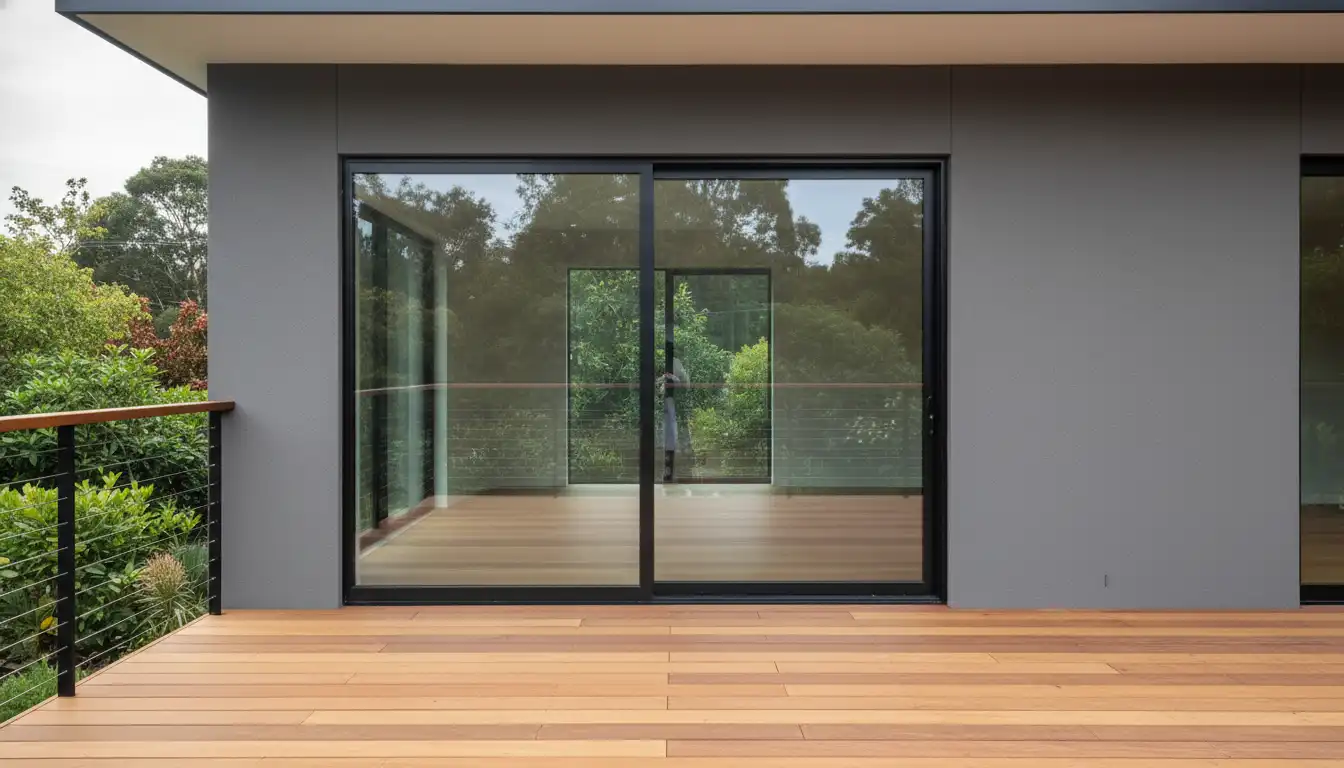
The Game-Changer: Narrow Frame (Slim Profile) Sliding Doors
Perhaps the most impactful and often overlooked solution for small spaces is the use of slim profile sliding doors. The core principle is simple but profound: less frame equals more glass. By minimizing the width of the aluminum or steel frame, these doors maximize the glazed area, which has a powerful psychological effect on how a space is perceived.
More glass means more natural light flooding the interior, which is proven to make rooms feel larger, brighter, and more inviting. The unobstructed view becomes the dominant feature, drawing the eye outward and creating a sense of depth. This minimalist aesthetic is incredibly effective in compact areas where every inch of visual real estate matters.
Key Features to Demand for Your Small Space Sliding Door
Choosing the right type of door is only half the battle. To ensure your investment truly enhances your home, you must pay close attention to the details of its construction. The materials, hardware, and glass technology all play a critical role in the door’s performance, longevity, and overall impact.
Don’t settle for standard features. For a small space application, certain specifications move from “nice to have” to “absolutely essential.”
Frame Material Matters: A Head-to-Head Comparison
The material of the door frame dictates its strength, thermal performance, maintenance requirements, and, most importantly, its profile width. For small spaces, a material that offers high strength with a minimal footprint is ideal. Aluminum is often the top choice for its ability to support large glass panes with incredibly narrow frames.
| Material | Frame Width | Strength & Durability | Maintenance | Best Use Case for Small Spaces |
|---|---|---|---|---|
| Aluminum | Very Narrow | High | Low | Ideal for maximizing glass and achieving a modern, minimalist look. |
| Vinyl | Wide | Moderate | Low | A budget-friendly option, but the wider frames can be bulky in small openings. |
| Fiberglass | Narrow to Moderate | Very High | Low | Offers excellent strength and energy efficiency with slimmer profiles than vinyl. |
| Wood | Wide | Moderate | High | Provides a classic look but requires significant maintenance and has the widest frames. |
The Threshold Dilemma: Striving for a Seamless Transition
A high, clunky threshold can ruin the seamless indoor-outdoor effect. It not only disrupts the visual flow but can also be a persistent tripping hazard. When a sliding glass door threshold is too high, it creates a distinct barrier that makes the outdoor area feel like a separate, less accessible space.
For the best result, look for doors that offer a low-profile or flush sill option. These designs sit nearly level with your interior flooring and exterior decking, creating a truly uninterrupted path. This small detail makes a massive difference in both the look and feel of your living area, making the patio or balcony feel like a true extension of the room.
Glass and Glazing: Performance is Paramount
With slim frames, the glass itself becomes the main component of the door, making its performance features critical. Look for dual-pane glass with a Low-E (low-emissivity) coating. This microscopic metallic layer reflects heat, keeping your home cooler in the summer and warmer in the winter, which is essential for managing energy costs with such a large glass surface.
Pay attention to the U-factor, which measures heat loss (lower is better), and the Solar Heat Gain Coefficient (SHGC), which measures how much solar radiation passes through the glass (lower is better in hot climates). For added security and sound insulation, consider laminated or impact-resistant glass options.
Installation and Planning: Avoiding Costly Mistakes
Proper planning and professional installation are non-negotiable for specialty sliding doors. Unlike a simple pre-hung interior door, these systems are complex and must be perfectly integrated into your home’s structure to function correctly and endure the elements.
Taking shortcuts at this stage can lead to air and water leaks, difficult operation, and even structural damage over time. Investing in a qualified installer will pay dividends in performance and peace of mind.
Measure Twice, Install Once
Accurate measurements are the foundation of a successful installation. A professional will not only measure the rough opening but also assess the wall’s condition, check for plumb and level, and ensure the necessary structural support, like a proper header, is in place. This is especially critical for pocket doors, which require significant modifications to the wall framing.
An expert installer can also identify potential challenges unique to your home, such as uneven floors or hidden utilities, and develop a plan to address them before they become costly problems.
Choosing the Right Manufacturer and Installer
While many reputable brands offer excellent products, it’s wise to compare their offerings specifically for small-space applications. When you’re evaluating major players, a deep dive into the Jeld-Wen vs Pella sliding patio doors debate, for instance, should focus on which brand provides the slimmest profiles and most reliable hardware for your specific needs. Don’t be afraid to look beyond the big names to specialty manufacturers that focus on minimalist and high-performance door systems.
Always vet your installer. Ask for references, look at their portfolio of past work, and ensure they have experience with the specific type of door you’ve chosen. A great product can be ruined by a poor installation.
Maximizing the Impact of Your New Sliding Door
Once your new door is installed, the final touches can help integrate it fully into your home’s design and maximize its space-enhancing effects. The right decor choices will amplify the benefits of the increased light and openness.
Think about how the interior and exterior spaces will work together. Using similar color palettes or flooring materials can further blur the line between inside and out, making the entire area feel like one cohesive, expansive living space.
The Finishing Touches: Rugs and Decor
Window treatments should be sleek and unobtrusive. Consider recessed ceiling track curtains or inside-mount roller shades that disappear when not in use, preserving the clean lines of the door. When it comes to floor coverings, homeowners often wonder if a rug in front of a sliding glass door is a design mistake. With a low-profile threshold, a low-pile rug can define the indoor seating area without impeding the door’s function or the visual flow.
Choose outdoor furniture that complements your interior style and is scaled appropriately for the space. A small bistro set or a pair of comfortable lounge chairs can turn even the tiniest balcony into a functional and inviting retreat.
Your Small Space Transformation Awaits
An exterior sliding glass door is far more than just a point of entry; it is a strategic design tool that can fundamentally change how you experience your home. For those with limited square footage, it is the key to unlocking a brighter, more open, and more connected living environment.
By moving beyond standard options and choosing a system engineered for small spaces—whether it’s a disappearing pocket door, a wide-opening telescoping door, or a light-maximizing narrow frame door—you can conquer the limitations of a compact footprint. The result is a home that not only feels larger but lives larger, proving that great design is the ultimate space-saver.