
Euphorbia Obesa Lifespan: Unlock Secrets to a Decades-Old Plant
The Euphorbia obesa, affectionately known as the “baseball plant,” is a remarkable succulent prized for its unique spherical shape and minimal care requirements. A common question among enthusiasts is just how long this charming plant can live. While many succulents are known for their longevity, the Euphorbia obesa stands out, with the potential to thrive for many decades, sometimes becoming a cherished heirloom passed down through generations. The key to unlocking this incredible lifespan isn’t a secret fertilizer or complex technique; it’s a deep understanding of the plant’s natural habitat and a commitment to replicating those conditions in your home.
The primary challenge gardeners face is preventing the handful of common issues that can prematurely end this plant’s life, most notably root rot from overwatering. This guide will provide a comprehensive, problem-solution approach to not only keep your Euphorbia obesa alive but to help it flourish for its maximum possible lifespan. By mastering a few fundamental principles, you can ensure your baseball plant remains a healthy, fascinating feature in your collection for years to come.
You'll Learn About
What Truly Dictates the Euphorbia Obesa Lifespan?
The longevity of a Euphorbia obesa is not a matter of luck. It is the direct result of a combination of its genetic predispositions and, more importantly, the environment and care it receives. Understanding these factors is the first step toward cultivating a plant that will outlive most household pets and even some garden trees.
The Genetic Blueprint: A Plant Built for a Long Life
Native to the arid Karoo region of South Africa, Euphorbia obesa has evolved to be incredibly resilient. Its spherical body is a masterful adaptation for water storage, minimizing surface area to reduce evaporation under the intense sun. This slow-growing nature is a hallmark of long-lived plants; it invests its energy in survival and structural integrity rather than rapid, fleeting growth. This inherent toughness gives it the genetic potential for a lifespan that can stretch for many decades.
The Crucial Role of Environment in Your Plant’s Health
While genetics provide the potential, the environment determines the outcome. In its native habitat, the baseball plant experiences intense sunlight, sparse rainfall, and gritty, well-draining soil. The most significant threat to its lifespan in a home setting is the stark contrast to these conditions, especially regarding water and soil composition. A waterlogged pot is the single most common reason for the premature death of this otherwise hardy succulent.
Common Misconceptions About Succulent Lifespans
A frequent mistake is treating all succulents the same. While many are drought-tolerant, the Euphorbia obesa has particularly strict requirements regarding soil moisture. Unlike some soft-leaved succulents that might bounce back from overwatering, the dense, fleshy stem of the baseball plant is highly susceptible to rot, which can be swift and irreversible if not caught early.
The Four Pillars of Care for Maximizing Your Euphorbia Obesa’s Life
To ensure your baseball plant reaches its full potential, focus on mastering four fundamental areas of care. These pillars form the foundation of a healthy, long-lasting succulent. Getting these right is far more important than any occasional fertilizing or special treatment.
Pillar 1: Mastering the Art of Watering
The problem of overwatering is the number one killer of Euphorbia obesa. Its roots are extremely sensitive to excess moisture and will quickly succumb to rot in soil that remains damp. The solution is a strict “soak and dry” method.
When you do water, do so thoroughly until water runs out of the drainage hole, but then wait for the soil to dry out completely before watering again. In the active growing season of spring and summer, this might be every 2-4 weeks, while in the winter dormancy period, you should reduce watering to once a month or even less.
Pillar 2: The Perfect Light and Temperature Equation
Euphorbia obesa thrives in bright light. A spot near a south-facing window where it can receive at least four to six hours of direct sunlight is ideal. Insufficient light will cause the plant to become weak and may lead to a less distinct, faded coloration. However, be mindful of scorching during intense midday summer sun, which can cause brown spots on the plant’s skin.
Temperature-wise, this plant is comfortable in average room temperatures between 65°F and 85°F (18°C to 29°C). It can tolerate cooler temperatures during its winter rest period, but it is not frost-tolerant and should be protected from temperatures below 50°F (10°C).
Pillar 3: Soil and Potting – The Foundation of Health
The right soil is non-negotiable for a long lifespan. Your Euphorbia obesa needs a gritty, fast-draining soil mix to prevent water from lingering around its roots. A commercial cactus or succulent mix is a good starting point, but it should be amended with materials like perlite, pumice, or coarse sand to improve drainage further. A good ratio is 50% succulent mix to 50% mineral grit.
Choose a pot with a drainage hole, and consider using unglazed terracotta, which allows moisture to evaporate through its walls, helping the soil dry out faster. Due to its slow growth, this plant will not need frequent repotting; every 2-3 years is typically sufficient.
Pillar 4: A Minimalist’s Guide to Fertilizing
This is a plant that thrives on neglect when it comes to nutrients. In its native soil, it is accustomed to lean conditions. Fertilizing is not a necessity, and over-fertilizing can harm the plant. If you choose to fertilize, use a diluted, low-nitrogen succulent fertilizer once during the spring to support the growing season, but no more.
Recognizing the Signs: Is Your Euphorbia Obesa Thriving or Just Surviving?
A key to ensuring a long life for your plant is learning to read its subtle cues. Early detection of stress allows you to correct course before serious damage occurs. A thriving plant is actively storing resources for the long haul, while a surviving one is slowly depleting them.
The following table provides a quick reference for interpreting your plant’s health signals, helping you distinguish between normal processes and warning signs.
| Sign | Thriving Plant (Healthy) | Surviving Plant (Stressed/Unhealthy) |
|---|---|---|
| Firmness | Body is firm and solid to the touch. | Body is soft, squishy, or mushy, especially at the base. |
| Coloration | Vibrant grey-green with distinct, clean markings or bands. | Yellowing, browning, or dull, faded colors. Brown or black spots. |
| Shape | Maintains its symmetrical, spherical or slightly elongated shape. | Leaning, shriveling, or visible deflation. |
| Base | Clean base, possibly with some hard, brown “corking” on very old plants. | Dark, discolored, or soft spots at the soil line. |
| Growth | Slow, steady new growth visible at the crown during the growing season. | No signs of new growth, or weak, stretched growth (etiolation). |
Telltale Signs of a Healthy, Long-Lived Plant
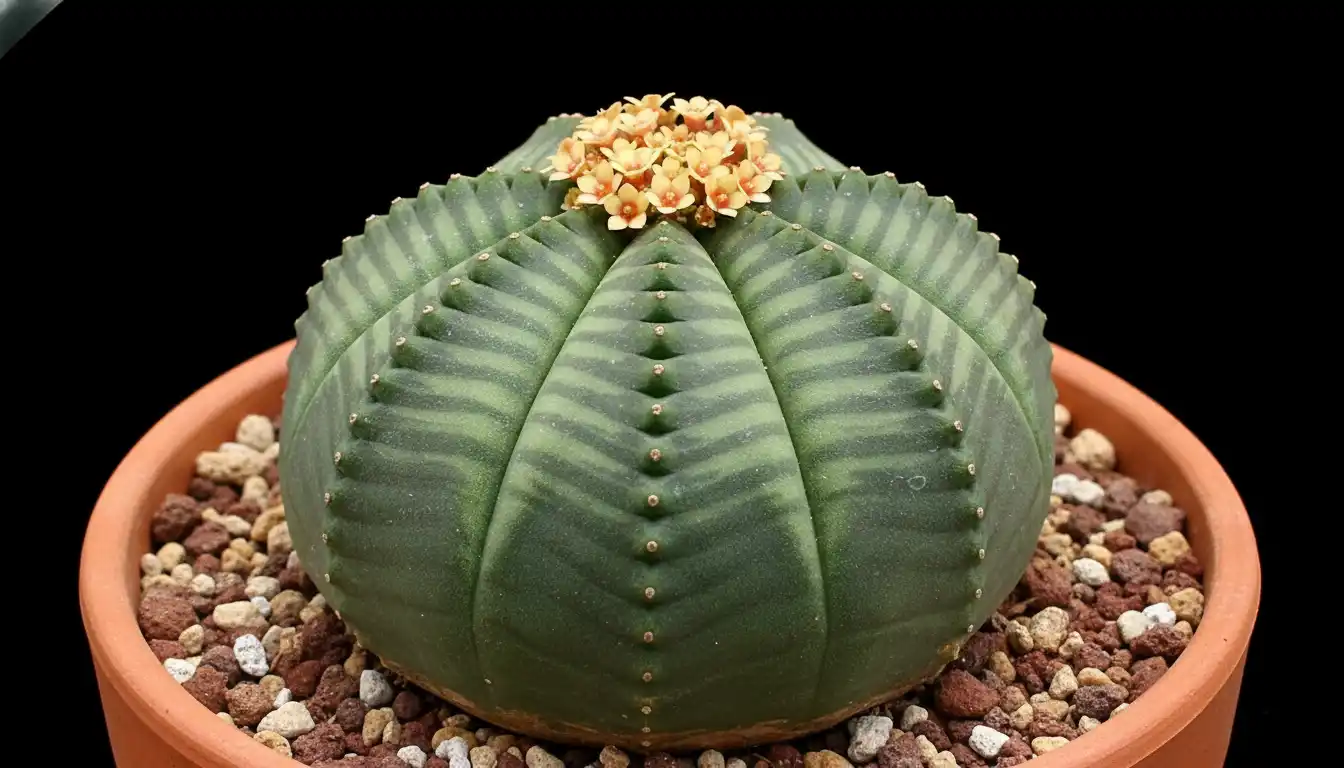
A healthy Euphorbia obesa will be firm to the touch, with a turgid, water-filled appearance. Its coloration should be a robust grey-green, often with attractive purple or reddish transverse bands. During the growing season, you may notice tiny, inconspicuous flowers appearing at the crown, which is a definitive sign of a content plant.
Red Flags: Early Warnings of Common Problems
The most dangerous red flag is a soft or mushy base, which is a classic sign of root rot. Yellowing of the plant’s body also points towards overwatering. Conversely, a shriveled or deflated appearance indicates severe dehydration. Pests like mealybugs can also be an issue, appearing as small, white, cottony masses on the plant’s ribs.
The Aging Process: What to Expect as Your Baseball Plant Matures
As your Euphorbia obesa lives through the years, it will undergo natural changes in its appearance. Understanding these developments is crucial to avoid mistaking normal aging for signs of disease, which could lead to unnecessary and harmful “treatments.”
From Perfect Sphere to Elongated Column: Natural Growth Habits
While young plants are famously spherical, they naturally begin to elongate as they age, becoming more columnar or conical. This is a perfectly normal part of their growth cycle and not a sign of any problem. A plant that is several decades old may be significantly taller than it is wide.
Corking: A Natural Sign of Old Age, Not Disease
One of the most misunderstood aspects of an aging Euphorbia obesa is corking. This is a natural process where the base of the plant becomes brown, woody, and bark-like. Many growers panic when they see this, assuming it is rot. However, corking is firm and dry to the touch, whereas rot is soft and mushy. This woody tissue provides structural support to the aging plant and is a badge of honor for a well-cared-for, mature specimen.
Flowering and Reproduction’s Role in the Life Cycle
Euphorbia obesa is dioecious, meaning individual plants are either male or female. They produce small flowers called cyathia at the apex. For seed production to occur, pollen must be transferred from a male plant to a female plant. While this may not directly impact the lifespan of an individual plant, the ability to produce flowers is a strong indicator of its overall health and vitality.
Proactive Measures: Advanced Techniques for Extending Longevity
Beyond the basic pillars of care, certain proactive steps can help safeguard your plant against future problems and even extend its life. This includes thinking about propagation and maintaining a sterile environment to prevent disease.
The Power of Propagation: Creating New Generations
Propagating Euphorbia obesa is most successfully done from seed. Since this requires both male and female plants, it can be a rewarding long-term project for serious collectors. Successfully growing these plants from seed not only gives you new plants but also ensures the continuation of your collection should anything happen to your original specimen.
Preventing Disease Before It Starts: A Sterile Approach
Always use clean pots and sterile soil when repotting. When pruning or taking cuttings from any plant (though not common for E. obesa), use sterilized tools to prevent the transfer of pathogens. Good hygiene is a simple but effective way to prevent fungal and bacterial infections that could shorten your plant’s life. Maintaining a safe and well-maintained home environment, including checking safety devices, is part of a holistic approach to care. For instance, ensuring you replace a wired smoke detector with a wireless one when needed keeps your home and your prized plant collection safe from unforeseen hazards.
The Overlooked Factor: Air Circulation’s Impact
Good air circulation is vital for preventing fungal issues and helping the soil dry out efficiently. In a stuffy room, moisture can linger on the plant’s surface and in the soil, creating an ideal environment for rot. A gentle breeze from an open window or a small fan can make a significant difference in the long-term health of your succulent.
Frequently Asked Questions About the Baseball Plant’s Lifespan
Many gardeners have similar questions when it comes to the long-term care of this unique plant. Here are answers to some of the most common inquiries.
How can you tell how old a Euphorbia obesa is?
Estimating the age is difficult, as growth rate varies with conditions. However, size is a general indicator. A plant that is only a few inches in diameter is likely just a few years old, while one that has become distinctly columnar and shows significant corking at the base could be 20, 30, or even older.
Can they really live for many decades?
Yes. With optimal care that mimics their natural environment, these plants have a very long potential lifespan. Their slow metabolism and water-storing capabilities are adaptations for long-term survival in a harsh climate.
What is the most common cause of premature death?
Without a doubt, overwatering is the primary reason these plants die prematurely in cultivation. The combination of too much water and poorly draining soil leads to root rot, a condition from which they rarely recover.
A Lifetime of Beauty: Final Thoughts on Your Euphorbia Obesa Journey
Caring for a Euphorbia obesa is less about constant attention and more about establishing the right foundation and then letting it be. Its path to a long life is paved with bright light, minimal water, and gritty soil. By understanding its needs and appreciating its slow, deliberate pace of life, you can cultivate a botanical companion that will grow alongside you for decades. Embracing this minimalist approach is the true secret to unlocking the remarkable lifespan of the baseball plant.
