
Espoma Berry-tone vs Holly-tone: Which is Best For You?
Choosing the right fertilizer can feel overwhelming. You stand in the garden center, faced with a wall of colorful bags, each promising vibrant blooms and bountiful harvests. For gardeners tending to acid-loving plants, two names often rise to the top: Espoma Berry-tone and Espoma Holly-tone. Both are trusted, organic options, but their subtle differences can have a major impact on the health and productivity of your plants. Making the wrong choice can lead to lackluster growth, fewer flowers, or a disappointing fruit yield.
This common dilemma leaves many gardeners wondering: Is there really a significant difference? Can one be used in place of the other? Understanding the specific formulations of Berry-tone and Holly-tone is the key to unlocking your garden’s true potential. This guide will break down the science behind these two popular fertilizers, helping you diagnose your plants’ needs and select the perfect formula for lush foliage and abundant fruit.
You'll Learn About
Unpacking Holly-tone: The Go-To for Green Growth
Espoma’s Holly-tone is a household name for a reason. It is the original organic fertilizer specifically designed for a broad range of acid-loving plants. Think of it as the versatile workhorse for promoting deep green leaves, strong root systems, and overall plant vigor. If your primary goal is lush, healthy foliage on non-fruiting plants, Holly-tone is expertly formulated to deliver just that.
This fertilizer is the ideal choice for plants like azaleas, rhododendrons, camellias, dogwoods, and most evergreens such as hollies and spruces. These plants thrive in acidic soil, and Holly-tone not only provides essential nutrients but also helps to lower and maintain a low soil pH. This is crucial because an improper pH can “lock up” nutrients in the soil, making them unavailable to the plant, even if they are present.
Key Features of Holly-tone
At its core, Holly-tone is built to support foundational plant health. It features a balanced NPK ratio (Nitrogen-Phosphorus-Potassium) of 4-3-4. This balanced profile ensures that plants get a steady supply of all three major macronutrients. Nitrogen fuels leafy growth, phosphorus supports root and flower development, and potassium contributes to overall plant hardiness and disease resistance.
What truly sets it apart is the inclusion of elemental sulfur. Holly-tone contains 5% sulfur, a key ingredient that naturally helps to acidify the soil over time. It is also fortified with Espoma’s exclusive Bio-tone microbes, a blend of beneficial bacteria and fungi that improve soil structure and enhance nutrient uptake, creating a thriving ecosystem for the plant’s roots.
Decoding Berry-tone: The Specialist for Superior Fruit
While Holly-tone focuses on general health, Berry-tone is a specialist. As the name suggests, it is meticulously formulated to meet the unique nutritional demands of berries and other fruiting plants. If you are growing blueberries, strawberries, raspberries, or blackberries, choosing Berry-tone can be the difference between a sparse picking and a truly impressive harvest.
Fruiting plants have different needs than those grown purely for foliage. They require specific nutrients to support the energy-intensive processes of flowering and fruit production. Berry-tone is engineered to provide this targeted support, ensuring your plants don’t just grow, but produce larger, more flavorful, and more abundant fruit. It is the premier choice for anyone serious about their berry patch.
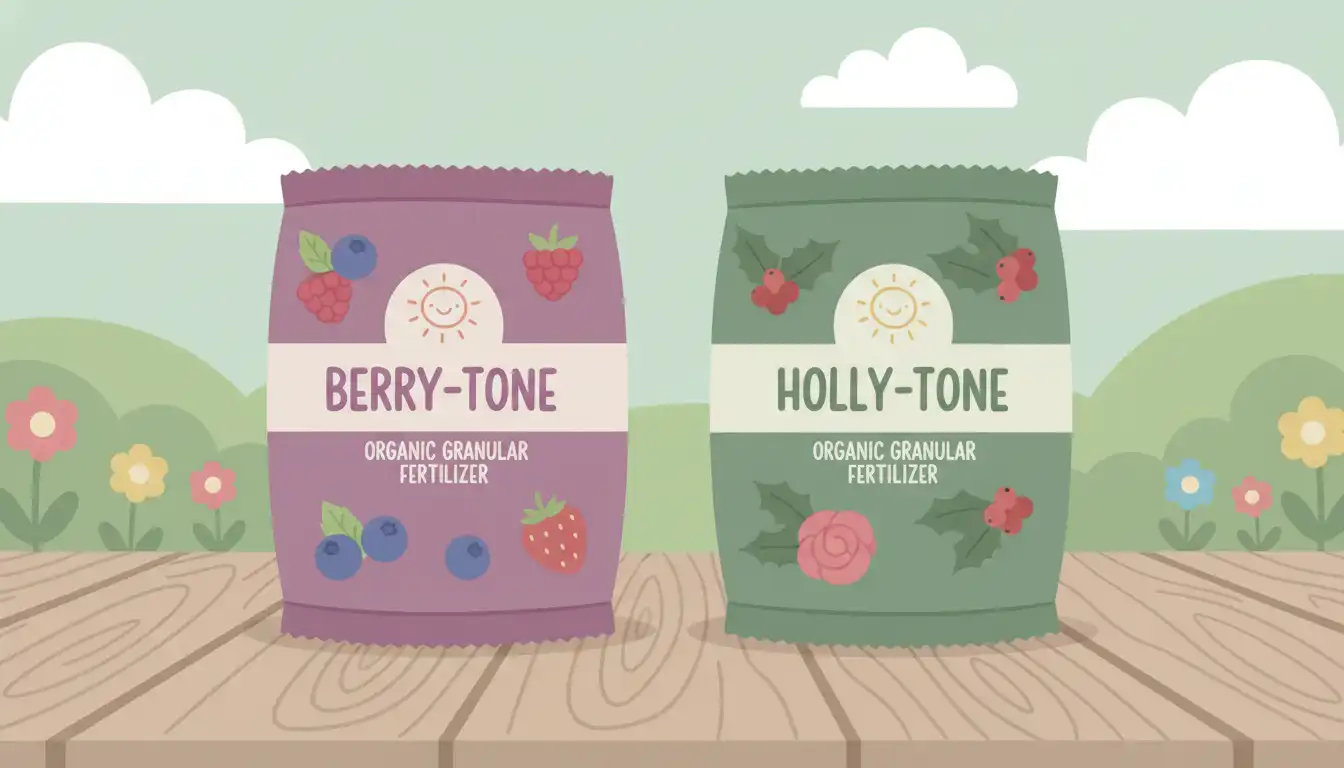
Key Features of Berry-tone
The nutritional profile of Berry-tone reflects its specialized purpose. It shares the same NPK ratio as Holly-tone, 4-3-4, providing a solid foundation for plant growth. Like Holly-tone, it also contains 5% sulfur to help create the acidic soil conditions that berries crave. It is also packed with the same beneficial Bio-tone microbes to foster a healthy soil environment.
The distinction lies in the subtle blend of organic ingredients and micronutrients optimized for fruiting. While the guaranteed analysis on the bag appears identical to Holly-tone, the formulation is tweaked to better support the entire fruiting cycle, from blossom set to harvest. This ensures that the plant has everything it needs to produce high-quality berries.
The Head-to-Head Comparison: Choosing Your Fertilizer
At first glance, Berry-tone and Holly-tone seem remarkably similar. They are both organic, slow-release granular fertilizers from a trusted brand, and they share identical NPK ratios and sulfur content. This has led many gardeners to believe they are interchangeable. While you can use one in a pinch for the other, optimizing your garden’s performance requires understanding their intended purposes.
The primary difference isn’t in the numbers on the label, but in the specific blend of natural ingredients. Holly-tone is formulated for robust vegetative growth—the leaves and stems. Berry-tone is specialized to fuel the reproductive cycle—the flowers and fruit. Think of it like this: Holly-tone builds a strong “factory,” while Berry-tone ensures that the factory has the specific raw materials to produce the best possible goods.
Nutrient Breakdown at a Glance
To make the best choice, it’s helpful to see their specifications side-by-side. While their core macronutrients are the same, their design philosophy differs.
| Feature | Espoma Holly-tone | Espoma Berry-tone |
|---|---|---|
| Primary Use | General purpose for acid-loving plants (Azaleas, Hollies, Evergreens) | Specialized for fruiting acid-loving plants (Blueberries, Strawberries, Raspberries) |
| NPK Ratio | 4-3-4 | 4-3-4 |
| Key Benefit | Promotes deep green foliage and strong roots | Encourages more abundant and flavorful fruit |
| Sulfur Content | 5% | 5% |
| Bio-tone Microbes | Yes | Yes |
Which One Is Right for Your Garden? A Plant-by-Plant Guide
The decision ultimately comes down to what you are growing. Applying the correct fertilizer ensures your plants receive the precise nutrition they need to flourish.
For Berries: The Clear Winner is Berry-tone
For any plant where the fruit is the goal, Berry-tone is the unequivocal best choice. Blueberries, strawberries, raspberries, and blackberries all have high energy demands during their fruiting season. Berry-tone is specifically designed to meet these demands, leading to a healthier and more productive harvest.
For Azaleas, Rhododendrons, and Evergreens: Stick with Holly-tone
If your garden features beautiful flowering shrubs and evergreens, Holly-tone is the superior option. Its formula is perfected for promoting the vibrant, deep green foliage that makes these plants so attractive. It provides all the necessary nutrients for year-round health without focusing energy on fruit production.
The Hydrangea Dilemma: A Case for Both
Hydrangeas are a unique case. The color of many hydrangea varieties is directly influenced by soil pH. To achieve a rich, deep blue, the plant needs acidic soil with available aluminum. Holly-tone, with its excellent acidifying properties, is perfect for lowering the soil pH to get those coveted blue blooms.
However, once the desired soil pH is established, the plant’s main goal is to produce large, numerous flowers. Some advanced gardeners have found success using Berry-tone on their hydrangeas during the blooming season. The formulation that supports fruit development can also provide an extra boost for flower production, potentially leading to more impressive blooms. A strategic approach could involve using Holly-tone in the early spring and late fall to manage pH, and switching to Berry-tone just before blooming.
Application and Best Practices: Getting the Most from Your Fertilizer
Using these products correctly is just as important as choosing the right one. Both are slow-release granular fertilizers, meaning they feed your plants steadily over time. This reduces the risk of fertilizer burn that can occur with liquid feeds.
For best results, apply the fertilizer in the early spring as new growth begins. A second, lighter application can be made in the late fall to help the plant prepare for winter. Always follow the package directions for application rates. Typically, you will sprinkle the granules evenly over the soil around the plant, extending out to the “drip line”—the edge of the plant’s outermost branches. Gently work it into the top inch of soil and water it in thoroughly. Just as you wouldn’t ignore a problem like a light switch that popped out in your home, don’t neglect the final step of watering, as it’s crucial for activating the fertilizer.
A Critical Step: Avoid Over-Fertilizing
More is not better when it comes to fertilizer. Over-fertilizing is a common mistake that can seriously damage your plants. It can lead to burnt roots, yellowing leaves, and stunted growth. Always adhere to the recommended application rates on the bag. An occasional soil test can also provide valuable insight into your soil’s nutrient levels, helping you avoid adding unnecessary fertilizers.
Advanced Troubleshooting for Acid-Loving Plants
Even with the right fertilizer, gardeners can face challenges. Understanding the underlying issues can help you solve them effectively.
Problem: “My Blueberry Leaves are Yellow!”
Yellow leaves with green veins on a blueberry bush are a classic sign of iron chlorosis. This condition is almost always caused by a soil pH that is too high (too alkaline). When the pH is high, the plant is unable to absorb iron from the soil, leading to the deficiency. Both Holly-tone and Berry-tone help by gradually lowering the soil pH, but for a faster fix, you may need a dedicated soil acidifier containing elemental sulfur or iron sulfate.
Problem: “My Hydrangeas Won’t Turn Blue!”
Patience is key. Changing the color of hydrangea blooms is not an overnight process. It can take a full season or even longer to sufficiently lower the soil pH and make aluminum available to the plant. Apply Holly-tone in the spring and fall, and consider supplementing with aluminum sulfate if your soil is particularly alkaline. A significant change in your garden, like deciding to replace a standard tub with a soaking tub, takes planning and time; altering soil chemistry is a similar long-term project.
A Pro-Tip: The Power of Mulch
One of the most effective ways to support your acid-loving plants is to use the right kind of mulch. Mulching with acidic organic matter like pine needles, pine bark, or oak leaves works in harmony with your fertilizer. As the mulch breaks down, it naturally helps to maintain a lower soil pH, conserves moisture, and suppresses weeds, creating the perfect growing environment.
The Final Verdict: Specialist vs. Generalist
In the Espoma Berry-tone vs Holly-tone debate, the best choice is clear when you align it with your gardening goals. They are not simply the same product in different bags. Holly-tone is the foundational, all-purpose fertilizer for ensuring the lush, green health of your non-fruiting acid-loving plants. It is the reliable choice for azaleas, evergreens, and for establishing the acidic conditions needed for blue hydrangeas.
Berry-tone, on the other hand, is the specialist’s tool for maximizing your harvest. Its formulation is expertly crafted to fuel the demanding process of flowering and fruiting, resulting in more berries that are larger and more flavorful. While you can use Holly-tone on your berries without causing harm, you will likely see a significant improvement in your yield by switching to the specialized nutrition of Berry-tone.
By understanding this key distinction and matching the right product to the right plant, you can move beyond simple maintenance and begin to unlock the full potential of your garden. Proper nutrition is the cornerstone of success, ensuring your plants not only survive but truly thrive.
