
Enola Sectional Reviews: The Brutally Honest Truth Before You Buy
Choosing a new sectional is one of the most significant furniture decisions a household can make. It’s not just a purchase; it’s an investment in your home’s comfort, style, and daily life. The wrong choice can lead to years of regret, discomfort, and a living space that never feels quite right. This is the central challenge facing anyone in the market for a large seating solution: how to find a piece that balances aesthetics, durability, and comfort without making a costly mistake.
The Enola Sectional has emerged as a popular contender for many, but with popularity comes questions and uncertainty. Is it truly as comfortable as it looks? How does the fabric hold up to pets, kids, and daily wear? Answering these questions requires a deep, honest look beyond the showroom floor, focusing on real-world performance and long-term value. This review provides a comprehensive analysis to help you make a confident and informed decision.
You'll Learn About
Decoding the Enola: First Impressions and Assembly
The arrival of a large furniture item like the Enola Sectional is a significant event. The sectional typically arrives in multiple large boxes, and the initial unboxing process reveals the modular nature of the design. Each piece is individually wrapped for protection during transit. The modular construction, a hallmark of modern sectionals, means it comes in several distinct parts that connect to form the final shape.
Assembly is designed to be straightforward. The different sections are joined together by heavy-duty metal clips or brackets. One piece will have the male side of the clip and the adjoining piece will have the female side; you simply lift one piece and guide its clip into the other to lock them together. This process requires some physical effort to lift and align the sections, but it generally doesn’t require specialized tools. This modularity is a major advantage, making it easier to move the sectional into homes with tight corners or narrow hallways.
A Closer Look at Design and Aesthetics
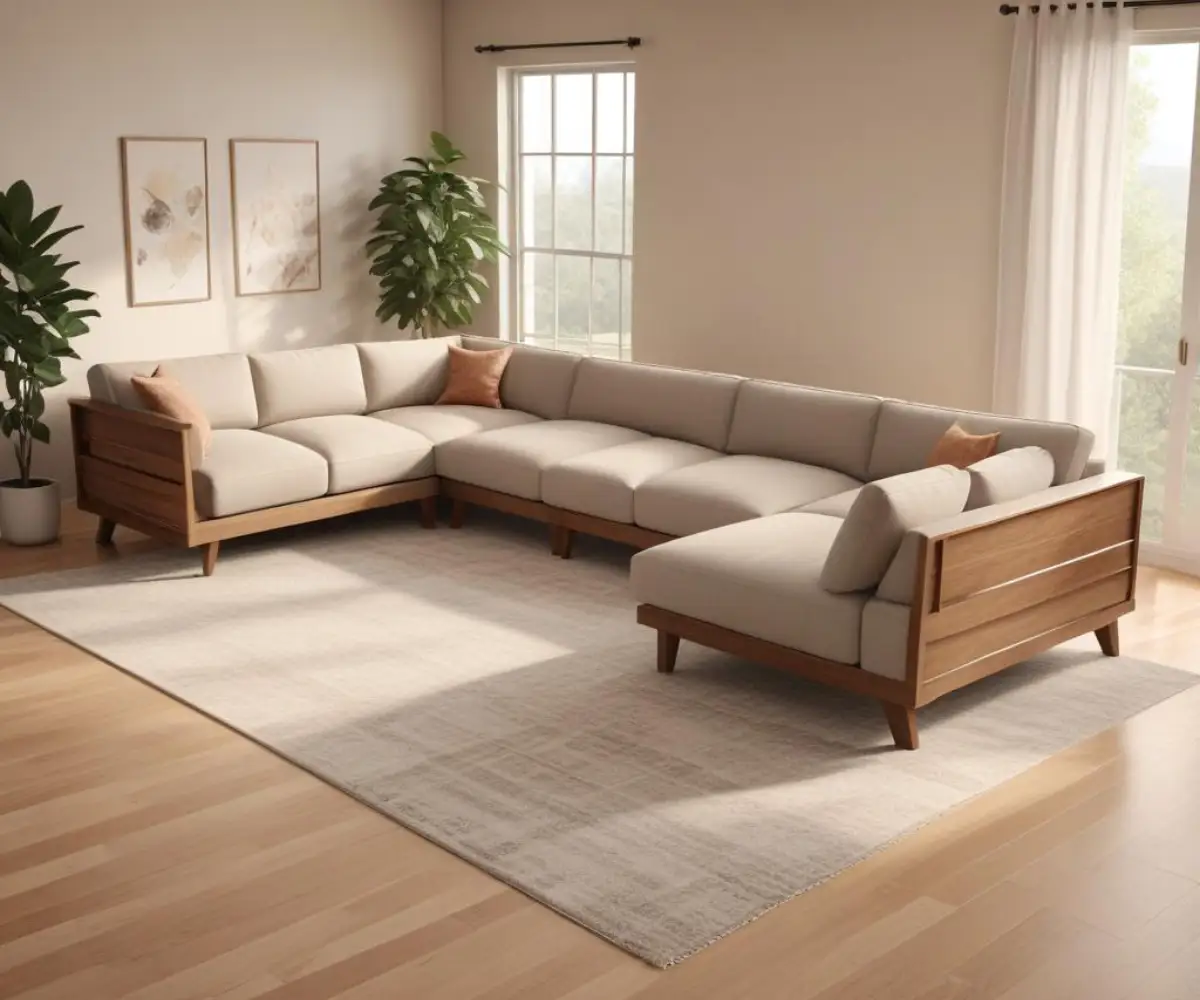
The Enola boasts a contemporary design that blends well with a variety of home and garden-inspired interiors. Its key features include low, minimalist track arms and short, exposed faux wood feet, giving it a modern and grounded profile. This clean-lined silhouette allows it to serve as a neutral foundation for a room, easily complemented by other decor styles.
The upholstery is typically a polyester fabric, often in versatile, neutral colors like sepia or gray. Polyester is chosen for its durability and resistance to stains and fading, making it a practical choice for a high-use item like a family sectional. The overall look is one of casual comfort, designed to be inviting and functional rather than overly formal. The included throw pillows often feature complementary patterns and colors, adding a layer of visual interest without overwhelming the design.
The Core Question: Comfort and Ergonomics
Comfort is subjective, but there are objective elements to consider with the Enola sectional. The seat cushions are constructed with high-resiliency foam wrapped in thick poly and cotton fibers. This combination is intended to provide a balance of support and softness. Most users find the seating to be medium-firm, offering enough support to prevent excessive sinking while still being comfortable for lounging.
The seat depth and back height are crucial for ergonomic comfort. The Enola’s design generally offers a generous seat depth, which is ideal for taller individuals or for those who enjoy curling up on the sofa. The back pillows are loose, allowing them to be adjusted for personalized comfort. However, a common point of feedback is that the back pillows may require frequent fluffing to maintain their shape and support over time. This is a trade-off for the plush, casual feel the sectional aims to provide.
Real-World Durability and Construction Insights
A sectional’s lifespan is determined by its underlying construction. The Enola’s frame construction is a key area of focus for potential buyers. While specific materials can vary, manufacturers often use a combination of solid wood and engineered wood in frame construction. To ensure stability, the corners are typically glued, blocked, and stapled—a standard practice in furniture manufacturing to reinforce joints.
The high-resiliency foam used in the cushions is designed to withstand repeated use better than lower-density foams, which can sag and lose their shape more quickly. A critical feature of the Enola is that its seat and back cushions are reversible. This allows for even wear distribution over time, significantly extending the life of the cushions and the overall appearance of the sofa. However, some user reviews have noted issues with cushion sinking or frame problems within a short period, highlighting potential inconsistencies in manufacturing. Considering long-term investments in your home, such as understanding if you should buy a house with cast iron pipes, is similar to evaluating the foundational quality of your furniture.
Navigating Size and Configuration in Your Space
One of the Enola’s main selling points is its modularity, which allows for various configurations to fit different room sizes and layouts. It is commonly available in 4-piece or 5-piece setups, which can include a combination of an armless loveseat, an armless chair, a wedge, and a chaise. This flexibility allows you to create an L-shape or a U-shape that perfectly suits your living area.
Before purchasing, it is absolutely essential to measure your space carefully. Consider not only the overall footprint of the sectional but also the traffic flow around it. Ensure there is enough room for coffee tables, side tables, and clear pathways. A common mistake is choosing a sectional that is too large, which can overwhelm the room and make it feel cramped. Sketching a floor plan can be an invaluable step in visualizing how the Enola will fit and function within your home’s layout.
The Unspoken Factor: How a Sectional Impacts Room Acoustics
Large, soft furniture pieces like the Enola sectional can have a significant and often overlooked impact on the acoustics of a room. The substantial mass and upholstered surfaces of a sectional act as a natural sound absorber. This can be a major benefit in open-concept living spaces or rooms with hard surfaces like wood floors and large windows, as it helps to reduce echo and reverberation, creating a quieter and more intimate atmosphere.
For home theater enthusiasts, this sound-dampening quality can enhance the audio experience by minimizing sound reflections that can muddy dialogue and sound effects. Conversely, in a room that is already heavily furnished with carpets and curtains, adding a large sectional might make the space feel acoustically “dead” or muffled. Understanding this effect allows you to balance your furniture choices to achieve the desired soundscape in your living environment. This thoughtful approach to home comfort is key, just as ensuring you have the right electrical setup, perhaps even considering a 2 prong to 3 prong gfci adapter for older outlets, is crucial for safety and convenience.
Long-Term Care and Maintenance for Lasting Value
Proper maintenance is crucial for maximizing the lifespan of the Enola sectional. The polyester upholstery is relatively easy to care for, but a consistent cleaning routine is recommended. Regularly vacuuming the sectional with an upholstery attachment is the first line of defense against dirt and dust embedding into the fabric fibers.
For spills, it’s important to act quickly. Blot the spill with a clean, dry cloth to absorb as much liquid as possible—do not rub, as this can push the stain deeper into the fabric. For more stubborn spots, use a water-based shampoo or foam upholstery cleaner, but always test it on an inconspicuous area first. Although the cushion covers have zippers, manufacturers typically advise against machine washing them. Consistent care, including rotating and fluffing the cushions weekly, will help maintain the sectional’s appearance and comfort for years to come.
Synthesizing User Reviews: The Good, The Bad, and The Realistic
A comprehensive analysis of user reviews reveals a mixed but informative picture of the Enola sectional. On the positive side, many users praise its comfort, size, and modern aesthetic. They often highlight its ability to accommodate large families and its cozy feel, making it a hub for household activity. The ease of cleaning the fabric is another frequently mentioned pro.
However, negative reviews often point to issues with durability. Complaints include cushions that sag or become misshapen prematurely and, in some cases, structural problems with the frame. Another common criticism is that the back cushions require constant fluffing to look neat and provide adequate support. The cushions also have a tendency to slide, requiring frequent readjustment. These contrasting reviews suggest that while the Enola offers great comfort and style for its price point, its long-term durability may be a concern for some users. It highlights a potential trade-off between initial affordability and lasting quality, an important consideration for any major household purchase, much like dealing with the frustration of a home system that delivers only lukewarm water from a tankless heater.
| Feature | Specification / Description | Potential Benefit | Potential Drawback |
|---|---|---|---|
| Upholstery | Polyester Fabric | Durable, easy to clean, resistant to fading and stains. | Less breathable than natural fibers. |
| Frame | Combination of solid and engineered wood. Corners glued, blocked, and stapled. | Standard construction for stability and durability at its price point. | Some user reports of premature frame issues. |
| Cushions | High-resiliency foam core wrapped in poly/cotton fiber. Loose and reversible. | Reversibility extends life; foam offers supportive comfort. | Cushions may slide and require frequent fluffing and readjustment. Reports of sagging. |
| Design | Modular with low track arms and exposed faux wood feet. | Versatile, contemporary style fits many decors. Modular design helps with moving. | Low-profile design might not appeal to those preferring traditional, taller furniture. |
| Configuration | Available in various multi-piece configurations (L-shape, U-shape). | Highly flexible to fit different room sizes and layouts. | Large footprint can easily overwhelm smaller spaces if not measured properly. |
| Assembly | Pieces connect with metal clips. | Relatively simple, tool-free assembly. | Requires physical effort to lift and align heavy sections. |
Final Verdict: Is the Enola Sectional the Right Choice for Your Home?
The Enola sectional presents a compelling option for those seeking a large, comfortable, and stylish seating solution at a moderate price. Its modular design offers excellent flexibility for various living spaces, and its contemporary aesthetic makes it a versatile choice for modern homes. The high-resiliency, reversible cushions and durable polyester fabric are practical features designed for the realities of daily life.
However, prospective buyers must weigh these benefits against the potential for durability issues reported by some users, such as sagging cushions and frame problems. The need for regular maintenance, including frequent fluffing and repositioning of cushions, is also a key consideration. Ultimately, the Enola is best suited for the homeowner who prioritizes immediate comfort, style, and size and is prepared to undertake consistent upkeep. For those requiring the absolute highest level of long-term durability for a very high-traffic environment, exploring higher-end options may be a worthwhile comparison.
