
Engine Hard to Turn With Plugs In? Your Ultimate Fix-It Guide
You head out to tackle the yard work, grab the pull cord on your lawn mower or snowblower, and give it a solid yank. But it stops dead. It feels like the engine is completely seized, and a wave of frustration hits you.
But then you try a simple trick you saw online: you remove the spark plug. Suddenly, the cord pulls freely. The engine turns over without any resistance. What is going on?
This confusing scenario is a common problem for homeowners, but it’s one you can almost certainly fix yourself. This guide will walk you through exactly what this symptom means and how to solve it for good.
First, It’s Not a Seized Engine—And That’s Good News
Let’s clear up the biggest fear right away. If the engine turns over easily once the spark plug is removed, you do not have a seized engine. A truly seized engine has internal metal components fused or broken, and it will not turn over at all, regardless of the spark plug.
Your problem is almost always related to excessive compression. Understanding this is the key to a fast and easy repair. Think of it this way: successfully diagnosing the issue is half the battle, much like knowing the real story behind Casabella hardwood reviews before you commit to a purchase.
Understanding Engine Compression: The Force You’re Fighting
In a healthy engine, the piston travels up the cylinder to squeeze a mixture of air and fuel before the spark plug ignites it. This squeezing process is called compression, and it’s what creates the power.
When you pull the starter cord, you are manually forcing this compression stroke. Removing the spark plug leaves a wide-open hole in the cylinder, meaning no pressure can build up. That’s why it suddenly becomes easy to turn over.
The real question is, why has this normal compression suddenly become so strong that you can’t overcome it? There are a few common culprits.
The #1 Cause: Hydrostatic Lock (Liquid in the Cylinder)
The most frequent reason an engine is hard to turn over with the spark plug in is hydrostatic lock, often called “hydrolock.” This happens when a non-compressible liquid, like gasoline or oil, leaks into the cylinder.
Because liquid can’t be compressed like air, the piston comes to a dead stop when it tries to squeeze it. This is what creates that “solid wall” feeling when you pull the cord.
How Does Liquid Get In There?
There are two primary ways liquid finds its way into the combustion chamber. The first is gasoline from a faulty carburetor. A stuck float or a leaking needle valve can allow fuel to continuously trickle into the cylinder long after the engine is off.
The second, and perhaps more common, culprit is engine oil. This often happens when you tip your lawn mower or other small engine the wrong way for cleaning, transport, or storage. Tipping it with the carburetor and air filter facing down can cause oil to flood into the cylinder.
How to Fix Hydrostatic Lock
Fixing hydrolock is straightforward. First, with the spark plug still removed, place a rag over the spark plug hole. Now, slowly pull the starter cord several times. This will shoot the trapped liquid out of the cylinder and onto the rag.
Once the liquid is cleared, clean any fuel or oil from the spark plug with a clean cloth and some carburetor cleaner. Before reinstalling it, let the cylinder air out for a few minutes. Re-insert the spark plug, and the engine should now turn over normally.
To prevent this from happening again, always tip your equipment with the spark plug side pointing up. Additionally, if gas was the issue, you may need to clean or rebuild your carburetor.
The Silent Culprit: Excessive Carbon Buildup
Over hundreds of hours of use, hard black carbon deposits can form on the top of the piston and inside the cylinder head. This buildup physically reduces the volume of space in the combustion chamber.
A smaller space means the air-fuel mixture gets squeezed much tighter, artificially raising the compression. This can make the engine noticeably harder to pull-start. This issue is more common in older engines or those that have been running on a rich fuel mixture or burning oil.
How to Fix Carbon Buildup
The easiest method is to use a chemical cleaner. Products like Sea Foam can be added to the fuel tank and, over time, can help dissolve some of these deposits. For a more direct approach, you can spray a dedicated engine cleaner directly into the carburetor while the engine is running.
For severe cases, the cylinder head may need to be removed for a manual cleaning. This is a more involved job but is the most effective way to restore the engine’s original compression ratio.
When the Problem is Mechanical: The Automatic Compression Release
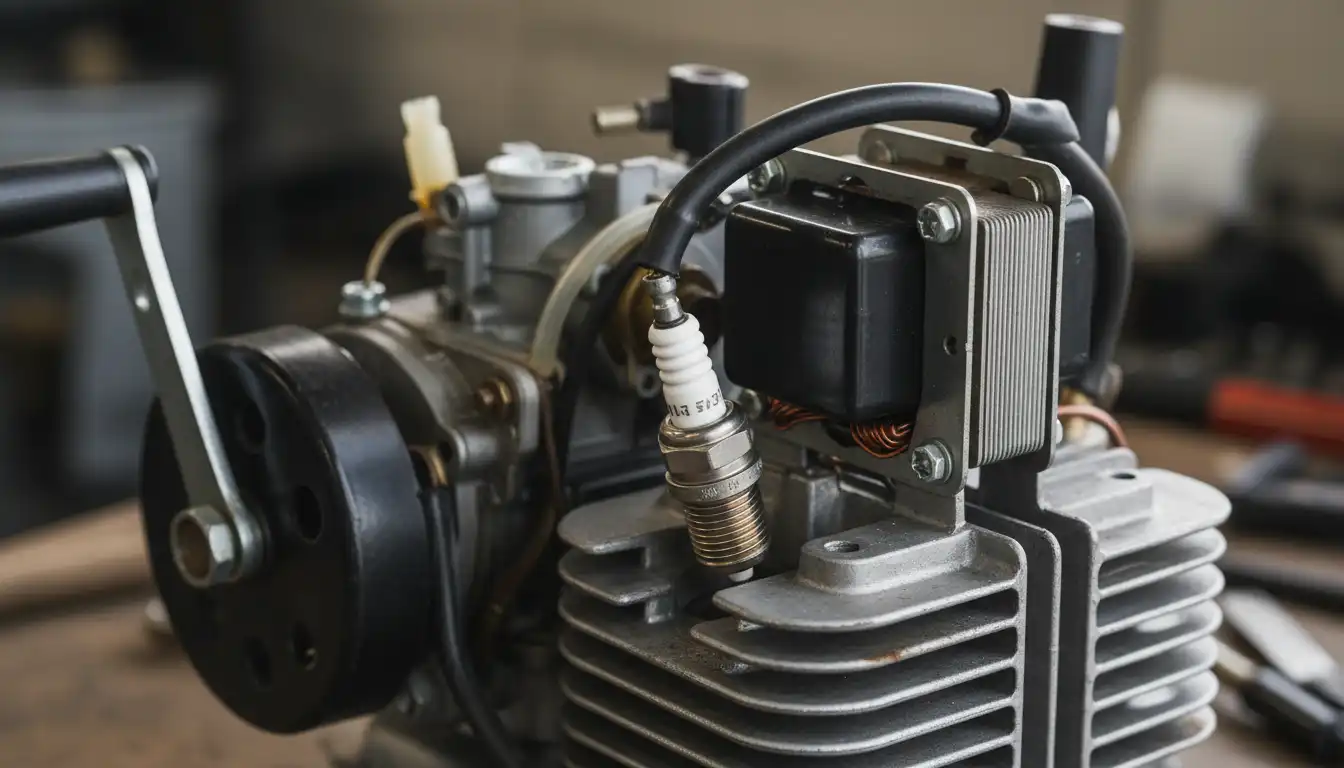
Many modern small engines have a clever mechanism called an Automatic Compression Release (ACR) system. This system includes a small weight and lever on the camshaft that slightly opens one of the valves at very low starting speeds.
This lets a tiny bit of compression escape, making the engine much easier to pull-start. Once the engine fires up and spins faster, the weight slings outward, and the valve functions normally. If this ACR system fails or breaks, you are left fighting the engine’s full, unmodified compression, which can be surprisingly difficult.
A key symptom of a failed ACR is not just a hard pull, but a violent kickback. The starter rope may feel like it’s being ripped out of your hand as the piston fights against the compression without any relief.
How to Address ACR Failure
Diagnosing a failed ACR often requires checking the valve lash (the small gap between the valve stem and the rocker arm). Incorrect valve lash can prevent the ACR from engaging properly. Adjusting the valves to the manufacturer’s specifications might solve the problem.
If the valve adjustment doesn’t work, the issue is likely a broken mechanical component on the camshaft itself. This is a more complex repair that may require professional service, as it involves opening up the engine.
Quick Troubleshooting Guide: Find Your Problem Fast
Use this table to quickly diagnose the issue based on what you’re experiencing. A systematic approach is key, whether you’re fixing an engine or planning a big project like turning a roof deck in pitched roof.
| Symptom | Most Likely Cause | Difficulty to Fix | Recommended Solution |
|---|---|---|---|
| Pull cord stops dead; liquid sprays out of spark plug hole. | Hydrostatic Lock (Gas or Oil) | Easy | Remove plug, clear liquid, and identify the source of the leak (carburetor or tipping). |
| Engine is consistently hard to pull over, especially when cold. | Excessive Carbon Buildup | Easy to Medium | Try a fuel-additive engine cleaner first. Manual cleaning is more advanced. |
| Pull cord has a violent “kickback” or rips from your hand. | Failed Automatic Compression Release (ACR) or Timing Issue | Medium to Hard | Check and adjust valve lash. If that fails, suspect a mechanical failure requiring deeper repair. |
| Engine was left in heavy rain or pressure washed before the issue. | Water Ingress | Easy | Treat the same as hydrostatic lock. Check oil for a milky appearance, which indicates water contamination and requires an oil change. |
| Engine has been sitting for a long time. | Stuck Valves | Medium | Sometimes tapping the valve cover can free a sticky valve. More advanced disassembly may be needed. |
Proactive Steps: How to Prevent a Hard-to-Start Engine
The best fix is prevention. Taking proper care of your small engines ensures they start easily every time. The health of your lawn equipment is just as important as knowing the right Troy-Bilt Storm 2410 oil capacity to avoid catastrophic failure.
Master the Tilt
Always remember the golden rule: when you must tilt a mower or other four-stroke engine, tilt it with the air filter and carburetor facing the sky. This keeps oil where it belongs and out of the cylinder.
Use Fresh, Stabilized Fuel
Old gasoline can break down, gum up carburetors, and cause a host of problems. Use fresh fuel (less than 30 days old) whenever possible, and always add a quality fuel stabilizer if the equipment will sit for more than a month.
Perform Regular Maintenance
Follow your owner’s manual for regular maintenance schedules. This includes changing the oil, cleaning or replacing the air filter, and replacing the spark plug. A well-maintained engine is far less likely to develop carbon buildup or other compression-related issues.
Thinking about seasonal care is crucial for both your lawn equipment and your garden. Knowing the right time for maintenance is as important as knowing when do Autumn Blaze maples turn red to enjoy their peak color.
Putting It All Together: Your Path to an Easy Start
That feeling of a locked-up engine can be intimidating, but now you know the secret. The fact that it turns freely without the spark plug is your biggest clue, pointing directly to a compression problem—not a catastrophic failure.
By methodically checking for hydrostatic lock, considering carbon buildup, and understanding the role of the automatic compression release system, you have the knowledge to diagnose the issue accurately.
In most cases, the fix is simple, requiring only a few minutes of your time. You can now approach this problem not with frustration, but with the confidence of a seasoned pro, ensuring your equipment is always ready when you need it.
