
End Tables As Nightstands? Unlock This Genius Bedroom Hack
Finding the perfect nightstand can feel like an impossible task. You search for a piece that’s the right height, offers enough surface space, and has the storage you need, only to find options that are overpriced, bulky, or simply don’t match your bedroom’s aesthetic. This common frustration leaves many settling for mismatched furniture or, even worse, using the floor as a catch-all for their nighttime essentials.
The core of the problem lies in the limited selection and specific design of traditional nightstands. They are often built as part of a matching bedroom set, forcing a uniform look that may not reflect your personal style. This dilemma pushes homeowners to seek creative solutions that offer both functionality and a unique design statement, leading them to ask: can an end table be used as a nightstand?
The answer is a resounding yes. Using an end table as a nightstand is not just a clever workaround; it’s a design strategy that unlocks a world of style, versatility, and practicality that traditional nightstands often lack. This approach allows you to break free from the constraints of bedroom sets and choose a piece that perfectly suits your needs and elevates your decor.
You'll Learn About
Why Your Living Room’s Best Kept Secret Belongs in the Bedroom
The fundamental difference between end tables and nightstands lies in their original placement and intended function. End tables are designed for living areas, meant to sit beside sofas and chairs, offering a convenient surface for a lamp, a drink, or a book. Nightstands, on the other hand, are bedroom-specific, designed to hold bedside essentials and often come with drawers for storage.
However, these distinctions are becoming increasingly blurred in modern interior design. The versatility of an end table—its wide range of styles, materials, and sizes—makes it an ideal candidate for the bedroom. By repurposing an end table, you gain access to a much broader selection of furniture, allowing you to find a piece that complements your bedroom’s unique character.
The Overlooked Advantages of This Smart Swap
Choosing an end table over a traditional nightstand offers several compelling benefits. Firstly, the variety is immense. End tables come in countless designs, from minimalist metal frames to rustic wood pieces and chic glass tops, offering far more stylistic freedom than the often-uniform world of nightstands.
Secondly, end tables can be a more budget-friendly option. Because they are produced in greater quantities and for a broader market, you can often find a stylish and well-made end table for a fraction of the cost of a comparable nightstand. This makes it an excellent choice for those looking to furnish their space on a budget without sacrificing style.
Finally, the versatility of an end table extends beyond the bedroom. If you decide to redecorate or move, an end table can easily be repurposed back into a living room or another area of your home, making it a more flexible and long-lasting investment. This adaptability is a significant advantage over a dedicated nightstand that may not fit in other spaces.
The Ultimate Guide to Choosing the Perfect End Table for Your Bedside
Successfully using an end table as a nightstand hinges on selecting the right piece. The key is to balance aesthetics with practicality, ensuring your choice not only looks great but also functions perfectly for your needs. There are three critical factors to consider: height, surface area, and storage.
Getting the Height Just Right
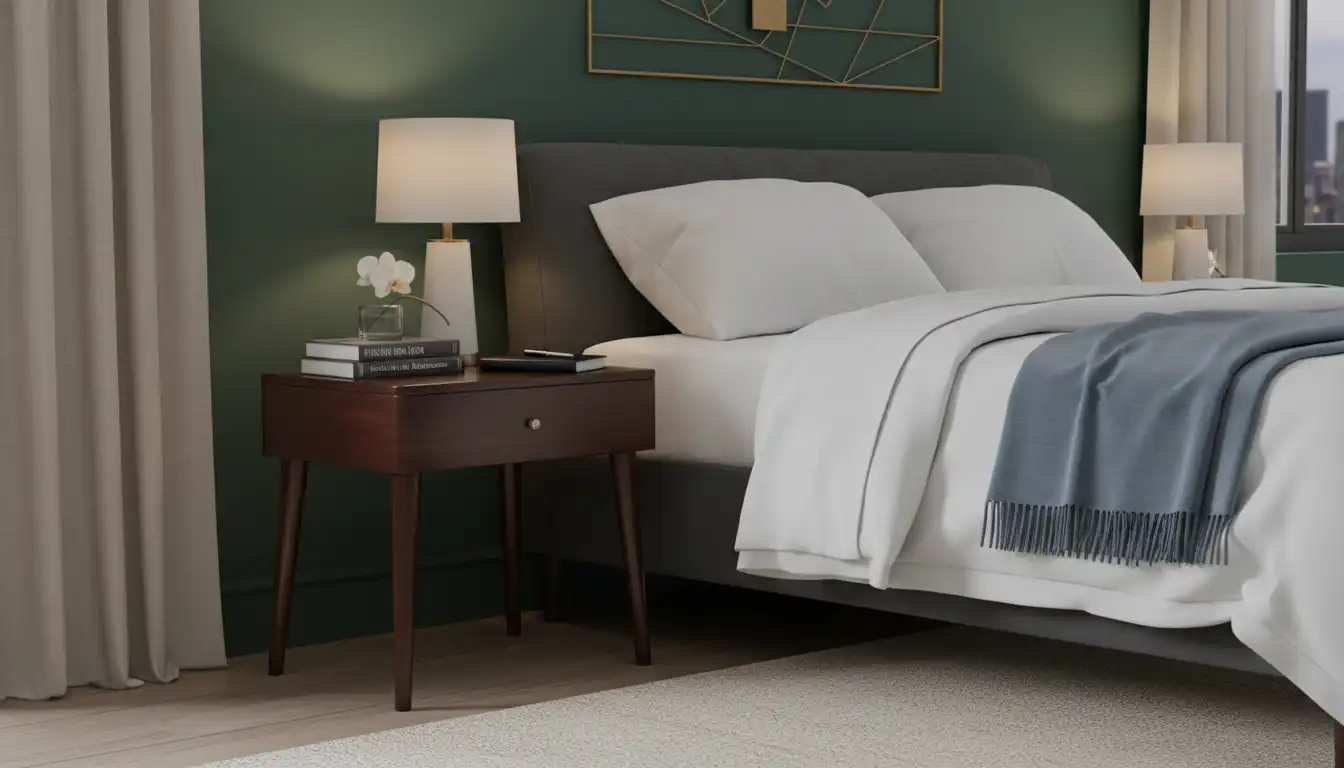
The most crucial element is height. An end table that is too tall or too short will be awkward to use and can disrupt the visual harmony of your bedroom. The ideal height for a bedside table should be roughly level with the top of your mattress, or within a two-inch range, either slightly above or below.
To ensure a perfect fit, measure the height from the floor to the top of your mattress before you start shopping. Most end tables stand between 22 and 26 inches tall, while nightstands average between 24 and 28 inches, so it’s essential to measure. This simple step will save you from the frustration of an ill-fitting piece.
Claiming Your Surface: Size and Scale Matter
Consider what you need to keep on your nightstand. Do you just need space for a phone and a glass of water, or do you have a lamp, books, an alarm clock, and other items? The surface area of the end table should comfortably accommodate your essentials without feeling cluttered.
Pay attention to the scale of the table in relation to your bed and the room itself. A large, bulky end table can overwhelm a small bedroom, while a tiny table might look lost next to a grand, king-sized bed. The goal is to create a balanced and proportional look that enhances the overall design of the space.
Storage: The Great Debate
One of the primary differences between end tables and nightstands is storage. Nightstands typically come with drawers, which are perfect for hiding away clutter. Many end tables, however, feature a more open design, with shelves or a minimalist frame.
If you need concealed storage for personal items, seek out end tables that include at least one drawer. Alternatively, if you prefer a more open, airy look, an end table with a lower shelf can be a great place to stack books or place a decorative basket for organization. Some homeowners even find that a minimalist table with no storage encourages a tidier, clutter-free bedside environment.
Beyond the Basics: Unconventional Wisdom for Your Bedroom
Choosing the right end table involves more than just measurements and storage. To truly elevate your bedroom design, consider the interplay of materials and how your new furniture will integrate with your daily routines. This is where you can add a layer of originality and thoughtfulness that goes beyond standard advice.
Material Synergy: More Than Just Looks
Think about the existing materials in your bedroom. The texture and finish of your end table can either complement or clash with your headboard, flooring, and other furniture. For example, a sleek metal or glass end table can create a striking contrast with a soft, upholstered headboard, adding a modern edge.
Conversely, a warm wood end table can ground the space and create a cohesive, natural feel. Don’t be afraid to mix materials, but do so with intention. Consider how different surfaces will wear over time; a durable stone or solid wood top might be a better long-term choice than a delicate veneer if you’re prone to spills.
The Unseen Impact on Your Daily Life
Practicality extends to how the furniture fits into your lifestyle. For instance, the design of the table’s legs can have a surprising impact. If you rely on a robot vacuum for cleaning, choosing a table with taller, more open legs is a smart move. This consideration is a key part of creating truly Roomba friendly furniture that simplifies your cleaning routine.
Furthermore, the long-term value of a quality end table shouldn’t be underestimated. While some furniture is trendy, a well-crafted piece can last for decades. When considering your options, it’s worth reading up on brand reputations. Exploring reviews of Lane Furniture or asking questions like “is Ashley Furniture good quality?” can provide insight into durability and craftsmanship, ensuring your choice is a lasting one.
Styling Your End Table for a Picture-Perfect Bedside
Once you’ve chosen the perfect end table, the final step is to style it. A well-styled bedside table can tie the whole room together and make your space feel more personal and inviting. The key is to balance functional items with decorative accents.
Creating a Cohesive Look
Start with the essentials, such as a lamp for reading and a small dish for jewelry. Then, add personal touches like a framed photo, a small plant, or a scented candle. Vary the height of the objects to create visual interest. A tall lamp paired with a short stack of books and a small decorative object is a classic and effective combination.
To maintain a cohesive look, stick to a consistent color palette that complements the rest of your bedroom decor. Don’t overcrowd the surface; less is often more. The goal is to create a vignette that is both beautiful and functional, a space that feels curated yet lived-in.
| Feature | Traditional Nightstand | End Table as Nightstand |
|---|---|---|
| Style Options | Often limited to matching bedroom sets. | Vast range of styles, materials, and designs. |
| Average Height | 24″ – 28″ (designed for mattress height). | 18″ – 24″ (designed for sofa arm height). |
| Storage | Typically features one or more drawers. | Varies greatly; from drawers to open shelves to none. |
| Cost | Can be more expensive, especially as part of a set. | Often more budget-friendly and widely available. |
| Versatility | Primarily designed for the bedroom. | Can be easily repurposed in other rooms. |
| Best For | Those needing significant concealed storage. | Those prioritizing style, flexibility, and budget. |
Common Questions and Final Thoughts
Swapping a traditional nightstand for an end table is a transformative design choice that offers unparalleled flexibility and style. This simple hack allows you to curate a bedroom that is a true reflection of your personality, moving beyond the one-size-fits-all approach of conventional furniture sets.
By prioritizing the correct height, adequate surface area, and your personal storage needs, you can find an end table that is not only a beautiful accent piece but also a perfectly functional bedside companion. Remember to consider the synergy of materials and the practical implications for your daily life to make a choice that is both stylish and smart.
Embrace the freedom to mix and match, and you’ll discover that the perfect solution for your bedroom might have been hiding in the living room all along. This approach to furnishing your space empowers you to create a home that is uniquely yours, one thoughtful piece at a time.
