
End Entry Shower Enclosure: The Genius Hack for Awkward Bathrooms?
That long, narrow bathroom layout can feel like an impossible puzzle. You need a functional, beautiful shower, but a standard side-entry door would either slam into the toilet or leave no room for the vanity.
It’s a common remodeling nightmare that forces compromises, often resulting in a cramped, awkward space. The core of the problem lies in trying to fit a square peg into a rectangular hole, using conventional shower designs in unconventional spaces.
You'll Learn About
What Exactly Is an End Entry Shower Enclosure?
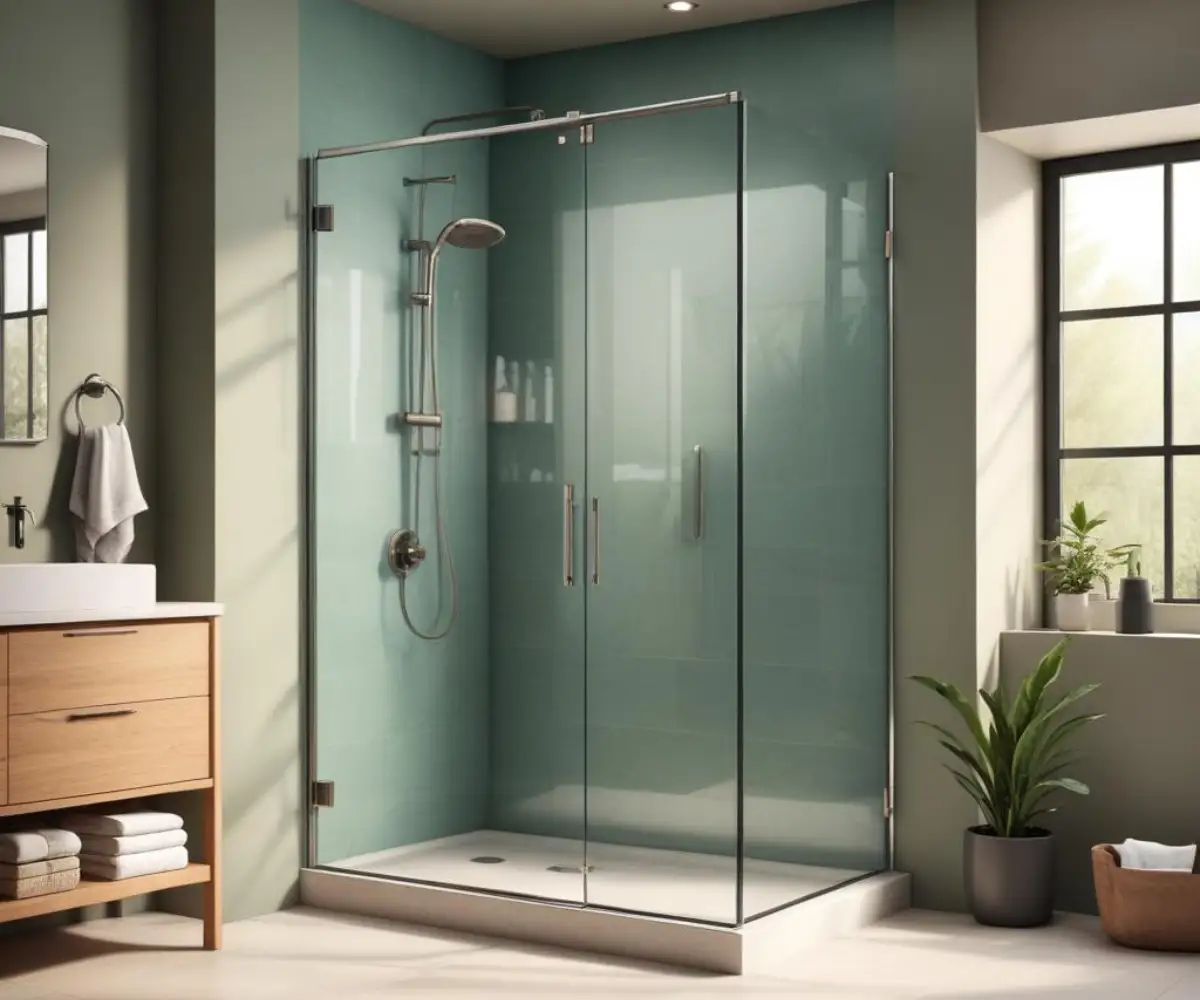
An end entry shower enclosure is a design where the door is placed on one of the shorter “end” walls of the shower. Imagine a rectangular shower stall; instead of entering from the long side, you walk in from the end.
This simple change in door placement is a game-changer. It’s specifically designed to maximize space and create a seamless flow in bathrooms that are longer than they are wide, often called galley-style bathrooms.
The #1 Reason Your Bathroom Layout Demands an End Entry Design
The single biggest reason to choose an end entry is to conquer a challenging layout. If your shower must be installed in an alcove or tucked between a vanity on one side and a toilet on the other, a side-entry door is often not feasible.
An end entry design creates a dedicated “walk-in” path at the front of the shower, leaving the long walls free. This not only solves the door-swing dilemma but also makes the entire bathroom feel more open and intentionally designed, rather than crammed and compromised.
End Entry vs. Side Entry: The Ultimate Showdown for Your Space
Choosing the right entry point is one of the most critical decisions for your shower’s functionality. The layout of your bathroom will almost always dictate the best choice.
Understanding the fundamental differences in how these two styles use space will ensure you make the right call for your remodel.
| Feature | End Entry Shower | Side Entry Shower |
|---|---|---|
| Best For Layouts | Long, narrow bathrooms; alcove installations between fixtures like a toilet and vanity. | Wider bathrooms where there is ample floor space along the length of the shower. |
| Space Efficiency | Excellent. Preserves floor space in the main bathroom area by eliminating side door swing. | Less efficient in narrow rooms; requires significant clear space for the door to open. |
| Door Swing Clearance | Requires clearance only at the short end of the shower, away from other main fixtures. | Requires a wide, clear path along the longest side of the shower. |
| Aesthetic Flow | Creates a streamlined, purposeful “walk-in” effect that can make a room feel longer. | The traditional, expected look that works well in standard square or wide bathrooms. |
| Accessibility | Can be highly accessible, especially when paired with a wider door and a curbless design. | Accessibility is good, but can be hindered if other fixtures are placed too close. |
Choosing the Right Door for Your End Entry Enclosure
The door you choose impacts both the function and style of your shower. For an end entry, your primary options are designed to maximize the opening while fitting your bathroom’s specific dimensions and clearances.
Pivoting and Hinged Doors
A pivoting or hinged door is the most common choice, offering the widest possible opening for a clean, minimalist look. These doors swing outward, so you must account for clearance. Understanding the dynamics of a shower door that can swing in and out is crucial for planning your space to avoid any collisions with vanities or toilets.
Sliding Doors
If floor space is at an absolute premium, a sliding door is an excellent solution. It requires zero out-swing space, making it perfect for the tightest of bathrooms. Modern sliding systems offer smooth, quiet operation and are a far cry from the rickety sliders of the past.
Critical Design Considerations Before You Buy
Success is in the details. Overlooking a few key measurements or features can turn your dream shower into a daily frustration. Pay close attention to these elements before finalizing your plans.
The “Measure Thrice, Install Once” Golden Rule
Precision is non-negotiable. You need exact measurements for the width of the opening at the top, middle, and bottom, as well as the height. Walls are rarely perfectly plumb or level, and accounting for these variations is essential for a watertight, professional fit.
The Curb Conundrum: To Curb or Not to Curb?
The entry point is a perfect opportunity to consider accessibility and modern aesthetics. A flawless curbless shower transition creates a seamless, trip-free entry that is both stylish and universally accessible. End entry designs are particularly well-suited for this high-end, modern look.
Glass Thickness and Quality
The quality of the glass defines the enclosure’s stability and luxurious feel. Most high-quality enclosures use either 3/8-inch (10mm) or 1/2-inch (12mm) thick tempered glass. While 1/2-inch glass offers a more substantial, premium feel, 3/8-inch glass, like that found in a high-end Cardinal 10 shower door, provides excellent stability and is the industry standard for quality frameless designs.
Hardware That Harmonizes
Don’t treat the handle and hinges as an afterthought. The hardware completes the look. Choose a finish—like matte black, brushed nickel, or polished chrome—that matches the other fixtures in your bathroom, such as your faucet and showerhead, to create a cohesive and professionally designed space.
Installation: The Final Frontier of Your Project
A perfectly designed enclosure can be ruined by a poor installation. While some experienced DIYers may tackle the job, the weight of the glass and the need for a perfect, waterproof seal make this a task best left to professionals.
A professional installer will ensure the walls are properly supported, the door is perfectly aligned, and every seam is sealed against leaks. This investment provides peace of mind that your beautiful new shower will last for years without issue.
Frequently Asked Questions
What is an end entry shower enclosure?
An end entry shower enclosure is a type of shower stall where the door or opening is located on one of the shorter sides. This design is often used for rectangular shower spaces and can feature a single door or a door combined with a fixed glass panel. Walk-in showers without a door can also be configured with an end entry.
What are the benefits of an end entry shower enclosure?
End entry designs are excellent for optimizing space in various bathroom layouts. They can create a sleek, streamlined look and are particularly well-suited for both small and large bathrooms. By positioning the entrance at the end, it can help to prevent water from splashing into the main bathroom area and allows for a more open and spacious feel.
Is an end entry shower suitable for a small bathroom?
Yes, an end entry shower can be a great solution for a small bathroom. By placing the door on the short end, it can maximize the usable showering space without the door swing encroaching on other fixtures. Using clear glass for the enclosure can also make the entire bathroom feel larger and more open.
What door options are available for an end entry shower?
There are several door options for an end entry shower to suit different space and style preferences. These include pivot doors that swing outwards, bi-fold doors that fold inwards to save space, and sliding doors that move along a track. The best choice depends on the amount of clearance in front of the shower and the overall bathroom design.
Can an end entry shower be a walk-in style?
Absolutely. A popular configuration for a walk-in shower is to have an open entry at one end of the enclosure. This doorless design offers easy accessibility and a modern, minimalist aesthetic. A glass panel is typically used to shield the rest of the bathroom from water spray.
What should I consider when installing an end entry shower enclosure?
When installing an end entry shower, it’s crucial to ensure accurate measurements of the space. You’ll need to consider the location of your plumbing, the direction of the door swing to avoid obstructions, and ensuring the shower tray is properly installed and sealed to prevent leaks. It’s often recommended to have a professional installation for the best results.
Conclusion: Is the End Entry Shower Your Bathroom’s Savior?
For homeowners with long, narrow bathrooms, the end entry shower enclosure isn’t just a good option—it’s often the perfect solution. It transforms an awkward, challenging space into a functional, elegant, and surprisingly open-feeling shower area.
By prioritizing smart layout choices over conventional designs, you unlock your bathroom’s true potential. An end entry shower proves that with the right design, even the most difficult spaces can become a source of daily luxury and comfort.
