Electric vs Oil Water Heater: The Choice That Saves You Thousands
That moment the hot shower turns ice-cold is a universal homeowner nightmare. It’s an immediate, jarring reminder of how much we depend on a reliable hot water heater. But when it’s time for a replacement, the decision-making process can be just as chilling, especially when faced with fluctuating energy prices and a sea of technical jargon.
Choosing between an electric hot water heater and an oil-fired one is a major decision that impacts your daily comfort, your monthly budget, and your home’s environmental footprint for the next decade or more. Making the wrong choice can lead to years of high utility bills and the constant frustration of running out of hot water. This guide will break down the critical differences to help you make the smartest investment for your home.
You'll Learn About
Understanding the Core Technology: How They Work
Before comparing costs and benefits, it’s crucial to understand the fundamental difference in how these two types of water heaters operate. Their method of generating heat is the primary driver of their efficiency, speed, and long-term costs. One relies on the electrical grid, while the other requires on-site fuel storage and combustion.
Electric Hot Water Heaters: The Silent Workhorse
Standard electric water heaters are remarkably simple. They consist of an insulated storage tank with one or two metal heating elements inside. When the thermostat detects that the water temperature has dropped, it sends an electric current to these elements, which glow hot and transfer that heat directly to the surrounding water.
This direct heating process is nearly 100% efficient at converting electricity into heat within the tank. However, the overall efficiency depends heavily on how that electricity was generated in the first place. These units are known for being quiet, relatively inexpensive to purchase, and easy to install since they don’t require fuel lines or venting.
Oil-Fired Water Heaters: Power and Speed
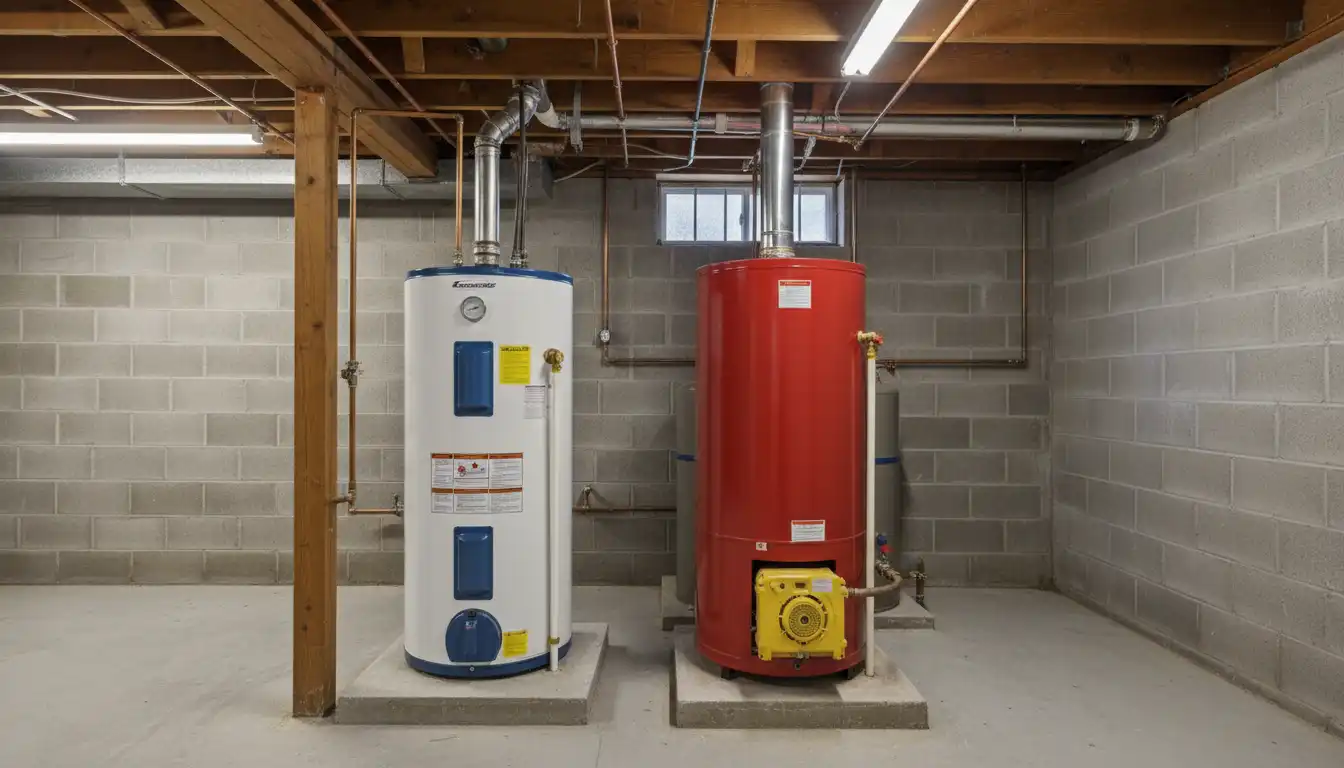
Oil-fired water heaters operate more like a mini-furnace dedicated to your water supply. A burner ignites a spray of heating oil, creating a powerful flame that heats a heat exchanger. Water from the tank circulates around this hot exchanger, absorbing the heat before being sent to your taps.
This combustion process generates a tremendous amount of heat quickly, giving oil heaters a significant advantage in speed. They require a dedicated oil storage tank on your property, a fuel line to the unit, and a flue or chimney to vent exhaust gases safely outside. The key benefit here is the rapid recovery rate—the ability to heat a large volume of water in a short amount of time.
Head-to-Head Comparison: Key Decision Factors
Choosing the right water heater involves weighing several critical factors against your household’s specific needs and priorities. From the initial purchase price to the long-term running costs and environmental impact, the best option is rarely the same for everyone. Here’s a detailed breakdown of what matters most.
Upfront Cost and Installation
Electric water heaters almost always have a lower initial purchase and installation cost. The units themselves are less complex, and installation is simpler, typically requiring only plumbing and electrical connections. A standard electric tank water heater installation can cost between $850 and $2,750, depending on the size and labor rates in your area.
Oil-fired water heaters have a significantly higher upfront cost. The equipment is more complex, involving a burner, fuel pump, and control systems. Installation is also more involved, requiring connections to an oil tank and proper venting, which can push total costs into the $3,000 to $7,000 range or higher, especially if a new oil tank is needed.
Operating Costs and Fuel Price Volatility
This is where the decision gets complex. Historically, oil has often been a cheaper source of heat energy than electricity, but this is highly dependent on market prices. One gallon of heating oil produces the heat equivalent of about 41 kilowatt-hours (kWh) of electricity.
However, the price of heating oil can be extremely volatile, fluctuating with global supply and demand. Electricity prices tend to be more stable, though they also rise over time. The key is to compare the local cost per gallon of oil to your cost per kWh of electricity to determine which is more economical to run at any given time.
Performance and Hot Water Recovery Rate
If your household uses a lot of hot water, this is a critical metric. Oil-fired water heaters have a much faster recovery rate than electric models. An oil heater can heat over 100 gallons of water per hour, while a standard electric model might only manage around 20 gallons in the same timeframe. This means a family can take back-to-back showers without running out of hot water with an oil system, which might be a challenge for an electric one.
Lifespan and Maintenance
The average lifespan of a water heater is about 7 to 13 years, but this can vary. Electric water heaters are simpler mechanically, with fewer moving parts. Their primary maintenance involves periodically checking and replacing the anode rod to prevent tank corrosion and flushing the tank to remove sediment. Problems with sediment buildup can sometimes lead to issues like seeing your water turns yellow after sitting.
Oil-fired systems require more diligent annual maintenance. The burner nozzle must be cleaned or replaced, the fuel filter changed, and the combustion chamber cleaned to remove soot. Neglecting this maintenance reduces efficiency and can lead to costly breakdowns. While some well-maintained oil heaters can last 10 to 15 years or more, the complexity introduces more potential points of failure.
| Feature | Electric Hot Water Heater | Oil-Fired Hot Water Heater |
|---|---|---|
| Upfront Cost | Lower ($850 – $2,750) | Higher ($3,000 – $7,000+) |
| Operating Cost | Depends on electricity rates (more stable) | Depends on oil prices (more volatile) |
| Recovery Rate | Low (approx. 20 gal/hour) | Very High (100+ gal/hour) |
| Lifespan | 7 – 13 years | 10 – 15+ years (with maintenance) |
| Maintenance | Low (anode rod, flushing) | High (annual professional service required) |
| Environmental Impact | No direct emissions; impact depends on grid’s energy source | Direct CO2 emissions; on-site fossil fuel combustion |
| Noise Level | Very quiet | Noticeable noise from the burner |
The Third Option No One Talks About: The Heat Pump Water Heater
When comparing electric versus oil, many discussions miss the most significant innovation in water heating: the heat pump water heater (HPWH), also known as a hybrid electric water heater. This technology represents a massive leap in efficiency over standard electric models and fundamentally changes the cost equation.
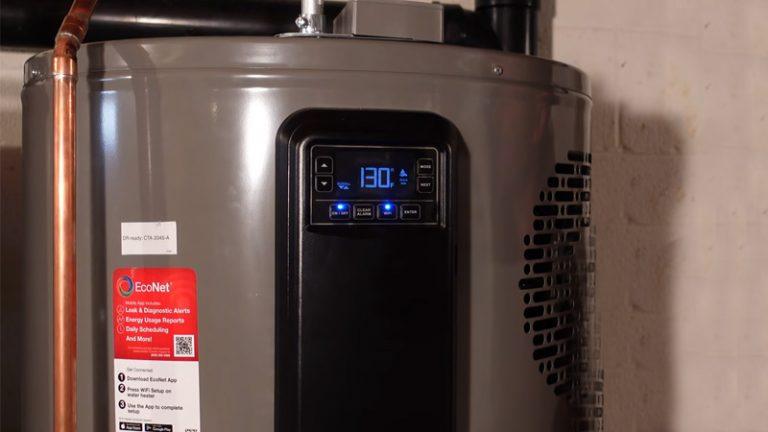
A HPWH doesn’t create heat directly with resistance coils. Instead, it works like a refrigerator in reverse, pulling heat from the surrounding air and transferring it into the water tank. This process makes it two to three times more energy-efficient than a standard electric water heater, dramatically lowering operating costs and potentially making it cheaper to run than an oil heater, even with oil prices are low.
While the upfront cost is higher than a standard electric model, federal tax credits and local rebates can often bring the price down significantly. For anyone considering an electric option, a heat pump water heater is the superior choice for long-term savings and environmental benefit.
Making the Final Decision for Your Home
Ultimately, the right choice depends on your specific circumstances. Consider these final points before you decide.
When to Choose an Oil-Fired Water Heater:
- You already have an oil furnace or boiler. If your home already has an oil tank and infrastructure, installing an oil-fired water heater (especially an indirect model that works with your boiler) can be highly efficient and cost-effective. Sometimes this is part of a larger decision on whether to replace a boiler with forced air entirely.
- Your family has very high hot water demands. For large families or homes with deep soaking tubs, the rapid recovery rate of an oil heater is a significant lifestyle benefit.
- Natural gas is not available, and electricity rates are very high in your area. In some rural locations, oil remains the most powerful and economical heating fuel available.
When to Choose an Electric Water Heater (Specifically a Heat Pump Model):
- You prioritize long-term energy savings and efficiency. A heat pump water heater offers the lowest operating costs of any option over its lifespan.
- You want to reduce your home’s carbon footprint. Electric options produce no on-site emissions, and their environmental impact will decrease as the electrical grid incorporates more renewable energy sources.
- You value simplicity and low maintenance. Electric heaters are quieter, cleaner, and require less frequent professional servicing than their oil-burning counterparts.
The debate between electric and oil is no longer a simple cost-per-gallon comparison. With the advent of hyper-efficient heat pump technology, electric water heating has become a formidable and often superior choice for the modern, energy-conscious homeowner. Carefully evaluate your home’s needs, local energy costs, and long-term goals to invest in a system that provides comfort, reliability, and savings for years to come.