
Downdraft Gas Cooktop Reviews: The Ultimate Guide
A kitchen filled with smoke and lingering cooking odors is a persistent problem for many homeowners. This issue is often magnified in open-concept living spaces or with stylish kitchen islands, where a bulky, traditional range hood can obstruct views and disrupt the aesthetic. Finding an effective, yet discreet, ventilation solution is a common challenge for those who love to cook but hate the smelly aftermath.
Downdraft gas cooktops present a sleek and modern solution to this problem. By integrating ventilation directly into the cooking surface, these appliances pull smoke, steam, and odors downward and away, eliminating the need for an overhead hood. This guide offers a comprehensive review of downdraft gas cooktops, exploring how they work, their benefits, and what to look for to ensure you choose the best model for a clean and fume-free kitchen.
You'll Learn About
What Exactly is a Downdraft Gas Cooktop?
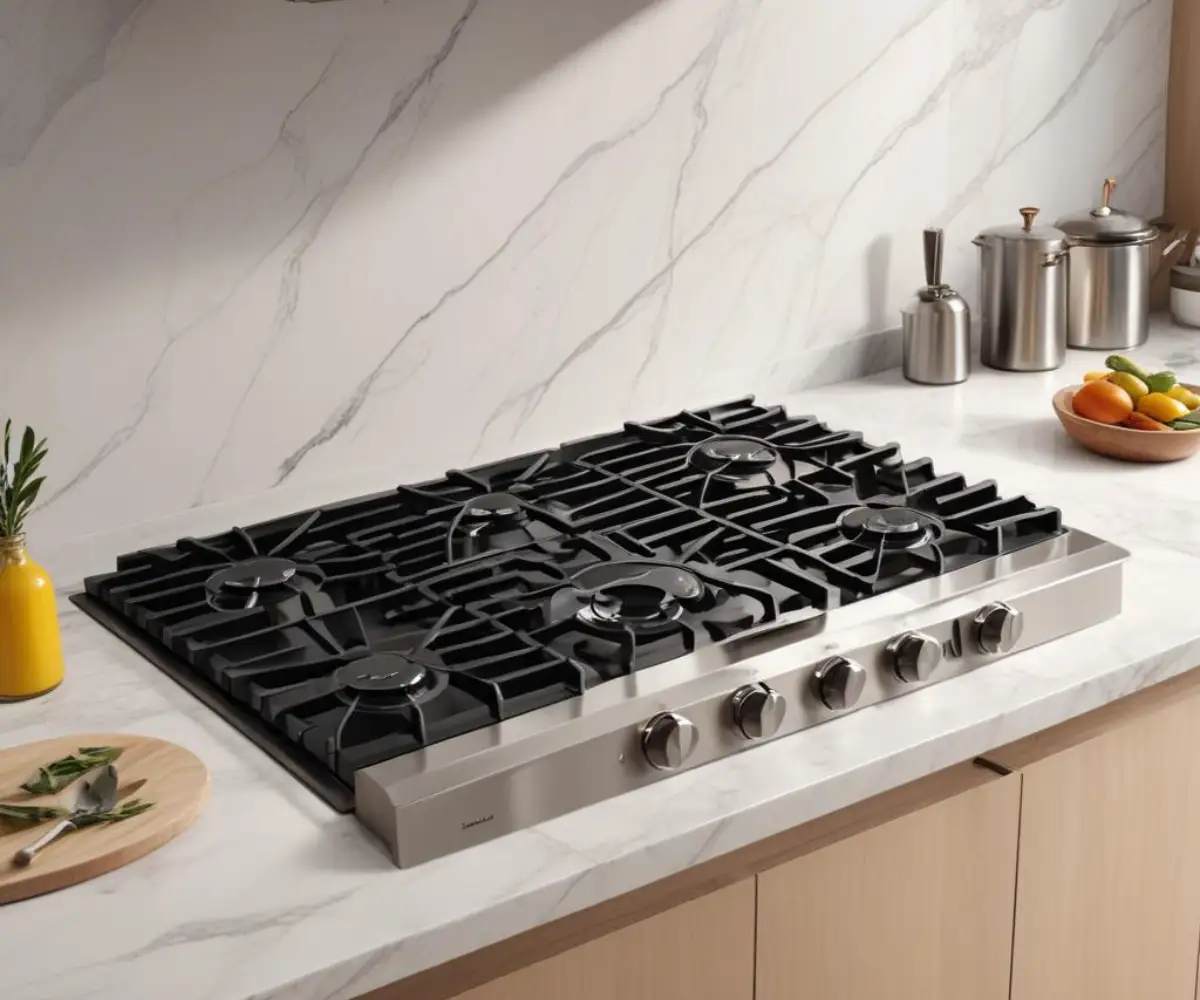
A downdraft gas cooktop is a kitchen appliance that combines gas burners with a built-in ventilation system. Unlike traditional setups that require a separate overhead range hood, a downdraft system uses a fan to suck air, smoke, and grease downward through a vent located on the cooktop itself. This air is then either ducted to the outside of the home or filtered and recirculated back into the kitchen.
This integrated design is especially popular for kitchen islands and peninsulas where installing a large overhead hood is impractical or visually disruptive. It allows for a more open and streamlined kitchen design, preserving clean sightlines and a minimalist aesthetic. Brands like JennAir, KitchenAid, and GE are prominent manufacturers in this space, offering various models to suit different needs.
The Great Debate: Downdraft vs. Overhead Hoods
Choosing between a downdraft system and a traditional overhead hood involves a trade-off between aesthetics and raw power. Overhead hoods generally offer more powerful ventilation because they work with the natural physics of heat and smoke, which rise. They capture fumes at the source before they have a chance to disperse throughout the room.
Downdraft systems, on the other hand, must work against gravity to pull rising steam and smoke downwards. While modern systems have become much more effective, they can sometimes struggle to capture emissions from tall stockpots. However, their seamless integration and space-saving benefits make them an attractive option for many contemporary kitchens.
Key Features to Scrutinize in Downdraft Gas Cooktop Reviews
When reading reviews and comparing models, focusing on a few key performance indicators will help you make an informed decision. These features directly impact the effectiveness and usability of the cooktop in your home.
Ventilation Power (CFM)
CFM, or cubic feet per minute, measures the volume of air a ventilation system can move. For gas cooktops, which produce more heat and exhaust than electric models, a higher CFM is crucial. Look for models with at least 300 CFM, though more powerful units are available and recommended for those who do a lot of high-heat cooking, like searing or stir-frying.
Burner Performance (BTU)
The power of gas burners is measured in British Thermal Units (BTUs). A good downdraft gas cooktop will offer a range of burner outputs, from low-heat simmer burners (around 5,000 BTUs) to high-power burners (15,000 BTUs or more). This versatility allows for precise temperature control, whether you’re melting chocolate or boiling water quickly.
Noise Level (Sones)
The operational noise of the ventilation fan is an important consideration, especially in open-plan homes. Noise levels are measured in sones; a lower sone rating means a quieter fan. Many modern downdraft systems are engineered to operate quietly, but it’s always wise to check reviews for real-world feedback on noise.
Installation and Ducting: The Hidden Complexity
Proper installation is critical to the performance of a downdraft system. The path of the ductwork significantly impacts airflow efficiency. Ideally, ducts should be as short and straight as possible, running through the cabinet and floor to an exterior wall. Complex runs with multiple elbows will reduce the fan’s effectiveness. Considering the intricacies of a home’s ventilation is crucial, whether you are dealing with a cooktop or looking into vented oven systems. During a kitchen remodel, the installation of new ductwork can sometimes reveal older construction materials, making it important to be aware of potential hazards like those associated with asbestos in masonite boards.
Comparing Top Downdraft Gas Cooktop Concepts
While specific models change, the leading brands consistently offer features that cater to different user needs. The table below provides a conceptual comparison of what you might find in the market to help guide your search.
| Feature | Model Concept A (Mid-Range) | Model Concept B (High-End) | Model Concept C (Compact) |
|---|---|---|---|
| Size | 36 inches | 36 inches | 30 inches |
| Burners | 5 Sealed Burners | 5 Brass Burners | 4 Sealed Burners |
| Max BTU | 17,000 | 20,000 | 15,000 |
| CFM | 350 | 400+ | 300 |
| Key Feature | Continuous Cast-Iron Grates | Telescoping High-Proximity Vent | Dishwasher-Safe Grates |
Advantages of Choosing a Downdraft Cooktop
Downdraft gas cooktops offer several compelling benefits that make them the right choice for certain kitchen designs and lifestyles. Understanding these pros can help clarify if this appliance is the perfect fit for your home.
Sleek, Unobtrusive Design
The most significant advantage is aesthetics. By eliminating the overhead hood, downdraft cooktops create a clean, open, and modern look. This is particularly beneficial for kitchen islands, as it allows for unobstructed views and social interaction while cooking. The minimalist design integrates seamlessly into any countertop.
Space-Saving Installation
For kitchens with low ceilings, unique layouts, or where upper cabinet space is at a premium, a downdraft cooktop is a practical solution. It removes the need for bulky overhead ductwork, freeing up valuable storage and design possibilities. This makes it an ideal choice for smaller kitchens or condos where space is limited.
Flexible Kitchen Layouts
Without the constraint of positioning the cooktop against a wall for an overhead hood, you have more freedom in your kitchen design. A downdraft cooktop can be placed almost anywhere, including in front of a window or on a peninsula, offering greater flexibility in creating a functional and beautiful kitchen layout.
Potential Drawbacks and Considerations
Despite their advantages, downdraft cooktops are not without their limitations. It’s important to consider these potential cons to ensure the appliance will meet your specific cooking needs.
Ventilation Effectiveness with Tall Pots
The primary challenge for any downdraft system is physics. Since hot air, steam, and grease naturally rise, the fan must be powerful enough to pull them down. This can be less effective when using tall stockpots, as the steam may escape the suction zone before it can be captured by the vent.
Installation Can Be More Complex
While it saves overhead space, installing a downdraft cooktop requires careful planning for under-counter ductwork. The ducting must run through cabinets and potentially the floor or foundation to vent outside. This can be more complex and costly than installing a standard range hood, especially in a remodel. It’s another aspect of home renovation that, like figuring out how to dispose of an old water softener, requires proper planning.
Potential for Reduced Cabinet Space
The blower motor and ductwork for the downdraft system are housed in the cabinet directly beneath the cooktop. This will consume a significant amount of storage space that would otherwise be available for pots and pans. This trade-off is an important consideration for those with limited kitchen storage.
Maintenance and Cleaning for Optimal Performance
Regular maintenance is key to keeping your downdraft gas cooktop working efficiently. A clean system not only performs better but also lasts longer. Most maintenance tasks are simple and can be done with basic household cleaners.
Cleaning the Grease Filter
The grease filter is the first line of defense, trapping airborne grease particles. Most downdraft cooktops feature a removable, dishwasher-safe metal mesh filter. It should be cleaned regularly, typically once a month, to prevent grease buildup that can obstruct airflow and create a fire hazard.
Wiping Down the Vent Grate and Chamber
The vent grate on the cooktop surface can be lifted off for easy cleaning. Wipe it down with warm, soapy water. The ventilation chamber, or plenum, beneath the grate can also accumulate grease over time and should be wiped clean periodically with a mild detergent and a damp cloth.
Is a Downdraft Gas Cooktop the Right Choice For You?
Ultimately, the decision to invest in a downdraft gas cooktop depends on your priorities. If your primary goal is to achieve a minimalist, open-concept kitchen design, particularly with an island cooktop, then a downdraft model is an excellent choice. It offers effective ventilation for everyday cooking without sacrificing style.
However, if you are a frequent home chef who regularly engages in heavy-duty cooking techniques like frying, searing, or wok cooking, the superior power of a high-CFM overhead range hood might be a better fit. Carefully weigh the pros of a streamlined aesthetic against the potential performance trade-offs to select the perfect ventilation solution for your home and garden.
