
Double Knobs on Drawers: Avoid This #1 Design Mistake
Upgrading cabinet hardware is a classic design trick. It’s a simple change that promises a significant visual impact. Opting for double knobs on wide drawers can elevate the look from basic to bespoke, suggesting a sense of balance, quality, and intention. However, this seemingly straightforward choice holds a hidden pitfall. Get the placement wrong, and that high-end look you envisioned quickly turns into a glaring design flaw that can cheapen your entire piece of furniture.
The core issue isn’t just about aesthetics; it’s about ergonomics and the longevity of your furniture. Incorrectly placed knobs can make a drawer difficult to open, causing it to twist and “rack” in its housing. This repeated, uneven stress can lead to premature wear and tear on the drawer slides and the drawer box itself. Getting it right is crucial for both form and function.
You'll Learn About
Why Two Knobs Can Be Better Than One: The Real Appeal
The choice to use two knobs instead of a single pull is often rooted in a desire for a specific design language. It’s a detail that can significantly influence the character of your cabinetry, whether in the kitchen, bathroom, or on a standalone dresser. Understanding the dual benefits helps clarify why this choice is so popular.
Balancing Act: Achieving Visual Symmetry and Style
Two knobs create a powerful sense of symmetry and visual balance, especially on a wide drawer front. This balanced appearance feels intentional and substantial. It’s a hallmark of certain design styles, particularly those that celebrate classic forms and sturdy craftsmanship. Think of the timeless appeal of farmhouse kitchens, the grounded elegance of traditional furniture, or the clean lines of transitional cabinetry.
A single knob on a very wide drawer can look lost and underscaled, like a tiny button on a large coat. Using two knobs grounds the drawer front, giving it appropriate visual weight. This small detail communicates a higher level of design consideration, contributing to a more custom and thoughtfully curated space.
The Practical Advantage: Evenly Distributing Force
Beyond looks, there is a strong functional reason to install double knobs. For drawers that are particularly wide or destined to hold heavy items—like stacks of dinner plates, cast iron skillets, or bulky sweaters—two points of contact are far more practical. When you pull a single, centrally located knob on a heavy drawer, you are applying force to just one small point.
This can cause the drawer to skew sideways as it opens, putting immense stress on the drawer glides. Using two knobs allows you to pull with two hands, distributing the force evenly across the drawer front. This ensures a smoother, straighter pull and significantly reduces the strain on the hardware, extending the life of your cabinetry.
The Critical Question: When Should You Use Double Knobs?
Not every drawer is a candidate for two knobs. Making the right decision requires evaluating the drawer’s dimensions, its intended contents, and the overall design context of the room. Applying a few reliable guidelines can help you make the perfect choice every time.
The “Golden Rule” of Drawer Width
The most widely accepted guideline among designers and cabinet makers is based on drawer width. Drawers that are 24 inches wide or more are prime candidates for double knobs. Below this width, two knobs can start to look cluttered and fussy, while a single knob or pull is usually sufficient both aesthetically and functionally.
Once a drawer spans 24 to 30 inches or more, a single point of contact starts to feel inadequate. The visual scale is off, and the functional benefits of two pulling points become much more apparent. This simple measurement is the first and most important check when considering your hardware layout.
Drawer Content and Weight Considerations
Think about what the drawer will hold. A shallow drawer for kitchen utensils or linens may not require two knobs, even if it’s moderately wide. However, a deep pot-and-pan drawer, a filing cabinet drawer, or a dresser drawer for heavy winter clothing will benefit greatly from a two-knob configuration.
The added weight makes the drawer harder to open and more prone to racking. By installing two knobs, you are inherently designing for ease of use. It’s a practical decision that makes daily interactions with your furniture more pleasant and efficient.
The Single Biggest Mistake in Double Knob Placement
Here is the critical error that most people make: improper horizontal spacing. There’s a fine line between perfect placement and a visual disaster. If the knobs are too close together, they look crowded and awkward, defeating the purpose of creating a balanced look. If they are too far apart, pushed to the very edges, they can make the drawer front look distorted and can actually increase the chance of the drawer binding if you only pull on one side.
This is the mistake that can undermine the entire upgrade. But fortunately, there is a simple, foolproof method to get it right every single time. It’s a classic design principle that ensures perfect proportions and a professional result.
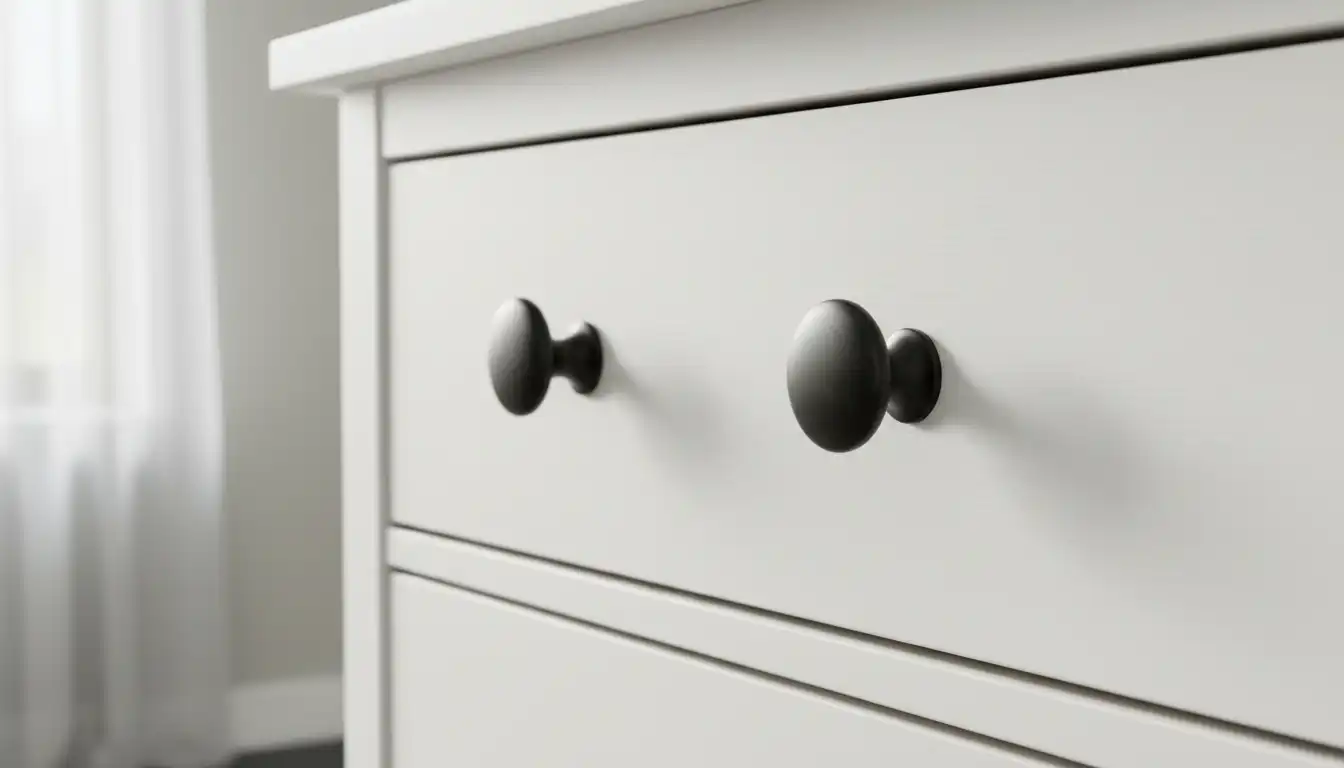
The “Rule of Thirds”: Your Secret for Perfect Placement
The secret to ideal knob placement is the “Rule of Thirds.” This principle is used in art, photography, and design to create compositions that are pleasing to the eye. For drawers, it provides a simple mathematical formula for achieving flawless balance. You don’t need to guess or eyeball it.
To apply this rule, you mentally (or literally) divide the width of your drawer front into three equal sections. You will place one knob in the center of the leftmost section and the other knob in the center of the rightmost section. The middle third remains empty. This creates a harmonious and visually stable arrangement that always looks correct.
Vertical Placement: Finding the Sweet Spot
Once you have the horizontal spacing figured out, you need to determine the vertical position. For a simple, flat drawer front (a slab drawer), the solution is easy: find the exact vertical center of the drawer height. This is the most common and visually restful placement.
If you have a drawer with a recessed panel, like a Shaker-style or raised-panel drawer, the rules change slightly. In this case, you should find the vertical center of the flat panel itself, ignoring the surrounding frame or stiles. Placing the knobs within the center of this panel creates a more integrated and custom look.
Step-by-Step Guide: How to Install Double Knobs Like a Pro
With the right technique and tools, installing double knobs is a precise and rewarding project. Taking your time with the measurement and marking phase is the key to a flawless finish. Rushing this stage is where errors happen.
Tools and Materials You’ll Need
Gathering your tools beforehand makes the process smooth and efficient. You will need a quality tape measure, a sharp pencil for marking, a level or a long straight edge, a power drill, drill bits appropriately sized for your hardware screws, and a screwdriver. For ultimate precision, a cabinet hardware jig is a highly recommended tool that makes repeatable accuracy effortless.
The Measurement and Marking Process
First, find the vertical centerline of your drawer front (or the panel, if applicable). Use the tape measure and draw a light, level pencil line across the drawer. Next, measure the total width of the drawer front. Divide this measurement by three. For example, if your drawer is 30 inches wide, each third will be 10 inches.
From the left edge of the drawer, measure in half the distance of the first third (in our example, 5 inches) and make a mark on your horizontal centerline. This is your first drill point. Repeat the process from the right edge, measuring in 5 inches and making your second mark. Double-check that your two marks are perfectly level before proceeding.
Drilling and Installation Done Right
Select a drill bit that is slightly larger than the diameter of your knob’s screw. This gives you a tiny bit of wiggle room for adjustment. To prevent the wood from splintering on the inside of the drawer as the drill bit exits, hold a small block of scrap wood firmly against the interior surface where you are drilling. Drill straight through your pencil marks from the outside in.
Insert the screw from the inside of the drawer and tighten the knob from the outside. Make it snug, but be careful not to over-tighten, as this can damage the wood or the knob’s finish. Once both knobs are installed, step back and admire your perfectly balanced, professional-looking work.
One Knob vs. Two Knobs: A Head-to-Head Comparison
Still on the fence? Sometimes a direct comparison can clarify the best choice for your specific project. Both options have their place, and understanding their respective strengths will help you align your hardware choice with your goals for both style and function. This table breaks down the key differences to help you decide.
| Feature | Single Knob/Pull | Double Knobs |
|---|---|---|
| Best For (Drawer Width) | Drawers under 24 inches wide | Drawers 24 inches or wider |
| Aesthetics | Clean, minimalist, simple | Symmetrical, traditional, substantial |
| Functionality | Good for light to medium-weight drawers | Excellent for wide, heavy drawers; prevents racking |
| Installation Complexity | Easiest; requires only one hole | More complex; requires precise measurement for two holes |
| Cost | Lower; fewer pieces of hardware required | Higher; double the hardware cost per drawer |
Advanced Considerations and Pro Tips
Once you’ve mastered the basics of placement, a few extra tips can help you integrate this look seamlessly throughout your home and handle any tricky situations that may arise. These details separate a good result from a truly great one.
What About Drawers with Existing Single Holes?
If you’re retrofitting a piece of furniture that already has a single, central hole, you’ll need to address it before drilling for your new double knobs. The best method is to fill the old hole with a quality wood filler. Overfill it slightly to account for shrinkage, let it dry completely, and then sand it perfectly smooth so it’s flush with the drawer surface.
Once filled and sanded, the area can be primed and painted or stained to match the rest of the drawer front. This is one of those amazing home upgrades for under $50 that can completely transform the look of an old piece of furniture, giving it a new and more refined life.
Consistency is Key: A Whole-Room Approach
For a cohesive and professional look, apply your hardware logic consistently across all the cabinetry in a room. Decide on your rule—for instance, “drawers over 24 inches get two knobs, and drawers under 24 inches get one”—and stick to it. This creates a pleasing visual rhythm and makes the entire installation look intentional.
This kind of systematic planning is essential in any design project, from choosing knobs to understanding the bigger picture of renovation costs. Gaining insight into why closet systems are so expensive, for example, reveals how every small component and decision contributes to the final cost and quality of a project.
Beyond the Kitchen: Where Else to Use Double Knobs
The appeal of double knobs extends far beyond the kitchen. This classic hardware application works wonderfully on bathroom vanities, especially on wide sink base drawers. It’s also a perfect choice for bedroom furniture, such as long dresser drawers or the bottom drawers of an armoire. Built-in cabinetry in a living room, home office, or a storage bench in a mudroom are also excellent places to employ this balanced, high-end look.
Troubleshooting Common Double Knob Problems
Even with careful planning, you might run into a few small issues. Knowing how to diagnose and solve these common problems will ensure your project is a complete success and functions perfectly for years to come.
My Knobs Look Crooked! How Do I Fix Them?
If you step back and your knobs don’t look perfectly level, don’t panic. First, use a level to confirm if it’s an optical illusion or a real issue. If they are indeed misaligned, the fix depends on how far off they are. If it’s a very minor amount, you may be able to slightly widen one of the drill holes to allow for adjustment before re-tightening the knob.
Sometimes, a drawer front itself isn’t perfectly square, which can create alignment challenges. It’s a subtle issue, much like how a snowblower pulling to one side can indicate a hidden problem with tire pressure or the blade alignment. Always trust your level over your eye.
The Drawer Binds or is Hard to Open. What’s Wrong?
This is a common issue, especially on older furniture with wooden drawer slides or less robust hardware. When you pull on only one of the two knobs, you are applying an angled force that can cause the drawer to bind. The solution is to get in the habit of pulling both knobs at the same time or pulling with one hand from the center point between the two knobs.
Upgrading to modern, full-extension ball-bearing drawer slides can also eliminate this problem entirely. These high-quality slides are designed to handle off-center forces and provide a smooth glide regardless of where you pull from.
Elevating Your Drawers from Functional to Fabulous
The decision to use double knobs on drawers is more than just a hardware choice; it’s a commitment to a higher level of design detail. While it seems like a small thing, this element has the power to define the character of your furniture and your room. By understanding the principles of when to use them and, most importantly, how to place them using the “Rule of Thirds,” you can avoid the common mistakes that plague many DIY projects.
This simple, affordable upgrade, when done correctly, adds a layer of sophistication, balance, and quality. It’s a testament to the fact that in design, thoughtful details are not just details—they are what transform a space from ordinary to extraordinary. With this knowledge, you are now equipped to make confident choices and execute them with professional precision.
