
Does Pickle Crisp Expire? The Truth About Canning’s Best Kept Secret
You’ve spent weeks tending to your garden, nurturing cucumbers from vine to harvest. The kitchen is filled with the tangy aroma of vinegar and dill. You reach into the pantry for the key to perfectly crunchy pickles, that trusty jar of Pickle Crisp, only to find it’s hard, clumpy, and well past the “best by” date. The immediate question is a frustrating one: does Pickle Crisp expire, and have you just ruined your entire batch before it even began?
This scenario is all too common for home canners and gardeners. The disappointment of biting into a soft, mushy pickle after hours of work is a shared pain. The problem isn’t just about a date on a jar; it’s about understanding the nature of the ingredients we rely on to preserve the fruits of our labor and ensure every jar is a crunchy success.
You'll Learn About
The Real Reason Your Pickle Crisp “Expires” (It’s Not What You Think)
Let’s clear up the biggest misconception right away. Pickle Crisp, which is simply food-grade calcium chloride, does not expire in the traditional sense. As a pure mineral salt, it doesn’t spoil, rot, or become unsafe to consume over time like perishable food does. The “best by” date on the packaging is more about quality and usability than safety.
The true enemy of Pickle Crisp is not time, but moisture. Calcium chloride is highly hygroscopic, which means it aggressively absorbs moisture from the surrounding air. This is the root cause of its degradation and the reason it can seem to “go bad.” When exposed to humidity, the fine granules undergo a physical transformation that renders them difficult, if not impossible, to use correctly in your recipes.
From Granules to Rock: The Stages of Moisture Contamination
Understanding what happens to Pickle Crisp when it’s exposed to air is key to preventing the problem. The degradation follows a predictable pattern that you can easily spot.
First, you’ll notice minor clumping. The free-flowing granules will start to stick together, forming small, easily breakable clumps. At this stage, it’s often still usable if you can accurately break it up and measure it. However, this is the first warning sign that your storage method is failing.
Next, the clumps will solidify into a hard brick. The product becomes a single, solid mass that is extremely difficult to break apart. Attempting to chisel off a piece for measurement is not only frustrating but also highly inaccurate, jeopardizing the texture of your pickles. This is the point where most home canners discard the product.
Finally, in the most advanced stage of moisture exposure, the granules will completely deliquesce, turning into a concentrated liquid brine. The calcium chloride has absorbed so much water from the atmosphere that it has dissolved itself. At this stage, it is completely unusable for standard pickling recipes that call for a dry measurement.
The Science of the Crunch: Why Calcium Chloride is Crucial
To appreciate why using compromised Pickle Crisp is a problem, it’s helpful to understand how it works. The satisfying crunch of a good pickle comes from the integrity of the cucumber’s cell walls, which are held together by a substance called pectin. During the heating process of canning, enzymes naturally present in the cucumber can break down this pectin, leading to a soft, mushy texture.
This is where calcium chloride comes in. The calcium ions in Pickle Crisp interact with the pectin, forming calcium pectate. This compound reinforces the cell walls, creating a stronger structure that can withstand the heat of the water bath canner. It essentially locks in the crispness that was present in the fresh vegetable, ensuring it doesn’t degrade during preservation.
The Dangers of Using “Expired” Pickle Crisp in Your Home Canning
While old Pickle Crisp won’t make your food unsafe in terms of spoilage, using it can lead to a host of other problems that spell disaster for your canning projects. The primary danger lies in the inability to measure it accurately.
Inaccurate measurements are the number one cause of failed batches. A recipe calls for a very small, precise amount—typically 1/8 teaspoon per pint or 1/4 teaspoon per quart. Using a chunk broken off a hardened brick or guessing with the liquefied version makes this precision impossible. Too little, and you’ll end up with soft pickles. Too much, and your pickles can become unpleasantly hard or develop a bitter, salty flavor.
Ultimately, this leads to wasted produce, time, and effort. There’s nothing more discouraging than opening a jar you lovingly prepared, only to find the contents are a textural disappointment. Protecting the integrity of your Pickle Crisp is a direct investment in the success of your garden preservation.
The Ultimate Guide to Storing Pickle Crisp for Maximum Potency
Preventing moisture contamination is the only way to ensure your Pickle Crisp remains effective indefinitely. The original plastic container it comes in is rarely sufficient for long-term protection once opened.
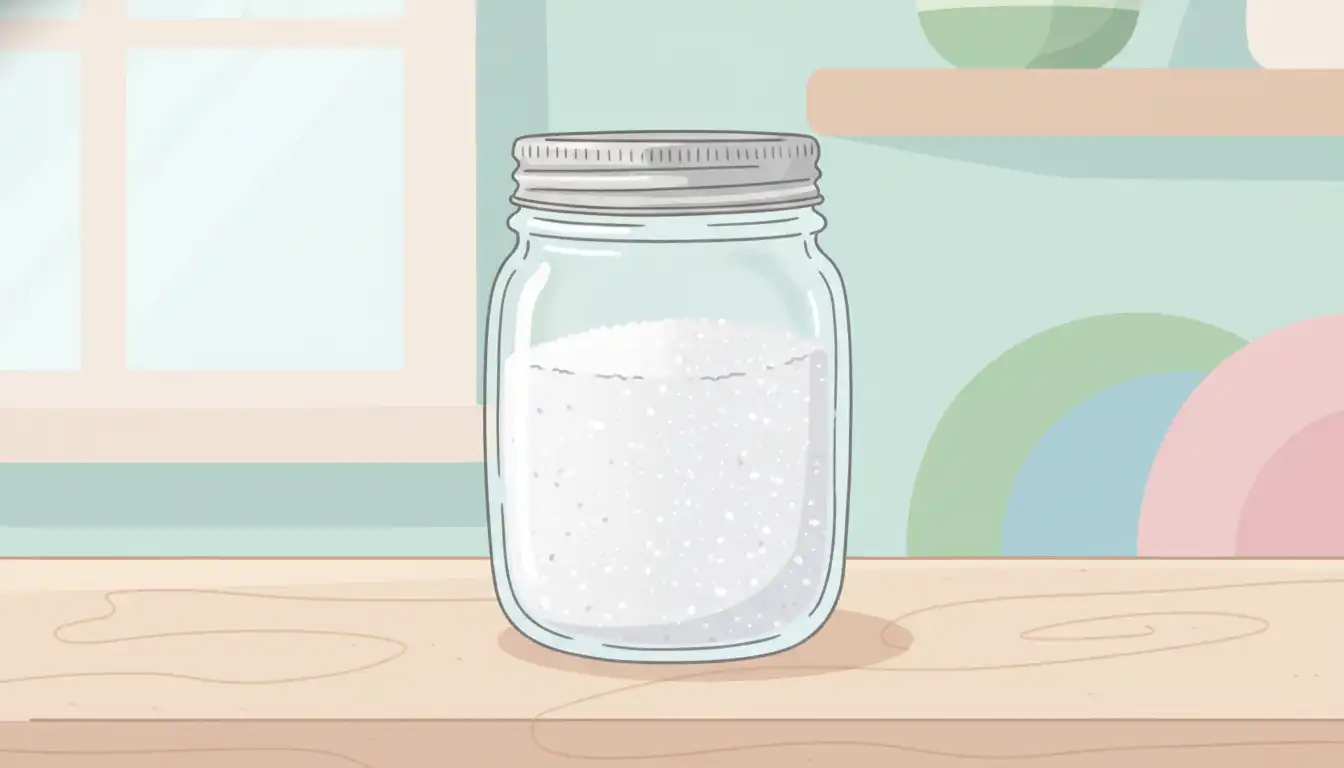
Your first line of defense is a truly airtight container. A glass canning jar, such as a Mason jar with a two-piece lid, is an excellent choice. The rubber seal on the lid provides a much better barrier against humidity than a simple plastic cap. For an even higher level of protection, consider transferring the granules to the jar and then using a vacuum sealer attachment to remove all the air.
For long-term storage, especially in humid climates, place the entire original container inside a larger, sealable Mylar bag or vacuum-seal bag with an added food-safe desiccant packet. These packets are designed to absorb any ambient moisture, acting as a final defense to keep the granules perfectly dry. Store the container in a cool, dark, and consistently dry location like a pantry or cupboard—never under a sink or in a damp basement where humidity fluctuates.
Thinking about organization in your pantry is also key. Storing ingredients properly is just as important as having the right tools. When planning your storage spaces, even the color of your shelving, like choosing between shades of white paint for a clean look, can contribute to an organized and efficient kitchen environment.
Can You Revive Clumped Pickle Crisp?
A common question is whether hardened Pickle Crisp can be saved. If it’s only lightly clumped, you may be able to break it apart with a fork or by striking the container. For more solid blocks, some suggest gently drying it in a low-temperature oven. However, this is often more trouble than it’s worth. Given the low cost of a new jar, the most reliable path to crunchy pickles is to discard compromised product and start fresh, ensuring your measurements are always accurate.
| Sign of Moisture Exposure | Visual Appearance | Is it Usable? | Recommended Action |
|---|---|---|---|
| Fresh & Dry | Free-flowing white granules. | Yes, ideal for use. | Use as directed in recipes. |
| Minor Exposure | Small, easily breakable clumps. | Use with caution. | Break up completely to ensure accurate measurement. Upgrade storage immediately. |
| Moderate Exposure | A single hard, solid brick. | Not Recommended. | Accurate measurement is nearly impossible. Discarding is the safest option. |
| Heavy Exposure | Completely dissolved into a liquid. | No. | The product is unusable for canning recipes. Discard. |
Beyond Pickles: Other Smart Uses for Calcium Chloride in Your Home and Garden
The usefulness of calcium chloride extends far beyond the pickle jar, making it a valuable addition to any home and garden toolkit. Its unique properties can solve a number of common household and horticultural problems.
In the garden, it serves as a readily available source of calcium for plants. It can be used to create a foliar spray to combat blossom-end rot in tomatoes and peppers, a common issue caused by calcium deficiency. This direct application can help save your harvest from this frustrating condition.
Around the house, its hygroscopic nature makes it an effective dehumidifier. You can place a small, open container of calcium chloride in damp closets, basements, or even a bathroom with limited ventilation to help absorb excess moisture and prevent musty odors. It’s also a powerful de-icing agent in the winter, melting ice and snow on walkways more effectively and at lower temperatures than rock salt (sodium chloride).
Achieving the Perfect Pickle: A Final Word
The secret to consistently crunchy pickles lies not just in a great recipe, but in understanding the science of your ingredients. While Pickle Crisp (calcium chloride) doesn’t “expire” from age, it absolutely degrades from moisture. By prioritizing dry, airtight storage, you can ensure this essential ingredient remains potent and ready to work its magic batch after batch.
Don’t let a hardened, clumpy jar of Pickle Crisp stand between you and canning perfection. Treat it with the same care as your other valuable pantry staples, and you’ll be rewarded with the satisfying, resounding crunch of a perfect homemade pickle every single time.
