
Architect for an Addition? The Hidden Truth Before You Spend a Dime
You dream of that spacious new master suite, a sun-drenched family room, or a kitchen that finally has enough counter space. The vision for your home addition is crystal clear in your mind. But then the practical questions begin, and one looms larger than all the others: do you need an architect to build an addition?
The answer isn’t a simple yes or no. It’s a critical decision that sits at the crossroads of your budget, your project’s complexity, and local laws. Making the wrong choice can lead to costly mistakes, permit nightmares, and a final result that falls short of your dreams.
This guide will demystify the process. We will explore when an architect is an absolute necessity, what they truly bring to your project, and what your other options are. Understanding this is the first and most important step in building your vision correctly.
You'll Learn About
The Legal Bottom Line: When the Law Demands an Architect
Before you even consider design aesthetics, you must consider the law. Your local building department has the final say, and in many cases, their rules make the decision for you. Ignoring these regulations isn’t an option; it will halt your project before a single nail is hammered.
Many jurisdictions have specific thresholds that mandate plans stamped by a licensed architect or engineer. These rules are in place for safety and to ensure structural integrity. You will almost certainly need an architect if your project involves these elements.
Common Triggers for Requiring an Architect
While this varies by state and city, some common red flags exist. If your addition involves changing the fundamental structure of your home, you’re in architect territory. This includes altering your roofline or adding a second story.
Projects that impact load-bearing walls or require significant foundation work also demand professional oversight. The core principle is simple: the more complex and structurally significant the change, the more likely you are to need an architect’s official seal of approval on the plans. Always check with your local building permit office first.
Beyond the Blueprints: An Architect’s True Role
Thinking an architect just draws pretty pictures is a common and costly misconception. Their role extends far beyond simple drafting. They are your primary advocate and the creative and technical leader of your project from the first sketch to the final walkthrough.
An architect is trained to see possibilities and solve problems you may not even know you have. They blend art with science to create spaces that are not only functional but also enhance your quality of life.
From Vague Idea to Viable Plan
You might want a “bigger kitchen,” but an architect asks the right questions to define what that really means. Do you need more storage, better workflow for cooking, more natural light, or a space that opens into the living area? They translate these desires into a detailed, buildable plan.
They are masters of space, light, and flow. A well-designed addition by an architect won’t feel like a box tacked onto your house; it will feel like an organic, intentional part of your home. This level of design integration is what separates a good addition from a great one.
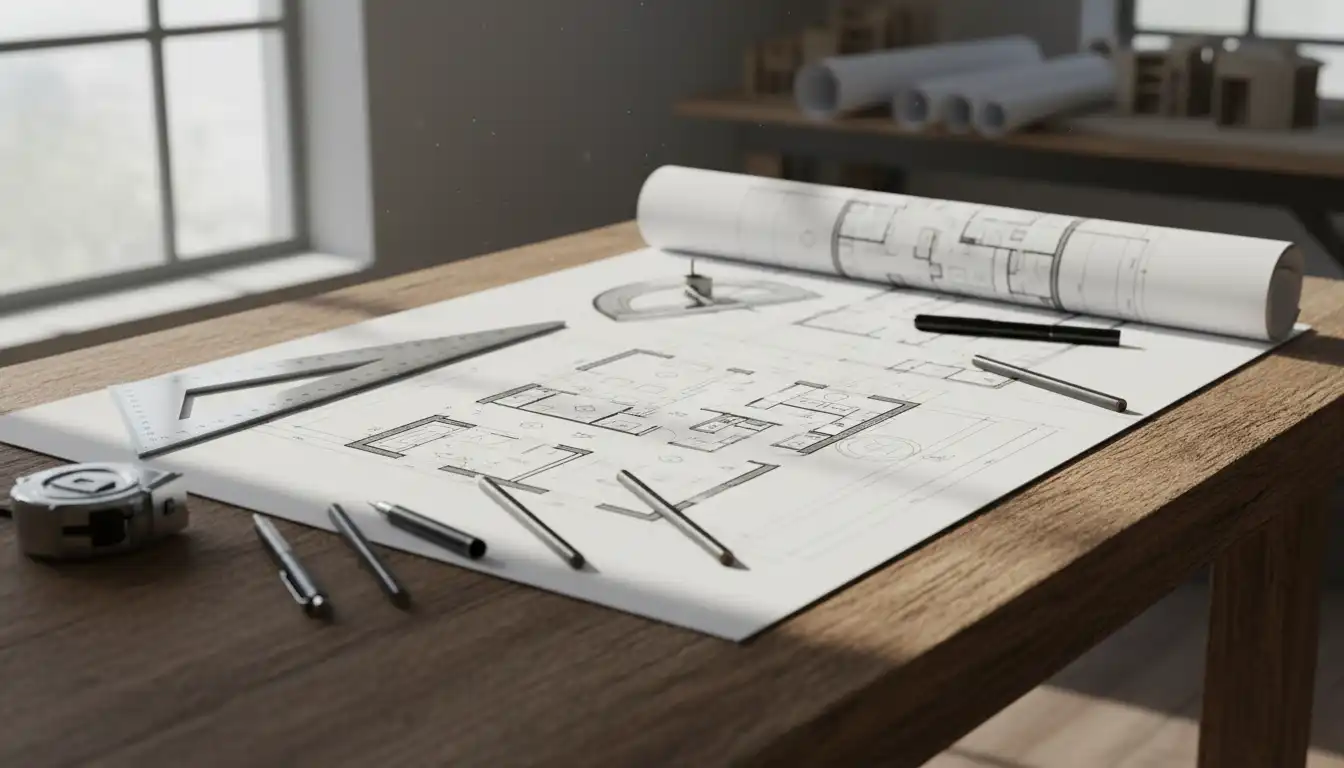
Mastering the Maze of Permits and Paperwork
The permitting process can be a labyrinth of zoning laws, setback requirements, and building codes. An architect is your expert guide through this bureaucracy. They know the local codes inside and out and prepare the highly detailed documents required for approval.
This expertise saves you an immense amount of time and stress. A rejected permit application can delay a project for weeks or months, but an architect ensures the plans are compliant from the start, smoothing the path to getting your project off the ground.
Your Advocate During Construction
An architect’s job doesn’t end when the permit is issued. Many homeowners retain them for contract administration. In this role, they act as your eyes and ears on the job site.
They conduct site visits to ensure the builder is following the plans and specifications, help resolve issues that arise during construction, and review contractor payment requests. This oversight provides crucial checks and balances, protecting you from corner-cutting and ensuring quality control.
Weighing the Alternatives: Who Else Can Design Your Addition?
While an architect offers the most comprehensive service, they aren’t the only option, especially for simpler projects. Understanding the alternatives is key to matching the right professional to the right job. Sometimes, a smaller project like a simple bump out wall may not require a full architectural service.
Choosing the right path depends heavily on your project’s scale. The team you need for a multi-room addition is very different from the one needed for small projects, like the ones you might find in a guide to amazing home upgrades for under $50.
The Draftsperson: The Technician
A draftsperson is skilled at creating technical drawings and construction documents. Think of them as the technician who translates a finished design into the detailed blueprints a builder needs. They are typically less expensive than an architect.
A draftsperson is a viable option if your design is simple, you’ve already figured out the exact layout, and no significant structural or complex design challenges exist. However, they do not offer design ideas, problem-solving, or project management. You provide the vision, and they draw it.
The Design-Build Firm: The All-in-One Package
A design-build firm offers a single contract for both the design and construction of your project. The designers and builders are all part of the same team. This integrated approach has become increasingly popular for its efficiency.
The primary benefits are streamlined communication and a single point of responsibility. This can often lead to a faster project timeline and better budget management. The main drawback is the lack of an independent advocate; the designer works for the same company as the builder, which can reduce checks and balances.
Comparing Your Design Professional Options
Choosing the right professional is crucial for the success of your home addition. This table breaks down the key differences between hiring an architect, a design-build firm, or a draftsperson to help you make an informed decision based on your project’s specific needs.
| Factor | Architect | Design-Build Firm | Draftsperson |
|---|---|---|---|
| Scope of Service | Comprehensive: Concept, design, permits, bidding, construction oversight. | Integrated: Design and construction under one contract. | Limited: Creates technical drawings from an existing design. |
| Best For | Complex, custom projects requiring creative solutions and homeowner advocacy. | Projects where streamlining communication and timeline is a top priority. | Simple, straightforward projects where the design is already finalized. |
| Cost Structure | Percentage of construction cost (8-15%), hourly, or fixed fee. | A single, combined price for the entire project. | Typically a lower, fixed fee or hourly rate for drawings. |
| Checks & Balances | High. The architect is your independent advocate overseeing the builder. | Lower. Designer and builder are on the same team. | None. You are responsible for all oversight. |
| Design Creativity | Highest level of custom design, problem-solving, and creative vision. | Design may be influenced by the firm’s construction methods and costs. | No design services offered; they only execute your ideas. |
The Hidden Value an Architect Delivers
The conversation around architects often gets stuck on cost. However, the real value is in the long-term benefits and the sophisticated problems they solve—problems you might not have even anticipated. This is where their expertise truly shines and provides a return on your investment.
A great architect doesn’t just add space; they add lasting value to your home and your daily life. They consider factors that go far beyond the floor plan.
Designing for the Future, Not Just for Today
An architect thinks about your home’s entire lifecycle. They design an addition that not only meets your current needs but can also adapt to future changes. This includes planning for potential accessibility needs (aging in place) or creating flexible spaces that can serve different functions over time.
They also possess a deep understanding of how to maximize resale value. A seamless, well-integrated addition is a major selling point. In contrast, a clunky, poorly designed addition can actually detract from a home’s value, making the initial savings on design fees a costly mistake in the long run.
Unlocking Your Home’s Hidden Potential
Often, the best solution isn’t the most obvious one. While you may be focused on the addition itself, an architect analyzes how the new space impacts the entire home. They might identify an opportunity to fix an awkward hallway, improve natural light in an adjacent dark room, or create a better overall flow.
For example, they’ll consider how a new structure connects to existing elements. This can even extend to thinking about how a new staircase should be integrated, a complex task with safety and design implications often overlooked by homeowners but explored in depth when considering who builds stairs. This holistic approach can transform your entire home, not just the new part.
Making the Final Decision: A Framework for Your Project
So, how do you decide? Use these questions as a final checklist to determine if an architect is the right choice for your home addition.
First, assess the complexity. Are you adding a second story, changing your roofline, or moving multiple load-bearing walls? If the answer is yes, you almost certainly need an architect’s expertise for both safety and design cohesion.
Next, consider your own design confidence. Do you have a very clear, detailed vision of exactly what you want, down to the last measurement? Or are you looking for a creative partner to help you explore possibilities and maximize your space? If you need creative problem-solving, an architect is invaluable.
Finally, evaluate your budget and timeline. While an architect is an upfront cost, they can save you money by designing an efficient building, avoiding costly errors, and managing a competitive bidding process with contractors. Their involvement often leads to a smoother, more predictable construction process.
Conclusion: Your Partner in Building a Better Home
The decision to hire an architect for your addition is not just about fulfilling a legal requirement. It’s about investing in a smooth process, a high-quality result, and a final space that truly enhances your home and your life. An architect is your creative partner, technical expert, and trusted advocate.
For simple, straightforward projects, other professionals can be a suitable choice. But for a significant addition that will forever change your home, the expertise, vision, and oversight of an architect are the foundation of a successful build. Choosing the right professional is the most important blueprint of all.
