
Do Ants Lay Eggs on Plants? The Truth May Shock You
You’ve seen it before: a trail of determined ants marching up the stem of your favorite rose bush or prized tomato plant. You follow the trail, and there, clustered on the underside of a leaf, you find a collection of tiny, speck-like dots. Your first thought is immediate and alarming: are those ant eggs?
It’s a logical conclusion. Where there are ants, there must be eggs, and the plant seems to be the center of their activity. This common sight sends many gardeners into a panic, imagining a full-blown ant colony about to hatch all over their precious foliage. But the truth is far more complex and fascinating.
You'll Learn About
The Straight Answer: Do Ants Lay Eggs on Plants?
Let’s clear this up immediately: No, ants do not lay their eggs on the leaves or stems of plants. The tiny specks you are seeing are almost certainly not ant eggs. Ant queens lay their eggs deep within the controlled environment of their nest, which provides the perfect temperature and humidity for the vulnerable eggs to develop.
Ant eggs are incredibly delicate. They are small, oval, translucent white, and soft. Exposing them to the open air on a plant leaf would cause them to dry out and perish. Worker ants are meticulous caretakers and go to great lengths to protect the colony’s future generations by keeping the eggs, larvae, and pupae safely underground, inside rotting wood, or within wall cavities.
If Not Ant Eggs, What Are Those Tiny Dots on My Plants?
So, if they aren’t ant eggs, what are you seeing? The reality is that the ants are on your plants for a different reason, and those tiny dots are the key to understanding why. In most cases, you are looking at an entirely different insect, one that the ants are actively protecting.
The most common culprits are aphids. These small, pear-shaped insects are sap-suckers and a major food source for ants. Aphids feed on plant juices and excrete a sweet, sticky substance called honeydew. Ants find this honeydew irresistible and will “farm” the aphids to harvest it, much like a dairy farmer tends to cows.
What you are mistaking for ant eggs is likely a colony of aphids. The ants are there guarding their food source, protecting the aphids from predators like ladybugs and lacewings. They will even move aphids to better feeding spots on the plant to ensure a steady supply of honeydew.
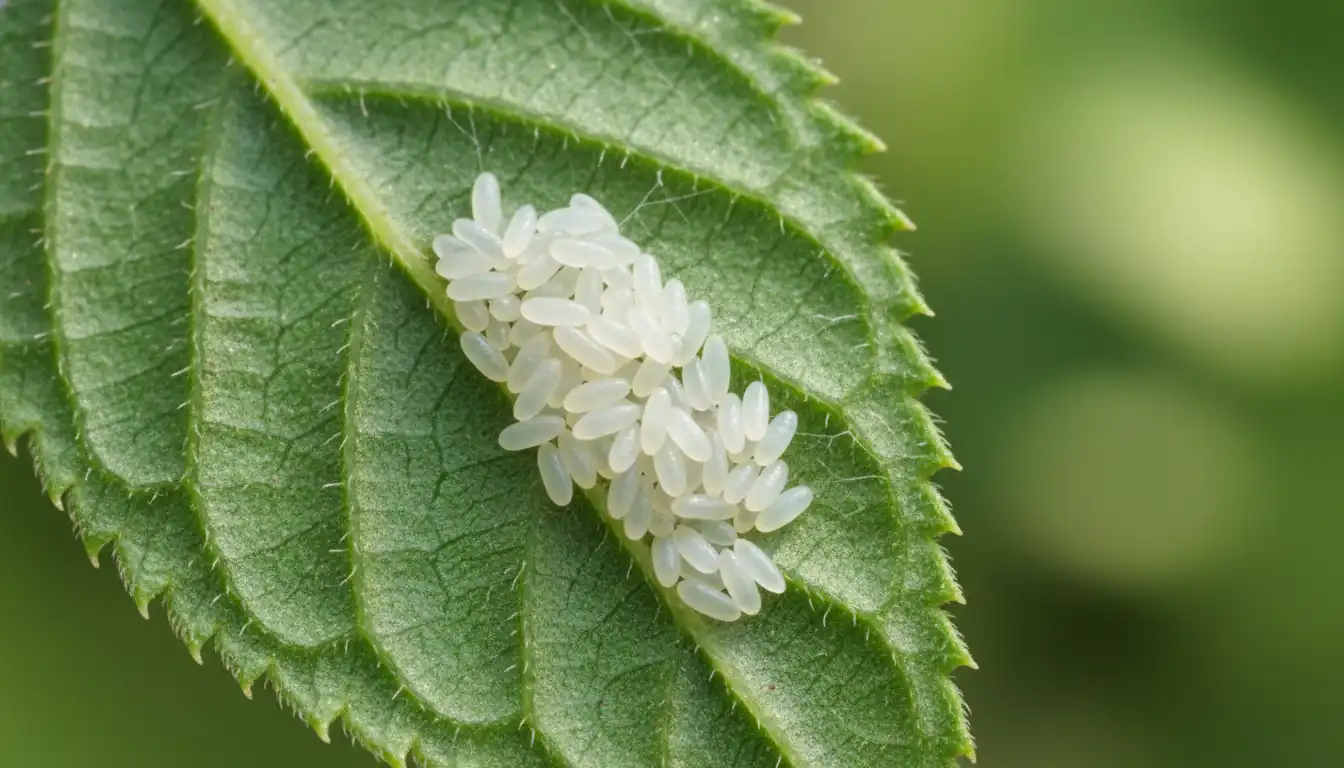
Other Possibilities Mistaken for Ant Eggs
While aphids are the most frequent explanation, other things can also look like tiny eggs on your plants:
- Scale Insects: These are small, immobile pests that latch onto stems and leaves, often appearing as hard or soft bumps.
- Mealybugs: These pests look like tiny bits of cotton and often hide in the joints of stems and leaves.
- Spider Mite Eggs: If you see fine webbing on your plants, tiny specks could be the eggs of spider mites.
- Whiteflies: These tiny, moth-like insects and their eggs are often found on the undersides of leaves.
- Fungal Growth: Sometimes, harmless saprophytic fungi can appear on the soil or plant as tiny white or yellow balls, which can be mistaken for eggs.
Why Are Ants All Over My Plants, Then?
Understanding why ants are swarming your plants is the first step to managing them. It’s rarely about the plant itself and almost always about a food source the plant is hosting.
The Honeydew Trail: Ants as Aphid Farmers
The relationship between ants and aphids is a classic example of symbiosis. The aphids get protection from predators, and the ants get a reliable, high-energy food source. A large ant presence on a plant is one of the strongest indicators of a significant aphid infestation. The ants are not harming your plant directly, but by protecting the aphids, they are contributing to the damage the aphids cause.
Nesting in Potted Plants
While they don’t lay eggs on the leaves, ants absolutely will build nests in the soil of potted plants. A container provides a secure, sheltered environment with stable moisture levels, making it an ideal home. If you notice ant activity around the base of a pot and soil being pushed out of the drainage holes, you likely have a nest.
This can harm the plant by disturbing its roots and altering the soil structure, which can lead to poor drainage and dry pockets. Using a high-quality potting mix can sometimes deter pests by promoting healthier, more resilient plants. If you find a nest, topping potted plants with sand can create a dry barrier that is less inviting for ants and other soil-dwelling pests like fungus gnats.
How to Get Rid of Ants and Their “Eggs” on Your Plants
Now that you know the ants are a symptom of a larger pest problem, you can tackle the issue effectively. The key is to remove the aphids (or other pests), which will in turn cause the ants to leave in search of a new food source.
Step 1: Get Rid of the Primary Pests (Aphids, Scale, etc.)
Forget about spraying the ants directly at first. You need to eliminate their food. A strong jet of water from a hose is often enough to dislodge aphids from a plant. For more stubborn infestations, organic solutions are highly effective.
- Insecticidal Soap: A solution of mild soap and water can be sprayed directly onto the pests. It breaks down their outer shell, causing them to dehydrate.
- Neem Oil: This is an excellent organic pesticide and fungicide. It disrupts the life cycle of pests and deters them from feeding. Mix it according to the package directions and spray all surfaces of the plant.
- Horticultural Oil: This oil-based solution smothers pests and their eggs on contact. It is especially effective during the dormant season but can also be used during the growing season in a lighter formulation.
Step 2: Manage the Ant Population
Once the food source is gone, the ants will lose interest in your plant. However, if they have established a large colony nearby or in your pots, you may need to take further action. Remember, pests in the garden can sometimes find their way indoors, much like the sources of tiny black eggs on a house often originate from nearby plants.
- Ant Baits: This is the most effective long-term solution. Worker ants carry the slow-acting poison bait back to the nest, which eliminates the entire colony, including the queen. Place baits along their trails but out of reach of pets and children.
- Diatomaceous Earth (DE): This natural powder is made from fossilized aquatic organisms. It has microscopic sharp edges that scratch the ants’ exoskeletons, causing them to dehydrate. Sprinkle a thin layer of food-grade DE around the base of affected plants.
- Disrupt Their Trails: Ants follow chemical trails. You can disrupt these by wiping them down with a 50/50 solution of white vinegar and water.
For infestations in pots, you can submerge the entire pot in a bucket of water mixed with a few tablespoons of insecticidal soap for about 20 minutes. This will drown the ants and force them out of the soil. Afterward, let the pot drain completely.
| Method | How It Works | Best For | Pros & Cons |
|---|---|---|---|
| Insecticidal Soap | Dissolves the outer coating of soft-bodied insects like aphids, causing dehydration. | Aphids, mealybugs, spider mites. | Pros: Organic, low toxicity, readily available. Cons: Must make direct contact with pests, may require repeat applications. |
| Neem Oil | Acts as a hormone disruptor, feeding inhibitor, and repellent. Smothers pests on contact. | A wide range of pests including aphids, scale, and mealybugs; also has fungal properties. | Pros: Organic, systemic benefits, broad-spectrum. Cons: Strong odor, can burn leaves if applied in direct sun. |
| Ant Baits | Worker ants carry a slow-acting poison mixed with a sweet attractant back to the nest, eliminating the whole colony. | Controlling entire ant colonies. | Pros: Highly effective, targets the source of the problem. Cons: Slow to act, must be placed carefully away from pets/children. |
| Diatomaceous Earth | Abrasive powder damages the exoskeleton of insects, leading to dehydration and death. | Crawling insects like ants, slugs, and earwigs. | Pros: Natural, non-toxic, effective as a barrier. Cons: Becomes ineffective when wet, can harm beneficial insects. |
A Deeper Dive: The Unique Case of “Ant-Plants”
While the vast majority of ants do not have a direct relationship with plants beyond foraging or farming pests, there is a remarkable exception in the natural world: myrmecophytes, or “ant-plants.” These plants have evolved a true symbiotic relationship with ants, offering them shelter and even food in exchange for protection.
Myrmecophytes have developed specialized hollow structures called domatia—such as hollow thorns, stems, or leaf pouches—that are specifically designed to house ant colonies. Some species, like certain Acacias, also produce nutrient-rich food bodies on their leaves for the ants to eat. In return, the resident ants act as a dedicated security force, aggressively defending the plant from herbivores, clearing away competing vines, and even preventing fungal growth.
Even in these highly specialized relationships, the ants keep their precious eggs and larvae tucked safely inside the plant’s domatia, not on the exposed leaves. This fascinating corner of the botanical world highlights the incredible ways nature adapts, but it remains a rare exception to the general rule that the ants on your garden plants are there for the pests.
Conclusion: A Gardener’s Final Takeaway
The sight of tiny dots on your plants surrounded by ants is not a sign that ants are laying eggs. It is a clear signal of a different problem—most likely an aphid infestation. The ants are simply opportunistic farmers protecting their “livestock.”
By correctly identifying the issue, you can avoid wasting time and effort on the wrong solutions. Focus on eliminating the sap-sucking pests that are attracting the ants in the first place. Once their food source is gone, the ants will move on. This problem-solution approach not only saves your plants from the direct damage of aphids but also restores the natural balance in your garden, turning a moment of panic into an opportunity for more effective and informed plant care.
