
Dishwasher in Corner: The #1 Kitchen Design Mistake You’re About to Make
Placing a dishwasher in the corner of a kitchen layout seems like a clever use of space. On paper, it promises to solve tricky design puzzles, especially in smaller or L-shaped kitchens where every inch counts. However, this common placement choice often transforms from a space-saving solution into a daily source of frustration and kitchen gridlock.
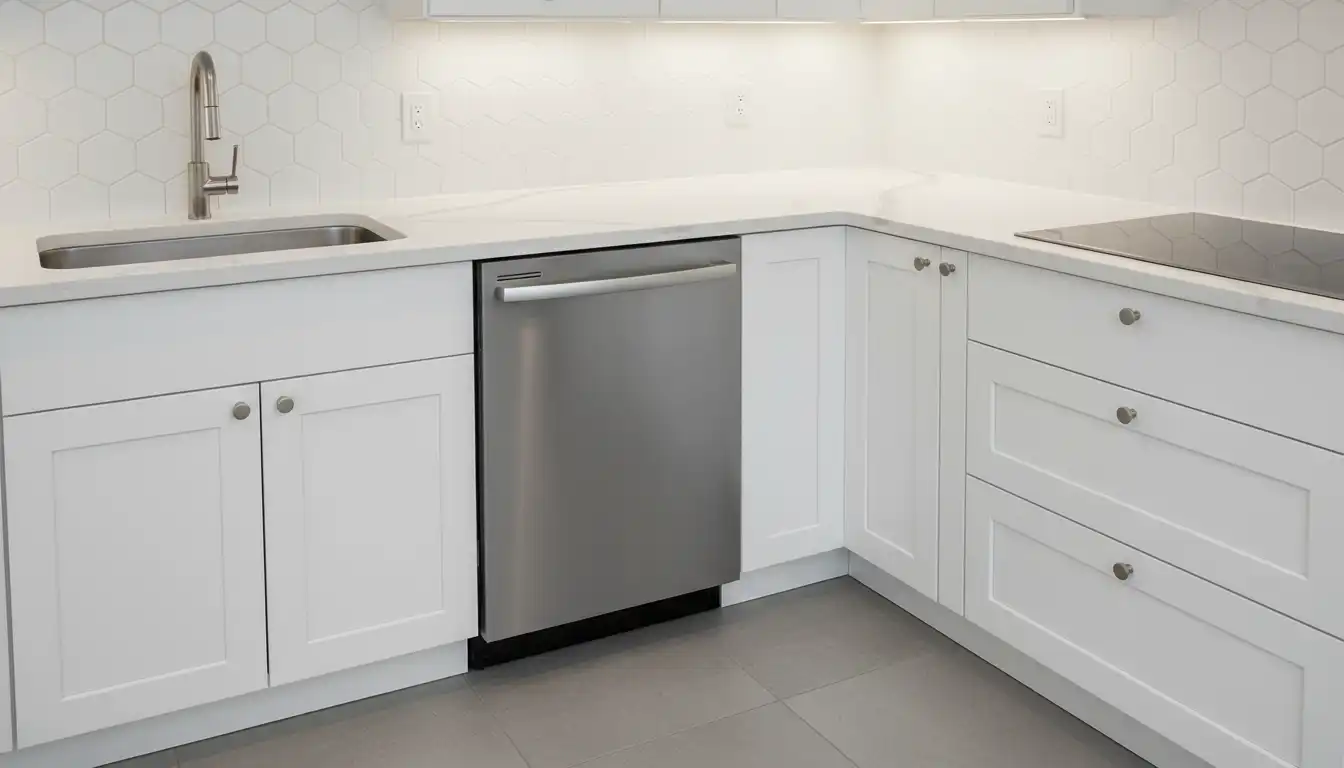
The core issue is a fundamental clash of geometry and workflow. A fully open dishwasher door can completely block adjacent cabinets and drawers, turning the simple act of unloading clean dishes into a multi-step, countertop-cluttering ordeal. Even worse, it can create a “user trap,” pinning you between the open door and the countertop, making movement awkward and inefficient.
You'll Learn About
Why the Corner Dishwasher Seems Like a Genius Idea
In the puzzle of kitchen design, the corner is often the most awkward piece. It’s deep, difficult to access, and frequently becomes a graveyard for rarely used appliances. Replacing this “dead space” with a functional appliance like a dishwasher feels like a strategic victory. It appears to maximize utility in an otherwise underused area.
For small kitchens, this logic is even more compelling. By moving the dishwasher to a corner, you free up valuable cabinet space right next to the sink, which is often considered the most prime real estate in the kitchen. This can allow for wider drawer banks for utensils or more convenient storage for everyday items. The idea promises a more open and efficient layout.
The Allure of Uninterrupted Counter Space
A seamless run of cabinetry and countertop is aesthetically pleasing. Placing a dishwasher at the end of a cabinet run, tucked into a corner, helps achieve this clean, continuous look. It avoids breaking up a bank of drawers or cabinets with a stainless steel appliance front, contributing to a more cohesive and visually calming kitchen design.
This is particularly true in modern and minimalist kitchens where clean lines are paramount. The dishwasher, a utilitarian workhorse, is neatly tucked away, allowing the beauty of the cabinetry and countertops to take center stage. But this focus on form often comes at a significant cost to function.
The Hidden Nightmare: Why Most Corner Dishwashers Fail
The blueprint rarely tells the whole story. What looks perfect in a 2D layout can become a 3D nightmare of colliding doors, blocked access, and ergonomic challenges. The primary failure of a corner dishwasher installation lies in underestimating the appliance’s spatial footprint when it’s in use.
A standard 24-inch dishwasher door extends about 21 to 27 inches into the room when fully open. In a corner, this swinging door creates an impassable barrier, instantly cutting off access to perpendicular cabinets and drawers. This oversight is the single most critical mistake in corner dishwasher placement and one that homeowners regret almost immediately.
The Collision Course: Doors vs. Drawers
Imagine this common scenario: you open your clean dishwasher, ready to put away plates and glasses. You reach for the cabinet where your glasses are stored, but you can’t open the cabinet door because the dishwasher door is in the way. You’re forced to pull everything out, stack it on the counter, close the dishwasher, and then open the cabinet to put things away.
This daily dance of opening, closing, and shuffling items defeats the purpose of an efficient kitchen. The conflict isn’t just with cabinet doors; it’s also with drawers. If your utensil drawer is on the perpendicular cabinet run, you’ll face the same frustrating blockade, making a simple task tedious and inefficient.
Trapped! The User Accessibility Problem
Beyond the issue of blocked cabinets, the corner placement creates a physical trap for the user. When the dishwasher door is open, it forms a 90-degree angle with the countertop, leaving very little room for you to stand and move comfortably. You are essentially pinned in a small triangle of space.
This makes loading and unloading an awkward, back-straining process. You have to twist and reach over the door rather than standing directly in front of the machine. This ergonomic flaw can make kitchen cleanup more physically demanding than it needs to be and highlights why proper workflow is just as important as the placement of individual appliances.
The Right Way to Install a Dishwasher in a Corner
While placing a dishwasher directly in a 90-degree corner is almost always a mistake, it can be done correctly with careful planning and the right components. The key is to create sufficient buffer space between the dishwasher and the corner, preventing door collisions and ensuring user accessibility. This is not a location to be chosen lightly or without precise measurements.
The solution involves using filler panels or specialized corner cabinets to push the dishwasher away from the true corner. This buffer zone is non-negotiable for a functional layout. Do not install a dishwasher flush against the perpendicular cabinet run without this crucial spacing.
Step 1: Planning Your Clearance Space
The absolute minimum clearance you need is determined by the hardware on your adjacent cabinets. Pulls and knobs on drawers and doors will be the first point of impact. You need enough space for the dishwasher door to swing past them without catching. Industry best practices recommend a minimum of 2 inches of filler space, but more is often better.
To be certain, consult the installation specifications for your specific dishwasher model. Manufacturers provide detailed diagrams showing the door swing radius. Use this information to map out the exact clearance needed to avoid any contact with perpendicular cabinetry and hardware.
Step 2: Using Filler Panels and Blind Corner Cabinets
The most common method for creating this buffer is to install a “filler panel” between the dishwasher and the corner. This is a strip of material that matches your cabinetry, typically 3 to 6 inches wide, that is placed in the corner. The adjacent perpendicular cabinet then butts up against this filler.
An even better, though more complex, solution is to use a blind corner cabinet. The dishwasher is placed next to the blind corner, and the filler is installed between the dishwasher and the next cabinet in the same run. This configuration inherently pushes the dishwasher further from the corner, often providing the necessary clearance while creating a more integrated look.
Installation Guide: Avoiding Common Pitfalls
A successful corner dishwasher installation depends on foresight and precision. Beyond just planning for door swing, you must also consider the practicalities of plumbing, electrical connections, and countertop support in a tight, often awkward space. Rushing these steps can lead to costly repairs down the line.
Remember that working in a corner complicates everything. Access is limited, making it harder to connect hoses and wires. This is why some professional installers charge more for corner installations. If you are DIY-ing, be prepared for a more challenging process than a standard installation.
Ensuring Proper Countertop Support
A dishwasher does not support the countertop above it. When you remove a standard cabinet to install a dishwasher, you must ensure the countertop remains properly supported. In a corner installation, this can be tricky. You may need to install a ledger board on the wall or a support cleat to prevent the countertop from sagging over time.
This is especially critical with heavy materials like granite or quartz. Failure to provide adequate support can lead to cracks in your countertop, a far more expensive problem to fix than an inconvenient appliance placement. Always consult countertop installation guidelines for your specific material.
Navigating Plumbing and Electrical in a Tight Spot
Proximity to the sink is crucial for a dishwasher. The drain hose and water supply lines need to connect to the sink’s plumbing. The farther away the dishwasher is, the more complex this connection becomes. While placing it in a corner might seem close, the cabinet configuration can make routing the hoses challenging.
The same applies to the electrical supply. An outlet must be accessible, typically in an adjacent cabinet. Ensure your planning accounts for drilling access holes for plumbing and electrical lines before you slide the appliance into place. The challenges of a corner installation are distinct from those you might face with a dishwasher not next to the sink in a straight run, which often presents even greater plumbing hurdles.
| Planning Aspect | Key Consideration | Recommended Action |
|---|---|---|
| Clearance & Filler | Will the open door block cabinets/drawers or hit hardware? | Install a minimum 3-inch filler panel between the dishwasher and the corner cabinet. Measure hardware projection. |
| User Space | Can a person stand comfortably in front to load/unload? | Ensure at least 21 inches of standing room between the open dishwasher door and any opposing counters or islands. |
| Countertop Support | Is the countertop properly supported without a cabinet underneath? | Install a ledger board on the wall or support brackets to bear the weight of the countertop. Do not rely on the dishwasher. |
| Appliance Handle | Will a protruding handle collide with adjacent cabinets? | Choose a dishwasher with a recessed handle or a flat, panel-ready front to minimize projection. |
| Plumbing & Electrical | Is there a clear, accessible path to the sink cabinet? | Plan and drill access holes for hoses and power cords in the cabinetry before installing the dishwasher. |
| Unloading Workflow | Can you easily access cabinets for dishes, glasses, and silverware? | Designate storage for everyday items in cabinets that are not blocked by the open dishwasher door. |
Alternatives to a Corner Dishwasher Installation
If the complexities and compromises of a corner installation seem daunting, the best solution is often to reconsider the layout. A truly functional kitchen prioritizes workflow over forcing an appliance into a difficult spot. There are several excellent alternatives that maintain efficiency and aesthetics.
The gold standard for dishwasher placement remains next to the sink. This layout simplifies plumbing, streamlines the process of scraping and loading dishes, and is ergonomically superior. This is often the case when integrating with specialty sinks, as the workflow with a farmhouse sink next to a dishwasher is most efficient with direct adjacency.
The Classic Sink-Adjacent Placement
There’s a reason placing the dishwasher to the left or right of the sink is the most common configuration: it works perfectly. This setup minimizes drips on the floor as you transfer dishes from sink to dishwasher and allows you to stand in one spot to perform most of your cleanup tasks. It also ensures that the open door is less likely to obstruct a major walkway.
If you are right-handed, placing the dishwasher to the left of the sink can be more efficient, as you can hold a dish with your left hand while scraping with your right before placing it in the machine. The reverse is true for those who are left-handed. It’s a small detail that can make a big difference in daily use.
Creative Layouts for Small Kitchens
In a small kitchen where a corner seems like the only option, consider alternatives like an 18-inch slimline dishwasher. This narrower model can free up 6 valuable inches of cabinet space, potentially allowing you to place it next to the sink without sacrificing a critical drawer bank. For some layouts, this is a much better compromise than a full-size model in a problematic corner.
Another option is placing the dishwasher at the end of a cabinet run that does not terminate in a corner. This provides the aesthetic benefit of not breaking up a cabinet bank while avoiding the functional nightmare of a corner collision. It allows for clear access and an unimpeded workflow.
Final Verdict: Is a Corner Dishwasher Ever a Good Idea?
A dishwasher can be successfully placed in a corner, but only with meticulous planning, the use of filler panels, and a full understanding of the compromises involved. It is not a solution that should be chosen simply to fill a “dead corner.” The potential for creating a dysfunctional workspace is incredibly high.
For the vast majority of kitchen designs, avoiding the corner is the wiser choice. Prioritizing an ergonomic layout and an efficient workflow will have a far greater impact on your daily kitchen experience than reclaiming a few inches of awkward corner space. Before you commit to this tricky placement, exhaust all other layout possibilities to ensure you are not solving one design problem by creating a much bigger one. In some cases, a unique installation challenge might not be about placement but size, such as when a dishwasher is too tall for the opening, requiring cabinet modifications.
