
Dish Rack In Sink or On Counter? The #1 Kitchen Debate Solved
The quiet battle wages on in kitchens everywhere. It’s a conflict fought not with pots and pans, but over a seemingly simple piece of equipment: the dish rack. This daily decision point—where to dry the dishes—secretly dictates your kitchen’s workflow, cleanliness, and sense of order.
A cluttered counter, a constantly damp sink, the endless cycle of wiping up puddles; these are the symptoms of a dish-drying system that isn’t working for you. The choice between an in-sink or on-counter dish rack is more than just a matter of preference; it’s about reclaiming your space and creating a more efficient, harmonious kitchen.
You'll Learn About
The Case for the On-Counter Dish Rack: A Kitchen Classic
The traditional on-counter dish rack is a familiar sight in most homes. It sits beside the sink, a loyal soldier ready to receive freshly washed plates and cutlery. Its long-standing popularity is rooted in a few key, practical advantages.
The Undeniable Benefits of Countertop Drying
The primary strength of a countertop rack is its unmatched accessibility and capacity. Loading and unloading are straightforward, with no need to reach over a sink basin. These models are often larger, accommodating bigger loads from family meals or extensive cooking sessions.
Their standalone nature also offers versatility. You can easily move the entire rack to wipe down the counter or temporarily relocate it to create more prep space when needed. This flexibility is a significant plus for dynamic kitchen routines.
The Hidden Downsides You Can’t Ignore
Despite its benefits, the countertop rack has significant drawbacks that contribute to daily kitchen friction. The most glaring issue is its consumption of prime real estate. In many kitchens, counter space is a precious commodity, and a bulky dish rack acts as a permanent tenant, hogging valuable prep area.
Then there’s the perpetual puddle problem. Even with a drain tray, water inevitably pools, creating a constant need for cleanup. This lingering moisture can lead to grime, mildew, and, over time, can even damage your countertops—a particularly frustrating issue if you find you hate your quartz countertop because of the constant maintenance required to prevent water spots and buildup.
The Rise of the In-Sink Dish Rack: A Modern Space-Saver
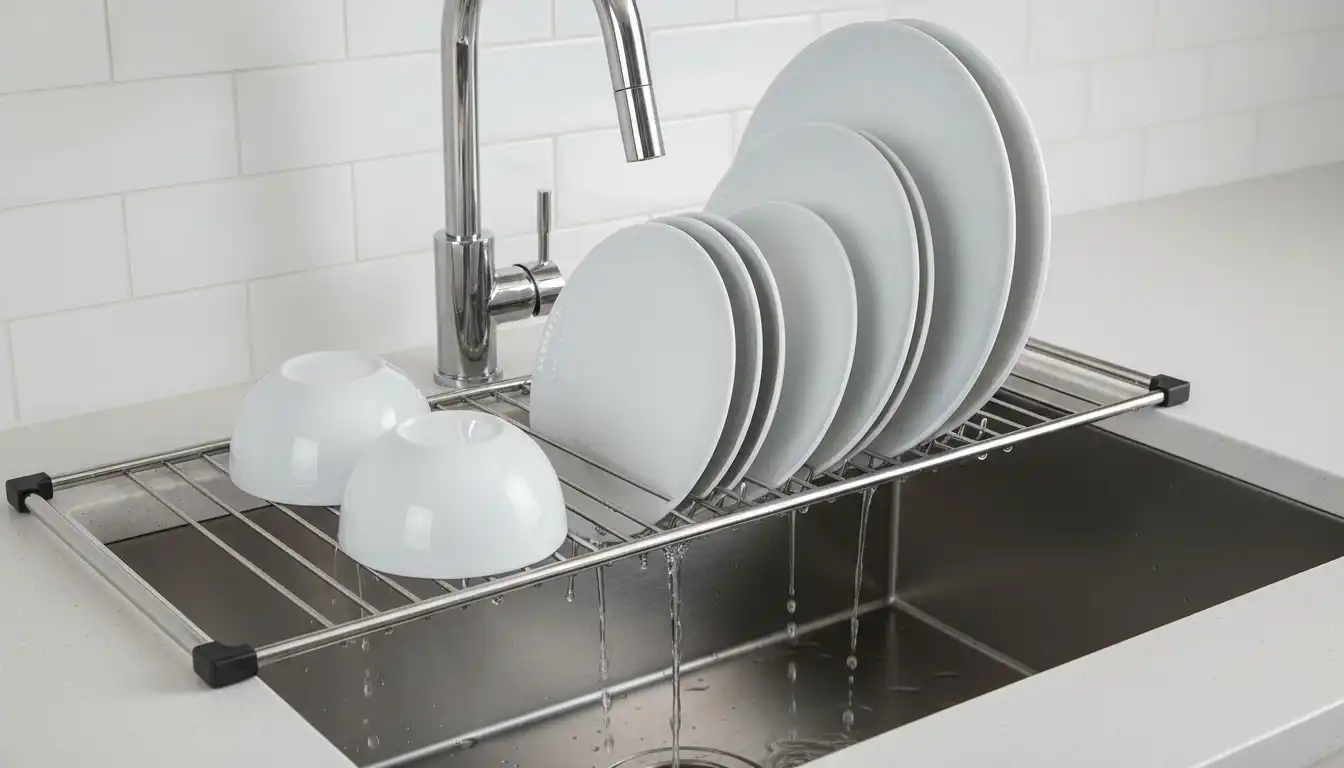
A new contender has gained massive popularity for its clever approach to kitchen organization: the in-sink (or over-the-sink) dish rack. These models are designed to use the sink basin itself as the drying zone, a simple shift that solves many of the countertop rack’s most frustrating problems.
Why In-Sink Solutions Are Taking Over Kitchens
The single most celebrated advantage is the instant reclamation of counter space. By moving the entire drying operation over the sink, you free up a significant area for meal prep, small appliances, or simply the visual relief of a clear surface. This is a game-changer, especially in smaller kitchens where every inch counts.
Drainage becomes a non-issue. Water drips directly into the sink, completely eliminating the puddles and slimy trays associated with countertop models. This not only makes for a cleaner kitchen but also a more hygienic one, reducing the damp conditions where bacteria can thrive. The result is a tidier, less cluttered aesthetic.
Potential Drawbacks to Consider Before You Commit
However, in-sink solutions are not without their own set of challenges. The most common complaint is that a loaded rack can obstruct the sink, making it difficult to wash your hands, rinse vegetables, or fill a pot. This problem is magnified if you don’t have the largest kitchen sink that can accommodate a rack while leaving usable space.
Capacity can also be a concern, as many in-sink models are smaller than their countertop counterparts. Furthermore, dishes drying in the sink are in the direct line of fire for splashes from other sink activities, potentially requiring a re-rinse.
The Ultimate Showdown: In-Sink vs. On-Counter Dish Rack
Choosing the right dish rack depends entirely on your kitchen’s layout, your dishwashing habits, and what you value most: capacity or clear counters. This table breaks down the key differences to help you decide.
| Feature | On-Counter Dish Rack | In-Sink/Over-the-Sink Rack |
|---|---|---|
| Space Efficiency | Poor; occupies valuable counter space. | Excellent; utilizes vertical or unused sink space. |
| Water Drainage | Requires a tray that needs frequent cleaning; prone to pooling. | Excellent; water drips directly into the sink, no extra cleanup. |
| Capacity | Generally larger, holds more dishes and bulky items. | Often smaller, better for smaller loads or daily use. |
| Sink Accessibility | Does not obstruct the sink. | Can block access to the sink basin when in use. |
| Visual Clutter | High; contributes to a cluttered look. | Low; keeps drying dishes contained and less visible. |
| Hygiene | Drain tray can harbor mold and bacteria if not cleaned regularly. | Generally more hygienic due to better airflow and direct drainage. |
Beyond the Binary Choice: Hybrid Solutions and Smart Alternatives
The decision doesn’t have to be strictly one or the other. Many modern kitchens benefit from a combination of solutions or innovative alternatives that move beyond the traditional rack altogether.
The “Two-Zone” Drying System
A highly effective strategy involves using a small in-sink or roll-up rack for everyday items like mugs and utensils. For larger loads or big pots and pans, you can supplement this with a foldable countertop rack or an absorbent drying mat that can be stored away when not in use.
The Over-the-Sink Revolution
Large, multi-tiered over-the-sink dish racks have become incredibly popular. These freestanding units create a complete “drying station” that arches over your faucet, using vertical space to its fullest potential. They offer massive capacity and organizational features without touching your counter. This can be an especially brilliant solution if you have a double hung window over your kitchen sink, as the open space provides ample clearance for such a unit.
Wall-Mounted Racks and Drying Cabinets
For those truly dedicated to clear counters, wall-mounted dish racks offer a sleek, minimalist solution. Positioned above the sink, they function similarly to over-the-sink models but with a more permanent, integrated look. In some designs, a “drying cabinet” is built directly above the sink, featuring wire shelves that allow dishes to drip-dry out of sight.
The Deciding Factor: How to Choose the Right Dish Rack for YOUR Kitchen
Making the right choice requires a practical assessment of your space and your habits. Follow these steps to identify the perfect solution for your home.
Step 1: Analyze Your Dishwashing Habits
Be honest about how you do dishes. Do you wash a few items throughout the day, or do you face a mountain of dishes after dinner? If you frequently wash large pots, pans, and mixing bowls by hand, a high-capacity countertop or large over-the-sink model might be necessary.
Conversely, if you rely heavily on a dishwasher and only hand-wash delicate items, a compact in-sink or roll-up rack is likely sufficient. Your daily volume is the single most important factor in determining the capacity you need.
Step 2: Measure Your Kitchen’s “Drying Zone”
Get out the tape measure. Note the available counter space next to your sink and the exact dimensions of your sink basin. An oversized rack on a small counter will create a cramped, inefficient workspace. An in-sink rack that’s too large will render your faucet useless.
For over-the-sink models, measure the width of your sink and the vertical height to any cabinets or windowsills. A precise measurement ensures you purchase a unit that fits perfectly and functions as intended.
Step 3: Consider Your Countertop Material
The material of your countertop should heavily influence your decision. Porous surfaces like butcher block or some natural stones are highly susceptible to water damage, making an on-counter rack a risky choice. Even for durable, non-porous materials, constant moisture can be an issue.
Hard water stains and soap scum can quickly build up under a countertop rack, creating an endless cleaning chore. This is a common complaint among those who come to hate their quartz countertop, as the pristine surface is marred by a film of grime from a poorly draining dish rack.
Step 4: The Overlooked Factor – Kitchen Acoustics
An often-ignored aspect of kitchen design is sound. The clatter of plates and pans can be disruptive. In-sink racks, particularly those made of silicone or coated metal, can dampen the sound of placing dishes down, as the sink basin absorbs some of the noise.
In contrast, placing a heavy pot onto a metal countertop rack can create a loud, echoing clang. While a minor point, considering the acoustic impact can contribute to a more peaceful and pleasant kitchen environment.
The Final Verdict: There Is a “Best” Answer
While the perfect choice is unique to every kitchen, the modern consensus is clear. For most homes, especially those with limited counter space, an in-sink or over-the-sink dish rack is the superior solution. The benefits of reclaimed counter space, improved hygiene, and a less cluttered appearance are simply too significant to ignore.
Ultimately, the goal is to create a kitchen that works for you, not against you. By thoughtfully choosing where your dishes dry, you can eliminate a source of daily frustration and take a significant step toward a more organized, functional, and enjoyable kitchen.
