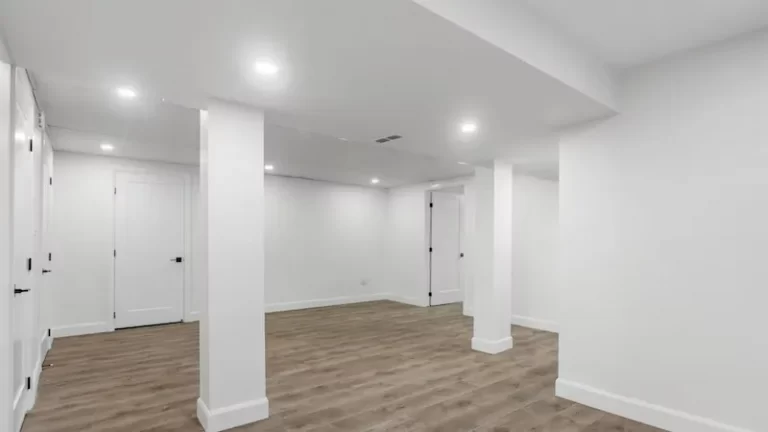
Dining Room Without Chandelier? Good. Your Space Deserves Better.
There’s an unwritten rule in home design: the dining room needs a chandelier. For decades, this single, central fixture has been the default, the unquestioned centerpiece meant to define the space. But this rigid thinking is a relic of the past, often creating more problems than it solves.
A reliance on a solitary chandelier can lead to poor, uneven lighting, cast unflattering shadows, and make a room feel dated. For those with low ceilings, modern aesthetics, or tables not perfectly centered in the room, the traditional chandelier is simply the wrong choice. It’s time to break free from this outdated convention and embrace a world of superior, more flexible lighting solutions.
You'll Learn About
The Great Un-Centering: Why Moving Beyond the Chandelier Is a Power Move
Deciding to forgo a central chandelier isn’t a compromise; it’s a strategic design choice. It opens up possibilities for better functionality and a more personalized aesthetic, solving common issues that plague many dining spaces.
The Low Ceiling Dilemma
In rooms with ceiling heights of eight feet or less, a hanging chandelier can feel oppressive. It visually lowers the ceiling, making the entire space feel cramped and cluttered. Choosing low-profile fixtures instantly creates an illusion of more vertical space, making the room feel airy and open.
The Minimalist & Modern Mandate
Modern and minimalist design languages celebrate clean lines and uncluttered surfaces. A large, ornate chandelier can feel jarring in such a space. Integrated and streamlined lighting options, such as recessed lights or a sleek linear fixture, honor the simplicity of the design and contribute to a cohesive, intentional look.
The Off-Center Table Problem
It’s a frequent frustration: the electrical box in the ceiling is never quite where you need it to be. This forces a compromise between ideal table placement and proper lighting. Moving away from a single central fixture frees you to position your dining table exactly where it works best, using flexible solutions like track lighting or a collection of pendants to illuminate it perfectly.
The New Rules of Illumination: Layering Light Like a Pro
Professional lighting design isn’t about a single fixture; it’s about building layers of light. This approach divides lighting into three distinct categories—ambient, task, and accent—to create a space that is both functional and atmospheric. This method is vastly superior to relying on one overhead source.
Ambient Lighting: The Foundational Glow
Ambient light is the general, overall illumination that fills the room and makes it navigable. This is the base layer upon which all other lighting is built. In a chandelier-free dining room, this can be achieved with recessed lighting or stylish flush-mount fixtures that provide broad, even light without creating a single, harsh focal point.
Task Lighting: The Functional Brilliance
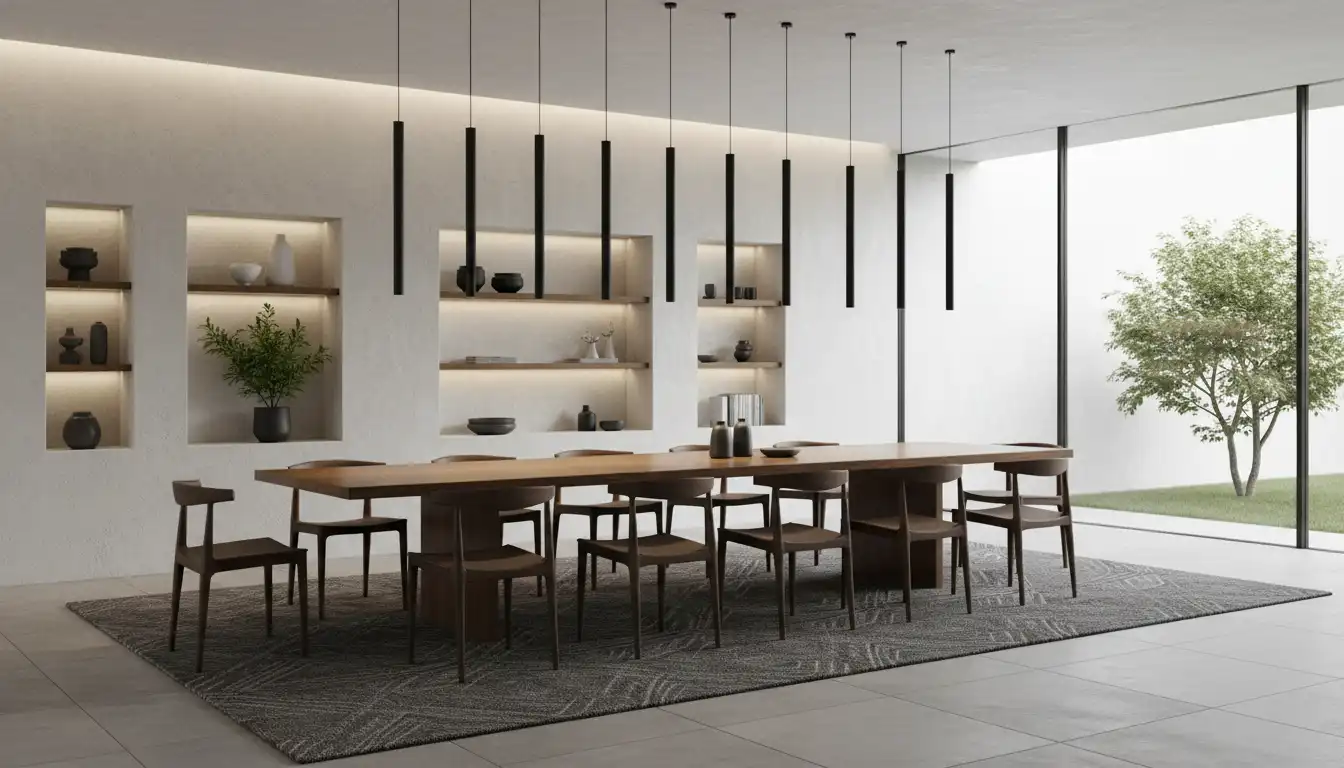
Task lighting is directed light focused on a specific area where activities occur. In the dining room, the primary task area is the table itself. A series of pendants, a linear suspension light, or adjustable track heads can deliver focused light right where you need it for dining, working, or conversation, eliminating the shadows often created by a single central fixture.
Accent Lighting: The Dramatic Flourish
Accent lighting is the final, decorative layer that adds depth and personality. It’s used to highlight artwork, architectural features, or create a mood. Wall sconces, picture lights above a buffet, or a slim floor lamp in a corner can add a warm, inviting glow that makes the room feel complete and thoughtfully designed.
Your Chandelier-Free Toolkit: A Guide to Stunning Alternatives
Forgoing a chandelier doesn’t mean sacrificing a “wow” factor. The modern market is filled with sophisticated, beautiful, and highly effective alternatives that can serve as the focal point of your dining room.
The Power of Pendants (Singles, Multiples, and Clusters)
Pendant lights offer incredible versatility. A single, oversized pendant can make a dramatic statement, while a linear series of three or five smaller pendants provides excellent, evenly distributed light over a rectangular table. For a more playful or artistic look, a cluster of pendants at varying heights can create a dynamic, sculptural centerpiece.
The Sleek Sophistication of Recessed Lighting
For the ultimate minimalist look, recessed lighting is unmatched. When properly planned, it provides seamless, unobtrusive ambient light. The key is to use a grid that illuminates the entire room, placing a few lights directly over the table and always, always install them on a dimmer switch to control the mood. This approach keeps the ceiling plane clean and makes the room feel larger.
The Architectural Elegance of Track and Monorail Lighting
Modern track and monorail systems are a world away from the clunky styles of the past. These solutions offer maximum flexibility, allowing you to aim light exactly where it’s needed. This is a perfect solution for off-center tables or for rooms where you also want to highlight artwork on the walls.
The Intimate Ambiance of Wall Sconces
To create a cozy, restaurant-like atmosphere, nothing beats the soft glow of wall sconces. While they may not provide enough light on their own, when used as part of a layered scheme with recessed lighting, they add warmth and intimacy. Directing the light upwards can also create the illusion of higher ceilings.
The Unexpected Drama of Floor Lamps
An arc floor lamp is a bold and unexpected choice for a dining room. A large, overarching lamp can be positioned to hang directly over the center of a table, acting as a sculptural statement piece. This is an excellent solution for renters or for situations where ceiling wiring is not an option.
The Understated Charm of Flush & Semi-Flush Mounts
Especially effective for low ceilings, modern flush and semi-flush mounts offer high style without sacrificing headroom. Available in a vast array of designs, from minimalist drums to sculptural metallic forms, these fixtures provide excellent ambient light and can serve as a subtle, yet beautiful, design element.
| Lighting Type | Best For | Style Fit | Key Consideration |
|---|---|---|---|
| Pendant Lights | Direct task lighting over the table; creating a focal point. | Modern, Industrial, Scandinavian, Transitional | The number and scale of pendants should match the table size. |
| Recessed Lighting | Seamless ambient light; minimalist spaces; low ceilings. | Minimalist, Contemporary | Proper placement is crucial to avoid a “runway” look; dimmers are essential. |
| Track Lighting | Flexibility; off-center tables; highlighting artwork. | Industrial, Contemporary, Eclectic | Choose modern fixture heads to avoid a dated appearance. |
| Wall Sconces | Creating an intimate, layered ambiance; accent lighting. | Traditional, Transitional, Art Deco | Best used in combination with another light source for sufficient brightness. |
| Arc Floor Lamp | Making a dramatic statement; rooms with no ceiling wiring. | Mid-Century Modern, Contemporary | Requires sufficient floor space and a visually balanced base. |
| Flush/Semi-Flush Mount | Low ceilings; providing general ambient light. | All styles, depending on the fixture design. | Choose a design that complements other elements, not just a basic utility light. |
Beyond the Bulb: Mastering Color Temperature and Dimming
Choosing the right fixture is only half the battle. To truly perfect your dining room’s atmosphere, you must consider the quality of the light itself. The two most important factors are color temperature and the ability to dim.
Color temperature, measured in Kelvin (K), determines whether light appears warm (yellowish) or cool (bluish). For a dining room, a warm white light in the 2700K to 3000K range is ideal. This temperature range is inviting and flattering, mimicking the glow of candlelight and making both people and food look their best. Avoid cooler temperatures, which can feel sterile and clinical.
Furthermore, installing dimmers on all your light sources is non-negotiable. The ability to adjust the brightness allows you to transition the room’s mood effortlessly, from bright and functional for homework to low and intimate for a dinner party. A layered lighting plan is only truly effective when you can control the intensity of each layer independently.
Designing the Complete Scene: Pulling It All Together
A successful lighting plan integrates seamlessly with the rest of your room’s design, considering scale, decor, and overall flow.
Matching Light to Your Room’s Scale
The size of your lighting should be proportional to the size of your room and your table. In a cozy 10×10 dining room, a cluster of small pendants can provide ample light without overwhelming the space. For larger tables, often needed when determining the best size dining table for a 12×12 room, a long linear suspension fixture ensures the entire surface is evenly lit. In a very small space, like a breakfast nook, understanding what size dining table for a 9×10 room is critical, and low-profile flush mounts can provide illumination while maximizing the sense of space.
Creating a Cohesive Look with Your Decor
Ensure the materials and finishes of your light fixtures complement other elements in the room. A matte black pendant echoes modern black window frames or chair legs. Brushed brass sconces can pick up the tones in cabinet hardware or a mirror frame. This attention to detail creates a polished and cohesive design.
The Final Check: Balance and Flow
Once your lights are installed, take a moment to evaluate the overall effect. Are there any dark corners? Are there any spots of harsh glare? The goal is a balanced, comfortable glow that invites people to gather and linger. Walk around the room and sit at the table to experience the lighting from all angles.
Your Dining Room, Your Rules
Letting go of the chandelier is an act of design liberation. It frees you to create a dining space that is more functional, more stylish, and more aligned with your personal taste and lifestyle.
By embracing a layered approach and exploring the world of modern alternatives, you can design a lighting scheme that not only illuminates your meals but also elevates every moment spent around the table. Your dining room is the heart of many gatherings; it deserves lighting that is as thoughtful and unique as the memories you make there.