
Delphinium Shade Secrets: Stop Killing Your Plants in Low Light
The dream of every cottage gardener is a stand of majestic delphiniums, their tall, vibrant spires reaching for the summer sky. But for many, this dream hits a frustrating wall: a garden that doesn’t get the six to eight hours of blistering sun these flowers supposedly demand. The result is often a collection of sad, spindly stems, sparse blooms, and a constant battle with disease, leaving gardeners to wonder if growing delphiniums in the shade is an impossible task.
This common problem leads to disappointment and the belief that these stunning perennials are reserved only for those with perfectly sun-drenched plots. The truth, however, is more nuanced. While delphiniums will never thrive in deep, dark shade, they can flourish in less-than-sunny conditions if you understand their needs and adjust your care strategy accordingly.
You'll Learn About
Why “Full Sun” Is the Gold Standard for Delphiniums
To understand how to succeed in the shade, you must first understand why delphiniums crave the sun. Like all plants, they rely on photosynthesis to convert light into the energy needed for growth. Abundant sunlight fuels the development of strong, thick, hollow stems capable of supporting their famously heavy flower spikes.
Without adequate light, the plant’s survival instincts kick in. It begins to stretch, seeking any available light source. This process, known as etiolation, results in weak, leggy stems that are prone to snapping in wind or rain. Insufficient light also means less energy is available for flower production, leading to smaller, fewer, and less vibrant blooms. Furthermore, shady, damp conditions with poor air circulation create the perfect breeding ground for their number one enemy: powdery mildew.
Redefining “Shade”: The Key to Success
The term “shade” is often misleading. Success with delphiniums is not about growing them in full shade—it’s about redefining your understanding of light. Deep, constant shade, like that found under a dense maple tree or on the north side of a house, will not support healthy delphiniums. The goal is to find a location that offers a strategic balance of light and protection.
The ideal compromise is a spot that receives several hours of gentle morning sun followed by afternoon shade. Morning sun provides the necessary light for photosynthesis without the scorching intensity of the late afternoon, which can stress the plants, especially in hotter climates. Dappled shade under a high-canopy tree can also work, as it allows pockets of light to reach the plant throughout the day.
Choosing Hard-Working Delphiniums for Shadier Spots
While no delphinium is a true shade plant, some varieties are inherently more robust and forgiving than others. The towering ‘Pacific Giant’ hybrids, for example, are famously magnificent but can be more demanding. Exploring other groups may yield better results in a partially shaded garden.
Look for more compact or sturdy varieties that are less prone to flopping. The ‘Magic Fountains’ series, which grows to a more manageable three feet, or some of the New Millennium hybrids from New Zealand, are known for their strong stems and vigorous growth. Don’t be afraid to experiment with different types to see what performs best in your specific microclimate. Many gardeners have found unexpected success with a variety they hadn’t previously considered.
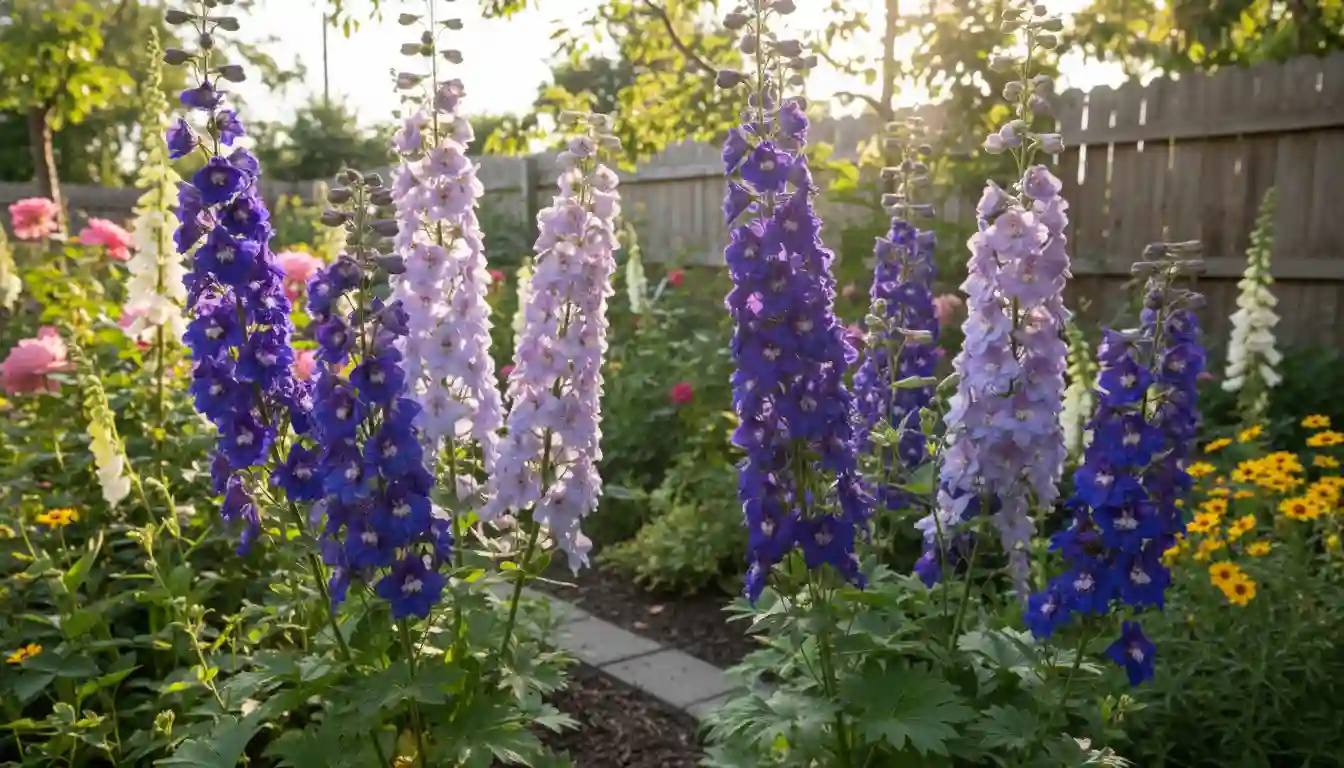
A Comparative Look at Delphinium Varieties
Understanding the different delphinium groups can help you make an informed choice for a garden with less than full sun. Each has its own characteristics and tolerance levels.
| Delphinium Group | Typical Height | Shade Tolerance | Key Characteristics |
|---|---|---|---|
| Elatum Group (e.g., Pacific Giants) | 5-7 feet | Low | Very tall with dense flower spikes; requires full sun and staking. |
| Belladonna Group | 3-4 feet | Moderate | More delicate, branched flower spikes; tolerates morning sun well. |
| Grandiflorum Group (Chinese Delphinium) | 1-2 feet | Moderate | Dwarf varieties with a bushy habit; often more heat tolerant. |
| New Millennium Hybrids | 4-6 feet | Moderate | Bred for stronger stems and vigor; can handle partial sun better than others. |
Your Step-by-Step Guide to Success in Partial Shade
Growing delphiniums in lower light is a game of compensation. Where you lack in sunlight, you must make up for it with impeccable care in other areas. In partial shade, excellent soil, strategic watering, and robust support are not just recommended—they are absolutely essential.
1. Perfect Your Soil Preparation
Healthy soil is the foundation of a healthy plant. Delphiniums are heavy feeders that demand rich, well-draining soil with a neutral to slightly alkaline pH. In a shady spot where the soil stays damp longer, drainage is critical to prevent crown and root rot.
Before planting, amend your soil generously with compost or well-rotted manure to improve both its fertility and structure. If you have heavy clay, incorporate grit or coarse sand to enhance drainage. This step creates a robust foundation that helps the plant cope with the stress of lower light conditions.
2. Master the Art of “Shade Watering”
Watering in the shade is different. The soil retains moisture for much longer, and the risk of fungal disease is significantly higher. Always water delphiniums at their base, and never use an overhead sprinkler. Wet foliage is a primary cause of powdery mildew.
Check the soil moisture by inserting a finger a few inches deep. Water only when the soil begins to feel dry. This deep but infrequent watering encourages roots to grow deeper, making the plant more resilient.
3. Feed for Flowers, Not Foliage
Adjust your fertilizing strategy for lower light. In full sun, a plant can utilize a high-nitrogen fertilizer to produce lush growth. In shade, however, the same fertilizer will encourage weak, sappy foliage at the expense of flowers, making the plant even more susceptible to disease and pests.
Use a balanced, slow-release granular fertilizer in early spring. Once the plant is established, switch to a liquid feed that is higher in phosphorus and potassium every two to three weeks to specifically promote bloom development.
4. Stake Proactively and Securely
Stems grown in partial shade will inevitably be weaker than their full-sun counterparts. Do not wait for the plant to be tall before you stake it. Provide support early to train the stems to grow straight and strong. A grow-through grid support or a cage of bamboo stakes and twine are excellent options.
Place your supports when the plant is about a foot tall. As the stems grow, you can gently guide them through the supports, ensuring they are protected from wind and the weight of their own blooms. Proactive staking is a cornerstone of successful perennial gardening, a skill every enthusiast should master. For more on this, consider exploring advanced perennial care techniques in resources like the gardenweb-perennials_gem1.
Troubleshooting Common “Delphinium Shade” Problems
Even with the best care, challenges can arise. Identifying problems early and acting decisively can save your plants and ensure a beautiful display.
The Powdery Mildew Predicament
This chalky white fungus is the most common issue for delphiniums in shade, thriving in the humid, still air. Prevention is the best cure. Ensure proper spacing between plants to promote good air circulation. As mentioned, always water at the base of the plant in the morning so any stray splashes have time to dry.
If you see the first signs of mildew, remove the affected leaves immediately and dispose of them. A spray of neem oil or a solution of one tablespoon of baking soda and a half-teaspoon of liquid soap in a gallon of water can be an effective preventative treatment.
Battling Slugs and Snails
These pests love the cool, damp environment of a shady garden and can decimate young delphinium shoots overnight. Protect new growth in the spring by using organic slug baits containing iron phosphate, surrounding the plant base with crushed eggshells or diatomaceous earth, or setting beer traps.
When Stems Are Still Spindly
If, despite your best efforts, your stems are still weak and leggy, you may be pushing the limits of the plant’s shade tolerance. One advanced technique is to thin the shoots in early spring. When new growth is about three inches tall, select the three to five strongest shoots and cut the rest down to the ground. This channels all the plant’s energy into developing a smaller number of much stronger, healthier flower spikes.
The Final Verdict: A Worthwhile Endeavor
So, can you grow delphiniums in the shade? The answer is a qualified yes. You cannot grow them in the dark, but you can absolutely cultivate glorious spires in a garden that benefits from partial or dappled sun. Success is not about fighting the plant’s nature but about intelligently adapting your gardening practices to meet it halfway.
By choosing robust varieties, perfecting your soil, watering wisely, feeding for blooms, and providing steadfast support, you can enjoy these magnificent flowers in less-than-ideal conditions. The blooms may be slightly smaller or the stalks a foot shorter than their full-sun relatives, but their beauty and dramatic vertical presence will be no less rewarding.
