
Delorean Gray vs Natural Gray Grout: The Subtle Choice That Makes or Breaks Your Tile Project
Choosing a grout color seems like a minor detail in a grand tiling project. Yet, this single choice holds the power to unify your design or completely sabotage it. Two of the most popular contenders in the world of gray grout, Delorean Gray and Natural Gray, often leave homeowners paralyzed with indecision, and for good reason.
On a tiny sample stick, they can appear almost identical. But once applied across an entire floor or wall, their distinct undertones emerge, dramatically altering the final look of your expensive tile. This decision is the critical final touch that defines your tile’s character, and making the wrong one is a costly, frustrating mistake to fix.
You'll Learn About
The Undertone Dilemma: Cool vs. Warm Grays
The core of the Delorean Gray versus Natural Gray debate lies in their undertones. Undertones are the subtle, underlying colors that determine a shade’s temperature. Ignoring them is like choosing a gray paint without considering the room’s lighting—a recipe for clashing colors and design regret. Just as with selecting the perfect dark paint, understanding the base tones is paramount to success.
Many homeowners mistakenly believe “gray is just gray,” only to discover their newly installed “neutral” grout looks unexpectedly blue or jarringly brown next to their tiles. This is the undertone dilemma in action. It’s the hidden factor that explains why one gray creates a seamless, high-end look while another feels mismatched and cheapens the entire installation.
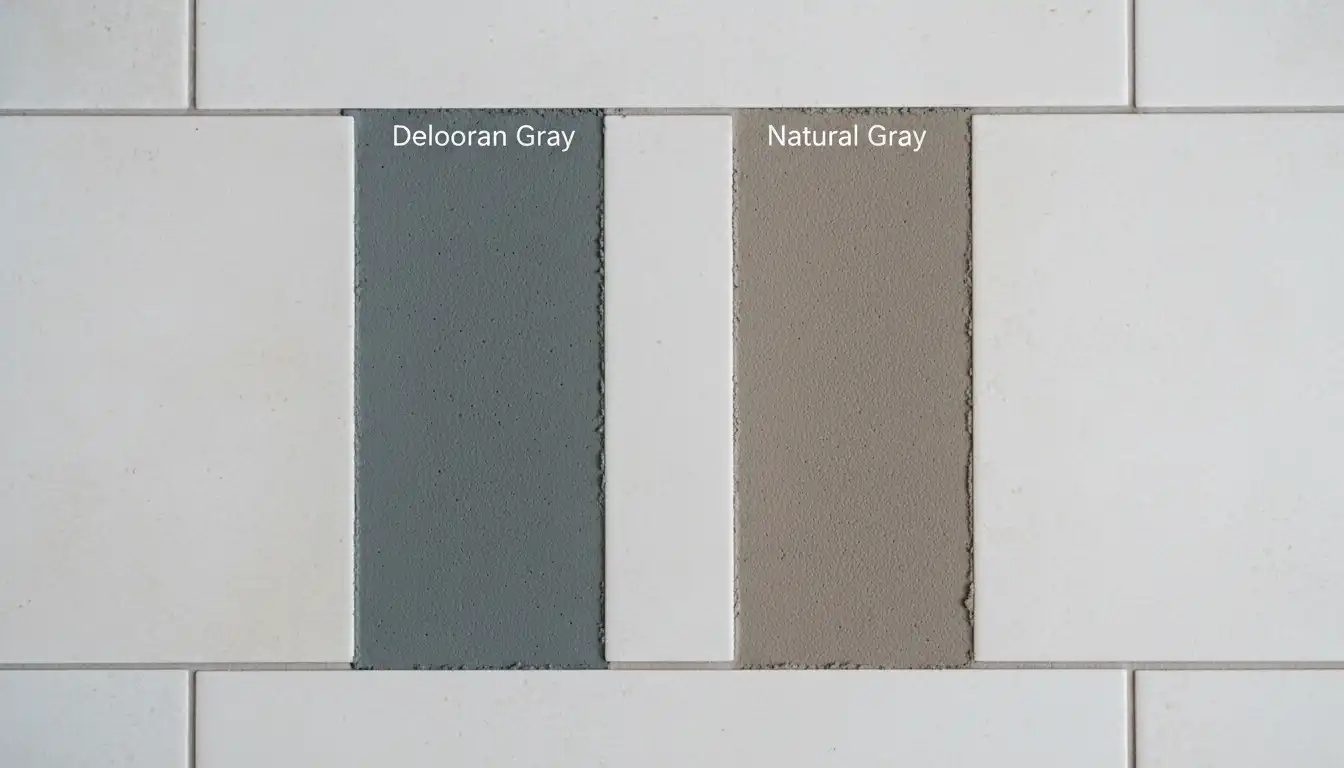
Breaking Down Delorean Gray (Polyblend #165)
Delorean Gray is a true chameleon, best described as a mid-tone gray with cool undertones. In most lighting conditions, it presents as a neutral, classic gray. However, its subtle blue and sometimes slightly violet undertones can become more prominent when paired with certain tiles or under specific lighting, like bright, cool-white LEDs.
This cool-leaning profile makes it an exceptional choice for modern, crisp, and clean design aesthetics. It pairs beautifully with classic white subway tiles, creating a timeless yet defined look. It also complements marble with gray veining and tiles in the blue, green, or cool-white families, as it harmonizes with their inherent coolness.
Unpacking Natural Gray (Polyblend #09)
Natural Gray, in contrast, is a mid-tone gray with noticeable warm, earthy undertones. Depending on the lighting and surrounding tile colors, it can reveal hints of beige or even a subtle green-brown cast. This warmth prevents it from feeling sterile or cold, making it a go-to for more traditional, rustic, or organic designs.
It is the perfect partner for travertine, slate, terracotta, and wood-look porcelain tiles. When paired with these materials, Natural Gray enhances their earthy qualities, creating a cohesive and inviting atmosphere. It also works well with beige, cream, and off-white tiles, bridging the gap between the tile and a true gray.
Side-by-Side: A Direct Grout Comparison
Visualizing the differences is key. While samples are crucial, a direct comparison of their core characteristics can guide your initial decision-making process. This table breaks down the essential attributes of each color to help clarify which might be the superior choice for your project.
| Feature | Delorean Gray | Natural Gray |
|---|---|---|
| Primary Undertone | Cool (Blue/Violet) | Warm (Beige/Green-Brown) |
| Best For Tile Colors | Bright White, Marble, Blue, Cool Grays, Black | Beige, Cream, Travertine, Wood-Look, Earth Tones |
| Design Style Match | Modern, Contemporary, Minimalist, Industrial | Traditional, Rustic, Farmhouse, Transitional |
| Perceived Temperature | Cool, Crisp, Clean | Warm, Earthy, Soft |
| Hides Dirt | Effectively hides everyday dirt and dust. | Slightly better at hiding brownish, muddy stains. |
| Pairs with White Tile | Creates a classic, defined, high-contrast look. | Offers a softer, more subtle contrast. |
Key Factors to Guide Your Final Decision
Choosing between Delorean Gray and Natural Gray extends beyond simple color matching. Several environmental and material factors will influence how the final color reads in your space. Overlooking these details can lead to dissatisfaction, much like discovering widespread flooring issues after an installation is complete.
1. Your Tile’s Color and Finish
The color of your tile is the most critical factor. Place a sample of each grout color directly next to your tile. A cool Delorean Gray next to a warm, cream-colored tile can look jarring. Conversely, a warm Natural Gray might make a crisp, blue-toned tile appear muddy.
For tiles with multiple colors, like patterned porcelain or natural stone, identify the dominant undertone you wish to highlight. For instance, with a tile featuring both blue and beige elements, you’ll need to decide which color you want the grout to complement. Making a choice here is essential, much like when deciding on the right grout for blue tile to achieve a specific design effect.
2. The “Chameleon Effect” of Adjacency
Both grouts exhibit what can be called a “chameleon effect.” Their perceived color can shift based on the tile they are next to. Delorean Gray might look like a perfect neutral gray on its own, but place it next to a blue tile, and its own blue undertones will be amplified.
Similarly, Natural Gray may seem like a standard gray until it’s installed next to wood-look tile, where its warmer, earthier qualities will become much more apparent. This is why you can never trust the color on the bag or a plastic sample stick alone. Always test the grout powder with your specific tile.
3. Lighting: The Ultimate Influencer
Lighting will dramatically alter how you perceive grout color. Natural daylight provides the truest rendering. However, you must also test your grout samples under the artificial lighting you will use in the room.
Warm, yellow-toned bulbs (around 2700K) will enhance the warmth in Natural Gray and can help neutralize the coolness in Delorean Gray. In contrast, cool, blue-toned bulbs (4000K+) will bring out the blue undertones in Delorean Gray and can make Natural Gray look dull or greenish. View your samples in the morning, afternoon, and at night with the lights on.
The Unspoken Truth: Mixing and Curing Variables
Beyond undertones, the final appearance of your grout is highly susceptible to installation variables. Many online complaints about gray grout drying “white” or “blotchy” are not defects in the product but results of improper mixing and cleaning. This is a critical piece of information that is often overlooked.
Too much water during mixing is the number one cause of color inconsistency. An overly wet mixture can cause the pigments to separate and leads to efflorescence—a crystalline deposit of salts that appears as a white haze after the grout cures. Always follow the manufacturer’s instructions precisely for the water-to-powder ratio.
Likewise, using too much water during the cleanup sponge pass can pull pigment from the surface, lightening the final color. The goal is a damp, not saturated, sponge. Consistent, careful application is the only way to achieve the uniform color you chose.
The Verdict: How to Choose With Confidence
Your choice between Delorean Gray and Natural Gray should be deliberate and informed. There is no universally “better” option—only the right option for your specific combination of tile, lighting, and design goals.
Choose Delorean Gray if:
- Your design is modern, contemporary, or minimalist.
- Your tiles are bright white, marble with gray veins, or have cool undertones (blue, green, violet).
- You want a crisp, clean contrast that defines the tile pattern.
Choose Natural Gray if:
- Your design is traditional, rustic, or leans toward earthy aesthetics.
- Your tiles have warm undertones (beige, cream, brown, terracotta).
- You are using wood-look tile and want a harmonious, blended look.
Ultimately, the only way to be certain is to create a sample board. Adhere a few of your tiles to a small piece of plywood or cardboard and grout one section with Delorean Gray and another with Natural Gray. Let it cure for at least 72 hours, then place it in the room to observe it under all lighting conditions. This small step takes time, but it is the single best way to prevent a large-scale, costly mistake and ensure your finished project is exactly what you envisioned.
Frequently Asked Questions
What is the main difference between Delorean Gray and Natural Gray grout?
The primary difference lies in their undertones and temperature. Delorean Gray is consistently described as a warm gray, often with subtle brown or taupe undertones. Natural Gray is generally considered a more neutral gray, though its perceived undertone can shift between slightly warm or cool depending on the lighting and surrounding tile colors.
Which grout color is darker, Delorean Gray or Natural Gray?
Delorean Gray is typically a medium-toned gray, providing a noticeable contrast with lighter tiles. Natural Gray is generally a lighter shade of gray, often chosen for a more subtle and blended look. While color can vary by manufacturer, Delorean Gray is the darker option of the two.
Is Delorean Gray a warm or cool color?
Delorean Gray is considered a warm gray. Its warm undertones can help to create a more inviting and traditional feel in a tiled space. These undertones can sometimes appear slightly brownish or taupe depending on the lighting.
What are the undertones in Natural Gray grout?
Natural Gray is a more neutral gray, but it can have subtle undertones. Depending on the specific brand, lighting, and adjacent tile colors, it can appear as a soft, warm gray or lean towards a cooler, taupe-gray. This versatility allows it to work well with a wide range of tile colors and styles.
What types of tile pair well with Delorean Gray grout?
Delorean Gray is a popular choice for creating a classic and defined look with white subway tiles. It also pairs beautifully with marble and other light-colored stone-look tiles, as the contrast highlights the tile’s pattern. Its warmth complements tiles with similar warm undertones.
When should I choose Natural Gray grout?
Natural Gray is an excellent choice when you want a less pronounced contrast between the grout and tile. It creates a soft, subtle look that works well with white, off-white, and other light-colored tiles. Its neutral tone makes it a versatile option for achieving a clean and seamless appearance.
Final Words
Choosing between Delorean Gray and Natural Gray depends entirely on the “temperature” of your tile and the level of contrast you desire. Delorean Gray is widely considered the industry’s most reliable neutral gray; it is a medium-light shade with subtle warm undertones, making it the perfect companion for Carrara marble or white subway tiles where you want definition without a harsh, cold look. It is forgiving during installation and hides daily grime exceptionally well.
Natural Gray, by contrast, is slightly darker and typically carries a cooler, almost “cement-like” base that can sometimes lean toward a greenish or blue-gray undertone depending on the light. This makes it an excellent choice for industrial-style floors or darker slate tiles where a deeper, earthier transition is needed. Ultimately, if you want a classic “designer” look that feels soft and timeless, go with Delorean Gray; if you want a bolder, more rugged concrete aesthetic, Natural Gray is your best bet.
