
Deepest 60 Inch Alcove Soaking Tub: Your Ultimate Guide
The dream is simple yet profound: a bathroom sanctuary where you can truly unwind. A key part of that vision is a deep soaking tub that lets you submerge completely, letting the warmth envelop you and melt away the day’s stress.
But for homeowners with a standard 60-inch alcove, this dream often crashes into a frustrating reality. Many so-called “deep” tubs are surprisingly shallow, leaving you with a lukewarm, knees-up bathing experience that fails to deliver.
This guide cuts through the marketing noise. We will explore why most tubs fail the depth test and provide a clear roadmap to finding, choosing, and installing the deepest 60-inch alcove soaking tub for your space, ensuring your dream of a perfect soak becomes a reality.
You'll Learn About
Why Your “Deep” Tub Is a Shallow Disappointment
The number one reason for disappointment is the disconnect between a tub’s listed height and its actual soaking depth. Manufacturers often advertise the exterior height, from the floor to the top edge of the tub. This figure is misleading.
The only measurement that truly matters for a bather is the distance from the bottom of the tub to the overflow drain. This is your maximum water depth, and it can be shockingly different from the overall height. A 20-inch tall tub might only offer 14 inches of soaking depth, a critical difference.
The Overflow Drain Deception
The overflow drain is the safety feature that prevents a flood, but its placement dictates your soak. Traditional overflows are large, round drains placed several inches below the tub’s edge. This design choice immediately robs you of precious inches of water depth.
Modern designs have addressed this flaw. Look for tubs with a slotted or linear overflow. These are thin, rectangular drains placed much higher on the tub wall, maximizing the water level and giving you the deep soak you desire.
Understanding Your Bathroom’s “Rough-In”
Another technical aspect that impacts your choice is the plumbing “rough-in,” specifically the drain location. Some tubs require an “above-floor rough-in,” meaning the drainpipe is situated above your subfloor. This can simplify installation in some homes, particularly on concrete slabs.
However, this design can also elevate the tub’s interior floor, subtly reducing the internal depth. It is crucial to understand your home’s plumbing layout before you fall in love with a specific tub model. A mismatch can lead to costly replumbing or the inability to install your chosen tub.
The Anatomy of a True Soaking Tub: What to Measure
To shop like an expert, you must ignore the showroom glamour and focus on the critical specifications. These numbers will tell you the true story of a tub’s soaking potential and comfort. Arm yourself with this knowledge to avoid buyer’s remorse.
Soaking Depth: The Golden Metric
This is it—the most important measurement. You must actively search for the “water depth to overflow” or “soaking depth” in the product’s specification sheet. Do not settle for the overall height.
A good target for a 60-inch alcove soaker is a minimum of 15 inches of soaking depth. Anything above this is a bonus and will provide a truly immersive experience. Be prepared to dig through manufacturer websites or technical documents to find this information, as it’s not always prominently displayed.
Interior Basin and Lumbar Support
Depth alone does not guarantee a comfortable bath. The interior of the tub matters immensely. A tub with a very steep, upright backrest might be deep, but it will force you to sit awkwardly, making it hard to relax.
Look for a tub with a comfortable, ergonomic recline, often described as lumbar support. A well-designed angle allows you to lean back and slide down slightly, fully submerging your torso without feeling cramped. This also affects the “bathing well” or the usable length at the bottom of the tub, which is vital for taller individuals.
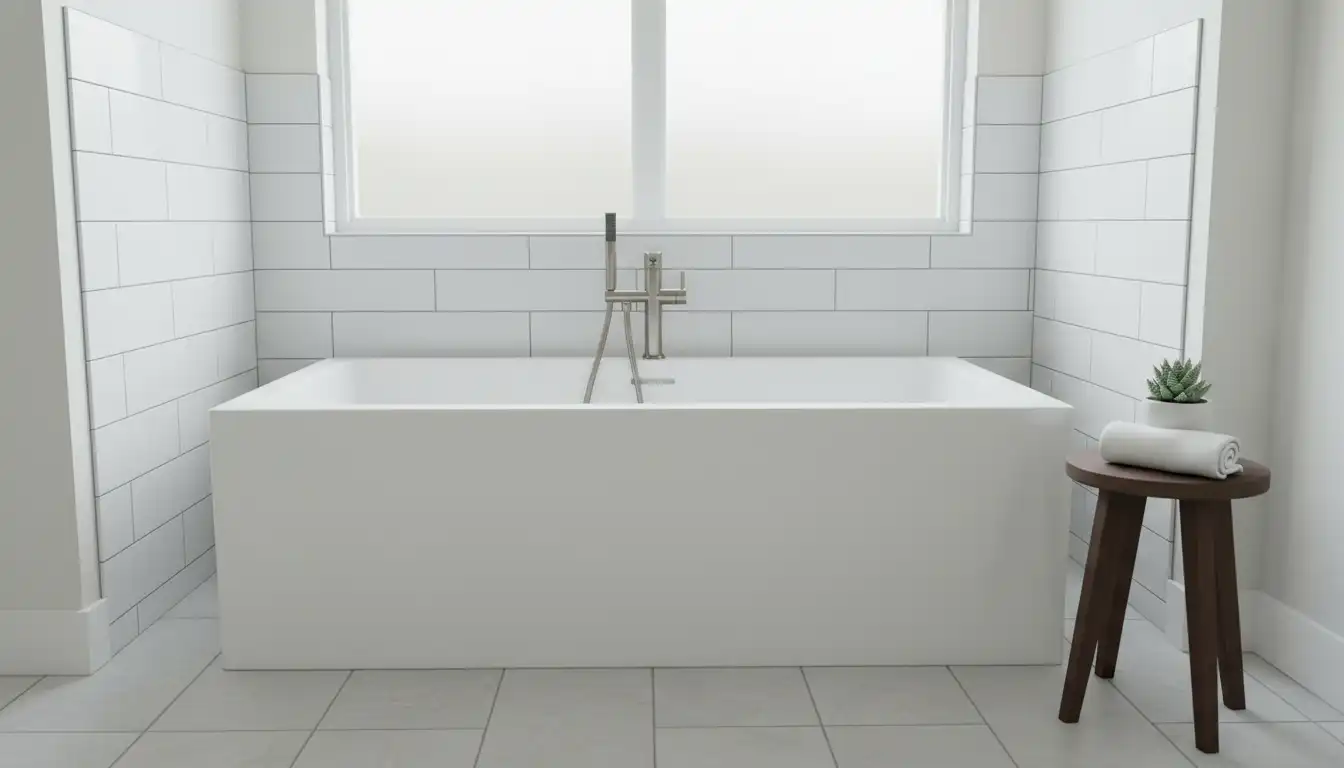
Material Matters: More Than Just a Pretty Face
The material of your tub affects everything from heat retention to weight and cost. For deep soaking tubs, the choice has significant practical implications. Understanding these differences is key to making a wise investment.
Acrylic is the most popular choice for its lightweight nature, warmth to the touch, and ease of molding into ergonomic shapes. Cast iron offers unparalleled heat retention and a classic, durable feel, but its immense weight is a serious consideration. Materials like Americast, a proprietary option from American Standard, offer a middle ground, providing cast iron-like durability at a lighter weight, a topic explored in product comparisons like the Bootz Aloha vs Maui showdown.
Key Features of the Deepest 60-Inch Tubs
When comparing models, certain features consistently appear in tubs designed for maximum soaking depth. The table below breaks down what you should be looking for and why it’s so important for achieving that perfect, deep-soaking experience in your bathroom.
Focusing on these elements will help you quickly identify the tubs that are genuinely designed for soaking, not just for filling a standard alcove space. It’s about understanding the thoughtful engineering that separates a basic tub from a personal spa.
| Feature | Why It Matters for a Deep Soak | What to Look For |
|---|---|---|
| Soaking Depth | This is the direct measurement of how much water the tub can hold before draining. It is the most critical factor for a deep soak. | A specification of 15 inches or more from the tub floor to the overflow drain. Ignore the overall height. |
| Overflow Drain Type | The placement and style of the overflow directly impact the maximum water level. Higher is better. | A modern, high-mounted slotted or linear overflow drain instead of a traditional round one. |
| Lumbar Support Angle | A comfortable backrest angle allows you to recline and submerge fully without being forced to sit upright. | Look for descriptions like “ergonomic backrest” or “lumbar support.” Try to sit in a floor model if possible. |
| Integral Apron & Tiling Flange | These features are essential for an alcove installation, ensuring a waterproof seal against the walls and a clean, finished look. | Ensure the tub is specified for “alcove” installation and includes an integral tiling flange on three sides. |
| Basin Design | A minimalist interior design with straight lines can maximize the internal soaking area, making it feel more spacious. | Look for tubs with a generous “bathing well” dimension at the bottom and less intrusive interior sculpting. |
Installation Secrets: Avoiding a Remodeling Nightmare
Selecting the perfect deep tub is only half the battle. A successful installation requires careful planning and attention to details that are often overlooked until it’s too late. A heavy, water-filled tub puts unique demands on your home’s structure and plumbing.
Proper preparation is the difference between a seamless upgrade and a costly disaster. Just as you’d research the reliability of essential outdoor equipment before a storm, your indoor fixtures deserve the same level of scrutiny to ensure long-term performance and safety.
Weight and Structural Support: The Hidden Danger
This is the most critical safety consideration. Water is incredibly heavy, weighing about 8.34 pounds per gallon. A deep soaking tub can hold 60-80 gallons or more, leading to a massive total weight.
Consider the math: a 100 lb acrylic tub + 70 gallons of water (584 lbs) + a 200 lb person = nearly 900 pounds. Your bathroom floor joists must be able to support this concentrated load. It is highly recommended to consult with a contractor or structural engineer, especially in an older home or a second-floor bathroom, to assess if reinforcement is needed.
Plumbing and Drain Alignment
Your new tub’s drain must align with your existing plumbing. As mentioned earlier, some tubs are designed for an above-floor rough-in, while others are not. A mismatch will require a plumber to relocate the drainpipe, adding unexpected costs and delays to your project.
Always confirm the drain location on the tub’s technical specification sheet (left-hand or right-hand) and compare it to your bathroom’s layout. Measure twice, purchase once. This foresight prevents major headaches during installation day.
The 60-Inch Alcove Is Not Always 60 Inches
An “alcove” is the three-walled space where your tub fits. While the standard is 60 inches, the actual measurement from stud to stud can vary. A newly framed wall might be exact, but an older home with thick plaster walls could be slightly less.
This is where precision becomes paramount, as a minor variance can create a major installation problem. This brings to mind the challenges faced by those dealing with non-standard sizes, such as the 58.5 x 29 bathtub dilemma. Always measure your actual alcove space carefully before ordering your tub to ensure a snug, proper fit.
Creating the Ultimate Soaking Sanctuary
With the perfect deep tub installed, the final touches transform your bathroom into a true sanctuary. These elements enhance both the function and the ambiance of your new soaking space. They are the supporting cast that makes your tub the star of the show.
Think about how you will use the space. The right accessories and fixtures will elevate your bath from a simple cleansing routine to a restorative ritual. These choices complete the vision of a perfect bathroom retreat.
Faucets and Fixtures
The style of your tub filler can have a big impact. A tub-mounted faucet is convenient, but a wall-mounted fixture can create a cleaner, more modern aesthetic and free up space on the tub deck. Consider a faucet with a high flow rate to fill your deep tub quickly; waiting for a slow faucet can be frustrating.
Make sure the spout reach is adequate to clear the edge of the tub without excessive splashing. This small detail makes a big difference in daily use. Coordinating your tub faucet with your sink and shower fixtures creates a cohesive, professionally designed look.
Water Heater Capacity
A deep soaking tub requires a significant amount of hot water. A standard 40 or 50-gallon tank water heater may struggle to fill the tub completely with hot water, especially if other appliances are running. You might end up with a lukewarm bath.
Consider upgrading to a larger tank or, better yet, a tankless water heater. A tankless unit heats water on demand, providing a virtually endless supply of hot water to ensure your deep tub can be filled to the brim with perfectly heated water every single time.
Ambiance and Accessibility
Complete your sanctuary with thoughtful details. Install a dimmer switch for the overhead lighting to create a relaxing mood. Consider building a small recessed niche in the wall next to the tub for holding soaps, candles, and a book.
Ensure you have easy access to towels with a nearby hook or warming rack. These small, functional touches are what elevate the space from a simple bathroom to a personalized spa-like retreat, making your investment in a deep soaking tub truly worthwhile.
Your Deep Soak Awaits
Finding the deepest 60-inch alcove soaking tub is not about finding the tallest model. It is about understanding the crucial difference between marketing hype and the technical specifications that deliver a truly immersive experience. By focusing on the real soaking depth, considering the ergonomics of the basin, and planning for the installation’s structural demands, you can confidently choose a tub that will transform your bathroom.
The path to your dream bath requires diligence. You must become an educated shopper, looking past glossy brochures to the hard numbers on the spec sheet. The reward for your effort is a bathroom sanctuary that offers a perfect, soul-soothing soak, day after day.
