
Deep Sink with Garbage Disposal: The #1 Compatibility Mistake
You envisioned a kitchen upgrade with a beautiful, deep sink capable of hiding stacks of dishes and a powerful garbage disposal to obliterate food scraps. The reality, however, can be a frustrating mess of leaks, clogs, and overwhelming vibrations that make you regret the entire project.
Many homeowners invest in these two components separately, only to discover they are fundamentally incompatible. This guide exposes the critical mistakes and provides a clear roadmap to creating the perfect, high-performance pairing.
You'll Learn About
The Dream vs. The Disastrous Reality
The allure of a deep basin sink is undeniable. It offers the space to wash large pots, pans, and cookie sheets without splashing water all over the countertop. Paired with a garbage disposal, it promises a clean, efficient, and modern kitchen workflow.
Unfortunately, this dream often turns into a nightmare. The most common point of failure isn’t a faulty sink or a weak disposal; it’s the lack of planning for how they interact within the confined space of your sink cabinet. This oversight leads to a cascade of entirely preventable problems.
Problem 1: The Hidden Spatial Conflict
The single most overlooked issue is the vertical space conflict. A deep sink, by definition, extends further down into your base cabinet, sometimes by an extra 4 to 6 inches compared to a standard sink. A garbage disposal is also a bulky appliance that hangs directly below the sink drain.
When combined, the bottom of the disposal unit can end up positioned lower than your kitchen’s wastewater pipe (the drain outlet in the wall). This creates a critical plumbing flaw where water and food waste must travel uphill to exit, leading to constant clogs, slow draining, and strain on the disposal’s motor.
Problem 2: Flange and Mount Mismatches
Not all sink drains and disposal mounts are created equal. The standard drain opening in the US is 3.5 inches, which fits most modern disposals. However, the thickness and material of the sink itself can create a huge installation headache.
For example, a thick fireclay or granite composite sink may require an extended flange or a specific mounting system to secure the heavy disposal unit properly. Using the wrong hardware can result in a poor seal, leading to persistent, damaging leaks under your sink.
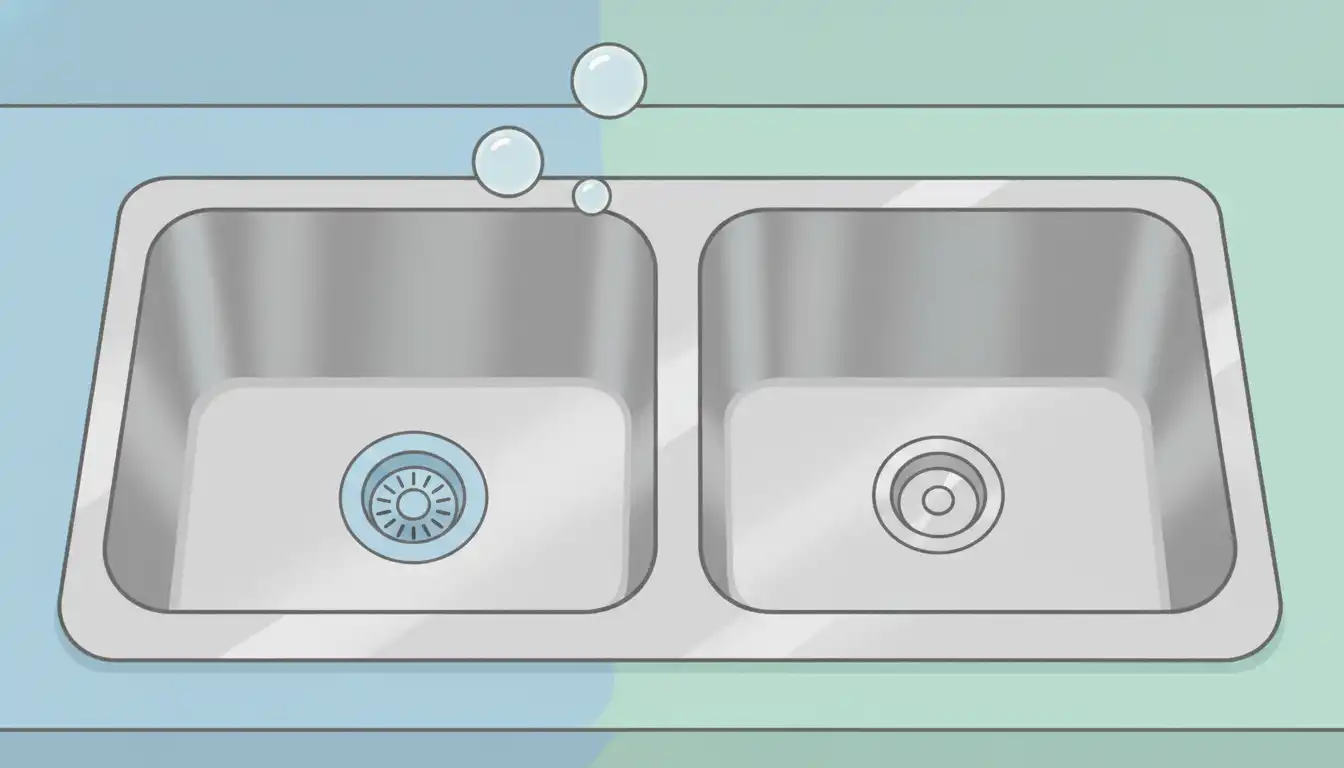
Problem 3: Amplified Noise and Vibration
A deep stainless steel sink acts like a drum, amplifying the noise and vibration from a powerful garbage disposal. If the unit isn’t mounted perfectly or if the sink material is a thinner gauge, the resulting roar can be startlingly loud.
This excessive vibration not only creates a noisy kitchen environment but can also stress the plumbing connections and sink sealant over time. This slowly loosens fittings and can eventually cause leaks at the P-trap or drain connections.
The Definitive Guide to a Perfect Pairing
Achieving a flawless deep sink and garbage disposal setup isn’t about luck; it’s about a systematic approach. By focusing on measurement, material science, and mechanical compatibility, you can build a system that is quiet, efficient, and reliable for years to come.
Step 1: The Non-Negotiable Measurement Phase
Before you buy anything, grab a tape measure. This is the most critical step. Open your sink base cabinet and measure three key dimensions:
1. Available Height: Measure from the floor of the cabinet to the underside of the countertop.
2. Drain Outlet Height: Measure from the floor of the cabinet to the center of the wastewater pipe entering the wall.
3. Available Depth & Width: Measure the usable interior space, noting any pipes or obstacles.
Now, when you shop for a sink and disposal, you can add their vertical dimensions together (sink depth + disposal height) to see if they will fit. The bottom of the disposal MUST be several inches above the drain outlet to allow for the P-trap and proper drainage slope.
Step 2: Choosing the Ideal Deep Sink
The sink is the foundation of your setup. Its material, shape, and drain location will dictate your disposal options and the complexity of the installation. Consider how a premium sink, like those explored in Shaws Sinks reviews, might influence your choice.
Sink Material Is More Than Just Looks
The material of your sink directly impacts noise, stability, and installation. A thicker, heavier sink is always better for managing a disposal.
- Stainless Steel: Look for a lower gauge (16 or 18 gauge is ideal). Thicker steel vibrates less. Also, look for models with sound-dampening pads on the underside.
- Granite Composite: This material is excellent for minimizing noise and vibration due to its dense, rock-like structure. It provides a very stable mounting base for the disposal.
- Fireclay/Cast Iron: These are the quietest and most stable options. However, their thickness often requires an extended sink flange for the disposal, so ensure one is available for your chosen model.
The Strategic Advantage of an Offset Drain
A sink with a drain placed toward the rear of the basin (an offset drain) is a game-changer for deep sink installations. This clever design pushes the garbage disposal and all the plumbing to the back of the cabinet.
This immediately frees up a large, usable storage area in the front of the cabinet. More importantly, it often provides more direct and simpler alignment with the wall drain, reducing the need for complex pipe configurations.
Step 3: Selecting a Compatible Garbage Disposal
With your measurements in hand and your sink style chosen, you can now select a disposal that fits the space and meets your performance needs. Don’t just focus on horsepower; size and design are far more important for compatibility.
Motor Power vs. Physical Size
A 1 HP disposal is fantastic, but it’s often significantly taller and wider than a 1/2 or 3/4 HP model. For deep sinks in cabinets with low drain outlets, choosing a “low-profile” or “compact” model is a much smarter decision, even if it means slightly less power.
A 3/4 HP disposal that drains properly is infinitely better than a 1 HP unit that causes constant clogs. Induction motors are generally quieter and more durable than permanent magnet motors, but they are also heavier and larger.
The Critical Mounting System
The connection between the sink and the disposal is the mounting system, which includes the sink flange and the locking ring. Most brands use a 3-bolt mount or a simpler EZ Mount system. The 3-bolt system is generally considered more robust and durable, providing a more secure fit for heavy sinks.
Ensure the mounting hardware is compatible with your sink’s thickness. This is where an extended flange becomes necessary for materials like fireclay. Never assume the standard flange will work.
Garbage Disposal Feature Comparison
The table below breaks down the key differences between common disposal sizes to help you make an informed choice based on your sink’s depth and your household’s needs.
| Feature | Compact/Low-Profile (1/2 HP) | Standard (3/4 HP) | Heavy-Duty (1+ HP) |
|---|---|---|---|
| Ideal Sink Depth | 9-12 inches | 8-10 inches | Up to 10 inches |
| Typical Height | 11-13 inches | 13-15 inches | 15-17 inches |
| Best For | Tight spaces, deep sinks with low drains | Average families, most standard kitchen sinks | Large families, avid cooks, high-volume use |
| Noise Level | Moderate to High | Low to Moderate (often has better insulation) | Low (typically features advanced insulation) |
| Grinding Chamber | Smaller, galvanized steel components | Larger, stainless steel components | Largest, heavy-duty stainless steel components |
Step 4: Installation Secrets for a Rock-Solid, Quiet System
A professional installation is always recommended, but if you’re an experienced DIYer, these tips are crucial for success. The goal is to create a system that drains perfectly and runs as quietly as possible.
Mastering the Plumbing Configuration
With your components selected, map out the plumbing. You will need a P-trap that connects the disposal’s discharge pipe to the wall drain. The key is to maintain a downward slope of at least 1/4 inch per foot of pipe.
If your disposal hangs too low, you may need to use a compact P-trap kit. If you have a dishwasher, ensure you create a “high loop” with its drain hose, fastening it to the underside of the countertop before connecting it to the disposal’s dishwasher inlet. This prevents dirty water from backflowing into the dishwasher.
Eliminating Vibration at the Source
First, ensure the disposal’s mounting ring is tightened evenly and securely. An unbalanced mount is the primary source of vibration. Use a bead of plumber’s putty under the sink flange to create a watertight, cushioning seal.
For stainless steel sinks, confirm that the unit has large sound-dampening pads. Some installers even add extra automotive sound-deadening material to the sink’s exterior to further mute the noise. This extra step transforms a noisy setup into a whisper-quiet one.
Advanced Kitchen Integration and Final Checks
A high-performance sink station is part of a larger, functional kitchen design. The efficiency you gain from a well-planned sink can be lost if other elements are poorly placed. For example, a kitchen island that is too close to the refrigerator can create a workflow bottleneck that no fancy sink can fix.
Similarly, the layout must account for appliance doors. Ensuring you have a zero clearance refrigerator door prevents it from hitting adjacent cabinets, maintaining the seamless feel of your design. For those seeking the pinnacle of kitchen efficiency, exploring an integrated workstation setup, like those detailed in The Galley Sink reviews, can provide inspiration on how to combine washing, prepping, and cleaning into one zone.
Final Thoughts: Plan Twice, Install Once
The secret to a successful deep sink and garbage disposal combination is not in buying the most expensive components, but in choosing the most compatible ones. The process begins with a tape measure and an understanding of the spatial relationships within your cabinet.
By prioritizing measurement, selecting components that fit your vertical space, and ensuring a secure, well-planned installation, you can avoid the common pitfalls of leaks, clogs, and excessive noise. You can build a sink station that is not only beautiful and spacious but also a quiet, reliable workhorse for your kitchen.
