
Deck Without Stairs: Your #1 Guide to a Seamless Backyard
Are you dreaming of an outdoor space that feels like a natural extension of your home? Many homeowners find that traditional raised decks create a jarring separation from the backyard, complete with stairs that can be cumbersome and even hazardous.
This disconnect can make your beautiful garden feel miles away. A deck without stairs, also known as a ground-level or platform deck, elegantly solves this problem, creating a fluid, accessible, and modern outdoor living area.
You'll Learn About
Why Go Stairless? The Overlooked Benefits of a Ground-Level Deck
Choosing a deck without stairs is more than just an aesthetic decision; it’s a practical one with numerous advantages. These designs offer a seamless transition from your home to your garden, making the outdoors feel instantly more accessible and inviting. They are particularly beneficial for households with children, elderly members, or individuals with mobility challenges, as they eliminate the risk of falls associated with stairs.
Beyond safety, ground-level decks often present a more cost-effective and simpler construction process. Because they are built close to the ground, they typically require less structural support and materials, which can save both time and money. Furthermore, depending on local regulations, decks below a certain height (often under 30 inches) may not require railings or even a building permit, streamlining the entire project.
Enhanced Accessibility and Safety
The most significant advantage of a stairless deck is the improved accessibility it provides. By creating a single-level surface that flows directly into the yard, you remove barriers for everyone. This design is inherently safer, reducing the trip and fall hazards that stairs can present, especially for young children and older adults.
This seamless connection fosters a more inclusive environment, allowing everyone to enjoy the backyard without difficulty. It provides peace of mind and makes the outdoor space more usable for every member of the family.
Aesthetic and Psychological Harmony
A deck without stairs fosters a powerful connection between your indoor and outdoor environments. This uninterrupted flow creates a sense of spaciousness and harmony, making your living area feel larger and more integrated with nature. The psychological effect is profound; it encourages more frequent use of the outdoor space, turning your backyard into a true extension of your home.
This design philosophy is about more than just looks. It’s about creating a lifestyle where stepping outside is as easy as walking into the next room. This encourages spontaneous moments of relaxation, outdoor dining, and connection with the natural world right at your doorstep.
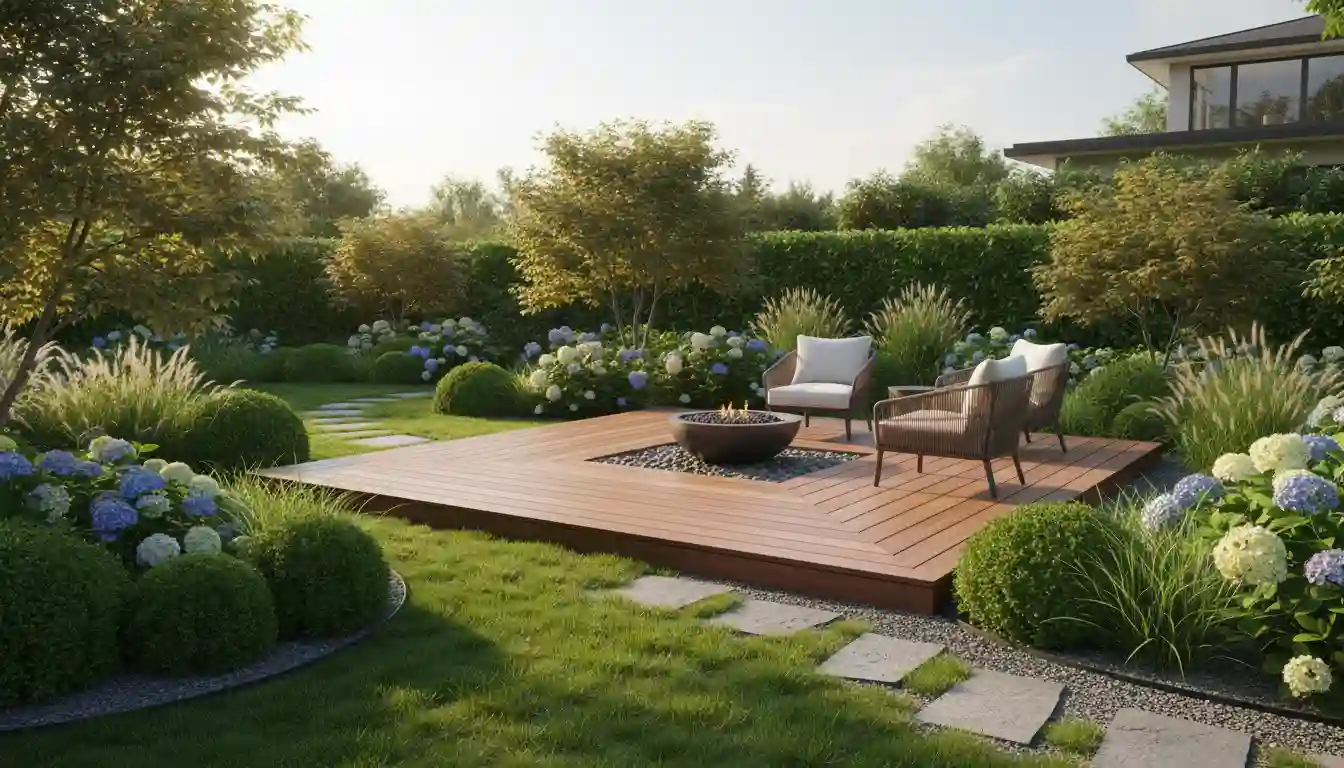
Planning Your Perfect Platform Deck: Critical Considerations
Before breaking ground, careful planning is essential to ensure your ground-level deck is durable, functional, and beautiful. Key areas to focus on include drainage, ventilation, and material selection. Because the deck is close to the ground, managing moisture is the single most important factor for its longevity.
Proper site preparation is the foundation of a successful project. This involves clearing the area of all vegetation, ensuring the ground is properly graded, and addressing any potential water pooling issues before you even think about framing.
Mastering Drainage and Ventilation
Proper drainage is non-negotiable for a low-lying deck. The ground beneath the deck must be sloped away from your house’s foundation to prevent water from pooling, which can lead to rot, mold, and foundation damage. A grade of at least 1/4 inch per foot is recommended.
Ventilation is equally critical. Trapped moisture is the enemy of any wood structure. To ensure adequate airflow, there should be a sufficient gap between the bottom of the deck frame and the ground. Installing a weed barrier covered with a layer of gravel can help keep the area dry and prevent unwanted growth.
Choosing the Right Materials
The materials you choose will have a huge impact on your deck’s appearance, durability, and maintenance requirements. With the structure being so close to the ground, selecting materials resistant to moisture and rot is paramount.
Pressure-treated lumber is a cost-effective and popular choice for the frame, as it’s treated to resist decay and insects. For the decking boards, options range from classic woods like cedar and redwood to low-maintenance composite and PVC decking, which offer superior resistance to the elements.
| Material | Pros | Cons | Best For |
|---|---|---|---|
| Pressure-Treated Wood | Affordable, readily available, insect and rot-resistant. | Requires regular maintenance (staining/sealing), can warp or crack. | Budget-conscious projects and the underlying frame. |
| Cedar/Redwood | Natural beauty, naturally resistant to rot and insects. | More expensive than PT wood, requires sealing to maintain color. | Homeowners desiring a classic, natural wood look. |
| Composite Decking | Low-maintenance, durable, resistant to rot, insects, and fading. | Higher initial cost, can get hot in direct sun. | A long-lasting, low-effort deck with a consistent look. |
| PVC Decking | Extremely durable, lightweight, superior moisture resistance. | Highest initial cost, can look less natural than wood. | Decks in very damp climates or near pools. |
Design Ideas to Elevate Your Ground-Level Deck
A deck without stairs doesn’t have to be a simple, boring square. With thoughtful design, your platform deck can become a stunning and functional centerpiece of your backyard. Think about creating different zones for various activities like dining, lounging, or even cooking.
Integrating features like built-in benches, planters, and lighting can add custom touches that enhance both the beauty and utility of the space. The goal is to create a deck that not only looks great but also perfectly suits your lifestyle.
Creating Zones with “Micro-Levels”
One advanced design technique is to create “micro-levels.” Instead of stairs, you can use a single, shallow step-down to a connected patio area or another slightly lower deck section. This defines separate functional zones, like a dining area and a fire pit lounge, adding dimension and interest without sacrificing the open, accessible feel.
This approach provides the architectural interest of a multi-level deck without the barriers of a full staircase. You can also use different decking patterns or materials to visually separate these zones, creating a custom, high-end look.
Seamless Landscape Integration
The true beauty of a ground-level deck lies in its ability to merge with the surrounding landscape. Design with nature in mind. Instead of ending the deck with a hard edge, allow it to flow into garden beds, a stone pathway, or a lush lawn. Building the deck around an existing tree can create a stunning natural feature.
Use planters and built-in garden beds along the deck’s perimeter to soften the edges and introduce greenery. This not only enhances the visual appeal but also strengthens the connection between your living space and your garden, creating a cohesive and tranquil oasis. While some deck designs require significant earth moving, you might be surprised that for simpler projects, you may not need to call in heavy machinery; sometimes a smaller, more mobile solution is sufficient, much like how deck movers can relocate an entire structure without a complete rebuild.
Built-in Features for Function and Style
Incorporate built-in elements to maximize your space and add a custom touch. Benches along the perimeter can provide ample seating without the clutter of extra furniture. Integrated planters can bring color and life directly onto the deck surface. For evening enjoyment, consider adding built-in lighting to create ambiance and improve safety.
An outdoor kitchen or a designated grilling station can turn your deck into an entertainer’s dream. These features make the space more functional and reduce the need for standalone items, keeping the design clean and streamlined.
Permits and Foundations: Do You Need Them?
A common question is whether a permit is required for a ground-level deck. Regulations vary significantly by location, but generally, decks that are not attached to the house (freestanding) and are below a certain height (often 30 inches) may not require a permit. However, it is always crucial to check with your local building department before beginning any construction.
The foundation is another key consideration. While a full concrete footing system like that for a raised deck might not be necessary, a stable base is still required. Pre-cast concrete deck blocks are a popular and easy-to-use option for floating decks, as they provide solid support without the need for extensive digging. For some, the choice of foundation is as critical as deciding on the home itself; for example, understanding whether a house without a basement is a bad investment involves weighing foundation types and local climate.
Maintaining Your Ground-Level Deck
Proper maintenance is key to ensuring your deck remains a beautiful and safe space for years to come. Because of its proximity to the ground, a stairless deck requires diligent care to prevent moisture-related issues.
Regular cleaning is the first line of defense. Sweep the deck frequently to remove leaves, dirt, and other debris that can trap moisture and promote mildew. At least once a year, give the deck a thorough cleaning with a deck cleaner appropriate for your material. The cleaning principles are similar even for elevated spaces; you can find relevant tips in our guide on how to clean a 2nd floor balcony.
Inspect your deck seasonally for any signs of wear, such as loose boards, popped screws, or areas of rot. For wooden decks, re-staining or sealing every 1-3 years is vital to protect the wood from UV rays and moisture. This regular upkeep will not only preserve the deck’s appearance but also extend its lifespan significantly.
