
Dahlias and Roses: Unlock the Secret to a Perfect Pairing!
Dahlias and roses are two of the most beloved flowers in any garden. One offers intricate, geometric blooms in a rainbow of colors, while the other provides classic elegance and intoxicating fragrance. The dream of combining them into one spectacular garden bed is a common goal for many gardeners, yet the reality can often be disappointing.
Many find that instead of a harmonious display, they end up with a chaotic jumble where one plant dominates the other. The vibrant dahlias might overshadow the delicate roses, or the roses’ specific needs leave the dahlias struggling. This common problem leads gardeners to believe these two floral powerhouses simply can’t coexist.
This guide will dismantle that myth. By understanding the core conflicts and implementing strategic solutions, you can create a breathtaking garden where dahlias and roses not only grow together but actively enhance each other’s beauty. Prepare to unlock the secrets to a truly integrated and stunning floral display.
You'll Learn About
Why Gardeners Struggle with the Dahlia-Rose Combination
The belief that dahlias and roses are incompatible isn’t unfounded; it stems from real challenges in their fundamental care requirements. Understanding these conflicts is the first step toward overcoming them. Ignoring these core differences is the primary reason gardeners fail to create a harmonious mixed border.
The Soil and Sun Dilemma: Meeting Conflicting Needs
One of the most significant hurdles is their different preferences for soil and sun. Roses thrive in rich, loamy soil that retains moisture and are heavy feeders, requiring consistent nutrients throughout their long growing season. They demand at least six hours of direct sunlight to produce abundant blooms and ward off fungal diseases.
Dahlias also need full sun, requiring a minimum of six to eight hours for strong stems and vibrant flowers. However, their tuberous roots are highly susceptible to rot in soil that is too dense or wet. They prefer well-draining, slightly lighter soil and can be overwhelmed by the heavy, compost-rich beds that roses adore.
Water Wars: Balancing Drought Tolerance and Thirst
Watering presents another major conflict. Established roses have deep root systems and require consistent, deep watering, especially during dry spells, to support their woody growth and continuous blooming. Their thirst is considerable, and they don’t appreciate drying out completely.
In contrast, dahlia tubers are prone to rot if overwatered, especially before they have sprouted and established a strong root system. Gardeners are often advised not to water tubers at all until the first green shoots appear. This creates a difficult situation where the needs of one plant directly contradict the needs of the other in the same bed.
Pest and Disease Crossroads: A Shared Vulnerability
Both roses and dahlias are magnets for a similar cast of pests and diseases, which can make planting them together a risky proposition. Aphids, spider mites, and thrips are happy to feast on both, meaning an infestation on one can quickly spread to the other. This shared vulnerability requires vigilant monitoring and proactive treatment.
Furthermore, both are susceptible to powdery mildew, especially in humid conditions or when air circulation is poor. Planting them too closely together can create a microenvironment perfect for this fungal disease to take hold and decimate your beautiful blooms. A strategy that addresses these shared threats is crucial for success.
The Ultimate Solution: A Step-by-Step Guide to Harmonious Planting
Creating a thriving garden of dahlias and roses is not about forcing them into an unnatural partnership. It’s about smart planning, strategic selection, and thoughtful preparation. Follow these steps to build a garden bed where both can flourish.
Step 1: Choosing the Right Varieties
The secret to a successful pairing begins with selecting the right plants. Not all roses and dahlias are created equal. Focus on varieties with compatible growth habits, sizes, and colors to create a cohesive and manageable garden design.
For roses, consider floribundas or smaller shrub roses that won’t tower over and shade the dahlias. For dahlias, choose varieties that won’t grow so large they crowd out the roses. The table below offers a starting point for pairing complementary varieties.
| Rose Variety | Dahlia Variety | Key Pairing Characteristics |
|---|---|---|
| ‘Julia Child’ (Floribunda) | ‘Cornel Bronze’ (Ball) | The buttery yellow of ‘Julia Child’ beautifully complements the rich, coppery tones of ‘Cornel Bronze’. Both are medium-sized plants. |
| ‘Iceberg’ (Floribunda) | ‘Thomas Edison’ (Dinnerplate) | The crisp white of ‘Iceberg’ roses provides a clean backdrop that makes the deep purple of ‘Thomas Edison’ dahlias pop dramatically. |
| ‘Boscobel’ (David Austin) | ‘Café au Lait’ (Dinnerplate) | The soft, creamy, and blush tones of ‘Café au Lait’ harmonize perfectly with the salmon-pink shades of the ‘Boscobel’ rose for a romantic palette. |
| ‘The Fairy’ (Polyantha) | ‘Golden Scepter’ (Pompon) | The delicate pink spray roses of ‘The Fairy’ create a soft texture next to the cheerful, tight globes of the yellow ‘Golden Scepter’ dahlia. |
Step 2: Perfecting Your Garden Bed Preparation
Proper soil preparation is non-negotiable for success. You must create a “hybrid” soil environment that satisfies the needs of both plants. The goal is a soil that is rich and fertile but also exceptionally well-draining.
Start by digging your bed to a depth of at least 12-18 inches. Incorporate several inches of high-quality compost or well-rotted manure to provide the nutrients roses crave. Then, to ensure the excellent drainage dahlias require, amend the soil further with horticultural grit, coarse sand, or fine pine bark. This creates air pockets and prevents the soil from becoming waterlogged. If your project involves clearing old garden structures, you may need to learn how to dispose of plaster and other debris properly before amending the soil.
Step 3: Strategic Planting for Coexistence
Spacing is everything. Crowding your plants is a direct invitation for poor air circulation, which leads to powdery mildew and other fungal diseases. Give each plant ample room to grow to its mature size. A good rule of thumb is to plant them at least 24-36 inches apart.
Consider the sun’s path across your garden. Plant taller dahlia varieties to the north or east of your roses so they do not cast excessive shade on them during the hottest parts of the day. This ensures both plants receive the requisite six to eight hours of sunlight. When redesigning garden layouts, you might even find yourself needing to move heavy decorative elements; knowing how to lift a dryer by yourself can offer surprisingly relevant techniques for safely handling heavy, awkward objects.
Advanced Care Techniques for a Thriving Rose and Dahlia Bed
Once your plants are in the ground, a tailored maintenance routine will keep them healthy and blooming profusely. It’s about providing individualized care within a shared space. This nuanced approach separates struggling gardens from spectacular ones.
Watering Wisdom: A Targeted Approach
The key to watering a mixed bed is to water each plant according to its needs. Avoid indiscriminate overhead sprinkling. Use a soaker hose or drip irrigation snaked around the base of the plants, allowing you to control the water flow to different zones.
Provide deep, infrequent watering for the roses to encourage deep root growth. For the dahlias, water more sparingly until they are well-established, then provide consistent moisture without letting the soil become soggy. Always check the soil moisture a few inches down before watering either plant.
Fertilizing Finesse: A Tailored Nutrient Plan
Both dahlias and roses are heavy feeders, but their specific nutrient requirements differ, particularly concerning nitrogen. Roses benefit from a balanced fertilizer throughout the season. Dahlias, however, can produce excessive foliage at the expense of blooms if given too much nitrogen.
Apply a balanced granular rose fertilizer around the base of your rose bushes in early spring. For the dahlias, use a low-nitrogen, high-phosphorus fertilizer (like a 5-10-10 or 10-20-20 formula) once they start actively growing. This targeted feeding ensures each plant gets what it needs to thrive without negatively impacting its neighbor.
Proactive Pest & Disease Management
Vigilance is your best defense. Regularly inspect the leaves and buds of both your roses and dahlias for common pests like aphids and spider mites. At the first sign of trouble, treat with insecticidal soap or neem oil, ensuring you cover the undersides of the leaves.
To prevent powdery mildew, ensure good air circulation through proper spacing and selective pruning of interior branches on your roses. If mildew does appear, promptly remove affected leaves and treat with a fungicide. A healthy, well-fed, and properly watered plant is always the most resistant to pests and diseases.
Design Secrets: Creating a Visually Stunning Dahlia and Rose Garden
A successful dahlia and rose garden is more than just healthy plants; it’s a masterpiece of color, form, and texture. Thoughtful design choices will elevate your garden from a simple flower bed to a breathtaking work of art. These principles guide you in creating a truly harmonious composition.
Color Theory in the Garden: Creating Palettes that Pop
Don’t leave color to chance. A planned color palette creates a sophisticated and intentional look. For a serene and romantic feel, pair white and blush pink roses with dahlias in shades of cream, lavender, and deep burgundy, like the ‘Crème de Cassis’ variety.
For a vibrant, high-energy border, combine yellow and apricot roses with hot-colored dahlias in fiery orange, scarlet, and bright yellow. This “hot” color scheme creates a dazzling display that feels warm and cheerful. The contrast makes each bloom stand out while contributing to a unified whole.
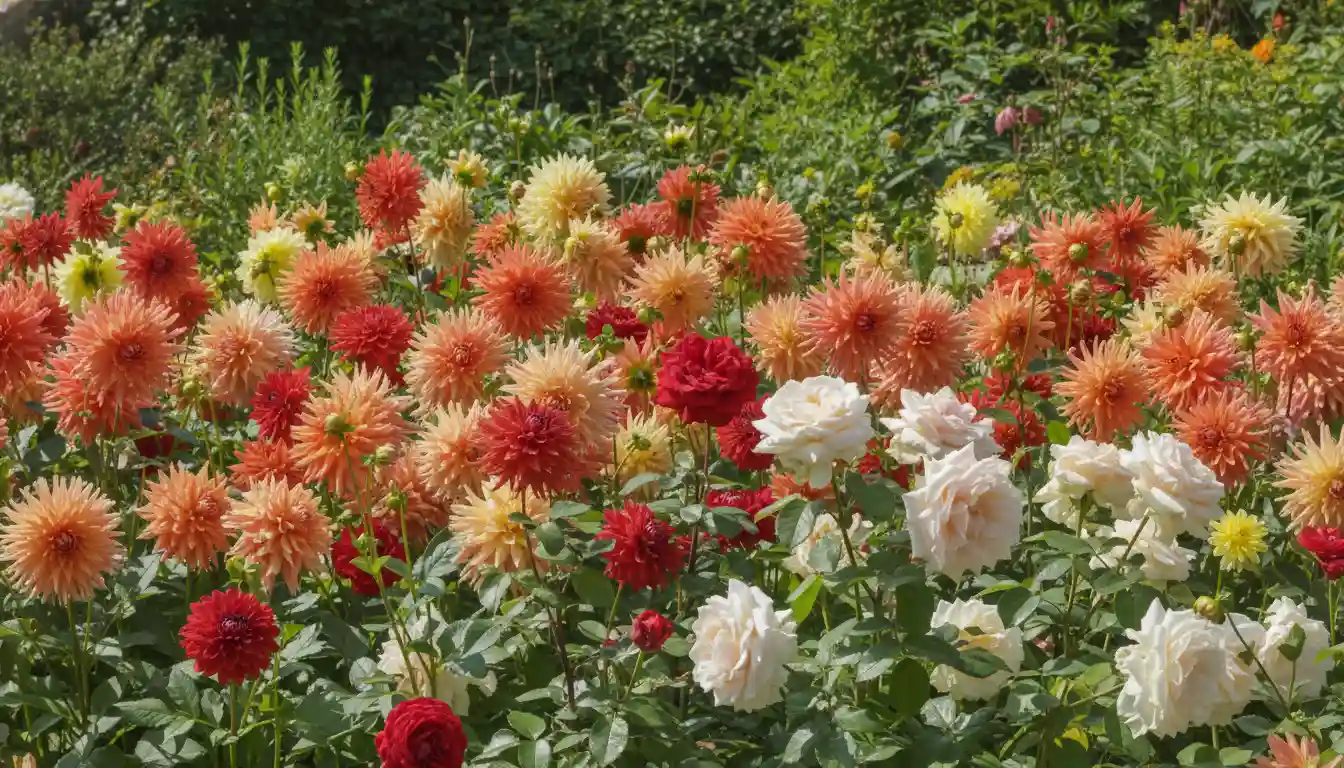
Texture and Form: The Art of Contrast
Great garden design relies on contrasting textures and shapes. The soft, swirling petals of a classic rose create a beautiful juxtaposition against the intricate, geometric patterns of a ball or cactus dahlia. This interplay of forms adds depth and visual interest.
Mix different flower shapes within your bed. Combine the large, dramatic presence of a “dinnerplate” dahlia with the delicate clusters of a floribunda rose. The contrast between the single, massive bloom and the multitude of smaller ones creates a dynamic and engaging visual rhythm.
Succession Blooming: Ensuring a Non-Stop Flower Show
While both roses and dahlias have long bloom seasons, you can orchestrate your garden for continuous color. Choose a mix of repeat-blooming roses and early, mid, and late-season dahlia varieties. This ensures that as one plant is resting, another is hitting its peak.
Incorporate other companion plants to fill any gaps. Spring-blooming bulbs can provide color before the dahlias and roses take off. Perennials like salvia, catmint, and lavender can offer complementary colors and textures throughout the summer and into the fall.
Beyond the Basics: Unconventional Wisdom for Unbeatable Results
Achieving a truly exceptional garden requires moving beyond standard advice. Certain unconventional techniques can provide a significant edge, creating a more resilient and beautiful planting. These strategies address subtle but critical aspects of garden health and aesthetics.
The Power of Strategic Mulching
A thick layer of mulch is essential, but the type of mulch matters. Around your roses, a rich compost or shredded hardwood mulch helps retain moisture and feed the soil. However, this can hold too much moisture for dahlia tubers, especially in early spring.
Consider using a dual-mulch system. Apply your richer mulch around the roses, but switch to a lighter, faster-draining mulch like pine straw or a thin layer of pea gravel around the immediate base of your dahlias. This helps keep the dahlia’s crown dry and prevents rot while still suppressing weeds and regulating soil temperature across the bed. When renovating a garden space, perhaps near a workshop or noisy area, considering a sonopan alternative for outdoor sound barriers can be an innovative way to enhance the tranquility of your new garden sanctuary.
Harnessing Mycorrhizal Fungi
One of the most powerful tools for plant health is invisible. Mycorrhizal fungi are beneficial soil organisms that form a symbiotic relationship with plant roots, dramatically increasing their ability to absorb water and nutrients. This is particularly beneficial for roses, helping them establish a robust root system.
When planting, dust the roots of your roses and the dahlia tubers with a high-quality mycorrhizal inoculant. This simple, one-time application can lead to more vigorous growth, improved drought resistance, and enhanced blooming for years to come. It creates a stronger, more resilient underground network that benefits the entire garden bed.
Frequently Asked Questions
Can I plant dahlias and roses in the same container?
This is generally not recommended for beginners. Both plants have extensive root systems and are heavy feeders, making it very difficult to meet their needs in the confined space of a pot. A large rose will quickly outcompete a dahlia for resources, and the dahlia’s need for tuber division would disturb the rose’s roots.
How far apart should I plant them?
A minimum spacing of 24 inches is recommended, but 36 inches is even better, especially for larger varieties. This generous spacing ensures excellent air circulation, which is the best defense against fungal diseases like powdery mildew. It also gives each plant the physical space it needs to grow without being crowded.
Do they attract the same pests?
Yes, unfortunately, they share several common pests, including aphids, thrips, and spider mites. This is why regular inspection is crucial in a mixed planting. However, by creating a healthy ecosystem and attracting beneficial insects like ladybugs and lacewings, you can help keep pest populations in check naturally.
Your Dream Garden Awaits
The challenge of growing dahlias and roses together is not a barrier but an invitation to become a more thoughtful and skilled gardener. By respecting their individual needs while creating a cohesive environment, you can achieve a truly spectacular display. The key lies in strategic variety selection, meticulous soil preparation, and targeted care.
The reward for this effort is a garden that is greater than the sum of its parts. It is a dynamic, season-long display of color, texture, and form, where the classic elegance of the rose and the dramatic flair of the dahlia unite in perfect harmony. Your dream garden of dahlias and roses is not only possible—it’s waiting for you to create it.
