
Crown Molding on 8-Foot Ceilings: Don’t Shrink Your Room
The standard 8-foot ceiling presents a classic design dilemma. Many homeowners dream of the elegance and character that crown molding adds, yet they hesitate, fearing it will make their rooms feel smaller or ceilings appear lower. This common concern leads to missed opportunities for architectural enhancement.
The core of the problem lies in scale, proportion, and color. Choosing a molding that is too large or ornate can indeed overwhelm a room with standard-height ceilings. Conversely, a molding that is too small can look insignificant and fail to make the desired impact.
This guide solves that problem by providing clear, actionable strategies. We will explore how to select the perfect crown molding, employ clever visual tricks, and ensure a flawless installation that elevates your space rather than diminishing it.
You'll Learn About
The Great Debate: Does Crown Molding Work with 8-Foot Ceilings?
One of the most persistent myths in interior design is that crown molding is unsuitable for rooms with 8-foot ceilings. The fear is that this architectural element will visually “lower” the ceiling, making the space feel cramped and boxed-in. However, this is a misconception that often stems from improper selection and application.
When chosen thoughtfully, crown molding can actually have the opposite effect. It draws the eye upward, creating an illusion of height and adding a touch of sophistication that finishes a room beautifully. The key is to understand the principles of proportion and how to use them to your advantage.
The right molding acts as a graceful transition between the walls and ceiling, defining the space without overpowering it. It’s not about avoiding crown molding altogether, but about selecting the right profile and size to complement the room’s dimensions.
Choosing the Right Size and Scale
For standard 8-foot ceilings, the scale of the crown molding is paramount. A molding that is too bulky will feel top-heavy and oppressive. Conversely, a profile that’s too thin can look out of place and fail to add any significant architectural interest.
The generally accepted guideline for an 8-foot ceiling is a crown molding with a height (the vertical measurement against the wall) of 2.5 to 6 inches. Within this range, the ideal size depends on the overall square footage of the room and its level of formality. A larger, more open-concept living room might handle a 5- or 6-inch molding, while a smaller bedroom or hallway would be better suited to a 3- to 4-inch profile.
Remember that the “spring angle” of the molding—the angle at which it projects from the wall—also affects its visual weight. A molding that extends further out onto the ceiling can create a more dramatic effect, which can be used strategically to enhance the perception of space.
Strategic Style Selection for Height Illusion
Beyond size, the style of the crown molding plays a crucial role in how it impacts a room with 8-foot ceilings. Simple, clean-lined profiles are often the most effective. Ornate and highly detailed designs, such as intricate dentil or egg-and-dart patterns, can look too busy and visually clutter the top of the wall, making the ceiling feel closer.
Consider styles with upward-curving profiles that draw the eye towards the ceiling. A simple cove or a classic colonial profile with gentle curves can add elegance without visual weight. These styles create subtle shadow lines that add depth and dimension, contributing to the illusion of a taller space.
Another powerful technique involves using built-up moldings. This method combines two or more simpler molding profiles to create a custom, more substantial look without the heaviness of a single large piece. For example, a simple crown can be paired with a small picture rail molding installed a few inches below it, with the intervening space painted the same color as the trim to create the appearance of a single, grander piece.
The Psychology of Paint: Fooling the Eye
Paint is one of the most powerful and cost-effective tools for manipulating the perception of space. When it comes to crown molding on 8-foot ceilings, the color choices you make can either enhance or negate your efforts to create a sense of height.
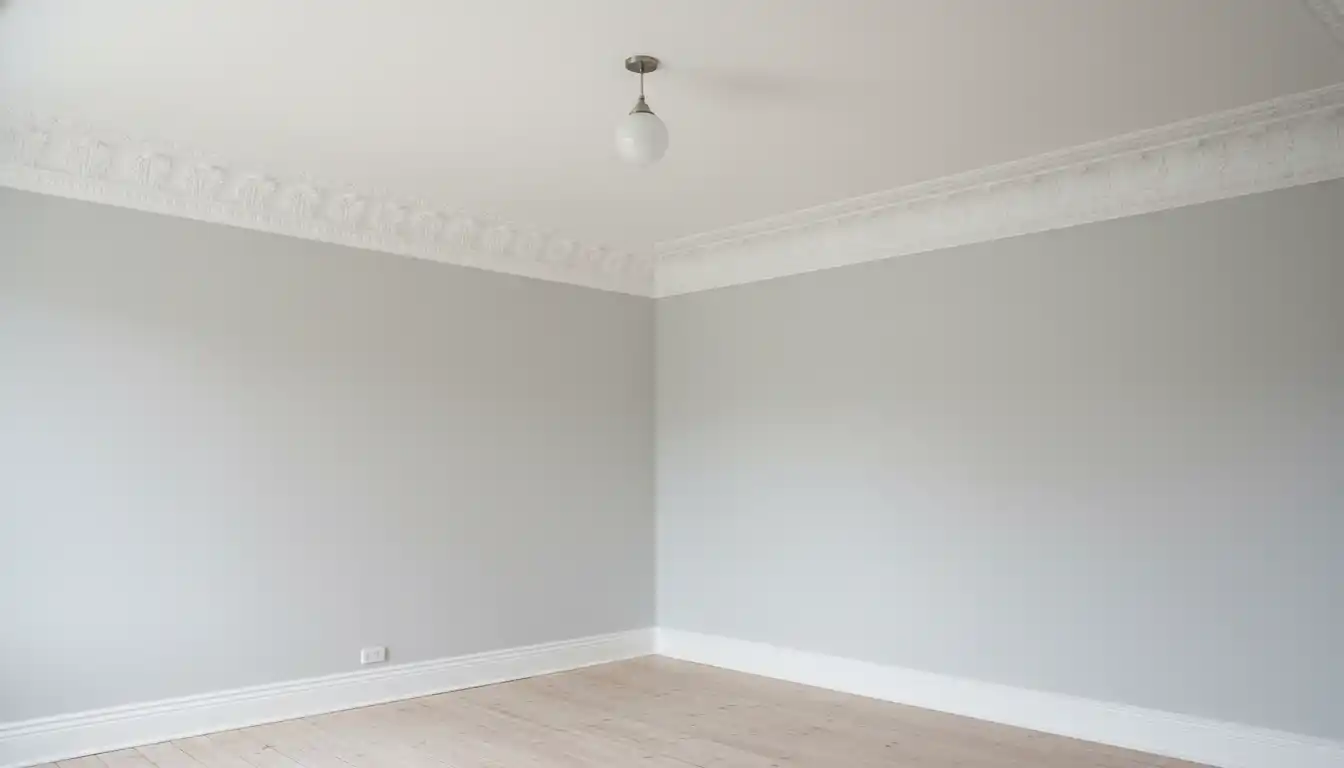
Painting the crown molding, ceiling, and walls the same color is a highly effective strategy. This monochromatic approach blurs the boundaries between the different surfaces, causing the eye to travel upward uninterrupted. The result is a seamless transition that makes the walls appear taller and the room feel more expansive.
If you prefer some contrast, consider painting the crown molding the same color as the ceiling (typically a bright white). This visually connects the molding to the ceiling plane, effectively “lifting” it. A popular and effective combination is a white ceiling, white crown molding, and a slightly darker wall color, which still provides that upward lift while defining the walls.
Installation Precision is Key
Even the perfectly chosen crown molding can fall flat if the installation is sloppy. A bad crown molding job is distracting and detracts from the intended elegance. Precision in cutting, joining, and finishing is essential for a professional look.
One of the most challenging aspects of installation is achieving tight, clean corners. Walls are rarely perfectly square, which can make miter cuts tricky. Using a coping saw for inside corners, rather than trying to miter them, often produces a superior fit. This technique involves cutting the profile of one piece to fit snugly against the face of the other.
Properly securing the molding is also critical. It should be nailed into the wall studs and ceiling joists to prevent it from pulling away over time. Any visible gaps, especially those that occur if the molding is pulling away from the ceiling, can ruin the effect. If you notice issues like crown molding separating from the ceiling, it needs to be addressed immediately to maintain the seamless look.
The Finishing Touches: Caulk and Sanding
The final steps of the installation process are what separate an amateur job from a professional one. Caulking all the seams and nail holes is non-negotiable. This includes the top edge where the molding meets the ceiling, the bottom edge where it meets the wall, and at all corner and scarf joints.
Use a high-quality, paintable caulk and apply a smooth, consistent bead. Wipe away any excess with a damp cloth for a clean line. This step not only hides imperfections but also makes the molding look like an integral part of the room’s architecture. Occasionally, you might encounter a vertical crack in crown molding, which can often be filled and repaired during this finishing stage.
After the caulk has dried and any wood filler on nail holes has been applied, a light sanding will ensure a perfectly smooth surface for paint. Don’t skip this step, as it ensures the final paint job looks flawless and professional, completing the transformation of your space.
Comparing Molding Profiles for 8-Foot Ceilings
Choosing the right profile involves balancing simplicity with architectural interest. Below is a table comparing common molding styles and their suitability for rooms with standard ceiling heights. This can help you visualize how different choices will impact your space.
| Molding Style | Profile Characteristics | Best For 8′ Ceilings? | Design Impact |
|---|---|---|---|
| Simple Cove | A single, concave curve. Minimalist and clean. | Yes | Draws the eye up gently without adding visual weight. Excellent for modern or transitional spaces. |
| Colonial | Features a gentle S-shaped curve (cyma recta or cyma reversa). | Yes | A classic, versatile choice that adds traditional elegance without being overly ornate. |
| Craftsman | Simple, straight lines with minimal ornamentation. Often flat and angular. | Yes | Complements Craftsman-style architecture and adds a strong, clean line at the ceiling. |
| Dentil | Characterized by a series of small, tooth-like blocks. | Use with Caution | Can be too busy for an 8-foot ceiling unless the molding is very narrow and the room is large. |
| Egg-and-Dart | A repeating pattern of an egg-shape and a V-shape. Highly decorative. | No | Generally too ornate and heavy for standard-height ceilings, making the space feel crowded. |
Beyond the Basics: Advanced Visual Tricks
To further enhance the illusion of height, consider incorporating lighting with your crown molding. Installing LED strip lighting along the top of the molding can create a soft, upward glow on the ceiling. This technique, known as cove lighting, not only adds beautiful ambient light but also draws the eye upward, making the ceiling seem to recede.
Another advanced technique involves a two-tone paint scheme that is less conventional. Consider painting the ceiling a very light, cool color like a pale blue or soft gray, while keeping the crown molding a crisp white. This can evoke the sense of an open sky, making the room feel more airy and limitless.
Finally, the interplay between crown molding and other trim in the room, like baseboards and window casings, should be harmonious. Ensuring that all the trim is stylistically consistent and proportionally balanced will create a cohesive and professionally designed look. A well-proportioned set of trim elements works together to elevate the entire space, making your 8-foot ceilings feel anything but standard.
The Final Verdict: Elevate Your 8-Foot Ceilings with Crown Molding
Crown molding is not a luxury reserved for homes with high ceilings; it is a versatile architectural detail that can dramatically enhance the character of a standard 8-foot room when properly scaled and colored. The fear that molding will lower the ceiling is overcome by smart design choices.
Key Strategies for Success:
-
Mind the Scale: For an 8-foot ceiling, stick to a molding width between 3 and 5 inches. Anything wider risks overwhelming the space and drawing the eye downward.
-
Use Visual Tricks: Install the molding slightly lower on the wall (a practice known as “tricking the eye”) or, more commonly, paint the molding the exact same color as the ceiling. This blends the transition, making the ceiling appear to extend up to the point where the molding meets the wall. [Image illustrating a crown molding painted the same color as the ceiling]
-
Embrace Simplicity: Choose profiles that are less ornate and simpler in design. Simple curves and coves add elegance without the heavy visual weight of highly detailed, layered profiles.
By respecting the constraints of your 8-foot ceiling and choosing the appropriate scale and color treatment, you can successfully integrate crown molding, adding valuable architectural depth and polished elegance without sacrificing the feeling of space.
