
Craftsman Snowblower Throttle Linkage Problems? Your Ultimate Fix-It Guide
There’s nothing more frustrating than a snowblower that refuses to run correctly just as the first heavy snow of the season begins to fall. You pull the cord, it sputters to life, but instead of a smooth, powerful roar, you get a chaotic surging, a weak whimper, or it stalls completely. Many owners immediately suspect a carburetor issue, but a surprising number of these performance problems trace back to a small, yet crucial, system: the Craftsman snowblower throttle linkage.
This intricate assembly of rods and springs is the communication line between your throttle control and the engine’s carburetor. When it’s out of sync, your snowblower’s performance can become erratic and unreliable. This comprehensive guide will walk you through understanding, diagnosing, and repairing throttle linkage issues, turning a potential headache into a manageable DIY task.
You'll Learn About
What is the Throttle Linkage and Why Is It So Important?
Before diving into repairs, it’s essential to understand what the throttle linkage does. It’s not just a single part but a system designed to precisely control the engine’s speed based on your input and the engine’s workload. Without it, your machine would either run at one constant, inefficient speed or constantly stall under the strain of heavy snow.
The Core Function: Translating Command to Action
At its most basic, the throttle linkage connects the manual throttle lever (the “rabbit” and “turtle” control) to the carburetor’s butterfly valve. When you move the lever to a faster speed, the linkage opens this valve, allowing more air and fuel into the engine, which increases RPMs. It’s a direct mechanical connection that gives you control over the machine’s power output.
However, the system is more intelligent than a simple direct connection. It works in constant harmony with the engine’s governor, an internal mechanism that senses engine speed. This partnership is what allows your snowblower to automatically adjust its power to handle changing conditions, like moving from light powder to a dense, icy drift at the end of the driveway.
The Unsung Hero: The Governor and Linkage Partnership
The governor is the true brains of the operation, and the linkage is its messenger. When your snowblower hits a patch of heavy snow, the engine starts to slow down. The governor senses this drop in RPM and, through the linkage, automatically opens the carburetor’s throttle plate slightly to give the engine more fuel and power to maintain its speed. Conversely, when the load lightens, the governor closes the throttle to prevent the engine from over-revving.
The delicate springs within the linkage assembly are critical to this process. They provide the precise amount of tension needed for the governor to make these micro-adjustments. If a spring is stretched, missing, or installed in the wrong hole, this sensitive feedback loop is broken, leading to the most common and frustrating symptom of all: engine surging.
Telltale Signs of a Throttle Linkage Problem
A faulty throttle linkage can manifest in several ways, often mimicking the symptoms of a dirty carburetor. Understanding these signs is the first step toward an accurate diagnosis. Pay close attention to how your engine behaves both under load and when idling.
The Classic Symptom: Engine Surging or Hunting
Engine surging, also known as “hunting,” is the most prevalent sign of a linkage issue. The engine RPMs will rhythmically rise and fall, creating a “rev-rev-rev” sound instead of a steady hum. This happens because the governor is constantly over-correcting, unable to find a stable speed due to incorrect spring tension or a binding linkage.
A stretched or weakened governor spring is the primary cause. It can’t provide the right resistance, causing the governor to open the throttle too much, then slam it shut when the engine over-revs, repeating the cycle endlessly. An air leak in an intake gasket can also cause surging, but checking the linkage first is often the quickest path to a solution.
Lack of Response or Delayed Throttle Control
You move the throttle lever from turtle to rabbit, but nothing happens, or the engine speed changes sluggishly. This often points to a physical problem with the linkage itself. A rod may have become disconnected from the governor arm or the carburetor.
In other cases, a linkage rod might be bent, preventing it from moving through its full range of motion. Ice, dirt, or debris can also build up around the linkage components, causing them to bind and stick. This prevents the smooth transfer of movement from your control lever to the engine.
Engine Stalling Under Load or Inability to Reach Full Power
If your snowblower starts and idles fine but bogs down and stalls as soon as you engage the auger in deep snow, the linkage is a prime suspect. This indicates the governor is failing to open the throttle to compensate for the increased workload. The cause could be a disconnected spring or a misadjusted governor arm.
Similarly, if the engine seems to lack its usual power and won’t reach its maximum RPM, the linkage may be physically restricting the carburetor from opening fully. This could be due to a bent rod or an incorrect adjustment that limits its travel.
A Step-by-Step Guide to Diagnosing the Problem
Before you start buying parts, a thorough inspection can often reveal the exact cause of your throttle troubles. Always begin by disconnecting the spark plug wire to ensure the engine cannot accidentally start while you are working on it. Safety should always be your first priority.
The All-Important Visual Inspection
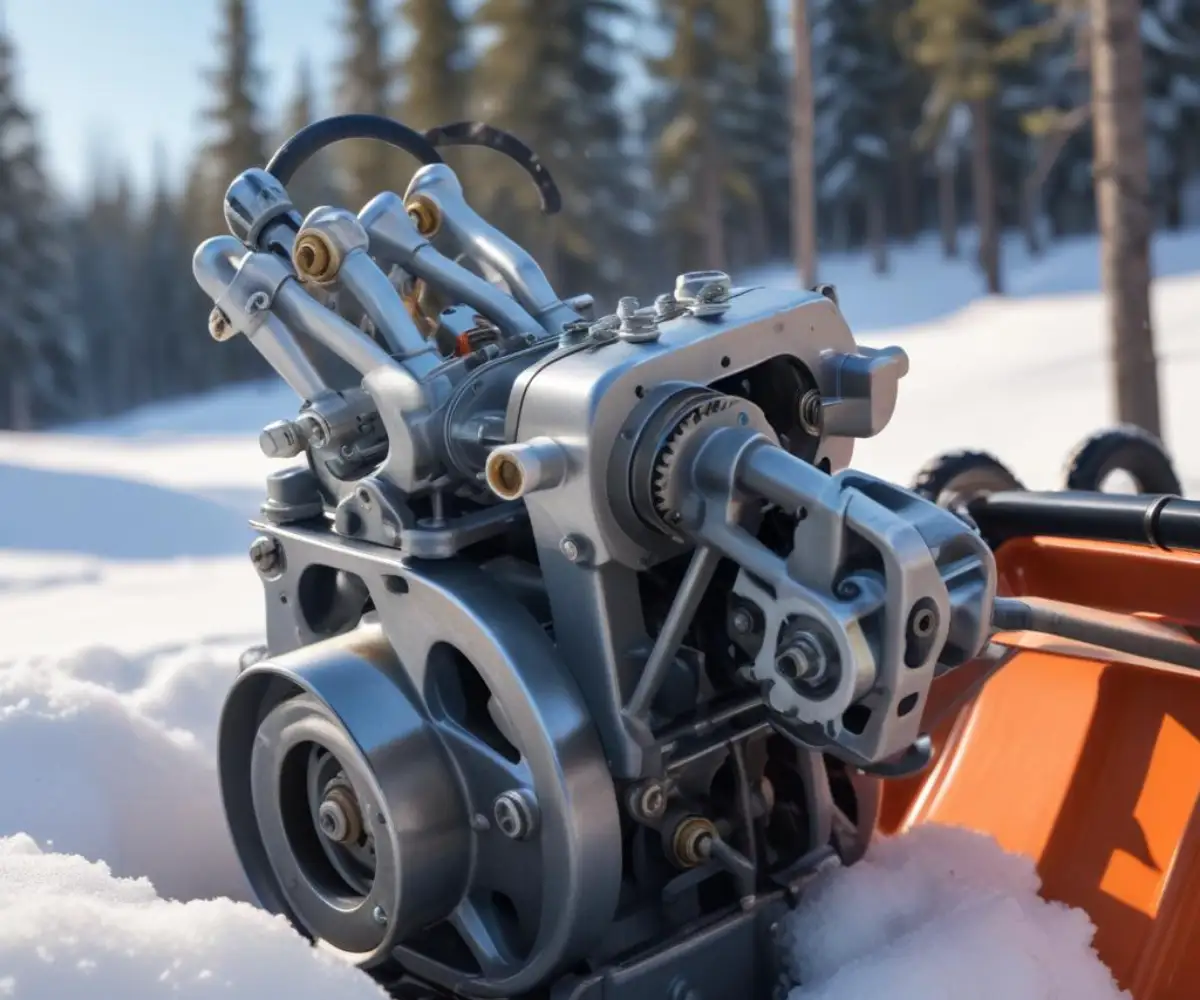
Start with a careful visual check of the entire throttle linkage assembly. You will likely need to remove a plastic engine cover to get a clear view. Look for obvious signs of trouble:
- Missing Springs: There are typically one or two small springs. Compare what you see to an engine diagram for your specific model to ensure everything is present.
- Stretched or Damaged Springs: A spring that looks elongated or has broken coils is a definite problem. Even slight stretching can throw off the engine’s performance.
- Bent Rods: The thin metal rods connecting the components should be perfectly straight. Any bends or kinks can cause binding and restrict movement.
- Disconnected Parts: Check every connection point. Ensure the rods are securely seated in their respective holes on the governor arm and carburetor throttle plate.
Feel for Free and Unrestricted Movement
With the engine off, manually operate the throttle linkage. Gently move the governor arm back and forth with your fingers. It should move smoothly through its entire range of motion without any catching or binding.
Also, move the external throttle control lever from the slowest to the fastest setting. Watch the linkage assembly as you do this. You should see the tension on the governor spring increase and decrease smoothly, and the carburetor throttle plate should open and close in response.
The Critical Spring Tension Test
The springs are the heart of the system. Gently flick them with your finger. They should feel taut and responsive. A spring that feels loose or “dead” has likely lost its elasticity and needs to be replaced.
Pay close attention to which holes the springs are connected to. Many governor arms have multiple holes, and placing a spring in the wrong one can drastically alter the engine’s RPM range. If you suspect someone has tampered with it before, find a parts diagram for your Craftsman model to confirm the correct placement.
How to Repair and Adjust Your Throttle Linkage
Once you’ve identified the problem, the repair is often straightforward. Whether it’s replacing a spring or performing a static adjustment, having the right approach is key to getting your snowblower running like new. Always use OEM (Original Equipment Manufacturer) parts when possible, especially for springs, as their tension rates are specifically calibrated for your engine.
Replacing a Faulty Spring or Bent Rod
Replacing a spring is typically the easiest fix. Use a pair of needle-nose pliers to carefully unhook the old spring from the governor arm and the throttle plate. When installing the new one, hook one end first, then gently stretch it to connect the other end.
If a rod is bent, it’s often better to replace it than to attempt straightening it. A perfectly straight rod is crucial for smooth operation. Simply pop the old rod out of its holes and snap the new one into place.
The Static Governor Adjustment: Restoring Factory Settings
If the linkage has been completely disconnected or you suspect a major misadjustment, performing a static governor adjustment can reset the system. The process is precise but manageable:
- Move the throttle control to the full-throttle (rabbit) position. This ensures the linkage is trying to hold the carburetor wide open.
- Loosen the clamp bolt on the governor arm. This will allow the arm to move independently of the governor shaft that comes out of the engine block.
- Ensure the carburetor’s throttle is wide open. The linkage from the governor arm should be pushing the throttle plate to its fully open position.
- Turn the governor shaft. Using pliers or a wrench, turn the small shaft that the governor arm is clamped to as far as it will go in the same direction that the governor arm moved to open the throttle.
- Tighten the clamp bolt. While holding both the governor arm and the shaft in these maximum positions, securely tighten the clamp bolt.
This procedure synchronizes the governor’s internal mechanism with the carburetor’s throttle plate, restoring the correct operating geometry. It’s a fundamental step that solves many persistent hunting and power issues.
Preventative Maintenance to Avoid Future Issues
An ounce of prevention is worth a pound of cure, especially when it comes to outdoor power equipment. A few simple maintenance steps can keep your throttle linkage operating smoothly for years and prevent you from being caught unprepared by a sudden blizzard.
Keep It Clean and Lubricated
During your pre-season check-up, take a moment to clean the entire linkage area. Use a can of compressed air or a soft brush to remove any dirt, grass clippings, or grime that could cause binding. After cleaning, apply a small amount of dry lubricant, like a graphite or PTFE spray, to all pivot points. Avoid heavy oils or greases that can attract and hold dirt.
Perform Regular Inspections
Each time you check your oil, do a quick visual inspection of the linkage. Look at the springs and rods to ensure everything is still connected and in good condition. This simple two-minute check can help you spot a weakening spring or a disconnected rod before it becomes a performance-hindering problem.
| Symptom | Primary Linkage Cause | Recommended Action |
|---|---|---|
| Engine Surging/Hunting | Stretched or weak governor spring; incorrect spring position. | Replace governor spring with OEM part. Verify spring is in the correct hole per the manufacturer’s diagram. |
| No/Slow Throttle Response | Disconnected or bent linkage rod; binding pivot points. | Reconnect any loose rods. Replace bent rods. Clean and lubricate all moving parts of the linkage. |
| Stalls Under Load | Misadjusted governor arm or disconnected spring. | Perform a static governor adjustment. Check that all springs are properly connected and have good tension. |
| Won’t Reach Full Power | Incorrect governor adjustment or physically obstructed linkage. | Perform a static governor adjustment. Inspect for any debris or ice buildup that may be limiting movement. |
Beyond the Basics: Advanced Knowledge and Considerations
Maintaining your equipment goes beyond just the engine. Sometimes, a simple task like accessing the linkage requires dealing with different types of hardware. Knowing the distinction between fasteners like Torx vs Robertson screws can save you a trip to the hardware store and prevent stripping a screw head on an engine shroud.
It’s also important to view equipment maintenance as part of a larger picture of homeownership. The small costs of maintaining a snowblower are minimal compared to larger projects. Just as you might research the Power Home Remodeling windows cost for a major upgrade, understanding the minor expenses that keep your essential tools running is key to smart budgeting. For some, the dedication to home improvement can even extend to massive undertakings, like calculating the cost to dig out a basement 2 feet for extra living space.
Conclusion: Taking Control of Your Snowblower’s Performance
The Craftsman snowblower throttle linkage may seem like a complex component, but it operates on straightforward mechanical principles. By understanding its role in partnership with the governor, you can effectively diagnose and solve the most common engine performance issues like surging, stalling, and low power.
A methodical approach of visual inspection, hands-on testing, and precise adjustment will empower you to tackle these repairs with confidence. Regular cleaning and maintenance will ensure that when the snow starts to fly, your Craftsman snowblower will be ready to answer the call with smooth, reliable, and powerful performance.
