
Craftsman Garage Door Opener Not Closing? Try This Fix First
There are few home-related frustrations as maddening as a garage door that refuses to close. You press the button, the motor hums, the door starts its descent, and then, suddenly, it reverses and goes right back up. This common issue with Craftsman garage door openers can disrupt your day and compromise your home’s security.
Fortunately, the root cause is often a simple fix that you can handle yourself without needing to call a professional. This guide will walk you through the most common reasons your Craftsman garage door opener is not closing and provide clear, step-by-step solutions to get it working again.
You'll Learn About
Decoding the Blinking Light: Your Safety Sensors Are Talking
Before diving into complex mechanical parts, start with the most frequent culprit: the safety sensors. These two small “eyes,” located near the bottom of your garage door tracks on either side, are essential safety features. They project an invisible infrared beam across the opening.
If anything breaks this beam while the door is closing, the opener assumes there’s an obstruction and automatically reverses to prevent injury or damage. When these sensors are misaligned or blocked, they prevent the door from closing at all.
How to Diagnose and Fix Safety Sensor Issues
Your first clue often comes from the opener’s motor unit. A blinking LED light is a diagnostic code. On most Craftsman models, a rapidly blinking light indicates a problem with the safety sensor system. You should also check the small LED lights on the sensors themselves.
The sending sensor will typically have a solid amber light, while the receiving sensor will have a solid green light when they are perfectly aligned and communicating. If the green light is flickering or completely off, you have found your problem area.
First, ensure nothing is physically blocking the beam. This could be a stray toy, a broom handle, or even accumulated leaves or cobwebs directly on the sensor lenses. Gently wipe the lenses with a soft, dry cloth to remove any dirt or debris. Even something as minor as tile dust from a recent renovation can coat the lenses and cause a fault, a good reminder to keep the garage clean after any project that creates a lot of mess, like when you find tile dust everywhere.
If cleaning doesn’t work, check the alignment. The sensors can get bumped or knocked out of position easily. Loosen the wingnut or screw holding the receiving (green light) sensor and carefully adjust its angle until the green light becomes solid and steady. Once it’s solid, tighten the wingnut securely.
Finally, inspect the wiring leading from the sensors to the motor unit. Look for any signs of damage, such as frayed wires, loose connections at the sensor terminals, or staples that may have pierced the wire insulation. Repairing or replacing damaged wiring may be necessary to restore the connection.
Setting the Right Boundaries: Travel and Force Limit Adjustments
If the safety sensors are perfectly aligned and the door still won’t close, the next step is to check the travel and force limit settings. These settings tell the opener how far the door should travel to be fully closed and how much pressure to apply before stopping. If these settings are incorrect, the opener might think it’s hitting an obstruction when it’s just reaching the floor.
Over time, factors like temperature changes and normal wear can cause the door’s mechanics to shift slightly, requiring these settings to be recalibrated. This is a crucial check, similar to the detailed inspection you would perform during a new construction walk through, where small adjustments can prevent major issues later.
Adjusting Your Craftsman Opener’s Limits
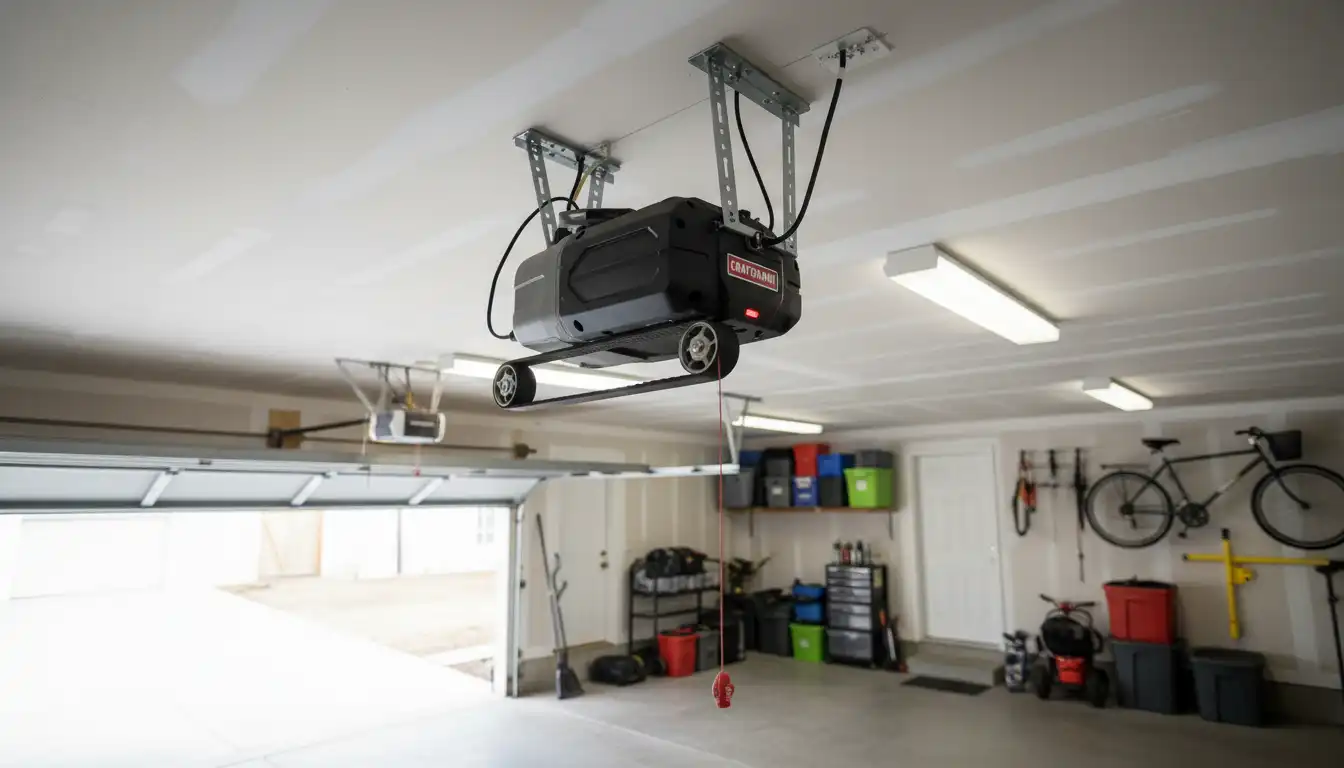
Most Craftsman openers have two adjustment screws on the motor unit, often labeled “Up Travel” and “Down Travel.” You will typically need a flathead screwdriver for this task. To adjust the down travel, press the wall button to send the door down.
If it reverses before hitting the floor, turn the “Down Travel” adjustment screw counter-clockwise in small increments (usually a quarter-turn at a time). This increases the distance the door travels downwards. Run the door through a full cycle after each adjustment until it closes fully and seals against the floor without being forced.
Similarly, there is a “Force” adjustment control. If the downward force is set too low, the opener might reverse from minor resistance. If it’s too high, it becomes a safety hazard. After ensuring the door is closing properly, perform a safety reversal test. Place a 2×4 piece of wood flat on the floor in the door’s path. When the door touches the wood, it should immediately reverse. If it doesn’t, decrease the “Down Force” slightly until it passes this test.
Checking the Obvious: Power and Physical Obstructions
Sometimes the simplest solution is the right one. Before you disassemble the opener, take a moment to confirm the basics. Is the motor unit plugged into a working electrical outlet? Test the outlet with another device, like a lamp, to be sure.
Check your home’s circuit breaker or fuse box to ensure the circuit for the garage hasn’t been tripped. A simple reset might be all that’s needed. Also, examine the power cord for any visible damage.
Inspecting the Door and Tracks
The problem may not be with the opener at all, but with the door itself. A physical obstruction in the door’s path will trigger the opener’s safety mechanisms. Carefully inspect the metal tracks on both sides of the door.
Look for dents, bends, or any debris that might be blocking the rollers. The tracks must be parallel and clean for the door to move smoothly. A slight misalignment can cause the rollers to bind, creating enough resistance to make the opener reverse.
To check the door’s health, you must test its balance. Pull the red emergency release cord to disconnect the door from the opener. Now, try to lift the door manually. It should lift smoothly with minimal effort and stay open when you let go around the halfway point. If it feels extremely heavy or slams shut, the springs are likely worn out or broken. This is a dangerous situation that requires immediate professional repair. Do not attempt to adjust or replace garage door springs yourself.
The Unsung Hero of a Smooth Garage Door: Proper Lubrication
One of the most overlooked aspects of garage door maintenance is lubrication. All the moving metal parts—rollers, hinges, and springs—require regular lubrication to function correctly. A dry, grinding door creates significant resistance that the opener’s force sensors can misinterpret as an obstruction.
Using the wrong lubricant can make the problem worse. Avoid products like WD-40 for this task, as they are solvents that can strip away existing grease and attract more dirt. Instead, opt for a high-quality garage door lubricant, which is typically a silicone or white lithium grease spray.
A Simple Lubrication Routine
At least twice a year, apply a light coating of lubricant to all the hinges and the stems of the rollers. Wipe away any excess to prevent drips. You should also lubricate the torsion spring above the door to ensure it winds and unwinds smoothly and quietly.
Your Quick Troubleshooting Guide
When you’re standing in your garage with a stubborn door, it helps to have a quick reference. This table summarizes the most common issues, their symptoms, and the recommended solutions to get your Craftsman opener working again.
| Symptom | Potential Cause | Solution |
|---|---|---|
| Door reverses immediately after starting to close. LED on motor blinks rapidly. | Safety sensor obstruction or misalignment. | Clear any obstructions. Clean sensor lenses. Realign the sensors until the green indicator light is solid. |
| Door closes partway, then reverses. | “Down Travel” limit is set too high (too short). | Adjust the “Down Travel” limit screw to increase the closing distance. Make small, incremental adjustments. |
| Door closes but doesn’t seal against the floor. | “Down Travel” limit is set too low (too long). | Adjust the “Down Travel” limit screw to decrease the closing distance until a proper seal is formed. |
| Door reverses upon touching the floor. | “Down Force” sensitivity is set too low. | Slightly increase the “Down Force” setting. Perform a 2×4 safety test after adjustment. |
| Opener makes no sound and doesn’t try to move the door. | Power issue or locked wall control. | Check if the unit is plugged in. Test the outlet. Check the circuit breaker. Ensure the lock feature on the wall control isn’t activated. |
| Door moves in a jerky or grinding manner. | Lack of lubrication or obstruction in tracks. | Lubricate all moving parts (rollers, hinges). Inspect and clean the door tracks for debris or damage. |
When DIY Isn’t the Answer: Calling a Professional
While most common issues with a Craftsman garage door opener can be fixed with these troubleshooting steps, some problems require an expert. If you have checked the sensors, adjusted the limits, and inspected the tracks, but the door still won’t close, you may have a more serious internal issue.
Problems like a stripped drive gear, a faulty logic board, or a failing motor capacitor are not typically DIY repairs. Most importantly, any issue related to the garage door’s springs or cables should be handled exclusively by a trained professional. The high tension in these parts makes them extremely dangerous to work with.
Proactive Care for a Reliable Door
The best way to deal with a garage door problem is to prevent it from happening in the first place. A simple monthly checklist can save you a lot of hassle. Take a few minutes to wipe the safety sensor lenses, watch the door operate to ensure it’s moving smoothly, and perform the safety reversal test with a 2×4.
This proactive approach ensures your opener operates safely and reliably year-round. It’s a small investment of time that pays off in convenience and peace of mind, much like staying ahead of maintenance on other home equipment, from your lawnmower to your snowblower after a long winter, which is when looking at snowblower reviews can be a lifesaver.
By following these diagnostic steps, you can confidently tackle the common reasons your Craftsman garage door opener is not closing. From a simple sensor adjustment to a quick lubrication, you have the knowledge to restore order to your garage and secure your home.
