
Craftsman 9 HP Snowblower Oil Capacity: The Mistake That Ruins Engines
As winter approaches, a looming storm can bring a sense of urgency. You pull out your trusted Craftsman 9 HP snowblower, ready to tackle the snow, but a critical question stops you in your tracks: how much oil does it actually need? This single, seemingly simple detail is one of the most vital aspects of your machine’s health.
Getting the oil capacity wrong is not a minor oversight; it’s a fast track to severe engine damage. Whether you use too little or, just as dangerously, too much, you are risking the life of your snowblower. This common mistake, born from simple uncertainty, can lead to smoking engines, hard starts, and catastrophic internal failure.
You'll Learn About
Why Correct Oil Capacity Is a Deal-Breaker for Your Engine
Engine oil is the lifeblood of your Craftsman snowblower. It serves three critical functions: lubricating moving parts to reduce friction, cooling the engine by dissipating heat, and cleaning internal components by carrying away debris. When the oil level is wrong, none of these jobs can be done effectively.
Underfilling is a recipe for disaster. Without enough oil, friction between the piston, cylinder walls, and crankshaft skyrockets. This generates immense heat, leading to overheating and, in the worst-case scenario, a completely seized engine—a repair that can easily cost more than the machine is worth.
Conversely, overfilling is just as destructive. Too much oil in the crankcase gets churned into a foam by the crankshaft. This foamy mixture cannot lubricate parts properly and leads to oil being forced past seals and gaskets, causing leaks. Even more critically, excess oil can be pushed into the cylinder, leading to hydro-lock, fouling the spark plug, and creating heavy carbon deposits that choke performance.
The First Step: Identify Your Snowblower’s Engine
Before you can find the correct oil capacity, you must understand a key detail: “Craftsman” is the brand of the snowblower, but not usually the brand of the engine. Most Craftsman machines are powered by engines from manufacturers like Tecumseh or Briggs & Stratton.
The “9 HP” designation is a general power rating, but the specific engine model holds the key to its exact specifications. Look for a metal plate or sticker on the engine shroud itself. You’ll find a model and spec number that is essential for looking up the precise oil capacity and type.
Official Oil Capacity for Common Craftsman 9 HP Engines
While the exact amount can vary slightly, most Craftsman 9 HP snowblowers, particularly those with Tecumseh or Briggs & Stratton “Snow King” engines, have a specific range. It is absolutely crucial to cross-reference with your specific engine model number, as even small variations exist.
Many owner’s manuals for models in this power range specify capacities between 20 and 28 ounces. However, user experience and engine-specific data often show that the true “full” level is closer to 26 to 28 ounces (approximately 0.77 to 0.83 liters). Pouring in a specific amount without checking the dipstick is a major mistake. Always use the dipstick to confirm the level.
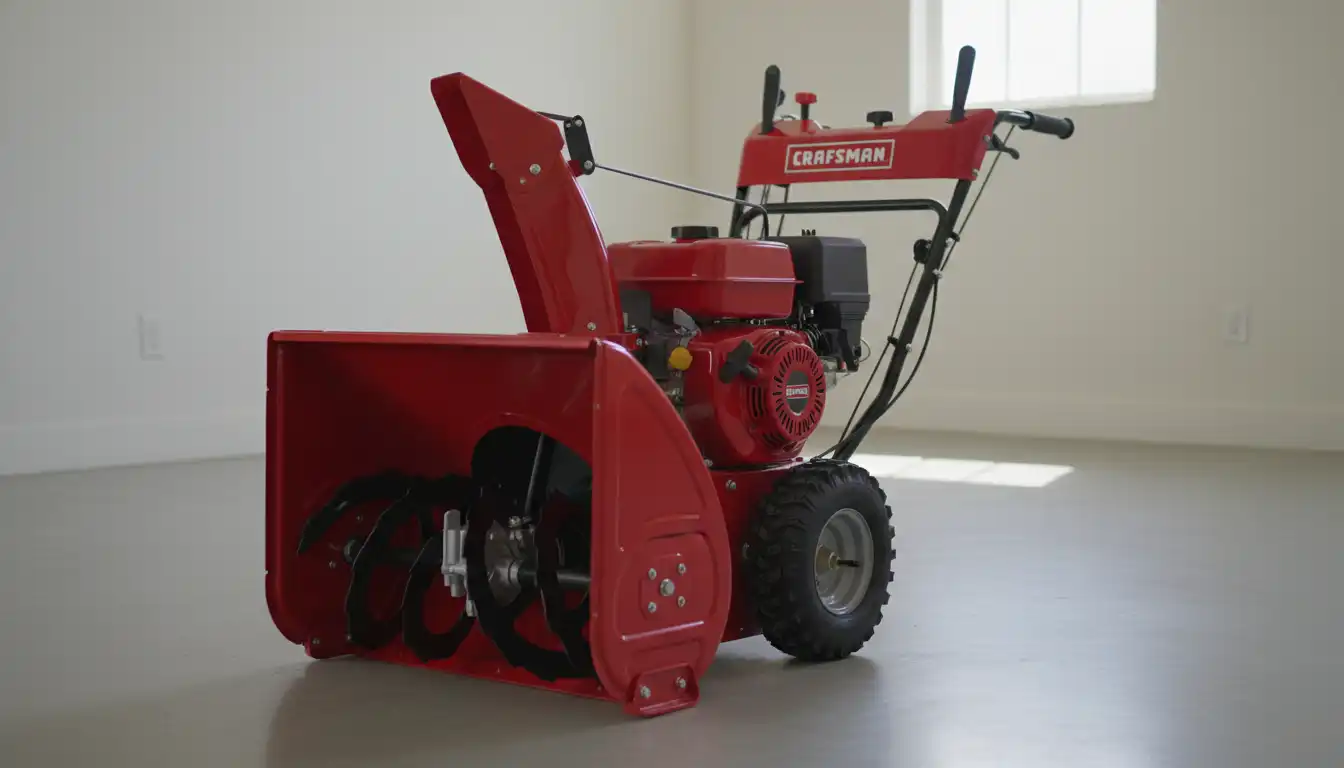
The table below outlines common engine types found in 9 HP Craftsman snowblowers and their typical oil requirements. This is a guide; your engine’s manual is the final authority.
| Engine Manufacturer | Common Engine Model/Series | Typical Oil Capacity (Ounces) | Recommended Oil Type (Winter) |
|---|---|---|---|
| Tecumseh | Snow King LH318SA / HMSK90 | 26 oz | SAE 5W-30 Synthetic |
| Briggs & Stratton | 950 Snow Series™ (208cc) | 20 oz (0.6 L) | SAE 5W-30 Synthetic |
| General Craftsman (MTD-built) | Various Models (approx. 300cc) | 20-28 oz | SAE 5W-30 Synthetic |
Choosing the Right Oil Type: It’s More Than Just How Much
Using the correct volume of oil is only half the battle; the type of oil is equally important for winter performance. For cold-weather operation, a multi-viscosity oil is essential for ensuring the engine can start easily and remain protected.
For virtually all snowblowers operating in freezing temperatures, SAE 5W-30 synthetic oil is the superior choice. The “5W” indicates that the oil flows easily at low winter (“W”) temperatures, allowing for easier starts and immediate lubrication. Synthetic oil maintains its viscosity better in extreme cold and provides superior protection against wear compared to conventional oil.
A Step-by-Step Guide to the Perfect Oil Change
Performing an oil change correctly ensures your engine is protected and ready for the season. Rushing this process or taking shortcuts can lead to major problems.
- Warm the Engine: Run the snowblower for 5-10 minutes. Warm oil is thinner and will drain more completely, taking suspended contaminants with it.
- Position and Prepare: Move the machine to a level surface. Place an oil drain pan under the drain plug, which is typically a square-headed bolt at the base of the engine.
- Drain the Old Oil: Using the correct size wrench, carefully loosen and remove the drain plug. Allow all the old oil to drain out completely.
- Replace the Drain Plug: Once the draining is complete, wipe the plug and the surrounding area clean. Reinstall the drain plug and tighten it until it is snug. Do not overtighten, as this can strip the threads.
- Refill with New Oil: Remove the dipstick cap (usually yellow). Using a funnel, slowly add about 80% of the recommended oil capacity. For example, if the capacity is 26 ounces, start by adding about 20 ounces.
- The Critical “Fill and Check” Method: Wait a minute for the oil to settle. Insert the dipstick but do not screw it in; simply rest the cap on the threads. Remove it and check the level. Continue adding small amounts of oil, checking the level each time, until it reaches the “FULL” mark on the dipstick. This prevents overfilling.
- Secure the Dipstick: Once the level is correct, screw the dipstick cap in securely.
Top Mistakes That Will Destroy Your Snowblower Engine
Many well-intentioned owners make simple errors that have devastating consequences. Avoiding these common pitfalls is key to a long engine life. This isn’t just a concern for Craftsman owners; knowing the correct oil fill is vital whether you have a powerful John Deere 828D or are trying to figure out how much oil an Ariens snowblower takes.
One of the most damaging mistakes is tipping the snowblower the wrong way to drain oil or service the underside. Always tip the machine back so the handles go to the ground. Tipping it forward or to the side can cause oil to flood the carburetor and air filter, resulting in a machine that won’t start and emits clouds of white smoke.
Another frequent error is simply dumping in a pre-measured bottle of oil without checking the dipstick. Capacities can vary, and what’s left of the old oil can affect the total amount needed. The fill-and-check method is the only way to be certain. Getting the exact amount is just as critical on other machines, like the John Deere 826 snowblower.
Frequently Asked Questions Answered
What are the signs of low oil in my snowblower?
The most immediate signs are the engine running hotter than usual or producing a knocking or ticking sound. If you notice these symptoms, shut the engine off immediately, let it cool, and check the oil level before attempting to restart it.
Can I use regular car oil in my snowblower?
While 5W-30 is a common grade for both cars and snowblowers, it’s best to use an oil specifically formulated for 4-cycle small engines. These oils contain additives designed for the operating conditions of air-cooled engines, which can run hotter and under different loads than a car engine.
How often should I change the oil?
For a new snowblower, you should change the oil after the first five hours of use. After that initial break-in period, changing the oil once per season or every 50 hours of operation is a solid rule of thumb. Fresh oil is the cheapest insurance you can buy for your engine’s health.
Conclusion: Don’t Guess, Know for Sure
The health and longevity of your Craftsman 9 HP snowblower hinge on getting the oil service right. The difference between a machine that lasts for decades and one that dies prematurely often comes down to this one crucial detail. Stop guessing.
Take the time to identify your specific engine model, use a high-quality 5W-30 synthetic oil, and meticulously follow the “fill and check” method. By giving your engine the precise amount of the correct oil, you ensure it will be ready to roar to life and tackle even the deepest snow, season after season.
