
Countertop Flush With Cabinet: The Ultimate Guide to a Flawless, Modern Kitchen
In the world of high-end kitchen design, small details make a monumental difference. One such detail, often overlooked but incredibly impactful, is the alignment of the countertop with the cabinets. The conventional choice for decades has been the countertop overhang, a practical feature designed to protect cabinet faces from spills. However, a growing trend towards minimalist, seamless aesthetics has brought a new contender to the forefront: the flush countertop.
Achieving a perfectly flush installation, where the countertop edge aligns flawlessly with the cabinet doors and drawers, creates a clean, architectural line that elevates a kitchen from standard to stunning. But this sleek appearance belies a significant technical challenge. Executing this design requires a level of precision that leaves absolutely no room for error, turning a seemingly simple choice into a complex project.
You'll Learn About
Understanding the Flush Countertop: More Than Just an Edge
A flush countertop installation means the front edge of the countertop terminates at the exact same vertical plane as the face of your cabinet doors or drawers. This is fundamentally different from the standard overhang, where the countertop extends typically 1 to 1.5 inches beyond the cabinet box. This overhang serves a practical purpose: it directs spills away from the cabinet fronts and hardware, protecting your investment from moisture damage.
Opting for a flush design is a deliberate aesthetic choice. It creates an uninterrupted, monolithic look, especially popular in modern, transitional, and minimalist kitchens. The primary benefit is its clean, sleek appearance. The drawbacks, however, are functional; it exposes cabinet fronts to drips and requires meticulous cleaning to prevent damage. Moreover, achieving this perfection is far from simple.
The Allure and the Challenge: Pros and Cons
The main advantage of a flush countertop is its sophisticated, high-end look. It transforms cabinetry and countertops into a single, cohesive piece of furniture, enhancing the overall design integrity of the space. For homeowners aiming for a truly custom and architectural feel, the flush finish is unparalleled.
However, the challenges are significant. There is zero tolerance for imperfection. Any slight misalignment in the cabinets, unevenness in the walls, or inconsistency in the countertop fabrication will be immediately obvious. Even a fabricator with years of experience will tell you that a flush install is among the most difficult to execute perfectly. Without an overhang to hide minor discrepancies, every element must be flawless.
The Hidden Challenges: Why a Flawless Flush Look Is So Tricky
The path to a perfect flush countertop is fraught with potential pitfalls. The sleek, simple final appearance hides a complex interplay of materials, measurements, and craftsmanship. Understanding these challenges is the first step toward overcoming them.
Problem 1: Cabinet and Door Inconsistencies
The foundational issue begins with the cabinets themselves. No cabinet installation is perfectly plumb, level, and square, especially in older homes. Even high-end custom cabinets can have minute variations from one to the next. Cabinet doors, in particular, are never perfectly flat and may have slight bows or twists that are invisible with an overhang but glaringly obvious with a flush countertop.
Furthermore, the alignment of doors and drawers across a long bank of cabinets must be impeccable. A tiny 1/16-inch difference in alignment from one door to the next creates a visible disruption in the clean line of the flush countertop edge. This is a level of precision that standard cabinet installation practices often do not account for.
Problem 2: The Unforgiving Nature of Walls
Walls are almost never perfectly straight. They bow, curve, and have imperfections that a standard countertop installation cleverly hides. Installers typically scribe the back edge of a countertop to the wall’s contours. With an overhang, this process allows the front edge to remain perfectly straight and consistent.
But in a flush installation, scribing to an uneven back wall can transfer those imperfections to the front, causing the countertop edge to deviate from the cabinet faces. Absolute precision during the templating phase is non-negotiable to counteract this. This requires advanced techniques, often involving digital templating technology to map the walls and cabinets with sub-millimeter accuracy.
Problem 3: Material Behavior and Tolerances
Different materials have different properties. Wood cabinets, for instance, can expand and contract with changes in humidity and temperature. While this movement is typically minor, it can be enough to disrupt the perfect alignment of a flush countertop over time. This is especially true for inset cabinet doors, which fit snugly within the cabinet frame.
Countertop materials also have fabrication tolerances. Natural stone like marble or granite can have slight variations, and even engineered materials like quartz require expert cutting to achieve a perfectly straight and consistent edge. The skill of the fabricator is paramount; they must not only cut the material perfectly but also finish the edge to a high standard, as it will be much more visible than in an installation with an overhang.
The Solution Blueprint: Your Step-by-Step Guide to a Perfect Flush Countertop
Successfully achieving a flush countertop requires a meticulous, multi-stage process that prioritizes precision from the very beginning. This is not a project where you can cut corners. Follow this blueprint to navigate the complexities and achieve a stunning result.
Step 1: Meticulous Planning and Measurement
The foundation of a successful flush installation is laid long before the stone is cut. Templating must occur only after the base cabinets are fully installed, secured, and perfectly leveled. All doors, drawer fronts, and end panels must be attached and adjusted for their final alignment. Using a laser templating system is highly recommended over traditional methods to capture precise dimensions and any imperfections.
During this phase, you must confirm that the cabinet faces form a single, flat plane. A long straightedge placed across the doors and drawers can help identify any high or low spots that need adjustment before the template is finalized. This level of scrutiny is essential for a flawless outcome.
Step 2: Choosing the Right Materials and Fabricator
Your choice of materials plays a role in the long-term success of the installation. Dimensionally stable cabinet materials are preferable. For countertops, engineered quartz is often an excellent choice due to its consistency and predictable fabrication qualities. If you opt for natural stone, ensure you are working with a highly reputable fabricator.
Vetting your fabricator is perhaps the most critical step. Ask to see a portfolio of their previous flush installation work. A skilled fabricator will understand the tight tolerances required and will possess the advanced CNC machinery and finishing skills to produce a perfect edge. Do not choose a fabricator based on price alone; expertise is worth the investment here.
Step 3: The Critical Role of Cabinet Hardware
Hardware is not just a decorative element; in a flush design, it’s a crucial functional consideration. Traditional knobs and pulls that project from the cabinet face can disrupt the seamless look. More importantly, their projection must be accounted for to ensure drawers do not collide with the underside of the countertop when opened.
For the ultimate seamless aesthetic, consider integrated hardware options or push-to-open mechanisms. Integrated J-pulls or channel pulls, which are routed into the top or side edge of the doors and drawers, eliminate any projection. Push-to-open hardware allows for a completely flat and unadorned cabinet face, perfectly complementing the flush countertop for a truly minimalist and architectural statement.
Step 4: Advanced Installation and Scribing Techniques
The installation is where precision planning meets skilled execution. The installers must ensure the cabinets are perfectly level before the countertop is placed. Shims may be needed to make micro-adjustments. The back edge of the countertop must be perfectly scribed to the wall to ensure the front edge remains straight and true to the cabinet line.
A perfect fit is also vital when integrating appliances. The precision needed to get a countertop for a slide-in range perfectly snug is amplified in a flush design. Every cutout and every seam must be executed with surgical precision to maintain the flawless aesthetic.
Design and Functionality: Making the Flush Look Work for You
Beyond the technical challenges, incorporating a flush countertop into your design requires thoughtful consideration of style and everyday usability. The right choices can enhance both the beauty and practicality of your space.
Protecting Your Cabinets from Spills
The most significant functional drawback of a flush countertop is the lack of protection against spills. Liquids will inevitably run down the face of your cabinets. To mitigate this, invest in a highly durable cabinet finish, such as a conversion varnish, which offers excellent resistance to moisture. It’s also wise to cultivate a habit of wiping up spills immediately. Some designers incorporate a subtle “drip edge,” a tiny groove cut into the underside of the countertop edge, to help direct liquids away, though this can slightly alter the perfectly flush look.
The seamless design of a flush countertop can be a stunning feature in any room. Its clean lines can elevate the design of a unique bathroom with two doors, creating a spa-like, custom furniture feel for the vanity.
The Waterfall Edge: The Ultimate Flush Statement
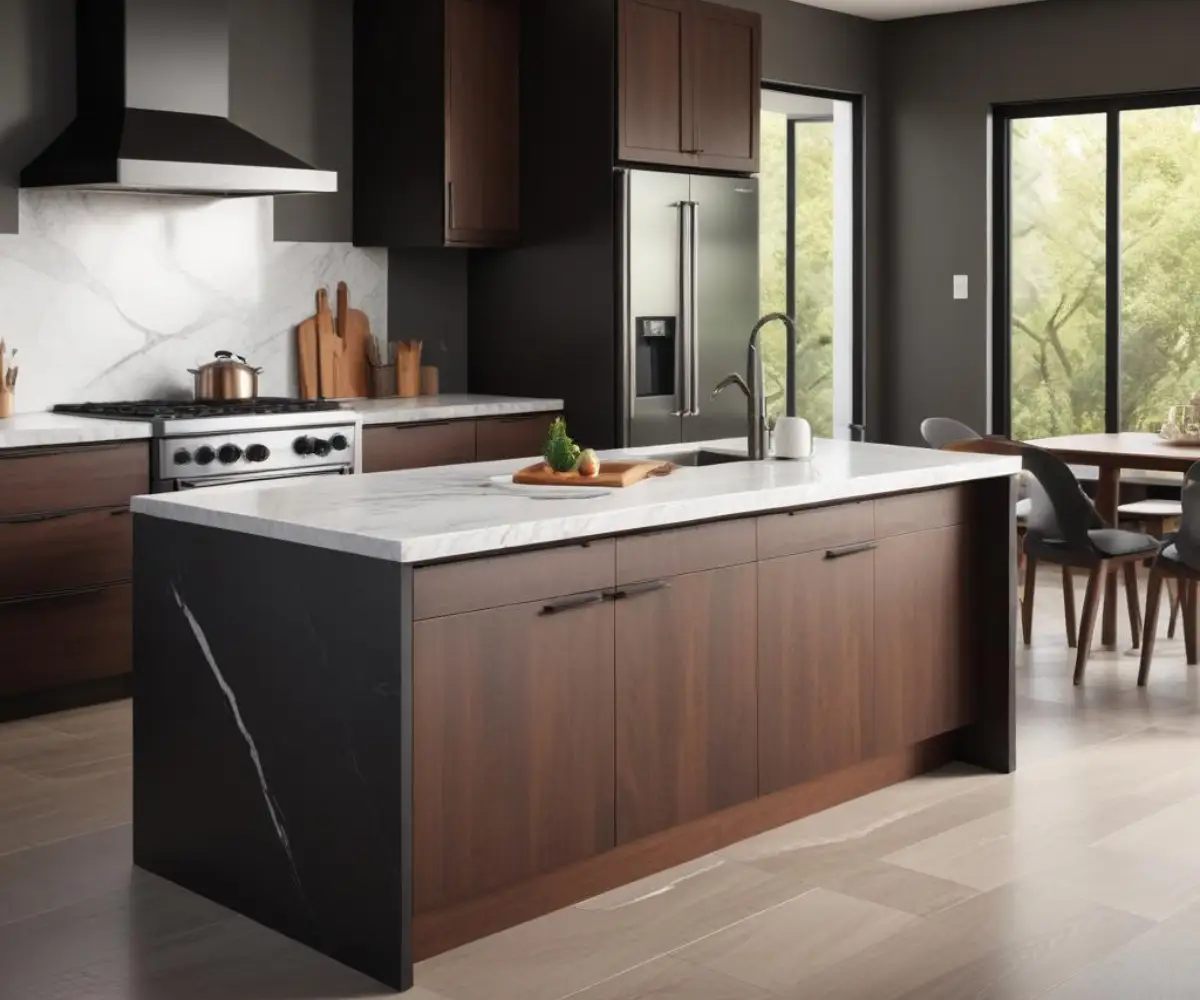
For the most dramatic and cohesive look, consider a waterfall edge. This is where the countertop material continues vertically down the side of the end cabinet to the floor. When combined with a flush front edge, a waterfall countertop creates a stunning, continuous flow of material that wraps the cabinetry in a single, elegant statement. It is the ultimate expression of the seamless, architectural aesthetic.
Of course, this approach requires even greater precision from the fabricator, who must create a perfectly mitered edge where the horizontal and vertical surfaces meet to ensure the pattern of the stone appears to flow uninterrupted around the corner.
| Edge Style | Description | Best For | Considerations |
|---|---|---|---|
| Eased Edge | A simple, squared edge with slightly softened corners to prevent chipping. | Modern, minimalist, and contemporary designs. The cleanest look for a flush install. | Sharp corners can be prone to chipping with harder materials like granite. Requires a high-quality finish. |
| Mitered Edge | Two pieces are cut at a 45-degree angle to join, often used to create a thicker look or for waterfall edges. | Creating a thick slab appearance or seamless waterfall countertops. | Requires a highly skilled fabricator to create an invisible seam. The seam can be a point of weakness if not done correctly. |
| Beveled Edge | The top edge is cut at a slight angle (typically 45 degrees), creating a sleek, defined border. | Adding a subtle decorative touch without being overly ornate. Works well in transitional kitchens. | The angle can slightly break the perfectly flush vertical line but adds visual interest. |
Common Mistakes to Avoid
The pursuit of a perfect flush countertop is a high-stakes endeavor where small oversights can lead to major disappointments. Being aware of the common pitfalls can help you steer your project toward a successful conclusion.
Do not assume your walls or floors are level. Always start with a thorough assessment and ensure cabinets are perfectly leveled with shims before templating. This initial step is foundational to everything that follows.
Do not hire an inexperienced installer or fabricator. This is not a standard job. Insist on seeing examples of their previous flush installation work. An installer who tries to treat this like a typical overhang job will fail.
Do not forget to account for appliance panels. If you have integrated appliances like a dishwasher or refrigerator with cabinet panels, their alignment is just as critical. A common issue is having the main cabinets flush while the fridge sticks out because its panel depth wasn’t factored into the countertop template.
Do not choose a countertop material prone to chipping on a sharp edge. While an eased edge is standard for a flush look, it is more susceptible to chipping than a rounded edge. Choose a durable material like quartz or a dense granite if your kitchen sees heavy use.
Is a Flush Countertop Right for Your Home?
A countertop installed flush with the cabinets is a bold design choice that delivers a uniquely sleek and modern aesthetic. It represents a commitment to precision and a minimalist philosophy, transforming your kitchen cabinetry into a seamless, architectural element. However, this high-reward look comes with high demands for planning, precision, and professional execution.
The decision to forgo the traditional overhang is not one to be taken lightly. It requires acknowledging the functional trade-offs, primarily the increased vulnerability of your cabinet faces to spills. Yet, for those who prioritize clean lines and a high-design aesthetic above all else, the stunning result of a perfectly executed flush countertop is an undeniable statement of style and sophistication that can define an entire home.
“`
