
Cost to Move Stairs: The Ultimate Price Guide to Avoid Disaster
Thinking about moving a staircase in your home? It’s a common thought during a major renovation, often sparked by a desire for a better layout or a more open-concept living space. But this is one home improvement project where ambition can quickly collide with a shocking reality.
Relocating a staircase is not a simple weekend task; it is a complex, expensive, and structurally significant undertaking. Before you start swinging a sledgehammer, it’s critical to understand the full scope of what’s involved, from the eye-watering costs to the absolute necessity of professional expertise.
You'll Learn About
Why Even Consider Moving a Staircase? The Problems It Solves
Despite the complexity, there are valid reasons why homeowners embark on this challenging project. An awkwardly placed staircase can disrupt the flow of a home, making rooms feel cramped and disconnected. Moving it can unlock a world of design possibilities.
Common motivations include creating a spacious, open-plan living area by removing a central staircase, improving access during a loft conversion, or simply enhancing the home’s overall aesthetic and market value. A well-designed and positioned staircase can become a stunning architectural feature rather than just a functional necessity.
The Shocking Reality: Average Cost to Move Stairs
Let’s get straight to the point: moving a staircase is a major investment. While a simple relocation might start around $4,000 to $8,000, most projects fall into the $10,000 to $30,000 range once all factors are considered. In complex cases involving high-end materials or significant structural changes, costs can easily soar past $50,000.
These figures often come as a surprise, but they reflect the intricate nature of the job. You are not just paying for a new set of stairs; you are paying for demolition, structural engineering, framing, finishing, and the coordination of multiple skilled trades.
A Detailed Look at Potential Expenses
To truly grasp the budget required, it’s helpful to see a breakdown of where the money goes. This table outlines the potential costs for various components of a staircase relocation project. Keep in mind these are estimates and can vary significantly based on your location and specific project details.
| Service or Material | Estimated Cost Range | Key Considerations |
|---|---|---|
| Structural Engineer Assessment & Plans | $500 – $2,500+ | Non-negotiable for safety and permits. More complex plans cost more. |
| Building Permits | $400 – $1,500 | Varies widely by municipality. Based on project value. |
| Demolition & Debris Removal | $500 – $2,000 | Includes removing the old staircase and any necessary walls. |
| Structural Modifications | $2,000 – $10,000+ | Framing the new opening, adding support beams, and closing the old opening. This is a major cost driver. |
| New Staircase (Materials & Fabrication) | $2,000 – $20,000+ | Cost depends heavily on style (straight, L-shape, spiral) and materials (pine, oak, metal, glass). |
| Labor for Installation (Carpenters/Builders) | $3,000 – $8,000 | Skilled labor is essential and represents a significant portion of the budget. |
| Finishing (Drywall, Plastering, Painting) | $1,000 – $4,000 | Making the new and old areas look seamless. |
| Flooring Repair/Installation | $500 – $2,500 | Patching the old location and integrating with the new. |
Key Factors That Inflate Your Stair Relocation Budget
Several variables can cause the cost of your project to climb. Understanding these factors from the outset will help you budget more accurately and make informed decisions about the scope of your renovation.
Structural Changes: The Biggest Cost Driver
This is the most critical and expensive part of the project. A staircase isn’t just a piece of furniture; it’s an integral part of your home’s structure. Moving it requires cutting a new, large opening in your floor and framing in the old one.
This work involves cutting through floor joists, which support the floor above. To do this safely, you must hire a structural engineer to assess the loads and design new supports, such as LVL (Laminated Veneer Lumber) beams, to redistribute the weight. Ignoring this step could lead to catastrophic structural failure.
Staircase Type and Materials
The style and materials of your new staircase will significantly impact the price. A simple, straight flight of stairs made from softwood like pine is the most budget-friendly option. Costs rise steeply from there.
L-shaped or U-shaped stairs require more complex construction and landings. Spiral staircases can be space-savers but have their own installation challenges. Materials like hardwood (oak, maple), metal, and glass for treads or railings can dramatically increase the material cost.
Labor Costs: Who You Need to Hire
This is not a one-person job. A successful stair relocation requires a team of professionals. Understanding who builds stairs and manages the project is key. You will likely need a general contractor to oversee the project, a structural engineer, skilled carpenters for the framing and installation, drywall, and painters for the finishing work.
In many cases, you may also need an electrician to move wiring or a plumber and HVAC technician if pipes or duct work are running through the area of the new staircase opening.
The Step-by-Step Process of Moving a Staircase
Relocating a staircase is a methodical process that requires careful planning and execution. Each step is crucial for ensuring the final result is safe, compliant with building codes, and aesthetically pleasing.
Step 1: Consultation and Design. The process begins with an architect or a design-build firm to map out the new layout and create detailed plans.
Step 2: Structural Assessment. A structural engineer must be engaged to analyze the existing structure and design the necessary modifications to support the new opening and close the old one.
Step 3: Obtaining Permits. Your contractor will submit the engineer’s plans to your local building department to obtain the required permits. This is a mandatory step as moving a staircase is a major structural alteration.
Step 4: Demolition and Preparation. Once permits are approved, the crew will carefully demolish the existing staircase and any interior walls in the way. They will also build temporary supports to ensure the house remains stable during construction.
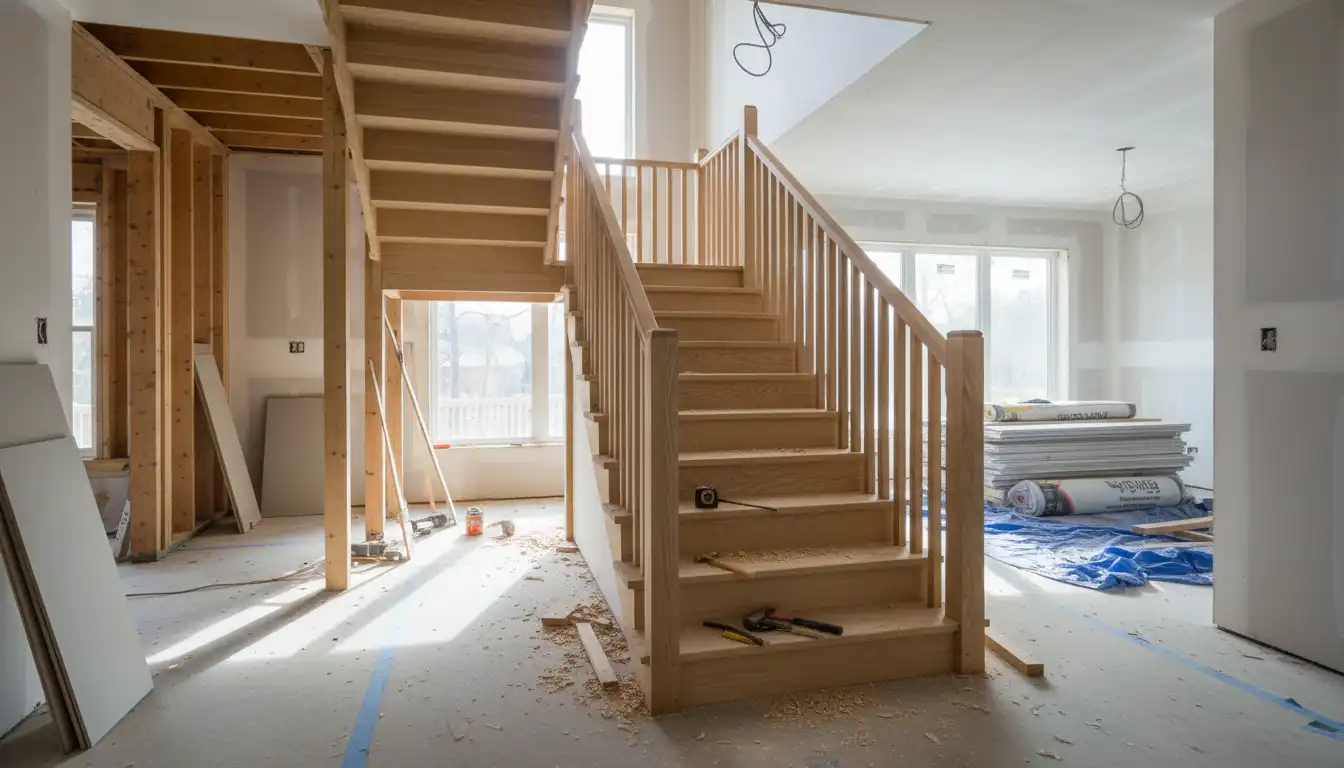
Step 5: Structural Modifications. This is the core of the project. The team will cut the new opening in the floor, install the engineered support beams and headers, and frame the old opening to create a solid new section of floor.
Step 6: Installing the New Staircase. The new staircase, which may be built on-site or prefabricated, is then carefully installed and secured to the structure.
Step 7: Finishing Work. The final phase involves installing drywall, plastering, painting, and finishing the flooring around the new and old staircase locations to create a seamless look.
DIY vs. Hiring a Pro: A Word of Serious Caution
In the world of home improvement, some projects are suitable for a determined DIYer. Moving a staircase is not one of them. The risks associated with performing this work yourself are immense.
Improperly supporting floor joists can lead to sagging floors, cracked walls, or even a partial collapse of your home’s structure. Furthermore, staircases are subject to strict building codes regarding rise, run, headroom, and railing requirements. Failure to meet these codes can result in a failed inspection, safety hazards, and major issues when you try to sell your home.
Beyond the Obvious: Unforeseen Costs and Complications
Even with careful planning, unexpected issues can arise. One of the most common surprises is discovering what lies within the walls and floors you need to alter. It’s not unusual to find electrical wiring, plumbing pipes, or HVAC ductwork that needs to be rerouted by licensed professionals, adding significant cost to the project.
This complexity is why other major relocations, such as finding out the cost to move washer and dryer upstairs, also require careful planning for plumbing and electrical work. Additionally, matching existing flooring can be a challenge, especially with older hardwood. You may need to budget for refinishing the entire floor to ensure a perfect match.
Smart Alternatives to Moving Your Entire Staircase
If the cost and complexity of a full relocation are too daunting, there are less drastic ways to update your staircase. Sometimes, the problem isn’t the location but the design. A bulky, enclosed staircase can be transformed by removing the walls around it and replacing them with open railings.
Replacing outdated balusters and newel posts with a more modern design can also completely change the look and feel of your space for a fraction of the cost. A professional can assess whether these smaller changes can achieve your design goals without the need for major structural work.
Conclusion: Is Moving Your Stairs Worth the Cost?
Relocating a staircase is one of the most transformative projects you can undertake in your home, but it comes with a price tag and complexity to match. It is a decision that requires careful consideration of your budget, your long-term goals for the home, and your tolerance for significant disruption.
By understanding the true costs, the necessity of hiring a team of qualified professionals, and the intricate process involved, you can make an informed choice. For the right home and the right renovation plan, moving a staircase can unlock your home’s true potential, creating a more functional, beautiful, and valuable living space.
