
Climbing Roses on Chain Link Fence: Your Ugly Fence is Actually a Secret Garden Weapon
That chain link fence in your yard. It’s practical, it’s durable, but let’s be honest—it’s not winning any beauty contests. Many homeowners see it as a landscape problem to be hidden, a metallic eyesore that detracts from the beauty of their garden.
This common frustration leads people to search for ways to cover it up as quickly as possible. But what if the fence wasn’t the problem? What if it was the ultimate secret weapon for creating a breathtaking vertical garden?
You'll Learn About
Why a Chain Link Fence is the Ultimate Trellis for Climbing Roses
Before you invest in a flimsy wooden trellis or an expensive arbor, consider the unique advantages your existing chain link fence offers. Far from being a liability, its structure is nearly perfect for helping climbing roses thrive, turning a perceived negative into a stunning positive.
With the right approach, that drab wire can become the backbone of a living wall of vibrant, fragrant blooms. It’s time to stop seeing an eyesore and start seeing an opportunity.
Unmatched Airflow for Disease Prevention
One of the biggest enemies of roses is fungal disease, such as black spot and powdery mildew, which flourish in stagnant, humid conditions. Solid walls and dense wooden fences can trap moisture and restrict air movement, creating the perfect breeding ground for these problems.
A chain link fence, however, is an open grid. It allows air to circulate freely around every leaf and cane, whisking away excess moisture and dramatically reducing the risk of fungal infections. This built-in advantage means healthier roses and less reliance on fungicides.
A Built-In Grid for Effortless Training
Climbing roses don’t actually “climb” on their own; they produce long, flexible canes that must be manually attached to a support structure. The diamond-shaped pattern of a chain link fence is a natural, ready-made grid for this very task. There’s always a convenient place to secure a cane exactly where you want it to go.
This makes it incredibly easy to train the canes horizontally—a key technique for maximizing blooms. By guiding the main canes sideways along the fence, you encourage the plant to send up numerous vertical flowering shoots. The result is a spectacular wall of flowers from top to bottom, not just a few blooms at the very top.
Surprising Durability and Strength
A mature climbing rose can become incredibly heavy, laden with thick woody canes, dense foliage, and hundreds of blossoms. Many decorative trellises, especially those made from plastic or thin wood, can buckle or break under this weight over time.
A properly installed chain link fence, with posts anchored in concrete, is an industrial-strength support system. It can easily handle the weight of multiple mature roses, providing a secure and permanent structure that will last for decades without sagging or collapsing.
The Microclimate Secret: How Metal Fences Affect Rose Growth
Here is a factor few gardeners consider: the thermal properties of the metal itself. A chain link fence can absorb heat during the day and radiate it back at night, creating a slightly warmer microclimate. This can be a significant advantage in cooler regions, helping to protect the plant from late spring frosts and slightly extending the growing season.
However, in very hot, sunny climates, this radiant heat can potentially scorch tender new growth. The solution is simple: ensure you plant your rose about 12 to 18 inches away from the fence line. This small gap provides enough of a buffer to prevent burning while still allowing the plant to benefit from the superior support and airflow.
Choosing the Perfect Rose: Not All Climbers Are Created Equal
Success begins with selecting the right plant for the job. While many roses are labeled “climbers,” their growth habits, flexibility, and thorniness can vary dramatically. For a chain link fence, the ideal candidates are those with long, pliable canes that are easy to train horizontally without snapping.
Vigorous, disease-resistant varieties will cover your fence more quickly and require less maintenance. While dense thorns can make training more challenging, they also add a layer of security to your property line. Consider your specific goals—whether for privacy, beauty, or security—when making your selection. Certain yellow roses, for example, offer stunning color but require careful selection, a topic explored further in our comparison of Teasing Georgia vs Graham Thomas.
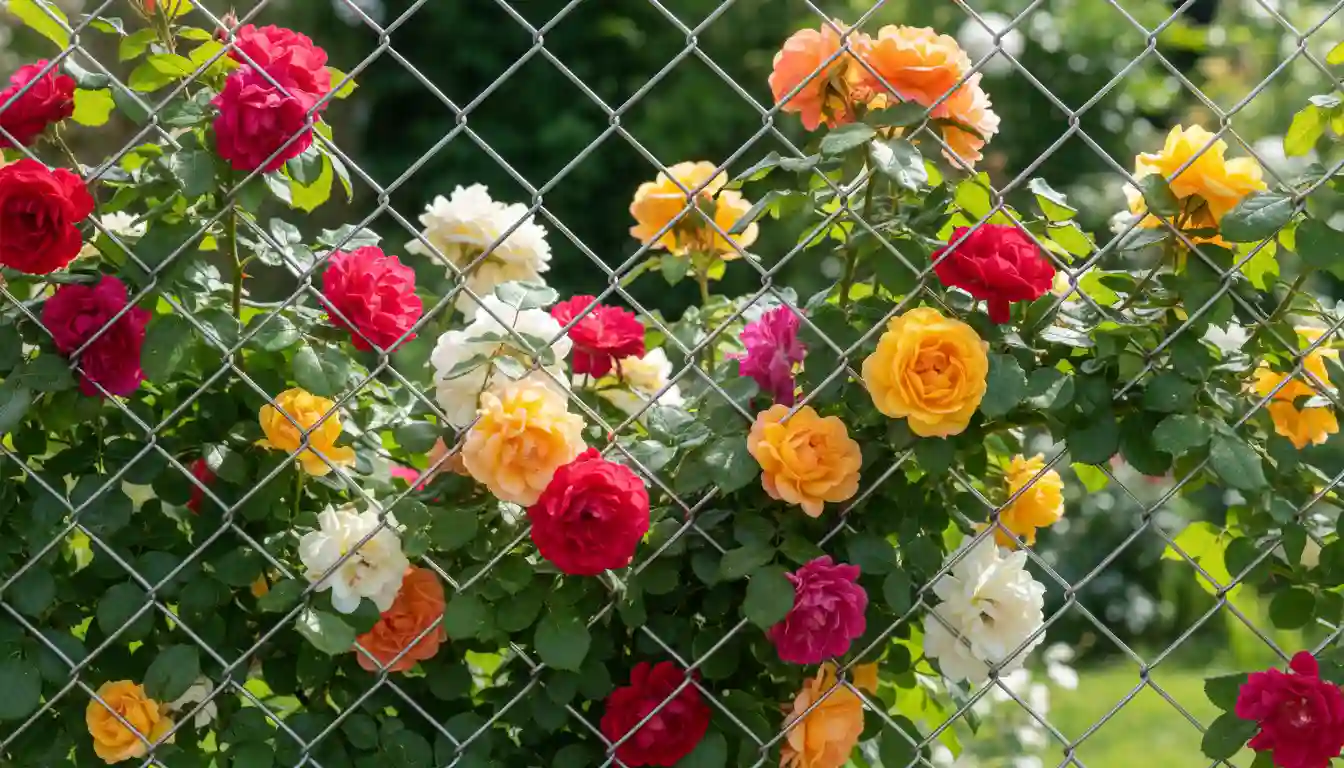
The table below highlights some of the best-performing and most popular climbing rose varieties that are exceptionally well-suited for transforming a chain link fence.
| Rose Variety | Growth Habit | Thorn Level | Fragrance | Disease Resistance |
|---|---|---|---|---|
| ‘New Dawn’ | Vigorous, flexible canes | Medium | Sweet, fruity | Excellent |
| ‘Zéphirine Drouhin’ | Moderately vigorous, pliable | Thornless | Strong, raspberry | Good (prone to mildew in shade) |
| ‘Climbing Iceberg’ | Vigorous, bushy | Low | Mild, sweet | Very Good |
| ‘Golden Showers’ | Stiff but trainable canes | Medium | Light, sweet | Good |
| ‘Eden’ (Pierre de Ronsard) | Stiff main canes, flexible laterals | Low-Medium | Light, apple | Excellent |
The Ultimate 7-Step Guide to Planting and Training Your Roses
Transforming your fence from bare wire to a floral masterpiece is a process that relies on proper technique from day one. Following these steps will ensure your roses establish quickly, grow vigorously, and produce the spectacular display you envision.
Step 1: Strategic Site Preparation
Success starts with the soil. Roses are heavy feeders and require rich, well-draining soil to thrive. Choose a location that receives at least six hours of direct sunlight per day.
Before planting, amend the soil by digging in several inches of compost or well-rotted manure. Crucially, dig your planting hole at least 12-18 inches away from the fence. This prevents the fence’s concrete footings from interfering with root growth and provides a heat buffer.
Step 2: The Right Way to Plant
If you have a bare-root rose, soak its roots in a bucket of water for a few hours before planting. For potted roses, gently loosen the root ball. Dig a hole that is wide and deep enough to accommodate the roots comfortably.
Place the rose in the hole, ensuring the bud union (the swollen knob at the base of the plant) is at or slightly above the soil level. Angle the plant slightly towards the fence to make the initial training easier. Backfill the hole with your amended soil, water thoroughly, and add a layer of mulch to retain moisture.
Step 3: The First Year – Patience and Foundation
The first year is all about establishing a strong root system. Resist the urge to prune or push for vertical growth. Water deeply and regularly, ensuring the soil remains consistently moist but not waterlogged.
Allow the canes to grow naturally. This initial period of seemingly slow progress is vital for the long-term health and vigor of your rose. A strong foundation now will pay off with explosive growth in the following seasons.
Step 4: Weaving the Magic – How to Attach Canes
Once your rose produces long, flexible canes (typically in its second year), it’s time to begin training. The goal is to guide the main canes as horizontally as possible to promote maximum blooming.
Use soft, flexible ties like garden twine, vinyl tape, or strips of cloth. Do not wrap the canes tightly around the wire links, as this can constrict and damage the cane as it grows. Instead, gently lay the cane against the fence and loosely tie it in place. Weave the canes in a fan shape to cover the fence evenly.
Step 5: Pruning for a Wall of Flowers
Annual pruning is key to maintaining the health and productivity of your climbing rose. The best time to prune is in late winter or early spring, just as the buds begin to swell. Start by removing any dead, damaged, or diseased wood (the three D’s).
Next, prune the side shoots (laterals) that flowered last year, cutting them back to just 2-3 buds from the main horizontal cane. This encourages the plant to produce new flowering wood. Avoid pruning the main structural canes unless they have become old and unproductive.
Step 6: Consistent Watering and Feeding
Climbing roses are thirsty plants, especially during their active growing and blooming season. Provide deep, thorough waterings at the base of the plant once or twice a week, rather than frequent, shallow sprinklings.
Feed your roses with a balanced fertilizer formulated for roses in the early spring as new growth emerges. Continue feeding every 4-6 weeks throughout the blooming season to provide the nutrients needed for continuous flower production.
Step 7: Pest and Disease Management
The excellent airflow of your chain link fence is your first line of defense against disease. However, it’s still wise to monitor your plants for common issues like aphids or black spot. Address pest problems with insecticidal soap or a strong jet of water.
If fungal diseases appear, treat them with an appropriate fungicide. Healthy, well-fed, and properly watered plants are always more resilient to pests and diseases.
Long-Term Care and Potential Pitfalls to Avoid
Once your rose is established, your role shifts to long-term management. A mature climbing rose is a living, growing part of your landscape that will interact with its support structure over many years. Anticipating potential issues will ensure your living fence remains both beautiful and structurally sound.
Managing Weight and Fence Integrity
A mature climber can exert significant weight on a fence. Every few years, inspect the fence posts and tension wires. Ensure the posts are still plumb and secure in the ground. If you notice any sagging, the fence’s tension may need to be adjusted. This proactive check prevents problems before they start.
The Rust Dilemma: Protecting Your Fence and Plant
Most modern chain link fences are galvanized or vinyl-coated to resist rust. However, if your fence is older or the coating gets scratched, rust can form. While minor rust is unlikely to harm the rose, significant corrosion can weaken the fence.
If you see rust developing, you can gently sand the area and apply a rust-inhibiting paint. Doing this during your annual pruning session is an easy way to keep the fence in top condition.
Creating a Privacy Screen That Breathes
A key goal for many is to create a privacy screen. You can achieve a dense wall of foliage and flowers by training canes to cover the fence in an overlapping fan pattern. The beauty of this approach is that it provides excellent visual screening while maintaining the airflow that keeps the plant healthy.
This is unlike ivy, which can create a dense, humid mat against a structure. For an even more lush and full appearance, some gardeners train vigorous cascading roses along a fence to achieve a dense, flowing effect of blooms.
Your Questions Answered: Common Concerns About Chain Link Rose Gardens
Embarking on this project can bring up a few questions. Here are answers to some of the most common concerns gardeners have when planting climbing roses on a chain link fence.
How long does it take to cover a chain link fence with roses?
This depends on the vigor of the rose variety and your growing conditions. Generally, you can expect a climbing rose to take about two to three years to substantially cover a section of fence. The first year is for root establishment, the second for significant cane growth, and by the third, you should see a beautiful, full display.
Will the rose thorns damage my vinyl-coated fence?
It is highly unlikely. While rose thorns are sharp, the vinyl coating on modern chain link fences is tough and durable. The thorns may cause minor surface scratches over many years of wind and movement, but they are not strong enough to pierce or strip the coating in a way that would compromise the fence’s integrity.
Can I grow climbing roses on a rental property’s fence?
This is a great, non-permanent way to beautify a rental property. Because climbing roses are simply tied to the fence and do not root into it or damage it, they can typically be removed with minimal effort. It is always a good idea to check with your landlord, but it is a far less invasive option than painting or modifying the structure itself.
From Eyesore to Breathtaking Asset
Your chain link fence is not a problem to be solved; it is a blank canvas. By leveraging its inherent strengths—superior airflow, a built-in training grid, and robust durability—you can convert this purely functional object into the most stunning feature of your garden.
With the right rose and the proper techniques, you can create a living wall of color and fragrance that provides beauty, privacy, and joy for years to come. It’s a project that transforms not only your fence but your entire perception of what a beautiful garden can be.
