
Transform Your Ugly Chain Link Fence with Clematis, Fast!
That chain link fence—it’s practical, but it’s not pretty. You stare out your window, hoping for a lush, green view, but instead, you’re met with a cold, industrial grid of wire. It’s a common problem for homeowners: how to hide an unsightly but necessary barrier without spending a fortune on a new fence.
Many people feel stuck, believing their only options are expensive fence replacements or slow-growing shrubs that take years to provide any real coverage. The desire for a fast, beautiful, and affordable solution often feels like an impossible dream. This is where the “queen of climbers,” the clematis, comes to the rescue, offering a stunning transformation in a surprisingly short amount of time.
You'll Learn About
Why Your Chain Link Fence Is the Perfect Canvas for Clematis
A chain link fence might seem like a gardening challenge, but it’s actually an ideal support structure for climbing plants. The open weave of the fence provides countless attachment points for a clematis vine to cling to as it grows. Unlike a solid wood or vinyl fence that might require additional trellises or wires, a chain link fence is a ready-made climbing frame.
The problem isn’t the fence itself, but rather how it’s perceived. By viewing it as a blank canvas instead of an eyesore, you can unlock its potential. With the right plant, that metal grid can become a living wall of vibrant color and lush foliage, providing not just beauty but also privacy.
Understanding the Clematis: Nature’s Most Eager Climber
Clematis are renowned for their spectacular flowers, which come in a dazzling array of colors, shapes, and sizes. From large, showy blooms to delicate, bell-shaped flowers, there is a clematis variety to suit every taste. More importantly, many types are vigorous growers, capable of covering a fence in just a few seasons.
These vines climb by twisting their leaf stems around thin supports, and the narrow gauge of a chain link fence is perfect for this. This natural climbing habit means less work for you; once established, a clematis will eagerly weave its way through the fence, creating a dense and beautiful screen.
The Solution: A Step-by-Step Guide to a Clematis-Covered Fence
Transforming your fence from drab to fab is a straightforward process. By following these steps, you can create a stunning floral display that will be the envy of your neighborhood.
Step 1: Choose the Right Clematis Variety
Success starts with selecting the best clematis for your specific needs. Consider factors like your climate zone, the amount of sunlight the fence receives, and your desired bloom time. Some varieties are better suited for creating a dense privacy screen than others.
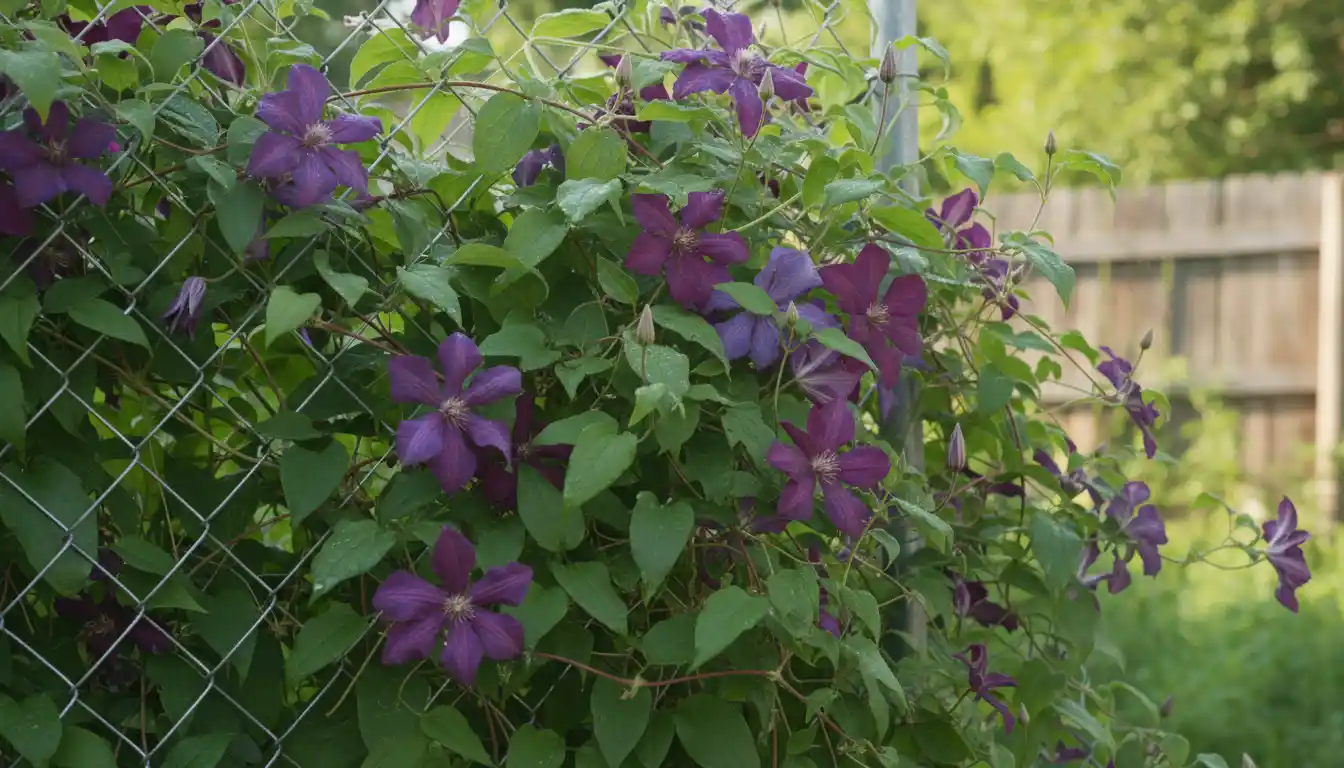
For fast coverage, look for vigorous growers like Clematis montana ‘Rubens’, known for its profusion of small, pink flowers in the spring, or the popular ‘Jackmanii’, which produces rich purple blooms in the summer. Evergreen options like Clematis armandii provide year-round coverage with the bonus of fragrant spring flowers.
When you want to create a truly special garden space, it’s worth considering how different plants can work together to build a layered, appealing environment. Thinking about a mature garden can give you some great ideas for creating that instant sense of character and value.
The table below highlights some of the best clematis varieties for covering a chain link fence, helping you make an informed choice.
| Clematis Variety | Flower Color | Bloom Time | Growth Habit | Sun Exposure |
|---|---|---|---|---|
| Clematis montana ‘Rubens’ | Light Pink | Spring | Very Vigorous | Full Sun to Part Shade |
| Clematis ‘Jackmanii’ | Deep Purple | Summer | Vigorous | Full Sun |
| Clematis armandii ‘Apple Blossom’ | White with Pinkish Tinge | Spring | Vigorous, Evergreen | Full Sun |
| Clematis ‘Sweet Autumn’ | White | Late Summer/Fall | Very Vigorous, Fragrant | Full Sun to Part Shade |
| Clematis ‘Nelly Moser’ | Pink with a Darker Stripe | Late Spring/Early Summer | Moderate | Part Shade |
Step 2: Proper Planting for a Strong Start
The old saying for clematis is, “feet in the shade, head in the sun.” This means the roots should be kept cool while the top of the plant receives plenty of sunlight. Plant your clematis where it will get at least six hours of sun per day, but consider planting a small shrub or perennial in front of it to shade its base.
Dig a hole that is twice as wide and just as deep as the pot the clematis came in. Gently remove the plant and place it in the hole, positioning the crown (where the stem meets the roots) about 3-5 inches below the soil surface. This encourages the plant to produce more stems from below the ground, resulting in a fuller vine.
Backfill the hole with a mix of your garden soil and compost to provide essential nutrients. Water thoroughly after planting to settle the soil and eliminate any air pockets.
Step 3: Training Your Clematis to Climb
Although clematis are natural climbers, they need a little guidance in the beginning. In the first year, the plant will focus on establishing a strong root system, and you may not see a lot of top growth. Be patient; this is a critical stage for the long-term health of your vine.
As new shoots emerge, gently guide them towards the fence. You can use soft plant ties or garden twine to loosely attach the stems to the chain link. This will encourage the plant to start its upward journey. Once the vine finds the fence, its leaf stems will begin to wrap around the wire on their own.
To ensure even coverage, don’t just let the vine grow straight up. Train some of the stems to grow horizontally along the fence. This will create a denser, more uniform screen of foliage and flowers.
Advanced Techniques for a Show-Stopping Display
Once your clematis is established, a few extra steps can take your living fence from simply beautiful to truly spectacular. These techniques will help you maximize blooms, ensure complete coverage, and maintain a healthy, vibrant plant for years to come.
Strategic Pruning for More Flowers
Pruning is essential for keeping your clematis healthy and encouraging abundant blooms. The right time and method for pruning depend on the type of clematis you have. Clematis are generally divided into three pruning groups:
- Group 1: These are early-flowering varieties that bloom on old wood. Prune them right after they finish flowering in the spring, removing any dead or weak stems.
- Group 2: These varieties produce large flowers in late spring and early summer and often rebloom later. Prune them lightly in late winter or early spring to shape the plant and remove dead wood.
- Group 3: These are the late-flowering types that bloom on new growth. Prune them hard in late winter, cutting all stems back to a pair of healthy buds about 12 inches from the ground.
Understanding which group your clematis belongs to is key to maximizing its flowering potential. A well-pruned clematis will produce a more impressive display year after year.
Layering for Fuller Coverage at the Base
A common issue with climbing vines is that they can become bare at the bottom over time. To avoid this, you can use a technique called layering. Select a long, healthy stem from the base of the plant and gently bend it down to the ground.
Make a shallow trench in the soil and bury a section of the stem, leaving the tip exposed. You can use a rock or a piece of wire to hold the stem in place. Over time, the buried section will develop its own roots, and a new plant will grow from the exposed tip, helping to fill in the lower portion of the fence.
Pairing Clematis with Other Climbers
For a truly dynamic and season-long display, consider planting more than one type of clematis or pairing your clematis with another climbing plant. A climbing rose, for example, can provide a sturdy framework for a clematis to weave through, and their different bloom times can extend the season of color.
When pairing plants, choose varieties with similar light and water requirements. This will ensure that both plants thrive without competing too aggressively with each other. The result is a multi-dimensional tapestry of color and texture that will completely transform your chain link fence.
Addressing Common Concerns and Problems
While growing clematis on a chain link fence is relatively easy, you may encounter a few common challenges. Being prepared for these issues will help you keep your living fence healthy and beautiful.
Pests and Diseases
Clematis can sometimes be affected by pests like aphids or diseases like powdery mildew. Aphids can be controlled by spraying the plant with a strong jet of water or using insecticidal soap. Powdery mildew, a fungal disease that looks like a white powder on the leaves, can be managed by ensuring good air circulation around the plant and watering at the base rather than overhead.
A more serious but less common issue is clematis wilt, which causes stems to suddenly wilt and die. If you notice this, prune the affected stems back to healthy tissue. Often, the plant will send up new growth from the base.
Ensuring Year-Round Interest
One of the main goals of covering a chain link fence is to create a sense of privacy. However, most clematis are deciduous, meaning they lose their leaves in the winter. If year-round screening is a priority, consider planting an evergreen clematis, such as Clematis armandii.
Alternatively, you can interplant your deciduous clematis with an evergreen vine like ivy or winter-blooming jasmine. This combination will provide a green backdrop throughout the year, with your clematis adding a spectacular show of color during its blooming season. This strategy gives you the best of both worlds: evergreen coverage and a stunning floral display.
It’s interesting to note that while we focus on our gardens, sometimes unexpected issues can arise inside our homes, like when you discover your fridge sticks out too far from the cabinets, or when you’re faced with a plumbing problem and realize the water shut off valve missing handle is a major inconvenience. These are the moments that remind us of the many details that go into making a house a home, both indoors and out.
Final Thoughts: From Eyesore to Asset
A chain link fence doesn’t have to be a blight on your landscape. With a little planning and the right plant, it can become one of your garden’s most beautiful features. Clematis, with its eager growth and stunning flowers, is the perfect partner for this transformation.
By following the steps outlined here, you can turn that functional but unattractive barrier into a breathtaking vertical garden. You’ll not only enhance the beauty of your property but also create a private, serene space for you and your family to enjoy. The “queen of climbers” is ready to help you reclaim your view and fall in love with your garden all over again.
