
Chiseled Edge Quartz: The Raw Truth Before You Choose This Style
The chiseled edge quartz countertop presents a stunning, rugged aesthetic that captivates homeowners desiring a touch of natural, raw beauty in their kitchens. Yet, this unique design choice often brings a wave of questions and uncertainty. Is this beautifully textured edge a practical option for a bustling family kitchen, or is it a high-maintenance feature reserved only for show homes?
Many worry about the practicalities: the difficulty of cleaning its uneven surface, the potential for chipping, or whether it feels too rough for daily use. These valid concerns can create hesitation, leaving you to wonder if the striking look is worth the perceived trouble. This guide directly addresses these problems, offering clear solutions and expert insights to help you decide with confidence.
You'll Learn About
What Exactly Is a Chiseled Edge? Uncovering the Artistry
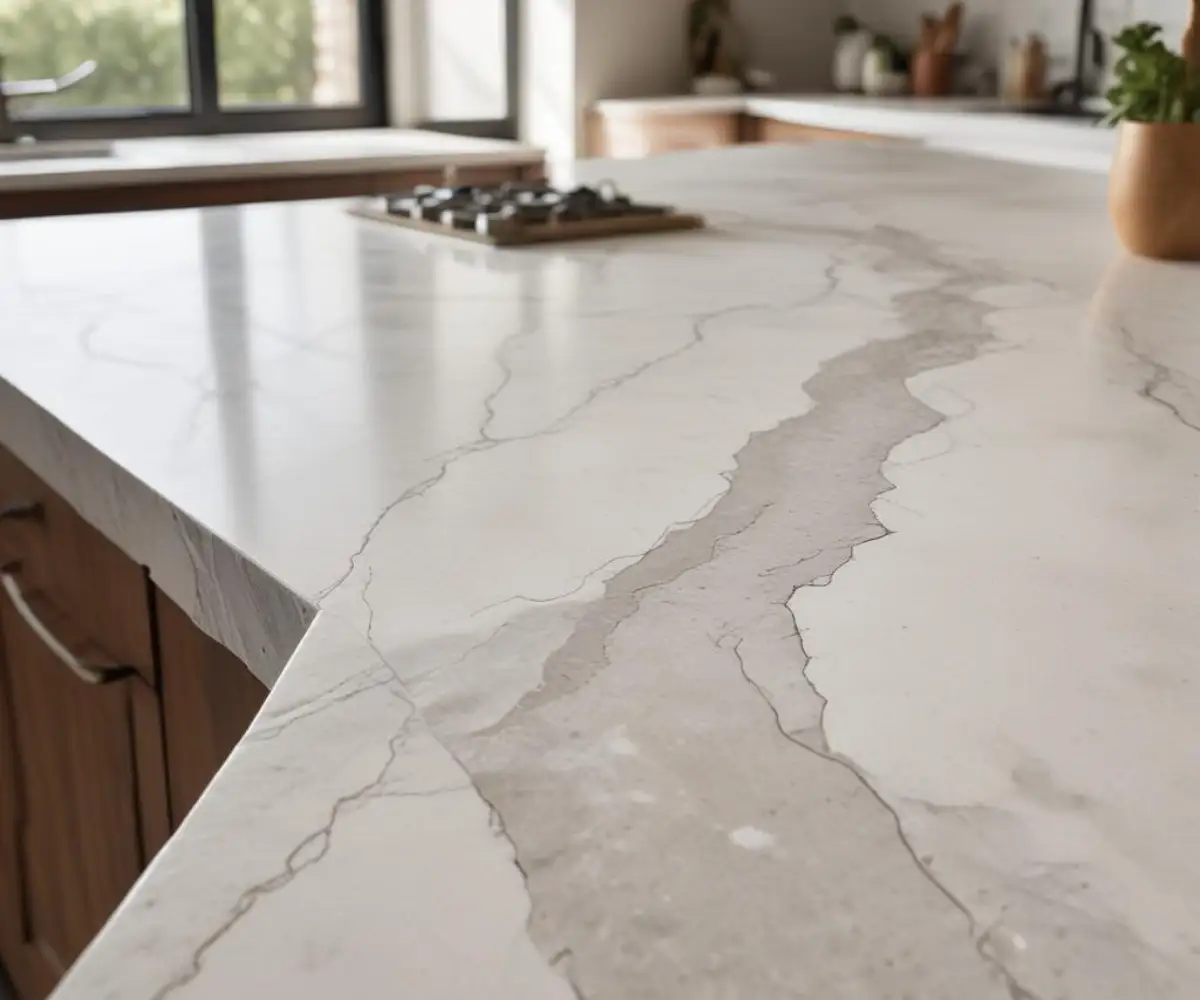
A chiseled edge, often called a rock face or broken edge, is designed to replicate the raw, unfinished look of natural stone freshly quarried from the earth. Unlike the smooth, polished edges that are uniformly machined, the chiseled edge is intentionally rugged and beautifully inconsistent. It provides a striking contrast to the smooth, polished top surface of the quartz slab.
Creating this look is a craft that blends technology with hands-on artistry. While some fabricators may use machines to create the initial texture, the finest chiseled edges are often finished by skilled artisans. They use hammers and chisels to meticulously shape the edge, ensuring each peak and valley contributes to a natural, authentic appearance without compromising the material’s integrity.
The Artisan’s Touch: Why It Matters
The quality of a chiseled edge lies in the details. A master fabricator will not only create the rustic texture but also subtly dull any overly sharp points. This ensures the edge is comfortable to the touch and won’t snag clothing, addressing a common concern for homeowners. This finishing step is crucial and separates a premium chiseled edge from a crudely finished one.
This handcrafted aspect means that no two chiseled edge countertops are exactly alike. Each section possesses its own unique character, turning your countertop into a one-of-a-kind piece of functional art. It brings an organic, tactile element into the home that polished surfaces simply cannot replicate.
Debunking the Myths: Durability and Maintenance Explained
Two of the biggest fears surrounding chiseled edge quartz are its durability and the effort required to keep it clean. Homeowners often envision crumbs getting stuck in the crevices and the edges chipping easily. However, the reality of living with a well-fabricated chiseled edge is far more manageable than these myths suggest.
Let’s tackle these concerns head-on with practical, actionable solutions. Understanding the true nature of quartz and the specifics of this edge style will empower you to enjoy its beauty without anxiety. Here, we separate fact from fiction and provide a clear path to easy ownership.
Myth 1: “It’s Impossible to Keep Clean”
While a chiseled edge has more texture than a smooth one, it is not “impossible” to clean. The non-porous nature of quartz is a significant advantage, as it prevents spills from seeping into the material itself. For daily cleaning, a simple wipe with a soft cloth and mild soap is all that’s needed for the top surface.
For the edge itself, a slightly different technique is required. Using a soft-bristled brush, like a dish brush or a toothbrush, makes cleaning the crevices effortless. Simply brush away any crumbs or debris and wipe with a damp cloth. This small adjustment to your cleaning routine is all it takes to keep the edge looking pristine.
Myth 2: “The Edge Will Chip Constantly”
This is a common misconception. In reality, the chiseled edge can be more forgiving than a sharp, squared edge. Because the edge is already textured with various facets, a minor impact or bump is less likely to create a noticeable new chip. On a perfect, polished edge, even the smallest nick can stand out.
Quartz itself is an incredibly durable material, engineered to be stronger and more consistent than many natural stones. When you combine this inherent toughness with a quality fabrication process that removes weak points, the result is an edge that is built to withstand the daily rigors of a busy kitchen. Thinking about overall material performance can be as important as the edge detail itself, similar to how one might evaluate the durability of alabaster performance basketweave for flooring.
Is a Chiseled Edge Right for Your Lifestyle and Design?
Beyond durability and cleaning, it’s important to consider how a chiseled edge fits into your home’s aesthetic and daily life. Is it safe for a home with young children? Does it only suit rustic-style kitchens? The answers may surprise you, as this edge profile is far more versatile and family-friendly than it initially appears.
Choosing a countertop edge is a decision that impacts both the look and feel of your kitchen. It’s a detail that can elevate a design from standard to stunning. Let’s explore the aesthetic flexibility and practical considerations of the chiseled edge to determine if it’s the perfect finishing touch for your space.
Surprising Versatility in Design
Many assume the chiseled edge is exclusively for rustic, farmhouse, or industrial designs. While it excels in these settings, its application is much broader. When paired with sleek, modern cabinets, a chiseled edge provides a powerful textural contrast that creates a sophisticated, high-design focal point.
The texture of the edge interacts beautifully with light. Under-cabinet LED lighting can graze across the chiseled surface, creating dynamic shadows and highlights that add depth and visual interest to the entire room. This effect can transform the ambiance of a kitchen, making the countertop a true statement piece in a contemporary or transitional space.
A Family-Friendly Feature?
Concerns about the sharp or rough texture in a home with children are understandable. However, as mentioned, a quality fabricator ensures the edge is honed to be safe to the touch. The points are softened so they won’t scratch skin or snag clothes during normal use.
Compared to a very sharp, squared-off mitered edge, a properly finished chiseled edge can be surprisingly forgiving. Ultimately, discussing your lifestyle with your fabricator is key. They can customize the ruggedness of the edge to meet your aesthetic desires while ensuring it remains a practical surface for your family’s daily activities.
Comparing Countertop Edge Profiles
To put the chiseled edge into context, it’s helpful to see how it stacks up against other popular options. Each edge profile offers a different blend of style, cost, and practicality. The right choice depends entirely on your design goals and lifestyle needs.
This table provides a clear, at-a-glance comparison to help you weigh the pros and cons of each style. Consider how each factor aligns with your priorities for your new countertops.
| Edge Profile | Primary Aesthetic | Typical Cost | Maintenance Level | Child Safety |
|---|---|---|---|---|
| Chiseled / Rock Face | Rustic, Natural, Textural | Moderate to High | Low (requires a brush) | Good (when properly finished) |
| Eased / Square | Modern, Minimalist | Low (often standard) | Low | Fair (corners can be sharp) |
| Half Bullnose | Transitional, Classic | Low to Moderate | Low | Excellent (rounded top) |
| Full Bullnose | Traditional, Soft | Low to Moderate | Moderate (spills can run down) | Excellent (fully rounded) |
| Ogee | Elegant, Ornate, Traditional | High | Moderate (grooves can trap dirt) | Good |
| Beveled | Modern, Defined | Moderate | Low | Fair (angled but defined corners) |
The Cost Factor: An Investment in Style
A chiseled edge is considered a premium or upgraded option, so it typically costs more than a standard eased or bullnose edge. The price increase is due to the additional labor and skilled craftsmanship required to create and finish the edge properly. The cost can vary based on your fabricator’s process and your geographical location.
Generally, you can expect a chiseled edge to add between $20 to $60 per linear foot to the total cost of your countertop project. While this is an additional expense, it’s important to view it as an investment in a high-impact design feature. This unique detail can elevate the entire look of your kitchen, providing a custom feel that standard edges cannot match.
Working with Your Fabricator: Keys to Success
Achieving the perfect chiseled edge countertop hinges on clear communication with your stone fabricator. This is not a standard, one-size-fits-all profile. Your input is crucial to ensure the final product matches your vision.
Before committing, always ask to see and touch a physical sample of their chiseled edge work. Photos can be misleading, and feeling the texture will tell you everything you need to know about its sharpness and overall quality. Discuss how “rugged” or “subtle” you want the final look to be, as a skilled craftsman can tailor the intensity of the chiseling to your preference.
A great installation requires attention to detail, much like ensuring proper fit and finish for smaller components like trex enhance end caps on a deck. In the same way, confirming these details with your fabricator beforehand prevents surprises and ensures a result you will love for years.
Your Ultimate Chiseled Edge Quartz Care Guide
Maintaining the beauty of your chiseled edge quartz is straightforward with the right approach. While quartz is famously low-maintenance, the unique texture of this edge requires a few specific techniques to keep it looking its best. Follow these simple steps for a lifetime of beauty.
This routine ensures both the smooth surface and the textured edge are cared for properly, preventing buildup and preserving the stunning look of your countertop. This kind of diligent home maintenance is important in all areas, whether it’s your kitchen or understanding unique challenges like how hot is an attic on a 80 degree day to protect your home’s integrity.
Step-by-Step Cleaning Process
For daily upkeep, wipe the top of the countertop with a soft cloth, warm water, and a drop of mild dish soap. Rinse with a clean, damp cloth to remove any soap residue and dry thoroughly to prevent water spots. This simple action handles 99% of daily cleaning needs.
Once or twice a week, or as needed, focus on the edge. Use a soft-bristled brush sprayed with a pH-neutral cleaner or a bit of soapy water. Gently scrub along the edge to dislodge any crumbs or buildup from the crevices, then wipe it clean with a damp cloth and dry it.
What to Avoid
To protect your investment, never use harsh chemicals like bleach, oven cleaner, or drain cleaner on your quartz. Avoid abrasive scouring pads (like green or red Scotch-Brite) on both the surface and the edge, as they can dull the finish. While quartz is highly durable, it’s always wise to use cutting boards and trivets to protect against deep scratches and extreme heat.
By debunking the myths and providing practical solutions, it’s clear that a chiseled edge quartz countertop is a stunning and manageable choice for many homes. Its unique, natural beauty offers a powerful design statement, while its inherent durability provides peace of mind. With proper care and communication with your fabricator, you can confidently embrace this raw, elegant style.
