Changing Tile Direction Between Rooms? The #1 Mistake to Avoid
The choice seems simple, but it’s a decision that can make or break the visual harmony of your entire home. Changing tile direction between rooms is one of the most debated topics in flooring design, and getting it wrong is a costly, permanent mistake. An awkward change can make your home feel disjointed and chaotic, while a strategic one can create definition and enhance flow.
This isn’t just about aesthetics; it’s about the fundamental principles of interior design that guide the eye and create a sense of cohesion. Before you let your installer lay a single tile, understanding the core rules of flooring direction is absolutely essential to avoid a layout you’ll regret for years to come.
You'll Learn About
The Floor Plan Dilemma: Why Tile Direction Is So Critical
The direction you lay your floor tile has a profound psychological impact on how a space is perceived. Long planks or rectangular tiles create strong lines that our eyes naturally follow. When these lines flow seamlessly from one space to another, they make a home feel larger, more open, and intentionally designed.
Conversely, when the direction changes abruptly without a clear purpose, it can act as a visual barrier. This creates a subconscious feeling of clutter and segmentation, effectively shrinking your living space and disrupting the architectural flow you want to achieve.
The Guiding Principle: Establishing a Dominant Sightline
Before deciding on individual rooms, you must first establish a dominant flooring direction for your entire home. This concept is the bedrock of a professional-looking installation. Typically, this primary direction should run parallel to the longest, uninterrupted wall or line of sight, often starting from the main entrance.
Think of it as the spine of your home’s design. This dominant line creates a powerful sense of continuity and should be the default direction for all primary living areas and hallways. Once this foundational rule is set, any deviation from it will be a conscious, deliberate design choice rather than a random mistake.
When You MUST Keep Your Tile Direction Consistent
While design has rules that can be broken, there are scenarios where changing tile direction is almost always a mistake. Maintaining consistency in these key areas is crucial for preserving an open, cohesive feel and preventing a layout that looks amateurish.
Open-Concept Spaces
In an open-concept living room, dining room, and kitchen, changing tile direction is the number one mistake to avoid. The entire purpose of an open floor plan is to create a single, expansive space. Introducing a directional change without a physical barrier like a wall will visually fracture the area, making it feel choppy and poorly planned.
Identical Tile in Adjacent Rooms
If you are using the exact same tile in two connecting rooms, such as a master bedroom and en-suite bathroom, the direction should remain the same. This creates a seamless transition that makes both spaces feel like a single, unified suite. A sudden change in direction can feel jarring and diminishes the luxurious, expansive effect.
Long, Narrow Hallways
Hallways are the arteries of your home, and the tile direction should enhance their function of guiding movement. Laying tiles lengthwise down a hall makes it feel longer and more spacious. The principles here are very similar to deciding if tile should run the same direction as hardwood, as both rely on creating clean, guiding lines.
The Exceptions: When Changing Tile Direction Is a Smart Move
There are specific situations where a deliberate change in tile direction can be a powerful design tool. These exceptions work because they serve a clear purpose, adding character and definition to your floor plan instead of creating confusion.
Creating a “Room Within a Room”
In some open layouts, you may want to visually define a specific zone, like an entryway foyer or a breakfast nook. A deliberate change in the tile pattern or direction in a contained area can act as an “invisible” border. This technique works best when the area is clearly defined by architectural elements like an archway or a change in ceiling height.
Transitioning to a Different Type or Shape of Tile
When moving from a standard rectangular tile in one room to a different shape, like a hexagon or a mosaic in another, changing the layout is often necessary and looks natural. The change in the tile itself provides a clear reason for the transition, preventing it from feeling abrupt or unplanned.
Correcting Awkward Room Layouts
Tile direction can be a secret weapon for fixing oddly shaped rooms. If a room is uncomfortably long and narrow, laying the tiles perpendicular to the longer walls can create an illusion of width, making the space feel more balanced and proportional.
Small, Enclosed Rooms
Small, self-contained rooms like a powder room, pantry, or laundry room are perfect places to experiment with different layouts. Because they are separated by a door, the change in direction doesn’t disrupt the flow of the main living areas. This is an excellent opportunity to introduce a dynamic pattern, such as deciding whether a 12×24 tile layout should be vertical or horizontal to add character to a smaller space.
The Art of the Transition: How to Make It Look Intentional
If you decide a directional change is right for your space, the execution of the transition is everything. A flawless transition looks deliberate and professional, while a poorly handled one screams DIY mistake. Success lies in making the change at a logical, architectural break point.
The Power of a Perfect Threshold
The ideal place to change flooring direction is directly under a door. When the door is closed, each room’s flooring appears as a distinct and complete layout. The door’s threshold serves as a natural and definitive dividing line, making the transition feel clean and intentional rather than arbitrary.
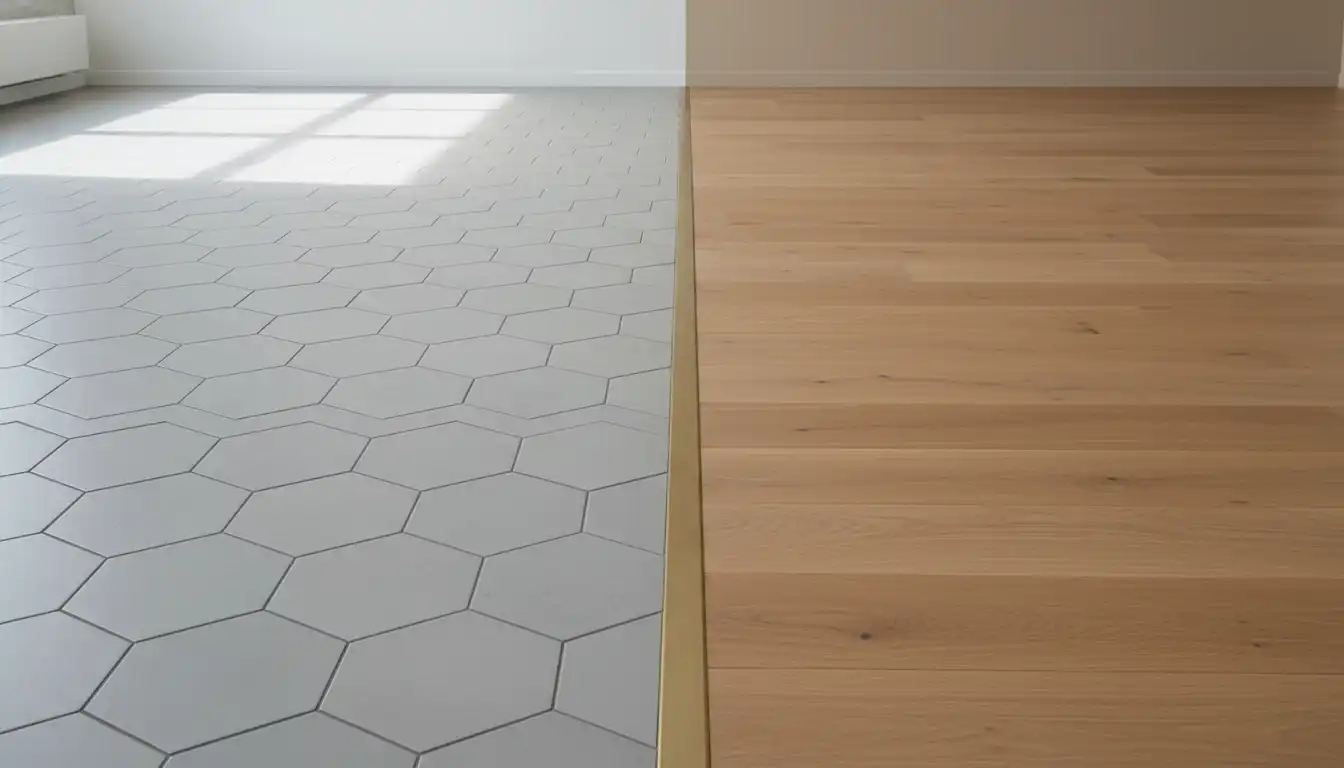
For open archways or large case openings where there is no door, a transition strip is often the best solution to cleanly delineate the two different layouts. Without a defined transition point, the change can look like a planning error.
Choosing the Right Transition Strip
A transition strip, or T-molding, is not just a functional piece; it’s a design element that can elevate the final look. The key is to choose a material that complements the overall design of your home. Options include sleek metal, classic wood, or durable stone.
Consider matching the transition strip to other finishes in your home, such as cabinet hardware, plumbing fixtures, or lighting. Just as selecting between two seemingly similar white paints can dramatically impact a room’s mood, the small detail of a transition strip material can tie the entire design together.
The “Borderless” Transition
For a high-end, seamless look, a “borderless” or “grout-line” transition is an advanced technique where tiles are precisely cut to meet without a visible strip. This method is best handled by a seasoned professional and works exceptionally well when transitioning between different tile shapes, such as from wood-look planks to hexagonal tiles. It creates a fluid, custom finish that is visually stunning.
Decision Matrix: Should You Change Your Tile Direction?
Use this table to help guide your decision-making process. Analyze your specific situation against these common scenarios to determine the best course of action for a professional and cohesive result.
| Scenario | Recommendation | Key Consideration |
|---|---|---|
| Open-concept living and dining area | Do NOT Change Direction | Maintain one consistent direction to create a unified, expansive space. A change will make it feel disjointed. |
| Hallway leading into a bedroom (same tile) | Keep Direction Consistent | A continuous flow from the hallway into the room creates a seamless and professional look. |
| Kitchen (plank tile) to bathroom (square tile) | Change Direction is Acceptable | The change in tile type and the presence of a doorway makes a directional change feel natural and intentional. |
| Defining an entryway in an open plan | Change Direction with a Border | A change in pattern (e.g., herringbone) in a small, defined area can create a beautiful “inlaid rug” effect. |
Common Questions About Changing Tile Direction
Even with clear guidelines, specific questions often arise during the planning phase. Here are answers to some of the most common concerns homeowners have about tile direction.
Will changing tile direction make my house look smaller?
If done incorrectly, absolutely. An arbitrary change in an open space can introduce visual clutter that makes an area feel more confined. However, if the change is made at a logical transition point like a doorway, it will define the rooms as separate spaces without negatively impacting the perception of size.
What about diagonal or herringbone patterns?
Diagonal and herringbone layouts are powerful design tools. A diagonal layout can make a small or square room feel larger and more dynamic. A herringbone pattern adds a sense of luxury and movement. When transitioning from a standard layout to one of these patterns, it’s crucial to do so at a doorway or by using a border to frame out the patterned area.
Do I need a professional to do this?
While a straightforward tile installation can be a DIY project, implementing a change in direction requires a high level of precision. Ensuring the transition point is perfectly straight and that any necessary cuts are clean is critical. For complex transitions or expensive tile, hiring a professional installer is a wise investment to guarantee a flawless finish.
The Final Verdict: Cohesion is Key
Ultimately, the golden rule is that every design choice should feel intentional. Whether you maintain a single direction throughout your home or strategically change it to define spaces, the goal is to create a sense of harmony and flow. A consistent direction is the safest and most common approach for a reason: it works.
If you choose to deviate, ensure the change serves a clear purpose—to define a room, to accommodate a different tile, or to correct a visual imbalance. By following these principles, you can confidently make a flooring decision that enhances your home’s beauty and avoids the #1 mistake that can ruin an otherwise perfect renovation.