Ceiling Fan Over Kitchen Island: The Dangerous Mistake to Avoid
Placing a ceiling fan over a kitchen island seems like a brilliant idea. It promises a cool breeze during hot cooking sessions, improved air circulation, and an added style element. However, this popular upgrade hides a series of problems that can turn your dream kitchen into a frustrating, greasy, and even hazardous space if not done correctly.
The core issue isn’t the fan itself, but its placement in a challenging environment filled with airborne grease, moisture, and fluctuating heat. Many homeowners invest in a fan without considering these unique kitchen conditions, leading to predictable and disappointing results.
You'll Learn About
The Greasy Film: A Fan’s Worst Enemy
The primary problem is the constant assault of airborne cooking particles. When you fry, sear, or sauté, tiny droplets of oil and grease become aerosolized. These particles rise with steam and heat, coating every surface they touch, including your new ceiling fan blades.
This isn’t just regular dust; it’s a sticky, stubborn film that attracts more dust, creating a heavy, grime-caked layer. This buildup is not only unsightly but also throws the fan blades off balance, leading to wobbling, noisy operation, and increased strain on the motor, potentially shortening its lifespan.
Why Your Range Hood and Fan Are Secret Enemies
A ceiling fan’s primary function is to move air. A range hood’s job is to capture and exhaust contaminated air directly over the cooktop. When you run both simultaneously, you create competing air currents. The fan can disrupt the upward flow of smoke and steam, pulling it away from the range hood and spreading it throughout the kitchen and adjoining rooms. This defeats the purpose of your ventilation system, allowing cooking odors and grease to settle everywhere.
This aerodynamic conflict is a crucial, often overlooked detail. The turbulence created by the fan can significantly reduce the capture efficiency of even a high-powered range hood, making your kitchen air quality worse, not better.
Safety and Code: The Non-Negotiable Rules
Beyond the grime and airflow issues, safety is a paramount concern. Electrical codes, like the National Electrical Code (NEC), provide strict guidelines for a reason. One of the most critical rules is clearance: fan blades must be a minimum of seven feet above the floor. For optimal airflow, a height of eight to nine feet is even better.
In kitchens with standard eight-foot ceilings, this makes a standard fan installation impossible. A low-profile “hugger” fan is necessary to meet the minimum height. Furthermore, blades must have at least 18 inches of clearance from any obstruction, including cabinets. Placing a fan too low over an island creates a serious risk of injury, especially in a busy workspace.
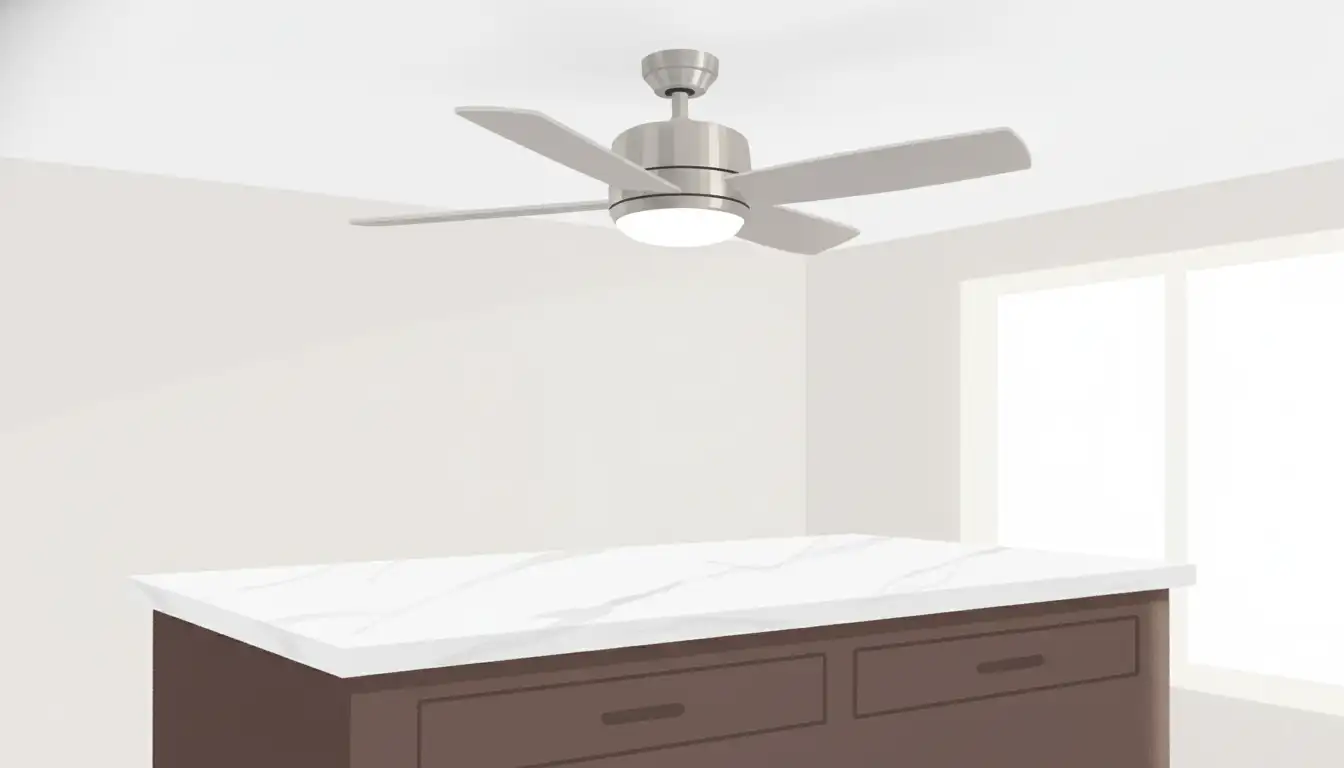
Finding the Right Fan: Your Kitchen-Proof Solution
Successfully installing a ceiling fan over your kitchen island requires choosing the right appliance for the job. Not all fans are created equal, and a model designed for a bedroom will fail in a kitchen environment. Here’s what to look for to ensure your investment is a lasting one.
The goal is to select a fan that can withstand moisture, resist grease buildup, and provide adequate, safe airflow without interfering with your other kitchen systems. Making an informed choice from the start prevents the common pitfalls of noise, poor performance, and constant cleaning.
UL Rating and Motor: The Technical Essentials
First, check the UL (Underwriters Laboratories) rating. For a kitchen, you need a fan that is at least UL Damp-Rated. This certification means the fan’s materials and motor are designed to withstand moisture and condensation, which is common in kitchens from boiling water and steam. A standard dry-rated fan can corrode or short-circuit in these conditions.
The motor housing should also be sealed or enclosed. This design prevents airborne grease and dust from infiltrating the motor’s sensitive components, ensuring longevity and reliable performance. A high-quality, quiet DC motor is also a worthwhile investment to minimize operational noise in a central gathering space.
Blade Material is Crucial
The material of the fan blades will determine how easy they are to clean and how well they hold up to the kitchen environment. Traditional wood blades are a poor choice; they can absorb moisture, warp over time, and the porous surface makes it difficult to remove greasy residue.
Instead, opt for blades made from metal or, even better, ABS plastic. These materials are non-porous, won’t warp from humidity, and can be easily wiped down with a degreasing cleaner without causing damage. Some ABS blades even come with realistic wood-grain finishes, offering the best of both worlds. The versatility and durability of these materials make them ideal for a high-functioning kitchen, much like considering buying used granite countertops can provide a premium look with practical resilience.
| Blade Material | Pros | Cons | Best for Kitchen Use? |
|---|---|---|---|
| ABS Plastic | Moisture-proof, easy to clean, lightweight, durable, can be molded into efficient shapes. | Can sometimes look less premium than real wood. | Excellent |
| Metal | Durable, easy to clean, powerful airflow, modern aesthetic. | Can be noisier, heavier (requires a stronger motor). | Good |
| Wood | Aesthetically pleasing, quiet operation. | Porous, absorbs moisture, can warp, difficult to clean grease from. | Poor |
Installation and Placement: The Blueprint for Success
Proper installation is just as critical as fan selection. Getting the height, placement, and electrical setup right ensures safety, compliance with building codes, and optimal performance. This is one area where professional installation is highly recommended.
A licensed electrician will ensure the junction box is fan-rated, meaning it’s designed to support the weight and dynamic motion of a spinning fan. They will also handle all wiring safely, which might include integrating the fan with wall switches or even a hidden GFCI outlet if your island’s electrical plan is complex.
Getting the Height and Location Just Right
As mentioned, the blades must be at least seven feet from the floor. For ceilings over nine feet, a downrod will be necessary to position the fan at the optimal eight-to-nine-foot height for best circulation. The fan should be centered over the island, but never directly over a cooktop or range.
Positioning the fan away from the primary cooking area helps minimize its interference with your range hood. This placement allows it to circulate ambient air and provide a cooling breeze without disrupting the critical ventilation zone. This strategic placement supports the overall workflow of a highly efficient kitchen, which might even feature upgraded appliances like 2 dishwashers for ultimate convenience.
Airflow and Fan Size
A fan’s airflow is measured in Cubic Feet per Minute (CFM). For a kitchen, a fan with a CFM rating between 3,000 and 5,000 is typically sufficient to provide comfort without creating a wind tunnel. The size of the fan, or blade span, should be proportional to your kitchen’s square footage.
For most kitchen islands, a fan with a 36 to 52-inch blade span is appropriate. A fan that is too large can overwhelm the space, while one that is too small won’t provide adequate air movement. The goal is a gentle, consistent breeze, not a disruptive gust.
Lighting and Maintenance
Many ceiling fans come with integrated light kits, which can provide excellent task lighting over your kitchen island. However, a common complaint is that these lights are often not bright enough on their own. It’s important to layer your lighting; supplement the fan’s light with other sources like recessed cans or pendant lights for a well-lit workspace.
Finally, even with the right fan, regular cleaning is unavoidable. The key is to make it easy. With smooth, non-porous blades, cleaning is much simpler. Simply wipe them down with a cloth and a degreasing cleaner, like a simple solution of dish soap and warm water, on a regular basis to prevent heavy buildup. Some homeowners find it easiest to remove the blades for a thorough washing in the sink, ensuring all greasy residue is gone.
Frequently Asked Questions
Is it a good idea to put a ceiling fan over a kitchen island?
Yes, installing a ceiling fan over a kitchen island can be very beneficial. It improves air circulation, which helps to dissipate heat, cooking odors, and smoke. This can make your kitchen a more comfortable space to work in, especially when the oven or stovetop is in use.
What is the proper height to hang a ceiling fan over a kitchen island?
For safety and optimal airflow, a ceiling fan’s blades should be at least 7 feet above the floor. If your ceiling height allows, positioning the fan 8 to 9 feet above the floor is even better for air circulation. Be sure to also maintain at least 18 inches of clearance from any cabinets or other obstructions.
What kind of ceiling fan is best for a kitchen?
It’s recommended to choose a damp-rated ceiling fan for a kitchen, as it can withstand moisture and humidity. Fans with blades made from materials like ABS plastic are a good choice because they won’t warp and are easy to clean. Consider a fan with a light kit to provide extra illumination over your workspace.
Where should a ceiling fan be placed in the kitchen?
The center of the kitchen or directly over the main work area, like an island, is an ideal placement for a ceiling fan to ensure balanced airflow. However, it is crucial for safety that you do not install a ceiling fan directly over a stove or range. Doing so could draw flames upward and spread grease particles.
What size ceiling fan do I need for my kitchen?
The right fan size depends on the square footage of your kitchen. For smaller kitchens under 100-150 square feet, a fan with a 36 to 44-inch blade span is generally suitable. For larger kitchens, you should consider a fan that is 50 inches or larger to ensure it can effectively circulate the air.