
Cased Opening vs Frame Opening: The #1 Mistake Most People Make
You’re standing in the middle of a renovation, dust swirling in the air. The contractor asks a simple question: “How do you want to handle this opening?” Suddenly, you’re hit with terms like “frame opening,” “cased opening,” and “rough opening.”
This isn’t just about terminology; it’s a critical decision that impacts your home’s style, budget, and durability. Making the wrong choice can lead to a disjointed look, unexpected costs, or corners that get beat up in a matter of months.
What is a Frame Opening? The Unsung Hero of Your Home’s Structure
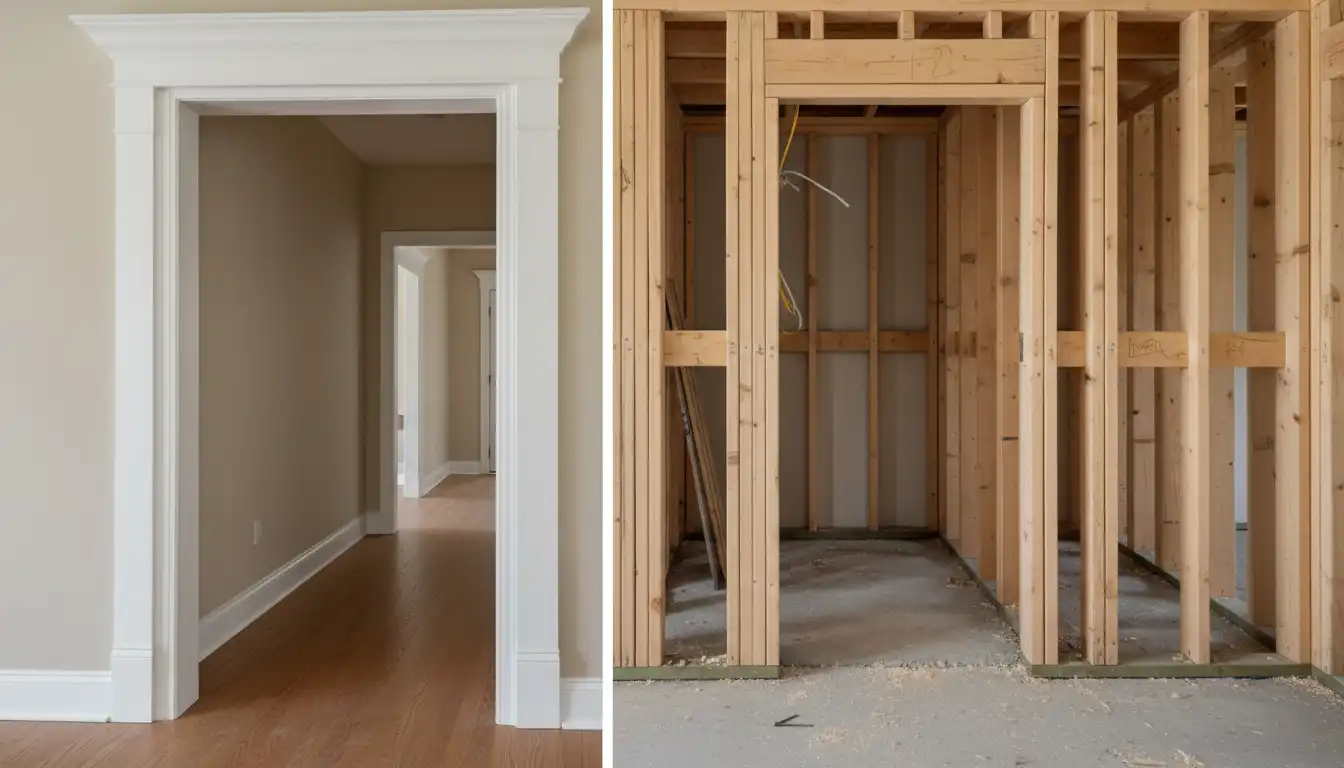
A frame opening, also known as a rough opening, is the structural starting point for any doorway or passthrough in your home. It’s the gap in the wall studs that is built before any drywall or finishing touches are added. Think of it as the skeleton that everything else is built upon.
This opening is meticulously constructed with vertical king and jack studs supporting a horizontal header. The header’s job is crucial: it bears the weight from above, ensuring the wall remains structurally sound. The integrity of the entire wall depends on a properly built frame opening.
The construction of this frame, particularly the choice of materials, is foundational. For instance, opting for stronger framing with 2×6 interior walls not only enhances stability and soundproofing but also directly influences the final depth and presence of the finished opening.
What is a Cased Opening? The Finishing Touch That Defines Your Style
A cased opening is the finished version of the frame opening, trimmed out with molding, also known as casing. This is the decorative woodwork that surrounds a doorway or passthrough, hiding the seam between the wall’s drywall and the door jamb or the opening’s edge.
Casing serves two primary purposes. Functionally, it protects the fragile drywall corners from the inevitable bumps and scrapes of daily life. Aesthetically, it adds a layer of architectural detail, character, and polish that defines a home’s interior style, from modern and minimalist to traditional and ornate.
The Critical Link: How a Frame Opening Becomes a Cased Opening
The transition from a raw frame opening to a beautiful cased opening is a multi-step process. Understanding this journey demystifies the entire concept and highlights the importance of getting the first step—the framing—perfectly right.
First, the rough frame opening is built to precise dimensions. Next, drywall is installed on the walls, covering the studs and bringing the opening closer to its final size. After taping and mudding the drywall, a wood jamb is typically installed inside the opening, followed by the decorative casing that trims it out on both sides of the wall.
Cased Opening vs. Frame Opening: A Head-to-Head Comparison
While one is the foundation and the other is the finish, directly comparing their attributes helps clarify their distinct roles in any construction or remodeling project. This understanding is key to communicating effectively with contractors and making informed decisions about your home’s design.
| Feature | Frame Opening (Rough Opening) | Cased Opening (Finished Opening) |
|---|---|---|
| Purpose | Structural support; creates the space for a door or passthrough. | Aesthetic finish; protects wall corners and adds architectural style. |
| Stage | Framing phase, before drywall or insulation. | Finishing phase, after drywall and painting. |
| Materials | Lumber (e.g., 2x4s, 2x6s, LVL headers). | Finished wood or MDF molding (casing), jamb material. |
| Appearance | Unfinished, rough wood studs. | Polished, painted or stained decorative trim. |
| Cost | Part of the essential structural framing cost. | Additional cost for materials (casing, jamb) and skilled labor. |
| Skills Required | Carpentry, structural knowledge, precision measurement. | Finish carpentry, precision mitering, caulking, and painting. |
Key Decision Factors: Choosing the Right Finish for Your Opening
The decision to case an opening or go with a different finish involves more than just picking a molding profile. It’s about aligning the design with your home’s overall character, your budget, and your practical needs.
Architectural Style & Home Aesthetics
The style of your home is the primary driver. Ornate, thick casings are hallmarks of traditional, Victorian, or Colonial homes. Simple, flat-stock casing fits perfectly with Craftsman, farmhouse, and transitional designs.
For minimalist and contemporary homes, you might even forego casing altogether in favor of a clean, trimless look. This is where the choice between a drywall opening vs cased opening becomes a critical style decision, with the former offering a seamless, modern aesthetic.
Budget and Project Scope
There’s no denying that casing adds cost. You are paying for the molding itself, the jamb material, and the skilled labor required for a precise, professional installation. A simple drywall-finished opening is significantly less expensive.
However, you must weigh the upfront cost against the long-term benefits. Casing is an investment in both the durability and the perceived value of your home, often providing a high return in visual appeal.
Durability and Maintenance
Think about the location of the opening. Hallways, mudrooms, and main entrances are high-traffic areas. In these spaces, a cased opening offers superior protection for the drywall corners, which can otherwise be easily damaged by moving furniture, running kids, or daily wear and tear.
A simple drywall corner, while clean-looking, is far more susceptible to chipping and cracking, requiring more frequent touch-ups and repairs over time. Casing acts as a durable bumper, preserving the integrity of the opening for years.
The Impact of Layout and Flow
The way an opening is finished can subtly influence how you perceive and move through a space. A wide, elegantly cased opening can create a grand, welcoming transition between rooms. In contrast, an improperly placed opening can create an awkward flow.
This is especially true in entryways. For instance, if your front door opens to a wall, the treatment of any nearby openings can help redirect focus and improve the sense of arrival. A beautifully cased passthrough can draw the eye and create a more inviting pathway into the home.
The Unspoken Factor: Wall Thickness and Its Profound Impact
Many discussions about openings stop at the surface trim. However, the true mark of high-quality construction lies in the depth of the opening itself. The thickness of the wall dictates the depth of the door jamb, and this third dimension is what separates a standard look from a truly architectural feature.
A standard interior wall built with 2×4 studs has a nominal depth of about 4.5 inches. A cased opening in such a wall looks perfectly fine, but it can lack a sense of substance. By contrast, building with 2×6 interior walls creates a much deeper opening, closer to 6.5 inches.
This extra depth provides a more substantial jamb, creating deep, appealing shadow lines and a feeling of solidity and permanence. This subtle detail elevates a simple cased opening into a powerful design element, making the home feel more robust and thoughtfully constructed. It is a feature that speaks to quality craftsmanship.
Common Mistakes to Avoid
The path from a frame to a cased opening has a few common pitfalls. Avoiding them is crucial for a professional-looking and functional result that stands the test of time.
Incorrect Rough Opening Size
This is the most frequent and costly mistake. A frame opening that is too small requires reframing, while one that is too large necessitates awkward shimming that can compromise stability. The standard rule is to frame the rough opening 2 inches wider and 2.5 inches taller than the door slab itself to accommodate the jamb, shims, and flooring.
Ignoring Wall Plumb and Level
A successful cased opening depends on a perfectly square, plumb, and level frame opening. If the studs are crooked or the header is sloped, installing the casing will be a nightmare of uneven gaps and frustrating adjustments. Always use a level to ensure the framing is perfect before proceeding.
Mismatched Casing Styles
Consistency is key to a cohesive home design. Avoid using drastically different casing profiles in rooms that are visually connected. Choose a style for your baseboards and door casings and carry it throughout the home to create a unified, intentional aesthetic.
Frame vs. Cased Opening: The Final Verdict
Ultimately, “cased opening vs. frame opening” is not a choice between two competing options. Rather, it is an understanding of a process. Every finished opening, whether cased, trimmed, or wrapped in drywall, begins as a structural frame opening.
The real decision lies in how you choose to finish that raw frame. A cased opening offers timeless beauty, architectural character, and superior durability, making it a wise investment for most homes. By understanding the relationship between the structural foundation and the aesthetic finish, you are empowered to create spaces that are not only beautiful but also built to last.
