
Carpet on Stairs Only: The Genius Hack Your Home Needs?
You love the clean, elegant look of your hardwood floors, but the staircase is another story. It’s the central highway of your home, and the constant thud of footsteps has become the unofficial soundtrack of your life. Even worse, a slick pair of socks can turn the descent into a hazardous adventure, especially for kids or older family members.
This common problem leads many homeowners to a stylish and practical solution: installing carpet on the stairs only. It’s a design choice that marries the beauty of hardwood with the practical benefits of carpeting, creating a focal point that is safe, quiet, and comfortable. Done correctly, it looks intentional and sophisticated, not like an afterthought.
You'll Learn About
Why Carpeting Only Your Stairs is a Smart Move
Deciding to carpet just the staircase is a strategic design choice with numerous advantages. It directly addresses the most common issues associated with bare stairs while preserving the aesthetic of your surrounding floors. This targeted approach delivers maximum impact right where you need it most.
Enhanced Safety for Peace of Mind
The number one reason homeowners opt for carpeted stairs is safety. Hardwood and laminate stairs can be notoriously slippery, posing a significant fall risk. Carpet provides essential traction and grip, making each step more secure. In the event of a stumble, the cushioned surface offers a much softer landing, which is a crucial consideration in any household with children or elderly residents.
Significant Noise Reduction
Stairs can act as an amplifier for household noise, echoing footsteps throughout your home. Carpet is a natural sound absorber, dampening the sound of foot traffic and transforming a noisy staircase into a quiet and peaceful passage. This can be particularly beneficial in multi-level homes where sound travels easily between floors.
Comfort and Warmth Underfoot
There’s an undeniable comfort that comes with soft carpeting. Walking on a cushioned surface is easier on your feet and joints compared to a hard surface. During colder months, carpeted stairs provide a welcome touch of warmth, making those barefoot trips upstairs much more pleasant.
Designing Your Perfect Staircase: Key Considerations
Successfully integrating carpeted stairs with hardwood floors requires careful planning. The goal is to create a seamless and deliberate look. From choosing between a full carpet or a runner to selecting the right installation style, every detail matters.
Full Carpet vs. a Stylish Runner
Your first major decision is whether to cover the entire stair tread or opt for a carpet runner. A full carpet installation covers the tread and riser from wall to wall (or spindle to wall), offering a uniform, plush look. This is an excellent choice for maximizing comfort and noise reduction.
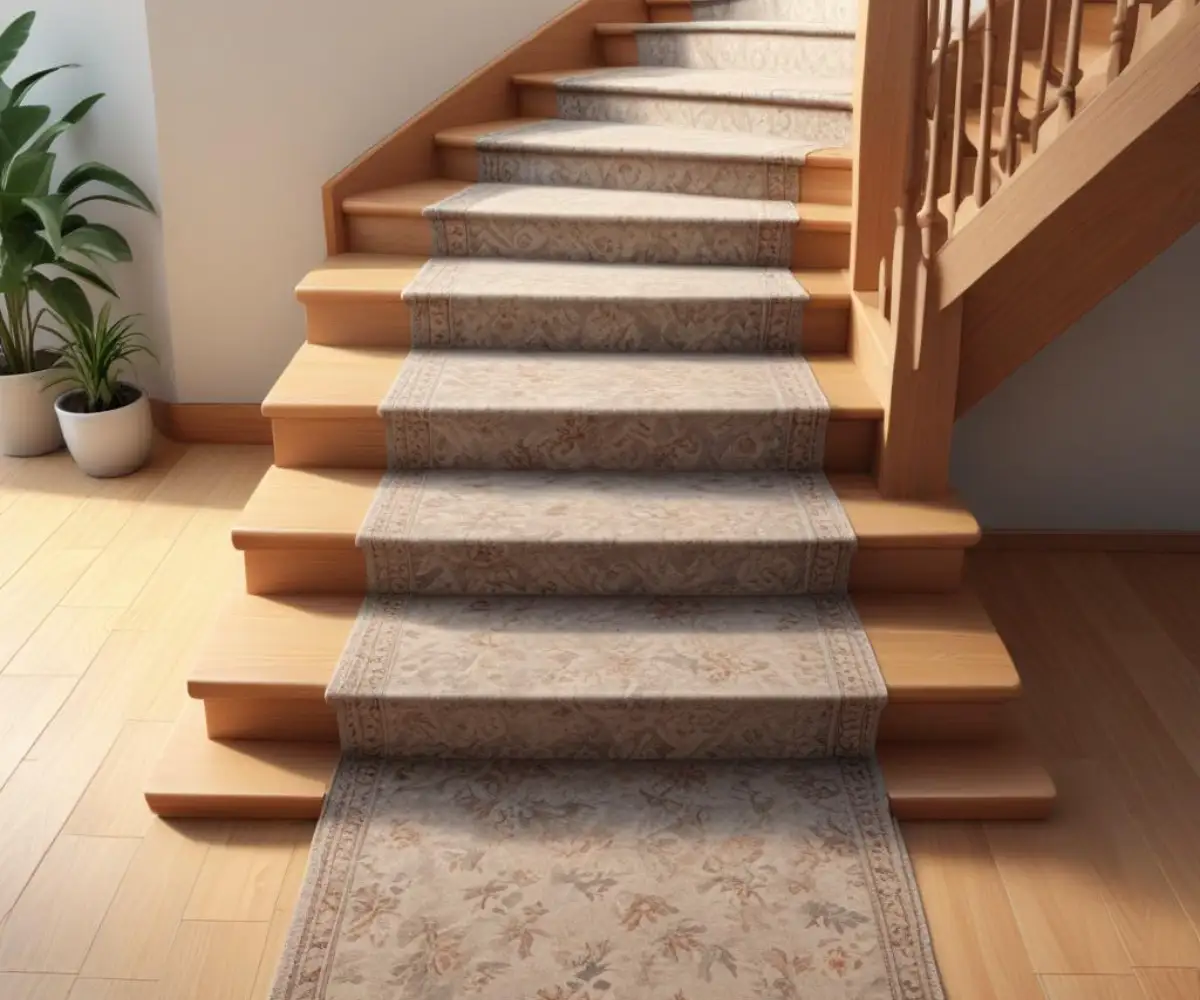
A stair runner, on the other hand, is a strip of carpet that runs down the middle of the stairs, leaving the hardwood exposed on either side. This popular option allows you to showcase the beauty of your wooden stairs while still gaining the benefits of safety and noise reduction. Runners offer a huge range of design possibilities, from classic solids to bold patterns.
The Subtle Art of Transitions
Creating a clean transition from your hardwood or laminate flooring to the carpeted stairs is crucial for a professional look. The transition at the bottom step is often straightforward, with the carpet ending on the first riser. At the top of the stairs, the carpet should end just under the nose of the landing, creating a crisp line where it meets the upstairs flooring.
This visual and textural shift does more than just connect two flooring types; it can psychologically separate the public, high-traffic areas of your home from the private, quieter spaces upstairs. This subtle cue enhances the feeling of entering a more restful part of the house, adding a layer of thoughtful design to your home’s layout.
Choosing the Right Installation Style: Waterfall vs. Hollywood
The installation method dramatically affects the final look of your stairs. The two primary techniques are “Waterfall” and “Hollywood.”
The Waterfall method is the most common and cost-effective. The carpet flows straight down from the edge of the tread over the riser to the next step in one continuous piece, like a waterfall. This creates a clean, simple line that works well with most carpets, especially those with patterns.
The Hollywood method (also called the upholstered or French cap method) offers a more tailored and custom look. The carpet is wrapped tightly around the nose of the tread and tacked securely under it before running down the riser. This accentuates the shape of each step and is ideal for thinner, low-pile carpets. While it requires more time and material, the result is a sophisticated, high-end finish.
Selecting the Best Carpet for High-Traffic Stairs
Stairs are one of the highest-traffic areas in any home, so choosing a durable, resilient carpet is non-negotiable. The right material will not only look great for years but will also stand up to the constant wear and tear.
Material Matters: Durability is Key
When it comes to carpet fibers, some are better suited for stairs than others. Nylon is a top contender due to its exceptional durability and resilience; it can withstand heavy foot traffic and resists crushing. Wool is another excellent, albeit more expensive, option known for its natural strength, softness, and stain resistance.
For homes with pets, synthetic options like Polypropylene (Olefin) and Triexta are fantastic choices. They are highly stain-resistant, easy to clean, and durable enough to handle paws and claws. Consider carpets labeled as pet-friendly for added protection.
Why Low-Pile Carpet is the Superior Choice
Always opt for a low-pile carpet for stairs. Taller, plusher carpets can be a tripping hazard and tend to mat down and show wear patterns more quickly on the narrow surface of a stair tread. A dense, low-pile or looped (Berber) style provides a more stable footing and maintains its appearance longer. Textured cut piles are also a great option as they effectively hide footprints and vacuum marks.
Coordinating Colors and Patterns
Your stair carpet is an opportunity to make a design statement. You can choose a neutral color that blends seamlessly with your hardwood floors for a subtle, cohesive look. Alternatively, a patterned carpet can turn your staircase into a stunning focal point. When selecting a pattern, ensure it complements the scale of your staircase and the overall style of your home.
Think beyond just the stairs. Coordinate the stair carpet with other textiles, such as area rugs in the adjoining hallway or entryway. This creates a harmonious flow and makes the “carpet on stairs only” choice feel even more integrated and intentional.
| Carpet Material | Durability | Stain Resistance | Average Cost (Material Only) | Best For |
|---|---|---|---|---|
| Nylon | Excellent | Good to Excellent (often treated) | $18 – $72 per sq. yd. | High-traffic areas, homes with kids |
| Wool | Very Good | Good (naturally resilient) | $45 – $234 per sq. yd. | Luxury feel, long-term investment |
| Polyester | Good | Excellent | $13.50 – $54 per sq. yd. | Budget-conscious buyers, low to medium traffic |
| Polypropylene (Olefin) | Good | Excellent | $6.75 – $45 per sq. yd. | Homes with pets, areas prone to moisture |
| Triexta | Excellent | Excellent (naturally resistant) | $18 – $54 per sq. yd. | High-traffic areas, homes with pets and kids |
Cost and Installation: What to Expect
The cost of carpeting your stairs can vary significantly based on the materials chosen, the complexity of your staircase, and labor rates in your area. However, it is almost always more affordable than a full hardwood stair renovation.
Breaking Down the Costs
On average, homeowners can expect to pay between $15 and $55 per step for professional installation, including materials. This typically brings the total for a standard 12 to 16-step staircase to between $300 and $880. More complex staircases, like those with curves or landings, will be at the higher end of that range.
If you’re considering a change, the process of refreshing your stairs is manageable. For those with existing carpet, understanding how to remove carpet staples from stairs is a useful first step in preparing for a new installation. A professional installer will ensure a flawless finish, but a competent DIYer can also tackle the project.
Maintaining Your Carpeted Stairs
Due to the heavy use they receive, carpeted stairs require regular maintenance to stay looking their best. A consistent cleaning routine will extend the life of your carpet and keep it fresh.
Regular Cleaning and Upkeep
Vacuum your stairs at least once a week using a hose attachment with a brush. Pay special attention to the corners and crevices where dust and debris tend to accumulate. For a deeper clean, sprinkle baking soda on the carpet, let it sit for 15-30 minutes to absorb odors, and then vacuum it up.
Spills should be treated immediately to prevent them from setting into stains. Blot the spill with a clean cloth—never rub—and use a carpet cleaner appropriate for the material. For more significant upkeep, such as during a larger renovation project that might involve tasks like learning how to remove a stair skirt board, a professional deep clean is recommended every 12-18 months. And while considering overall home maintenance, improving air flow is always a plus; some find that even carpeting can subtly affect drafts, connecting to broader topics like how to stop smoke from going upstairs in a holistic approach to home comfort.
The Verdict: A Smart and Stylish Upgrade
Opting for carpet on the stairs only is far from a design compromise—it’s a sophisticated solution that addresses key issues of safety, noise, and comfort without sacrificing the beauty of your hardwood floors. It’s a practical, stylish, and cost-effective upgrade that enhances the daily experience of your home.
By carefully selecting the right material, style, and installation method, you can transform your staircase from a simple thoroughfare into a beautiful and functional centerpiece of your home. It’s an intentional choice that proves you don’t have to choose between elegance and practicality.
