One Electric Bill For Two Apartments? The Shocking Truth
You’ve combined two apartments or are managing an in-law suite, and a tempting thought crosses your mind: can you simplify things with just one electric bill? It seems logical, a way to cut down on administrative hassle and maybe even save a few dollars. But this seemingly simple question opens a complex world of legal codes, safety regulations, and utility company policies that every homeowner and landlord must understand.
Attempting to power two distinct living units from a single electrical service is not just unconventional—it’s often illegal and dangerous. The core of the issue lies in safety, accountability, and legal compliance. Let’s illuminate the critical reasons why this path is fraught with problems and explore the correct, safe, and legal alternatives for your property.
You'll Learn About
Why Separate Apartments Need Separate Electricity
The fundamental principle governing utilities is that each legal, separate dwelling unit requires its own dedicated service meter. This isn’t just bureaucratic red tape; it’s a critical framework designed to protect occupants, property owners, and the public electrical grid. Utility companies and municipal building departments enforce these rules strictly for several non-negotiable reasons.
First and foremost is electrical load management. A standard electrical panel and service line are engineered to handle the predictable load of a single household. This includes the simultaneous use of major appliances like HVAC systems, ovens, dryers, and microwaves. Attempting to run two households off one panel creates a massive risk of overloading the system, leading to tripped breakers, damaged wiring, and a significant fire hazard.
The Dangers of a Single Electrical Panel for Two Homes
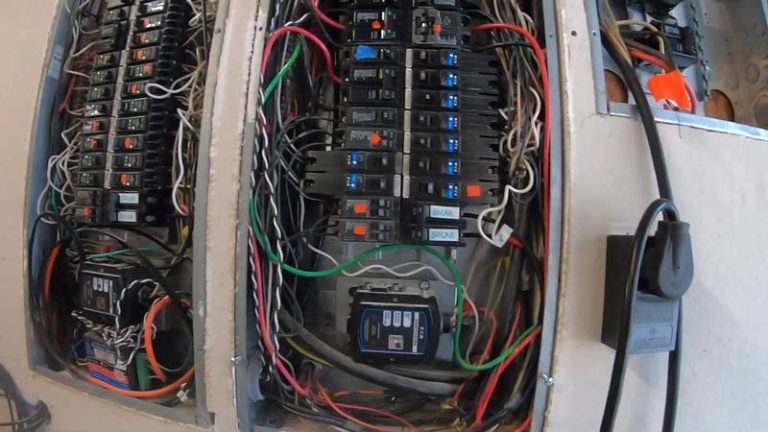
An electrical panel, or breaker box, is the heart of a home’s electrical system. It’s designed with a specific maximum capacity. Doubling the demand by adding a second apartment’s worth of appliances and outlets without a complete system overhaul is a recipe for disaster. The wires are rated for a certain amperage; exceeding it causes them to overheat, melting the protective insulation and creating the perfect conditions for an electrical fire.
Furthermore, this setup creates a nightmare for troubleshooting. When a circuit trips, which unit is responsible? Identifying electrical faults becomes exponentially more difficult and time-consuming when circuits from two separate living areas are intertwined. This complexity can delay critical repairs and increase labor costs significantly.
Navigating Legal Codes and Utility Mandates
Local building codes and the National Electrical Code (NEC) are explicitly clear on this matter. They mandate separate service disconnects for each dwelling unit. This ensures that firefighters or electricians can safely shut off power to one apartment without affecting the other in an emergency. Combining services on a single meter and panel directly violates these essential safety codes.
Utility companies also have their own tariffs and service agreements that prohibit the resale of electricity. When a landlord has a master meter and charges a tenant for electricity (a practice known as sub-metering), they are often in violation of their agreement with the utility provider. This can lead to hefty fines and even the termination of electrical service to the entire property.
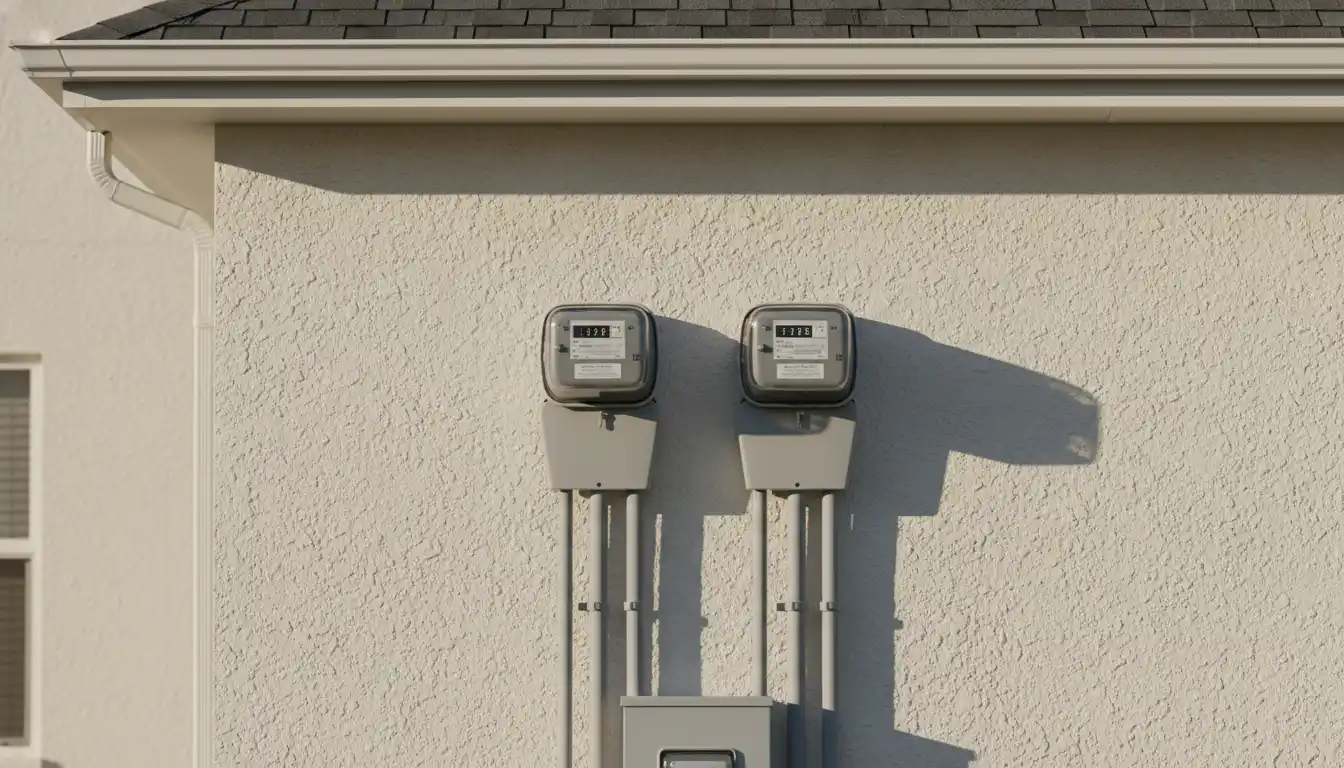
The image above illustrates the standard, correct setup. Each apartment has its own meter, ensuring that each household is billed accurately for its own consumption and that the electrical load is managed safely and independently.
The Myth of Sub-Metering for Residential Apartments
Sub-metering is a system where a property owner receives a master bill from the utility company and then uses individual sub-meters to measure and bill each tenant’s usage. While this practice is common in commercial buildings or RV parks, it is highly regulated and often disallowed for residential apartments in many jurisdictions. The laws are designed to protect tenants from unfair billing practices, estimated charges, and disputes over shared utility costs.
Before ever considering this route, you must thoroughly research your state and local laws governing tenant utility billing. In most cases, the legal and administrative burden makes it an impractical and risky solution for a simple two-unit property. The most straightforward path is always direct, separate metering by the utility company itself.
The Right Way: Legally Combining or Separating Electrical Service
So, what are the approved methods for handling the electricity for two apartments? The correct approach depends entirely on how the units are legally classified and used. There are two primary, legitimate scenarios: formally combining the units into a single dwelling or establishing separate, legal services for each.
Choosing the right path ensures your property is safe, code-compliant, and valuable. Taking shortcuts with electrical work will inevitably lead to problems during a home inspection when you try to sell or with your insurance company in the event of a claim.
Solution 1: Formally Combining Two Apartments into One
If your goal is to create a single, larger living space, you can legally combine the electrical systems. This is a significant renovation project that requires permits and the work of a licensed electrician. The process involves decommissioning one of the electrical services entirely. The electrician will remove one meter and panel, reroute all circuits to the remaining main panel, and ensure that the main panel is robust enough to handle the increased load of the larger home.
This is the perfect time to plan for your new, larger space. A bigger kitchen might mean upgrading from a standard stove. When you’re making these plans, understanding your options, such as in the debate between a 30 vs 36 range, becomes critical for both functionality and electrical planning. You may also consider installing modern, efficient appliances to manage the home’s overall energy consumption, like those discussed in some Bosch 2 drawer dishwasher reviews.
Solution 2: Installing a Second, Fully Independent Service
If the two apartments will remain separate rental units or one will be an in-law suite, the only correct solution is to have two independent electrical services. Each apartment needs its own meter, its own main service line, and its own electrical panel. This guarantees safety, eliminates billing disputes, and keeps you in compliance with all legal and utility regulations.
A licensed electrician will need to run a new service drop from the utility pole, install a new meter base, and wire a completely new panel for the second unit. This is a significant investment, but it is the only way to legally and safely power a second dwelling. It adds considerable value to your property by ensuring it is a legal, multi-unit dwelling.
Comparing Electrical Setups: Separate vs. Combined Service
Understanding the differences between these two valid approaches is crucial for making an informed decision. The table below breaks down the key factors to consider when you are either combining units or keeping them separate.
| Feature | Separate Meters (Two Units) | Combined Service (One Unit) |
|---|---|---|
| Legality & Code Compliance | Fully compliant with NEC and local codes for multi-family dwellings. | Fully compliant for a single-family dwelling after permits and inspection. |
| Tenant Billing | Simple and fair. Each tenant pays their own utility bill directly. No landlord involvement. | Not applicable as it is a single home. Owner pays one consolidated bill. |
| Safety & Load Management | Optimal. Each panel manages a predictable load, preventing overloads and hazards. | Safe, provided the main panel is properly sized and upgraded for the larger space. |
| Property Value | Increases value as a legal, income-producing multi-unit property. | Increases value by creating a larger, more desirable single-family home. |
| Upfront Cost | High. Requires installation of a new, complete electrical service. | Moderate to High. Requires extensive rewiring and decommissioning of one service. |
Uncovering Hidden Dangers: Shared Circuits and Phantom Loads
A particularly insidious problem in improperly divided properties is the “phantom load” from shared circuits. This happens when a single circuit powers outlets or fixtures in both apartments. It could be a hallway light, an exterior outlet, or even a bathroom fan that was never properly isolated during a renovation.
This creates a situation where one tenant is unknowingly paying for another’s electricity. Tracing these shared wires can be incredibly difficult, especially when they are hidden behind walls. It sometimes requires sophisticated tools to figure out. Even a high-quality stud finder for double drywall might not be enough to solve the mystery of where a wire is running. This is another compelling reason why a complete electrical separation performed by a professional is the only trustworthy solution.
Modern Solutions for Energy Management
Even with properly separated meters, property owners can still leverage technology for better oversight. The advent of smart electrical panels and standalone energy monitors offers a powerful way to understand electricity consumption without violating any regulations. These devices can be installed in each panel to track real-time usage for specific circuits.
This technology can help you identify wasteful appliances, detect unusual spikes in consumption that might indicate an equipment malfunction, and provide tenants with data to help them conserve energy. It is a modern, legal, and transparent way to manage electricity in a multi-unit property, offering insights that were previously unavailable.
Conclusion: Prioritize Safety and Legality Above All
The idea of having electricity for two apartments on a single bill is a non-starter from a legal, safety, and practical standpoint. The risks of fire, code violations, tenant disputes, and insurance denial are far too great. The regulations requiring separate meters for separate dwellings are there for a very good reason: to protect everyone involved.
Whether you are creating a new rental unit or combining spaces for your family, the solution must begin with a call to your local building department and a consultation with a qualified, licensed electrician. They can guide you through the correct process of either installing a completely new service or properly consolidating the existing ones. In the world of electrical work, there are no safe shortcuts. Always prioritize doing it the right way.